
(Credits: Far Out / Janice Minn)
Wed 25 February 2026 21:15, UK
While their comeback and long-awaited second album in 2016 was a thrill for fans of the band, the reunion of American Football took a little of the mystique out of the band and their singular self-titled album.
Until this point, it was frequently hailed as one of the greatest examples of a project that dipped after one studio album despite having ultimately created a masterpiece that ultimately helped to define not just one, but two genres in math rock and midwest emo. A record that took twinkling guitar lines and complex time signatures and combined them with earnest lyricism and pensive moods, American Football is still hailed as a touchstone for many other bands of a similar ilk.
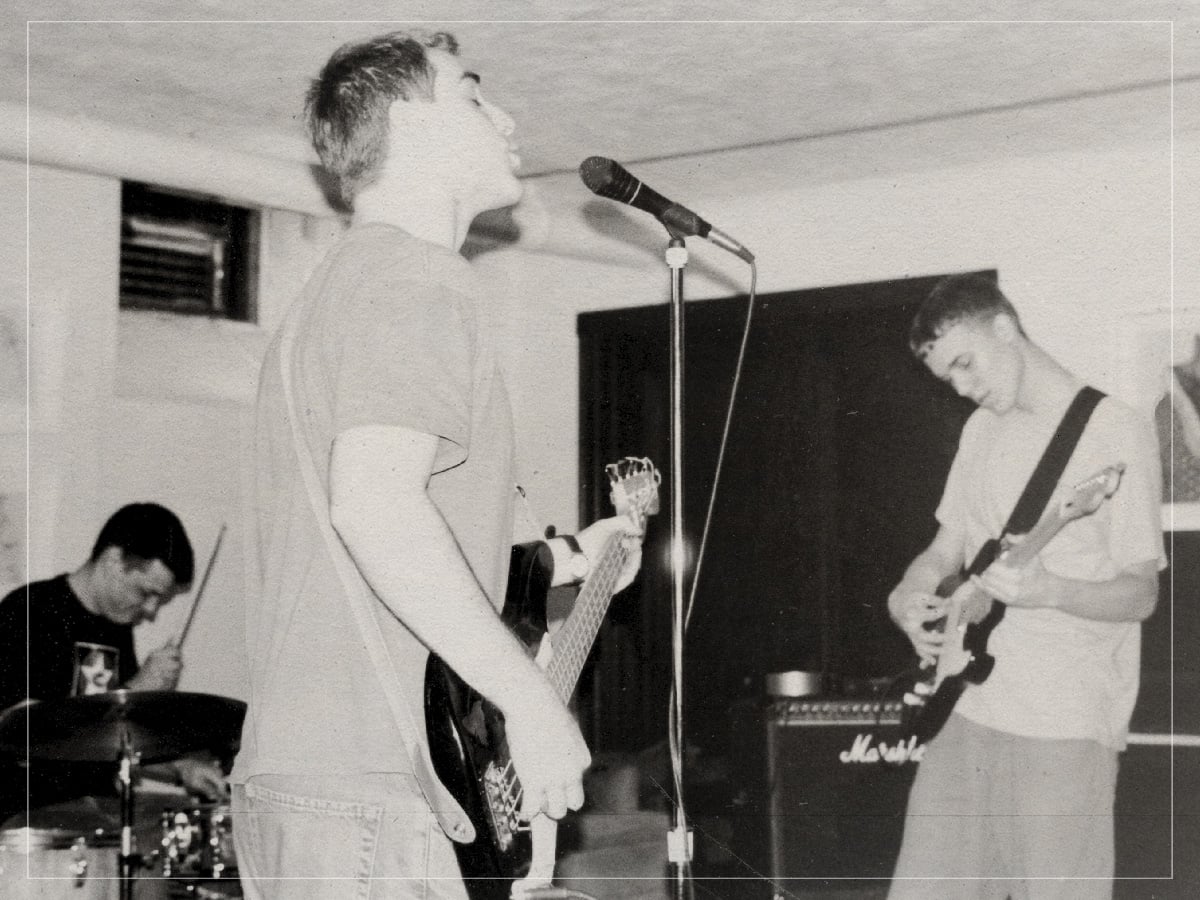
Formed in Urbana, Illinois and slotting in nicely alongside the nearby Chicago school of artists such as Tortoise, Gastr Del Sol and The Sea and Cake who were producing equally ornate yet mellow interpretations of what rock music could be, American Football were seemingly a far cry from what the band’s co-founder, Mike Kinsella, had been doing prior to joining forces with guitarist Steve Holmes and drummer Steve Lamos.
Having previously been a member of Cap’n Jazz alongside his brother, Tim, and Joan of Arc alongside Tim and their cousin, Nate, Kinsella’s background was playing in more raucous post-hardcore acts, despite there having been elements of the math rock and emo stylings that would go on to inform his future projects.
However, with the dissolution of the former group and his desire to create something as a songwriter rather than simply as a member, like in the latter group, Kinsella found himself working with two of his high school friends on something that was considerably divorced from the intensity and aggression that his other projects had always displayed.
It was a conversation between Holmes and Kinsella that eventually led to the band’s decision to rethink their approach to the styles they’d become so familiar with, and it was due to their shared opinion that everything had been done and perfected before on another album that they saw fit to shift towards the style they’d eventually become known for.
“We loved Yank Crime, the last Drive Like Jehu record,” Holmes would later admit in a 2024 interview with Paste. “We were like, ‘Oh, they’ve mastered this sound. No band could do this loud, screamy math rock better than them, so let’s do the opposite.’ Let’s try to do slow, quiet, pretty songs that are more influenced by Red House Painters and Nick Drake.”
While Drive Like Jehu had already split at this point after just two albums, their final offering in Yank Crime was ultimately the same proposition as American Football; an album that did so much to define a sound to the point that it felt impossible to follow up. However, Holmes and Kinsella’s acknowledgement of the album’s brilliance and desire to create their own tranquil opposition to it also proved to be a landmark moment for math-rock.
For the band to return after a 15-year hiatus and choose to continue releasing new music over the following decade may feel like it has damaged the special nature of the record, but it can’t be argued that they still managed to create something that was just as definitive as the album they felt they couldn’t top at their first attempt, and are simply now relishing the experience of playing together and reaping the rewards of their past labours.