
Photo: RNZ / Evie Richardson
All motorists know what it is like learning to drive – the endless attempts to parallel park, the grinding gears, the lurches and the stalls.
Now one instructor believes he has found a way to confine those teeth-clenching experiences to the past, with a virtual reality programme that can help teach learners to drive without even getting into a car.
Ashley Gore runs VR lessons in Auckland and Napier through his company MintEDVR, and is now hoping to expand his virtual driving school across the country.
When he first came across virtual reality technology five years ago, Gore started thinking about its implications for learner drivers and the huge number of people who fail their tests, often multiple times.
“[In one year] 46,000 fails, 7000 failed because they didn’t stop at a stop sign, 37,000 drove too slow on their practical licence, let’s get rid of all these thousands of people who don’t have a license.”
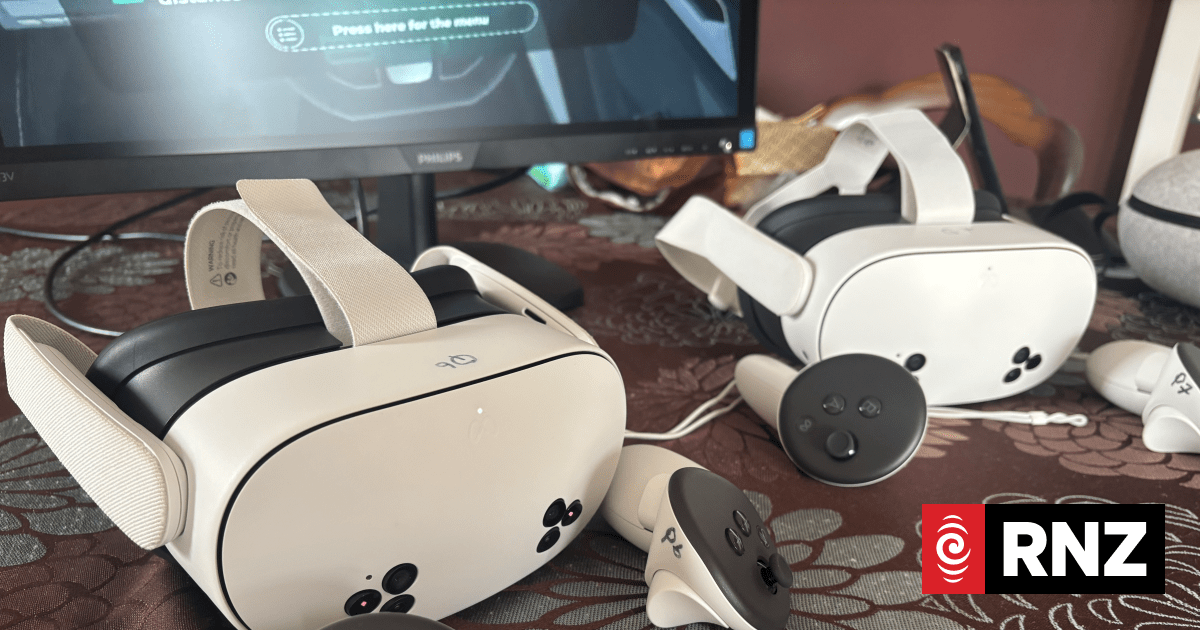
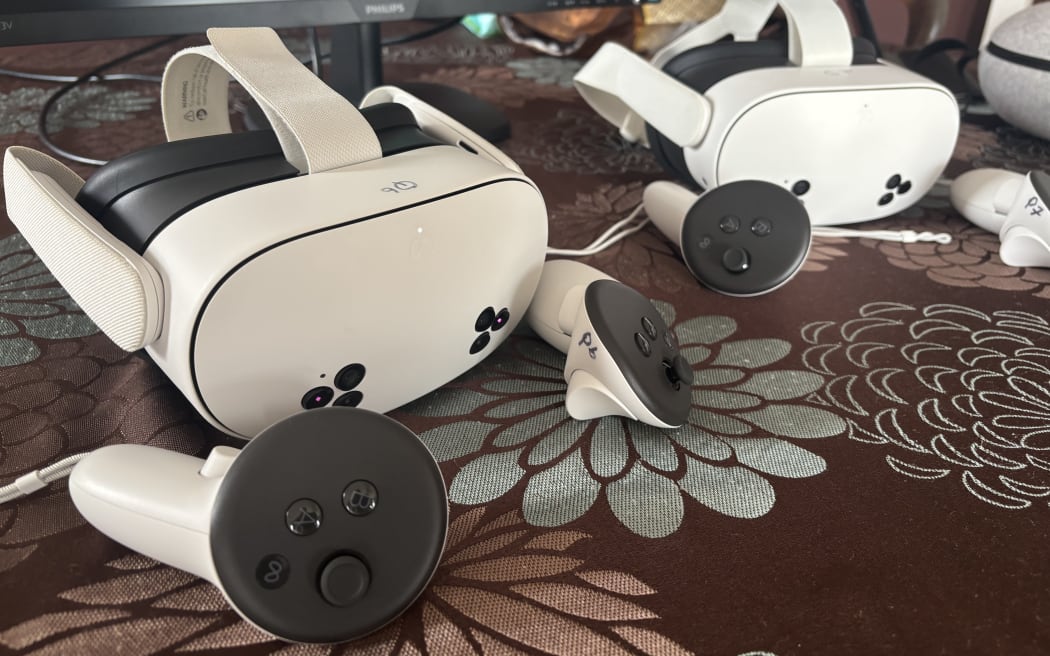
The set up looks identical to one used while playing VR video games, consisting of a headset that covers the eyes with two small controllers held in each hand.
Once the headset goes on, the user is in the driver’s seat.
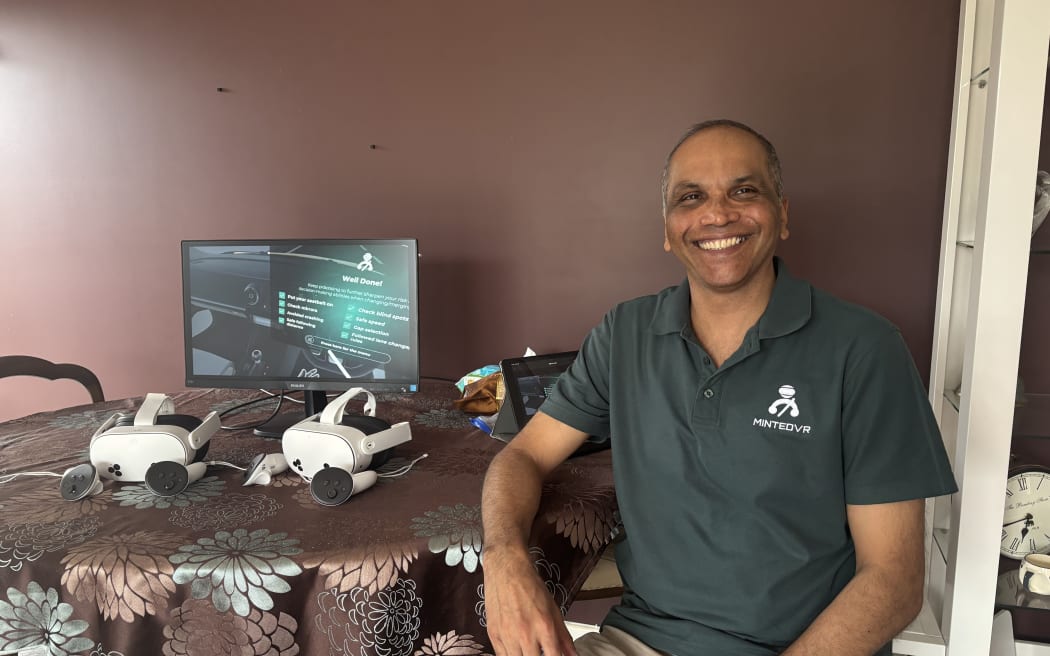
Ashley Gore creator of MINTEDVR, a virtual reality tool for learner drivers
Photo: Evie Richardson
But with joysticks instead of pedals, and no actual steering wheel to grab onto, it is a system quite different to traditional car controls.
However, Gore said most people catch on quickly.
“Couple of sessions, it’s just familiarisation, it’s a bit like when you jump into a different car, if you’re used to driving a small hatchback and then you jump into a ute, just the whole dynamics, the controls are a bit different.”
There are different scenarios available to practice things like right-hand turns, parallel parking and T-intersections, along with the rest of the skills needed to pass a practical licence test.
While the simulation features other cars on the road, road signs and markings, and all the buttons and the lights you’d find in and on a real car, the scenery resembles something closer to a video game than real life.
At around $15 per lesson, it is a cheaper option than practical driving lessons, which Gore hopes will make the tech more accessible, not just for first time learners, but also people wanting to brush up on their skills.
The VR tracks the users movements, picking up on errors such as failing to stop, driving too fast or slow, or forgetting to check a blindspot.
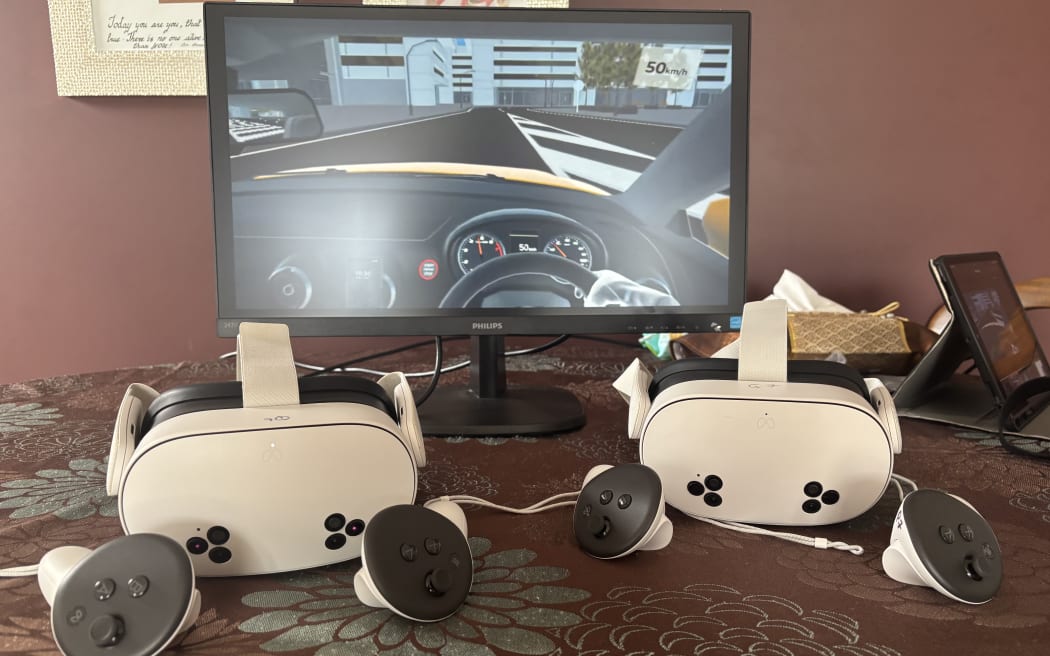
Photo: RNZ / Evie Richardson
Although it offers virtually every experience you get while being in a car, Gore said it is not a replacement for driving.
“The VR is there and it plugs and plays anywhere in your driving journey, and it’s never going to replace driving on the road.”
However, Gore said he believes the VR training should count towards the driving hours learners are recommended to undertake before their practical test.
“I would like to see the hours that you do in VR count towards your driving hours because you are learning, you’re getting important skills, you still need that experience on the road but I think it should count.”
It comes soon after the government announced changes to the driver licensing system, including increasing the learner period for those under 25, and removing the requirement to sit a second practical test.
While Gore is now marketing his technology to driving schools across the country, AA spokesperson Dylan Thomsen said the organisation is tentative.
“The thing you need to spend lots of time doing is actually driving a real car in the real world, and that is the major thing that people need to put the time into, but we certainly see potential for the tech to work as a nice additional practice tool.
“Those hours of practice should be for hours spent in a real car actually driving in the real world, that is the key thing.”
The New Zealand Transport Agency told RNZ there is no substitute for on-road training and experience.
“Our position is based on evidence which shows that learners do not gain the same level of skill or competence in a simulated environment, without real-world experience, and there is potential for over-confidence which can lead to novice and learner drivers being at greater risk of crashes.”
It said it is not possible to replicate the complex real world driving environment using a simulator.
Sign up for Ngā Pitopito Kōrero, a daily newsletter curated by our editors and delivered straight to your inbox every weekday.