
Why you can trust What Hi-Fi?
Our expert team reviews products in dedicated test rooms, to help you make the best choice for your budget. Find out more about how we test.
Samsung caught us rather off guard last year when it launched the Galaxy S25 Ultra. After many years of picture and sound performance taking a back seat while AI features and camera specs hogged the limelight, Samsung’s 2025 flagship Android smartphone wowed us with its impressive display features, derived from the company’s TV division.
One year on, and Samsung has officially unveiled that phone’s successor in the form of the Galaxy S26 Ultra, which hopes to set the standard for flagship smartphones. With a specification list longer than Avatar 3’s run time, and a refined design that might make it the best-looking, best-feeling Galaxy Ultra device yet, has Samsung struck gold once again?
Price
(Image credit: Future)
The Samsung Galaxy S26 Ultra, which we shall be referring to as the S26 Ultra from here on out for the sake of brevity, sports a higher price tag compared with its predecessor here in the UK.
It’s launching at £1279 for the 256GB version; there are also 512GB and 1TB versions of the handset, available for £1449 and £1699 respectively. The first two of those sport 12GB of RAM, whereas the last enjoys 16GB.
The base model is £50 more expensive than its predecessor, the 512GB model is £100 more than the S25 Ultra, and the 1TB version is £150 more than last year’s model.
That’s quite the asking price, especially when we look at the current competition. The Award-winning iPhone 17 is available for £899, while its Pro Max variant – more comparable with the S26 Ultra – can be found for £1199.
The Award-winning Galaxy S25 Ultra will also probably stick around for a reduced price while stocks last, while the Sony Xperia 1 VII (£1399) could be a tempting choice for audiophiles.
Build
(Image credit: Future)
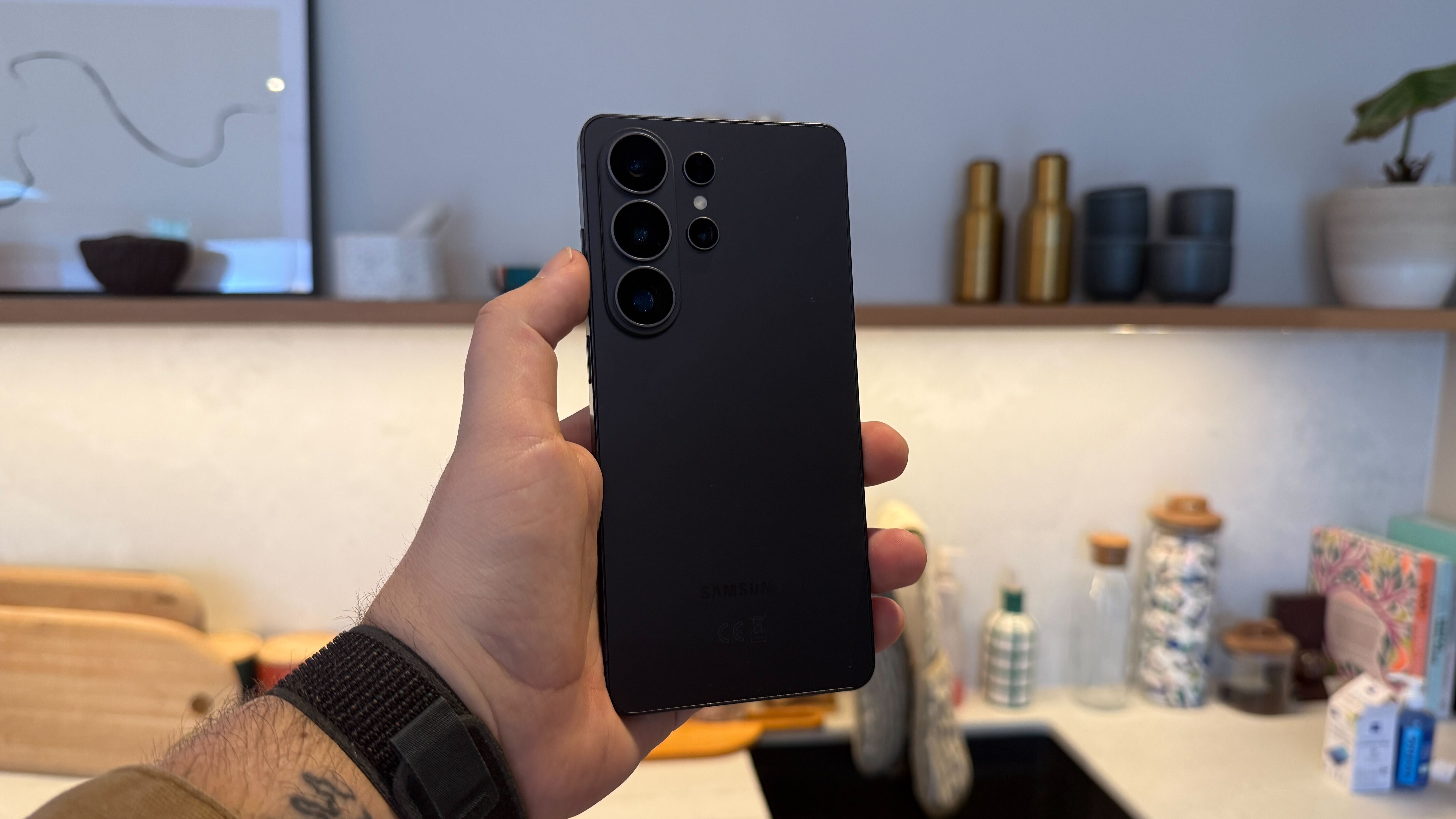
Samsung’s flagship has gone through a gradual transformation during the past few generations. The S23 Ultra featured a curved screen and sharp corners, the S24 Ultra flattened that screen, and the S25 Ultra smoothed out the corners for a nicer in-hand feel.
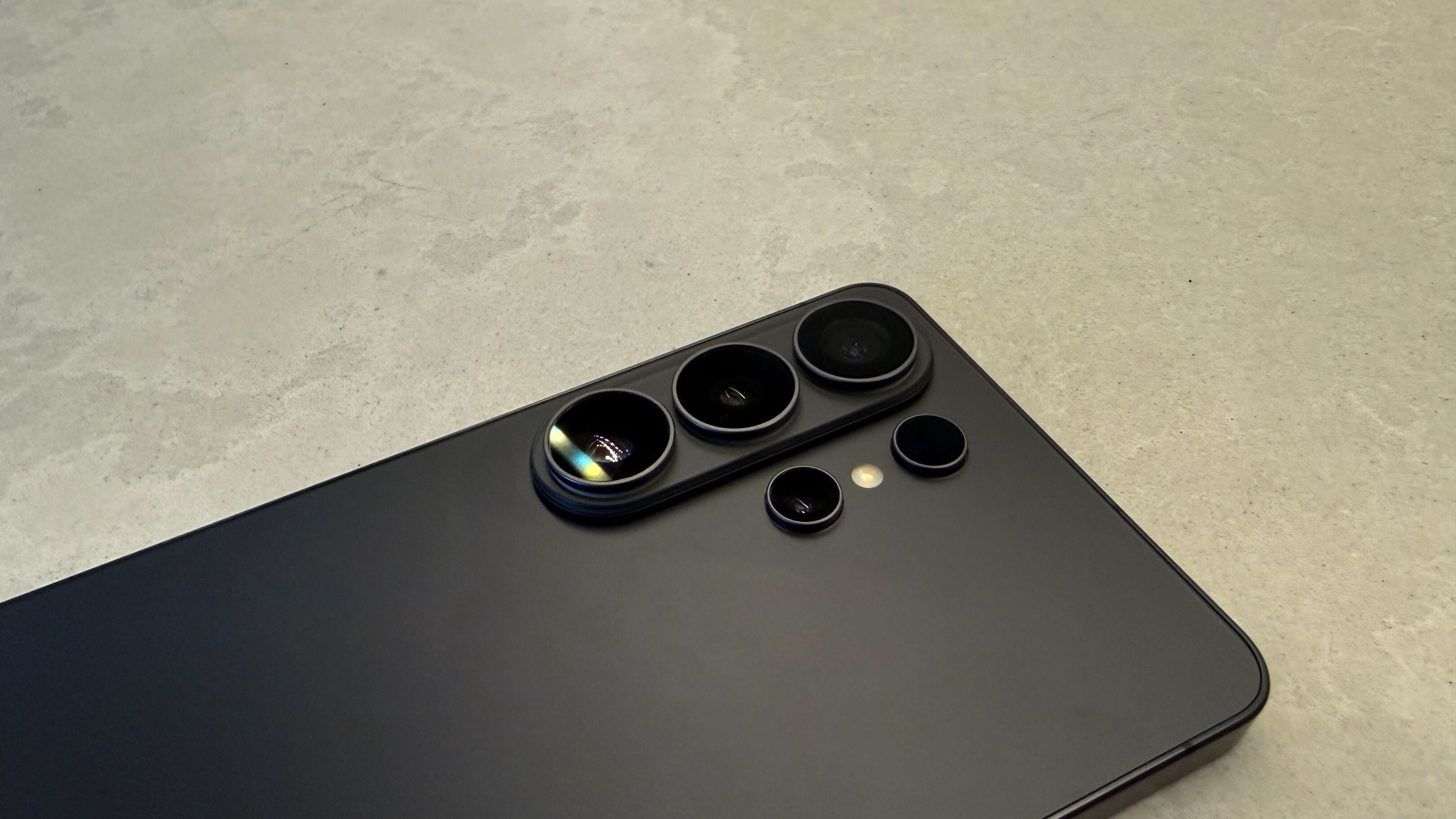
The S26 Ultra, however, feels like a culmination of the past three years of design development – and it looks all the better for it. The corners are now fully rounded for an even more comfortable in-hand feel, and the slightly awkward smattering of camera lenses on the rear is now mostly housed on a raised “island”.
This looks neater, but it also means that the phone now dramatically rocks if you interact with the display while it’s lying flat on a table.
Another design quirk that’s more of an irk is Samsung’s choice to drop the premium, durable titanium frame of the S25 Ultra and move back to an aluminium shell.
Samsung has, at least, ensured that the S26 Ultra is sporting the latest and toughest version of its Armour Aluminium material, which can also be found on the Galaxy Z Fold 7. This is paired with Corning’s Gorilla Armour 2 display coating for better scratch and crack resistance, and Samsung’s excellent anti-reflectivity screen coating.
We pressed Samsung on why it chose to make the switch, but no official word was given as to why it opted to move back to an aluminium frame after two years of titanium-clad smartphones.
Apple made the same move for the iPhone 17 Pro and 17 Pro Max, though it cited improved thermal efficiency as its biggest influence in making this change.
Back to the positives, Samsung has achieved its “thinnest Galaxy Ultra smartphone yet” with the S26 Ultra, as it has shaved the handset down to just 7.9mm from the S25 Ultra’s 8.3mm thickness.
Despite the thinner build and change in materials, the S26 Ultra is broadly the same weight as its predecessor, at 214g. That’s still pretty impressive for a device with a 6.9-inch display, and it doesn’t feel particularly unwieldy in the hand despite its size.
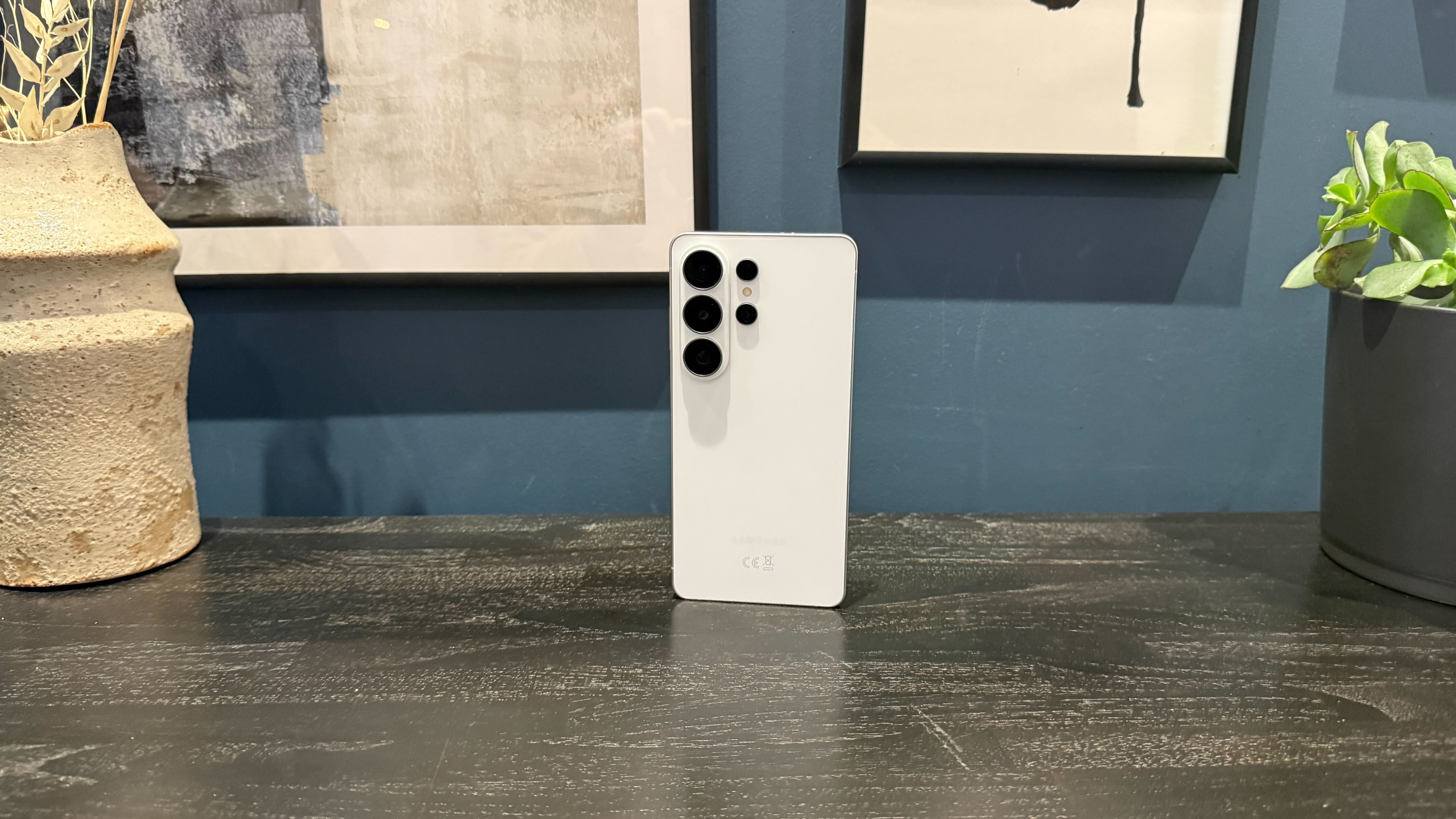
Regardless, the S26 Ultra looks and feels premium in all of its available colours – those being Cobalt Violet (a dark blue-ish purple), Sky Blue, Black or White. Samsung is also offering two exclusive colours for its online store: Silver Shadow and Pink Gold.
Features
(Image credit: Future)
Strap in, this is going to be a long one.
Samsung is once again billing this smartphone as the ultimate feature-packed handset for power users, and that’s evident from the feature-set. That being said, not a whole lot has changed since last year.
We’ll start with the glorious 6.9-inch Super AMOLED 2X Display, which is practically identical to that of the S25 Ultra. It features the same 3000 nits peak brightness, 3120×1440 resolution, pixel density of 500ppi, HDR10+ support and variable refresh rate of 1Hz-120Hz.
It does come with a few new tricks, including a privacy mode that can block the display from off-axis viewing. This has been impressively achieved at a pixel level, and can be easily switched on or off for the whole screen, or even certain parts of the display, meaning you can look at sensitive information or input passwords without worrying about prying eyes.
More exciting for us is the upgraded ProScaler feature, which Samsung says uses a new algorithm for even sharper and richer upscaling of lower-resolution content. Once again, Samsung claims that its mobile division has worked closely with its TV arm to achieve this, and it remains one of our favourite AV-focused smartphone features on the market.
Furthermore, Samsung is touting an enhanced mDNIe system with 10 Bit data processing for colours. Samsung claims that this will allow for four times the precision and subtlety when it comes to displaying colours; this is music to our ears as Samsung’s smartphone displays have traditionally leaned towards the more “enthusiastic” end of the scale when it comes to colour reproduction.
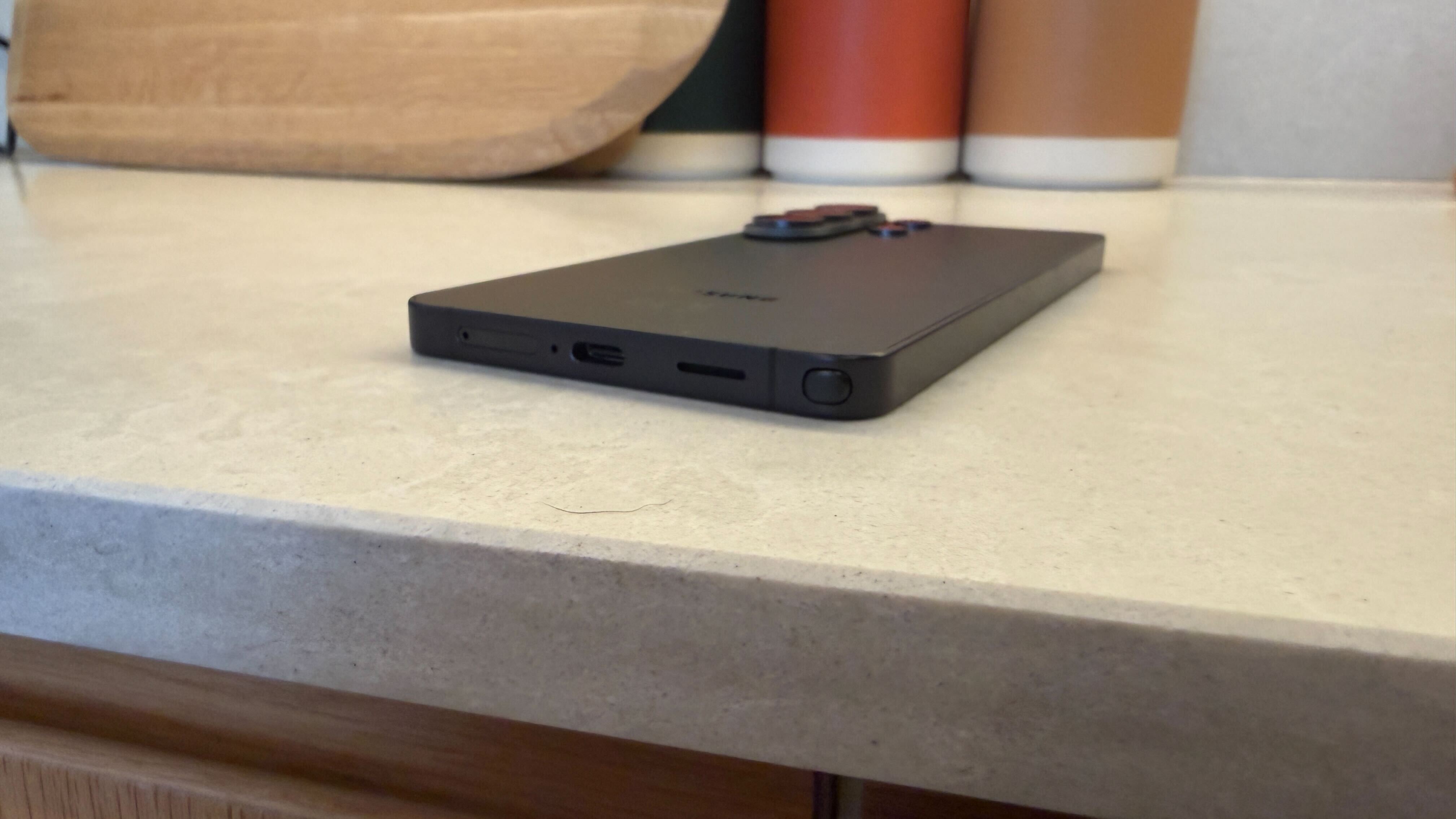
The audio capabilities of the S26 Ultra seem to be mostly identical to those of its predecessor. Unsurprisingly, there is no headphone jack (wired audio peripherals can be connected to the USB-C socket), and Bluetooth audio is supported via the Samsung Seamless Codec (SSC) and LE codec.
Dolby Atmos is, once again, supported via headphones and the stereo speaker arrangement made up of the bottom-firing speaker and earpiece.
On to the less-AV crucial feature of the S26 Ultra. This handset uses the latest Qualcomm Snapdragon Elite Gen 5 for Samsung processor; the suffix differentiates this from the standard Snapdragon Elite Gen 5 chipset found on other smartphones, as Samsung has customised this chip for optimal performance on its smartphones.
As mentioned earlier, this is backed up by either 12GB or 16GB of RAM, depending on the storage configuration you choose.
Disappointingly, Samsung hasn’t upped the battery capacity of the Ultra, choosing to stick with the 5000mAh cell of the S25 Ultra. It does, however, benefit from some charging upgrades, including faster wired and wireless charging.
Samsung claims that the S26 Ultra can go from zero to 75% in 30 mins via 60W wired charging, whereas wireless charging is now boosted to 25W. You will, of course, need to supply a supported fast charger to access these charging speeds.
While Samsung is selling a range of magnet-equipped accessories, including cases and power banks, oddly the company has opted not to include the magnet ring in the handset itself for native Qi2 charging support.
Apple’s MagSafe and Google’s Pixel Snap features have been hugely popular for seamless accessory compatibility, so it feels as though Samsung is lagging behind here somewhat.
Nevertheless, Samsung is still putting in an impressive shift when it comes to the camera specifications of the S26 Ultra. It features a very similar quad camera rear setup to its predecessor, which is no shame to us.
The S26 Ultra sports four lenses in total. The 200MP main sensor is reportedly 47 per cent brighter for better night photography, while Samsung claims the 50MP telephoto zoom lens features a 37 per cent improvement over last year.
The 10MP 3x optical zoom lens now features less noise and better HDR support, while the 50MP ultra-wide lens (which was updated on last year’s handset) seems to be the same.
Last, but by no means least, is Samsung’s extensive AI feature set. Samsung is billing this phone as “the easiest, effortless AI phone”, so you can bet that artificial intelligence is baked into most of the software.
The usual suite of Galaxy AI features is here, including Circle to Search, writing suggestions, auto translate and the Now Brief feature, which provides contextual information such as calendar entries, weather forecasts and news depending on your interests and time of day.
These are being joined by a generative AI photo-assistant tool, which can transform photos into different styles simply by typing in a prompt, and Now Nudge, which will provide intelligent auto replies based on information from other apps (such as your calendar or messages).
Finally, Samsung’s Audio Eraser feature, which is supported for video recording in order to isolate and remove background noise, is now available on video streaming apps, including Netflix.
Samsung ran a demo on this feature by removing the crowd noise from a football match and isolating the commentators’ voices, all of which sounded quite impressive.
Picture
(Image credit: Future)
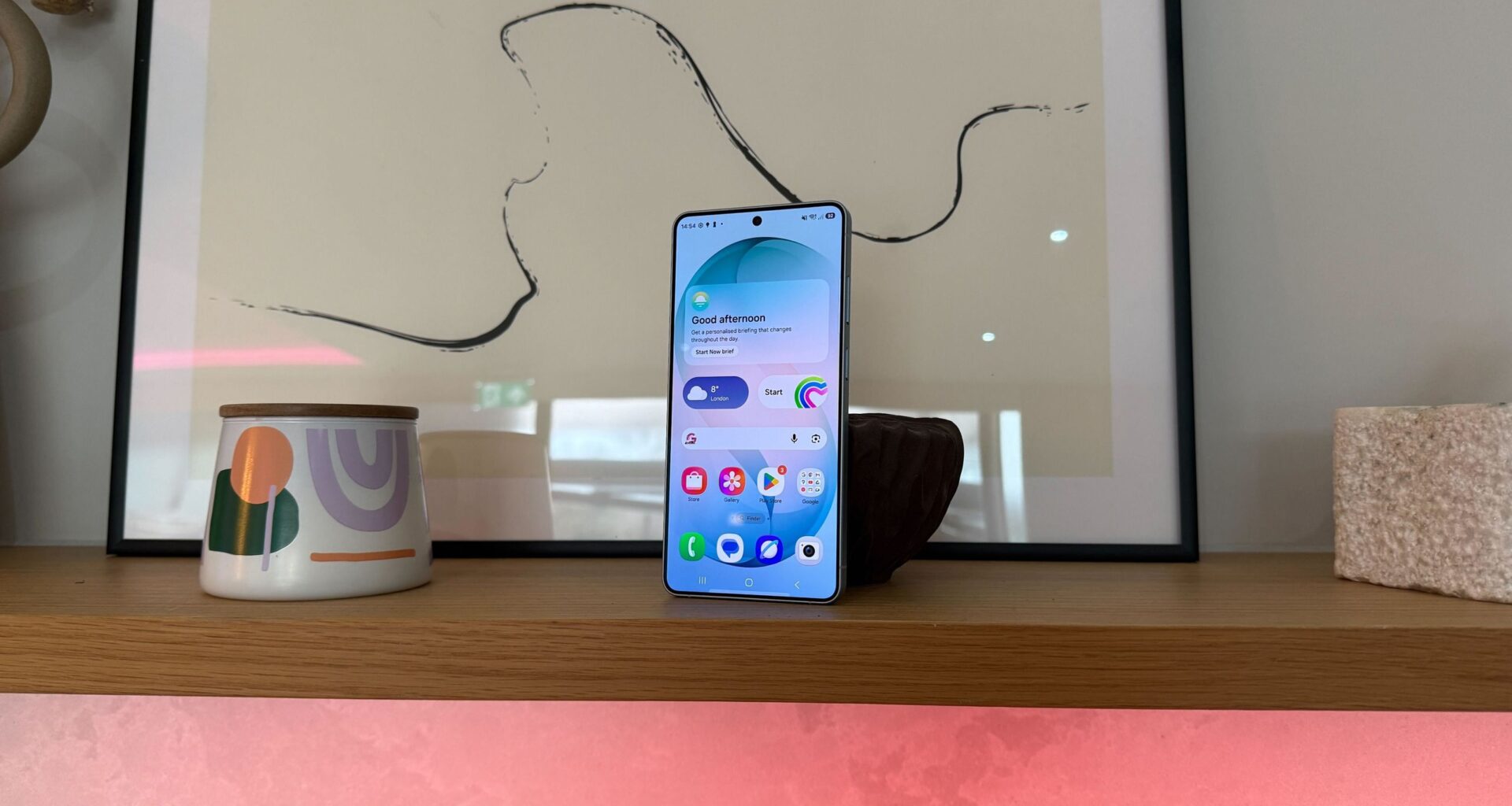
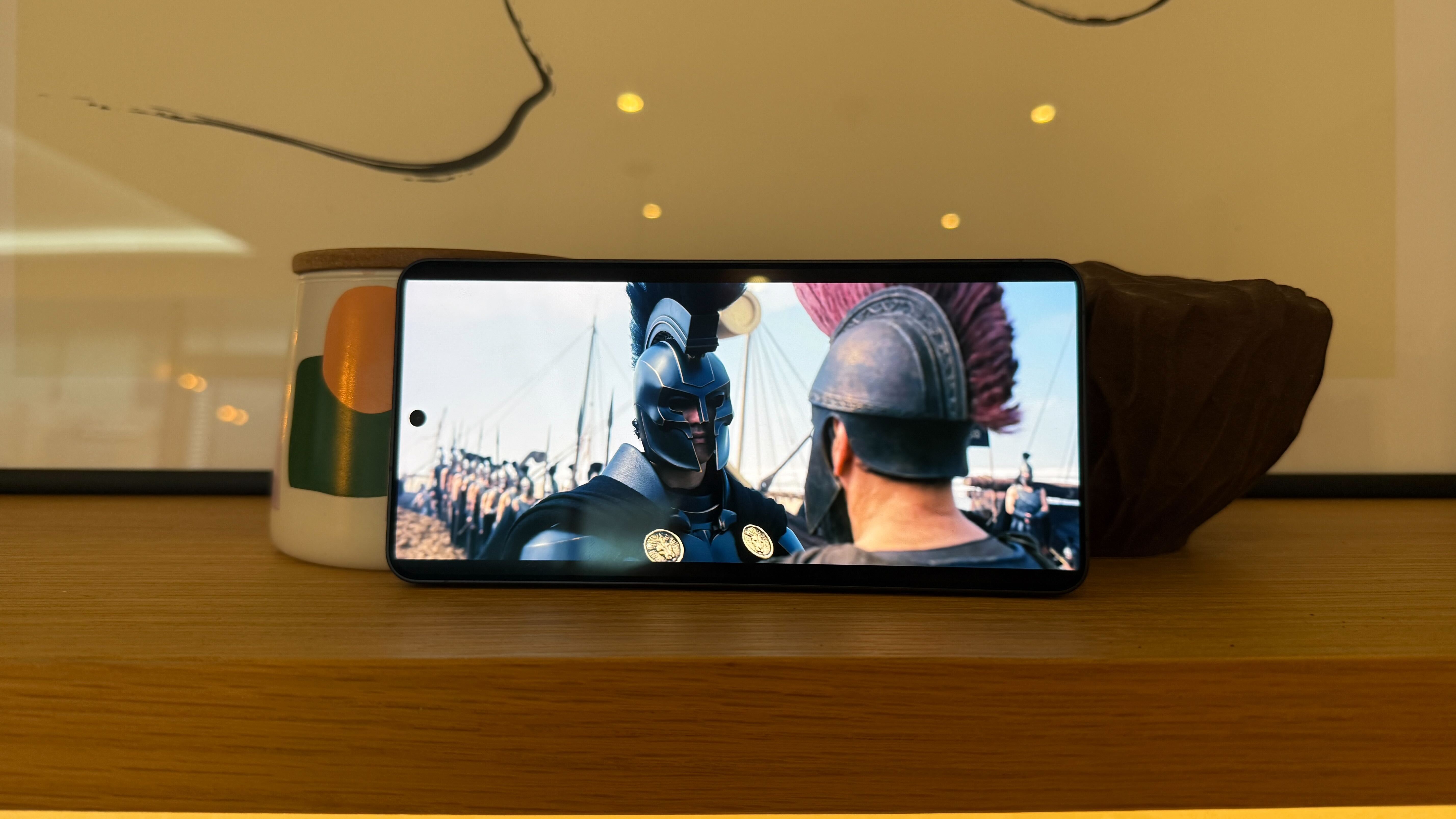
While we spent a considerable amount of time handling Samsung’s latest flagship smartphone, we couldn’t download our usual suite of streaming apps to test the S26 Ultra’s full capabilities. That being said, we did manage to try out a few film trailers on YouTube – The Odyssey, Supergirl and The Mandalorian and Grogu to be exact – to get a flavour of what this display is capable of.
The good news is that the S26 Ultra seems to carry most of what made the S25 Ultra such a triumph. Contrast, sharpness and detail all seemed excellent, with the Samsung outputting a particularly contrast-rich and three-dimensional image.
The striking armoured soldier featured in the trailer for Christopher Nolan’s The Odyssey stood solidly in the foreground of the shot. Motion seemed mostly good, although it seemed to stutter slightly during a brief fight sequence in the trailer for the upcoming Star Wars spin-off movie.
Most interestingly, colours didn’t seem to be overbaked or too saturated in the phone’s default vivid screen setting mode. We find that Samsung’s natural mode can lean a bit too cool for whites, so improvements to the vivid mode are always welcome.
There is no doubting that this is one of the most capable displays on a mainstream smartphone, and we’re eager to put it through its paces; watch out for a full review coming soon.
Sound
(Image credit: Future)
We’ll keep this section short and sweet: the conditions in which we went hands-on with the Galaxy S26 Ultra weren’t ideal for serious sound testing; nor did we have a chance to download Tidal onto the device for a serious spot of listening.
If there was anything we would change about the S25 Ultra, however, it would be the sound performance. It can sound somewhat dynamically stunted, and could have stronger timing. We hope Samsung has fixed these issues in the S26 Ultra, but only further testing will tell.
What we do know is that the Galaxy Buds 4 Pro, which we have just reviewed, are a solid set of companion earbuds to this handset, thanks to their support for the SSC UHQ hi-res codec, which can transmit music files up to 24-bit/96kHz.
Early verdict
(Image credit: Future)
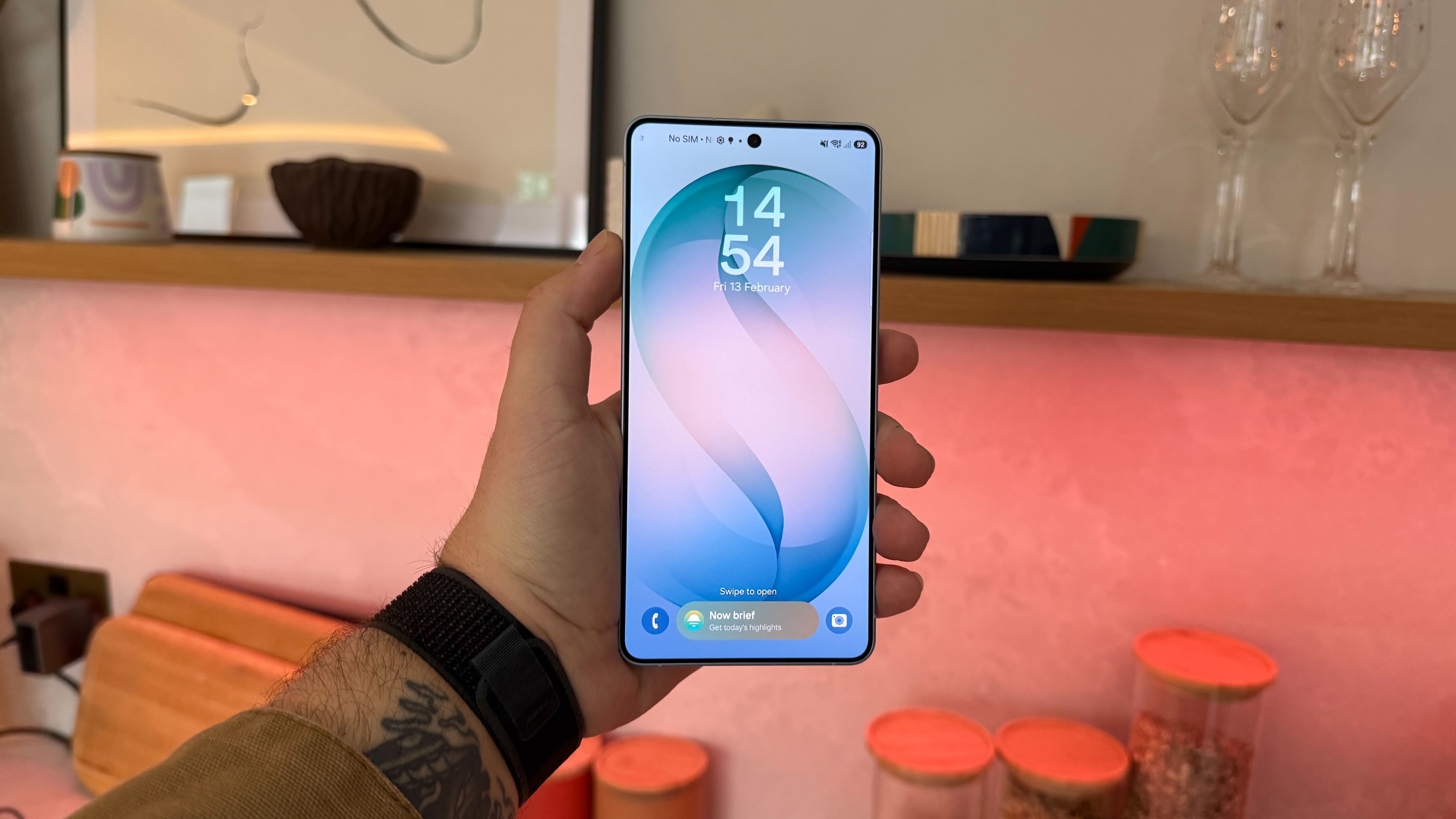
It’s too early to decide what star rating we should bestow the Samsung Galaxy S26 Ultra with, as much more testing is required to see if its picture performance lives up to the heights set by its predecessor.
Early signs show promise, however, as the S26 Ultra seems to be another feature-packed handset with a gorgeous screen. We can’t wait to put it through our rigorous testing process.
MORE:
Read our full Samsung Galaxy S25 Ultra review
As well as our Samsung Galaxy S25 Plus review
And our Samsung Galaxy Z Flip 7 review