
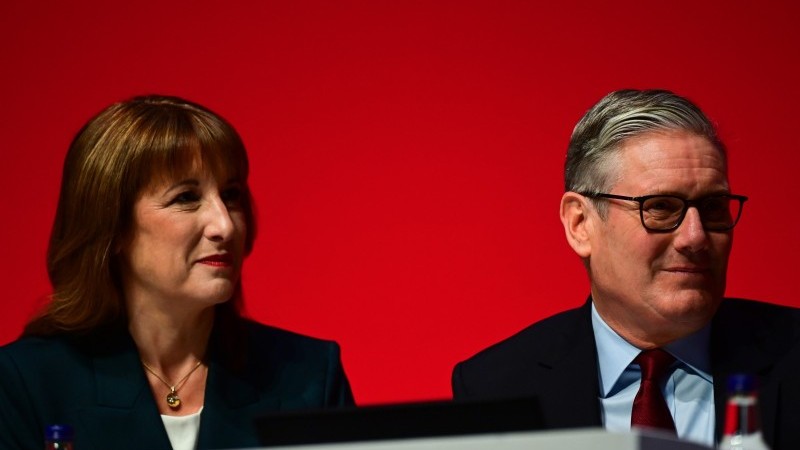
But can that last? There’s no shortage of political flashpoints over coming weeks – from the fallout of this week’s by-election in Gorton and Denton, to challenging local elections on 7 May. Nationally, Labour are polling 18% according to YouGov, down from around 35% at the 2024 general election. Keir Starmer’s position as Labour Party leader – and therefore as Prime Minister – still appears vulnerable.
That all threatens to overshadow next Tuesday’s “Spring Forecast”. UK Chancellor Rachel Reeves will be keen to avoid a re-run of last year’s statement, where financially modest but politically seismic welfare changes sparked a huge political backlash and ultimately U-turns.
Fortunately for the Treasury, the Office for Budget Responsibility’s forecasts are likely to be little changed – certainly nothing that’s likely to drastically alter the comfortable levels of “headroom” available under the fiscal rules. Next week’s announcement is likely to be low-key.
So what happens if leadership noise resurfaces? A few short-lived gilt sell-offs last year offer a clue to the financial market reaction. A new prime minister would likely mean a new chancellor (finance minister). A new chancellor might mean new fiscal rules. And new fiscal rules would presumably herald more borrowing and gilt issuance, potentially complicating the Bank of England’s rate-cutting cycle. UK yields likely go higher again if those risks resurface.
That may well be the short-term playbook, but is it the right reaction? The reality looks more nuanced.
For one thing, Labour Party rules don’t make it easy to change leader. 20% of Labour MPs need to back a rival candidate to trigger a contest. That’s 81 lawmakers. Even if that number push for a change in leader, can they all agree on a single nominee?
In the event a Labour leadership challenge is triggered, though, we think there are four questions we’d need to answer: