
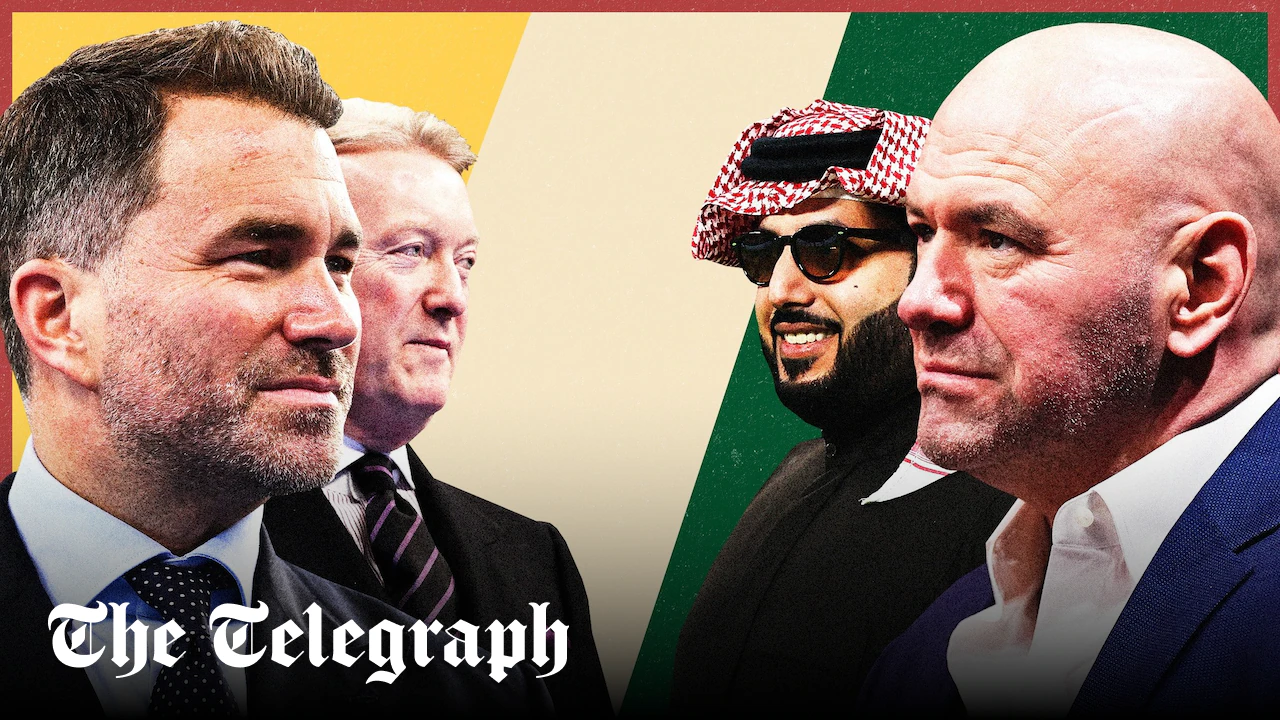
The British promotional duo have held court as the gatekeepers of the game. But as the 2026 season dawns, there is a growing threat from Zuffa Boxing.
When White officially launched Zuffa Boxing, there was no olive branch. He came with a flamethrower. Speaking after his third major card – a small but sleek affair that felt more like a Las Vegas residency than a smoky hall show – White was typically blunt in his post-event media conference, insisting he was expecting more opposition.
White’s vision is simple: take the UFC blueprint of centralised control, unified rankings and a single belt and graft that onto what he considers as the fragmented corpse of boxing. By partnering with Alalshikh and Sela, White has bypassed the usual “alphabet soup” of sanctioning bodies – the WBC, WBA, IBF, and WBO – to create a new paradigm.
While Matchroom announced a new five-year deal with DAZN last week and Warren commands a stronghold on the British and world heavyweight scene with a clutch of the leading global heavyweights, the Saudi-backed Zuffa machine has secured a massive terrestrial and streaming foothold with US broadcasters Paramount+. And there is talk of a deal with Sky Sports in the UK. There are also noises around Zuffa seeking recognition of its belt by the British Boxing Board of Control.
Zuffa Boxing is also actively lobbying in the US for the Muhammad Ali Revival Act, a legislative push to water down the original Muhammad Ali Boxing Reform Act, which was introduced in 2000 to protect the rights, welfare and safety of professional boxers.
Under current law, a promoter cannot also be a manager or a sanctioning body. It is a firewall designed to protect fighters from exploitation. White and Alalshikh want to change that, creating Unified Boxing Organisations (UBOs). If they succeed, Zuffa will be able to bypass boxing’s established sanctioning bodies to effectively become the sport’s judge and jury.