
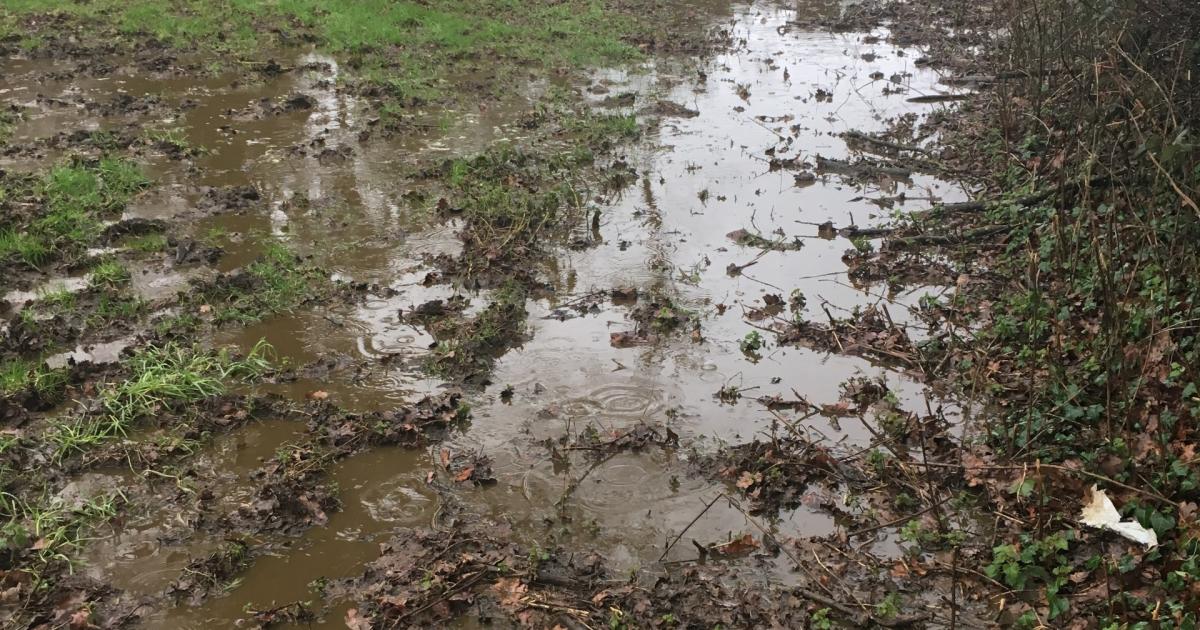
Mark Pearson of Hanford Farm in Dorset was ordered to increase slurry storage to prevent pollution but failed to do so.
He appeared at Yeovil Magistrates’ Court on December 2, where he pleaded guilty and was fined £1,200.
He was also ordered to pay a victim surcharge of £480 and costs of £4,075.
In January 2019, an Environment Agency officer was out walking his dog when he noticed what appeared to be a slurry in a stream. (Image: Environment Agency)
Chris Westcott of the Environment Agency said: “Pearson has consistently failed to deliver on his promises to the Environment Agency that slurry storage would be increased.
“We first highlighted this issue in 2015.
“We have been more than patient with the farmer, but the promised improvements never materialised, and the offending continued which left us with no alternative but to pursue enforcement actions.”
The court heard that there had been multiple pollution incidents linked to Hanford Farm since 2012.
The farm is located within a Nitrate Vulnerable Zone, an area at risk from agricultural nitrate pollution, which can harm the environment and enter water supplies.
Regulations require farmers in these zones to maintain proper slurry storage and follow rules on when and how much slurry can be spread.
Mr Pearson had previously been given advice and guidance by the Environment Agency, and in January 2019, an officer walking nearby noticed what appeared to be slurry in a stream.
The source of the pollution was traced back to Hanford Farm.
During a formal interview under caution, Mr Pearson admitted that slurry spreading on his land had caused the pollution.
He accepted an Enforcement Undertaking as an alternative to prosecution and paid £2,000 to the National Trust, agreeing to increase his slurry storage as part of the undertaking.
Despite this, he did not complete the necessary works.
In November 2024, he was fined £2,500 for the original pollution offence.
The Environment Agency later issued an Anti-Pollution Works Notice with a deadline of October 1, 2024, but Mr Pearson failed to comply.
A follow-up visit to the farm on October 16 confirmed that no additional slurry storage had been built.
Mr Westcott said the Environment Agency had been patient over several years, but that continued non-compliance and repeated pollution left them with no choice but to pursue prosecution.
Farmers can find guidance on proper slurry storage and handling on the Gov.uk website to help avoid similar issues and stay compliant with environmental regulations.