
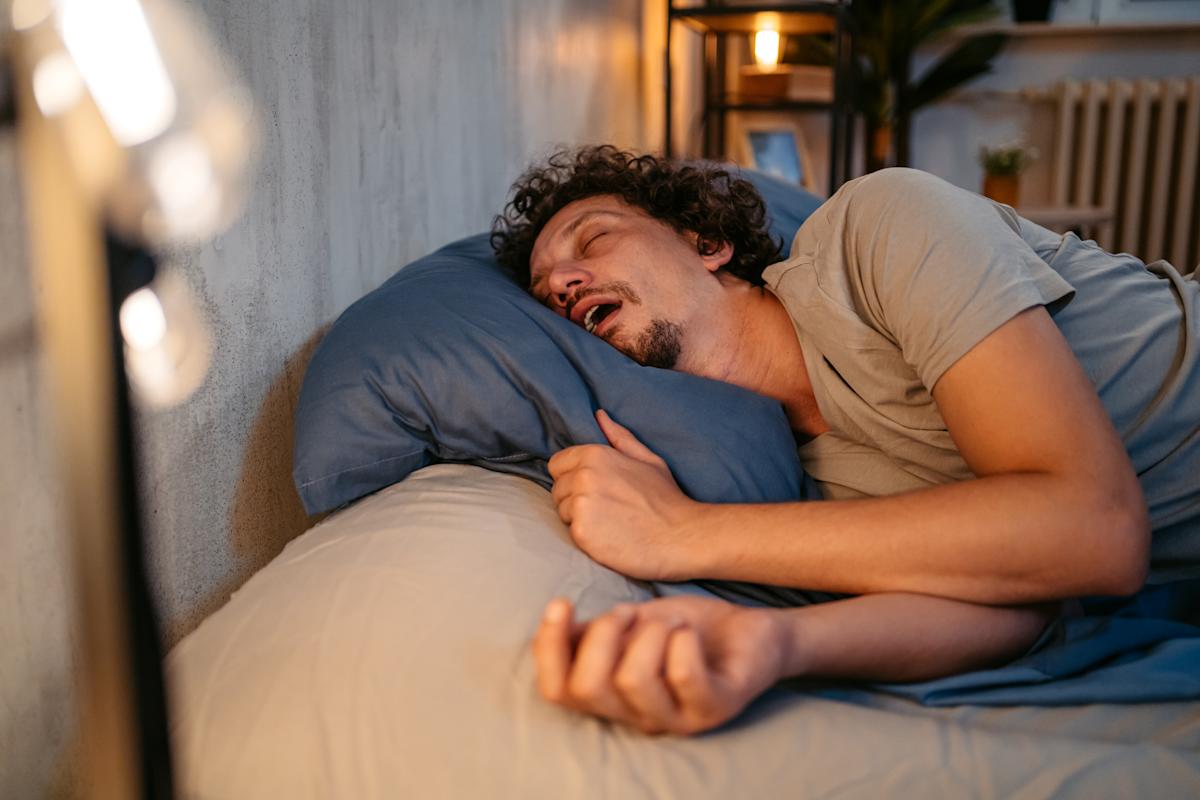
It might be annoying for anyone you share a bed with, but snoring is very common. While it may wake you up from time to time, the NHS says it’s not usually caused by anything serious.
However, if your snoring is loud and persistent, or you’re feeling excessively sleepy during the day, then it could be a sign of sleep apnoea.
A common sleep disorder in which your breathing stops and starts during sleep, if untreated, sleep apnoea can lead to serious problems, including heart disease, depression and a higher risk of having a stroke.
Sleep specialists are highlighting the warning signs, as a new study has suggested that screening for obstructive sleep apnoea should be introduced in workplaces. Researchers found that the condition could impact businesses significantly, due to sufferers being absent from work and tiredness affecting their productivity.
Here’s how to know when your snoring may be a sign of something more.
What causes snoring?
Lifestyle, anatomy and physiology are the three main causes of snoring, according to consultant ENT (ear, nose and throat) and sleep surgeon Dr Ryan Chin Taw Cheong.
Snoring can be caused when your tongue, mouth, throat or airways vibrate as you breathe. This is because they relax and narrow when you’re asleep.
“If you have a structural narrowing of your nose or the back of your throat or the back of the tongue, that can actually increase the resistance of air flow when you breathe at night, which results in snoring sounds,” Dr Cheong explains.
“Also, if you’re particularly overweight or you drink a lot of alcohol, the upper airway muscles can become more relaxed, and that can also increase the resistance of air flow, resulting in snoring.”
He adds that, for some people, “the way that the muscles of the tongue or the palate or the throat relaxes is excessive to the point of obstruction or narrowing, and that can also cause snoring.”
The NHS says you’re also more likely to snore if you smoke or sleep on your back.

Choking, gasps or pauses between breaths can be signs of sleep apnoea.
(Marco VDM via Getty Images)What is sleep apnoea and what are the red flags?
Sleep apnoea is when your breathing stops and starts while you’re asleep. There are two types and the symptoms for both are virtually the same.
Obstructive sleep apnoea is by far the most common. It happens if your airways become too narrow while sleeping, stopping you from breathing properly.
A rarer type is known as central sleep apnoea. It occurs when part of the brain that controls breathing isn’t working properly.
Sleep apnoea can cause loud snoring. Symptoms also include:
Choking, gasping or pauses between breaths
It can be hard to monitor your own nighttime behaviour, so you may need to ask your partner or a friend to check for any symptoms while you sleep.
“If you witness any choking episodes or gasping of breath or pause of breath by your bed partner, or if you’ve experienced it yourself, that’s a potential red flag of sleep apnoea,” says Dr Cheong.
Feeling excessively sleepy during the day
Sleep apnoea can cause you to wake up repeatedly during the night and can cause excessive daytime sleepiness.
“The issue with sleep apnoea is that it causes really fragmented, poor-quality sleep, so you can’t get into these deep states of sleep that help you feel refreshed in the morning,” says Dr David Garley, GP and director of The Better Sleep Clinic.
“So, if you wake up feeling unrefreshed, are sleepy throughout the day and often struggle with concentration, memory and low mood, then you might want to consider talking to a professional about sleep apnoea.”
What should I do if I have any symptoms?
If you have any symptoms, speak to your GP. If left untreated, sleep apnoea can lead to other problems, such as high blood pressure, heart disease, type 2 diabetes and a higher chance of having a stroke.
It can also affect your mood. “If you think how bad you feel after one night of sleep, then you can see how years of bad sleep can have a really major impact on your health,” says Dr Garley. “Some evidence suggests that around 20% of patients with sleep apnoea have depression.”
Who is more likely to have sleep apnoea?
Sleep apnoea can happen at any age, but is more common when you’re older. You may be more likely to have sleep apnoea if you are:
Have a family history of the condition
Have large tonsils or adenoids
Have chronic obstructive pulmonary disease (COPD)
What are the treatments?
To test for sleep apnoea, your GP may refer you to a specialist sleep clinic or you may be asked to complete a home sleep test.
“This usually involves wearing a medical watch-like device on your wrist, which has a chest and a finger sensor, which takes really detailed measurements on how you sleep,” says Dr Garley.
Treatments involve lifestyle changes, such as making sure your weight is in the optimal range, drinking less alcohol and giving up smoking. You may also need to use a device called a CPAP (continuous positive airway pressure) machine, which gently pumps air into a mask you wear over your mouth or nose while you sleep.
Surgery or more advanced technologies are also available.
Additional reporting by PA.