
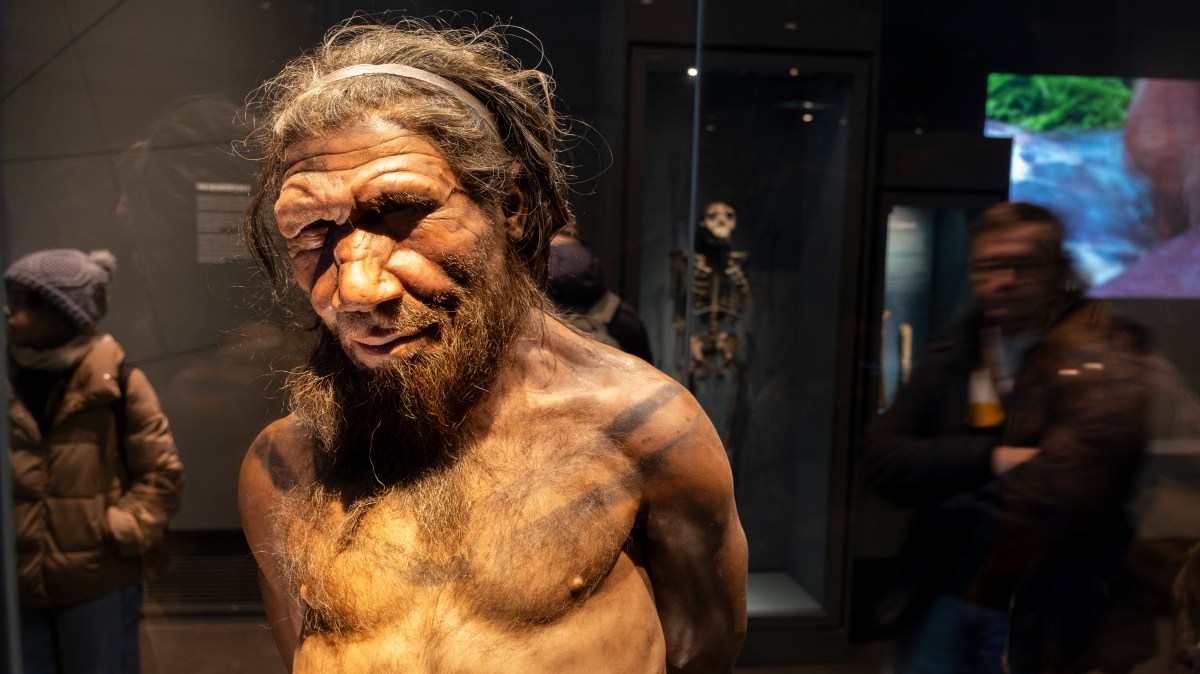
Scientists have known for more than a decade that our ancient ancestors interbred with another kind of people — the Neanderthals. A study now suggests that most of these encounters involved Neanderthal men and modern human women.
Neanderthals were evolutionary cousins of modern humans. Formally recognised as a separate species, they evolved in Europe and western Asia hundreds of thousands of years ago. They were stockier in build and had larger brains than us, but disappeared around 40,000 years ago.
However, they did not vanish entirely. Thanks to interbreeding roughly 45,000 years ago, most people alive today outside Africa have a small amount of Neanderthal DNA in their genetic make-up.
The new study looks at how that genetic legacy is spread. When scientists map where Neanderthal DNA sits in the modern human genome, they find large blank patches. The most striking gaps appear on the X chromosome, one of the two chromosomes that determine a person’s sex (men have an X and a Y, women have two Xs).
The gaps have puzzled researchers. If two groups mix, their genes might be expected to spread fairly evenly. So why is there so little Neanderthal DNA on our X chromosomes?
There were two main possibilities. One was that Neanderthal genes did not function well on modern human X chromosomes and were gradually filtered out. The other was simpler: fewer Neanderthal X chromosomes entered the human population in the first place, because of who was having children with whom.
To test this, researchers led by Alexander Platt at the University of Pennsylvania turned the question around. Instead of looking only at Neanderthal DNA in humans, they examined traces of early modern human DNA found in Neanderthal remains from about 250,000 years ago, when interbreeding also occurred.
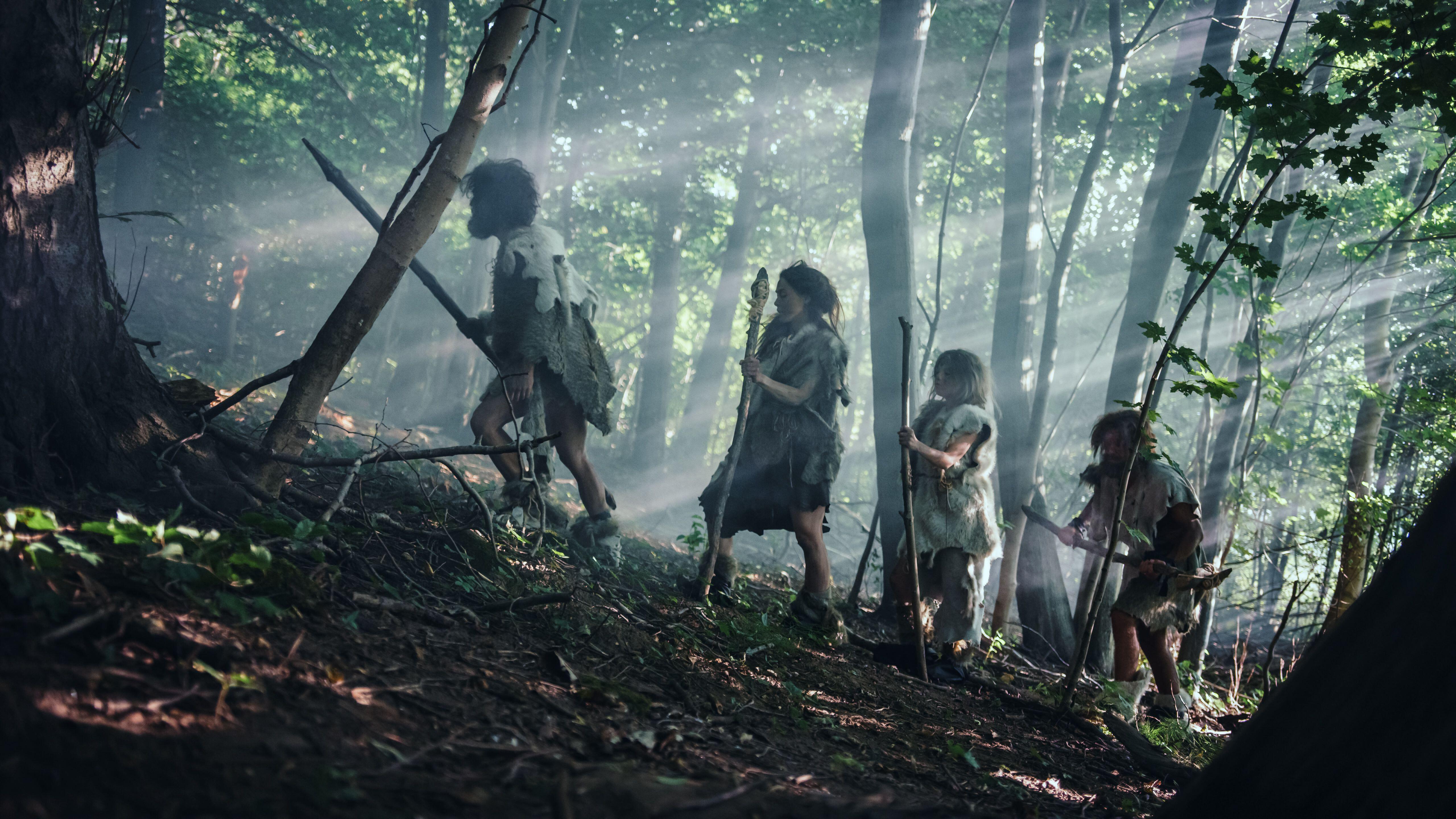
Neanderthals were evolutionary cousins of modern humans
ALAMY
First, they asked whether there was something about X chromosomes in general that meant they shed “foreign” DNA over time. If that was the case, the Neanderthals should have had unusually low levels of modern human DNA on theirs. They did not. In fact, Neanderthal X chromosomes contained more modern human DNA than expected.
• Who are you calling savage?Neanderthals tended the sick
Second, they looked at where the human DNA appeared. If it had given Neanderthals an advantage, it should have been concentrated in the most important parts of the genome — regions that code for proteins or regulate other genes. It was not. Instead, it was relatively scarce in those “functional” areas.
Altogether, the results suggest the shortage of Neanderthal DNA on the modern human X chromosome today was not caused by those genes being weeded out by evolutionary forces over time. If there was something about the X chromosome that made it generally bad at carrying foreign DNA, we would expect to see the same pattern in both Neanderthals and humans. We do not. At the same time, there was no sign of human genes being inherently “better” than Neanderthal ones.
Instead, the data fits better with a simpler explanation: more Neanderthal men mated with modern human women than the other way around.
• Found in a cave: proof the Neanderthals were far from thick
Because men carry just one X chromosome and women two, if most unions were between Neanderthal males and modern human females, the mother would always pass on one of her X chromosomes. This would mean relatively fewer Neanderthal X chromosomes spreading through later generations.
After tens of thousands of years, the result would look as it does today: traces of Neanderthal ancestry across much of our DNA but comparatively little on the X chromosome.
As Platt and his colleagues write in the journal Science: “Fundamentally, the patterns that we observed … were likely coloured by a persistent preference for pairings between males of predominantly Neanderthal ancestry and females of predominantly anatomically modern human ancestry over the reverse.”