
Your support helps us to tell the story
From reproductive rights to climate change to Big Tech, The Independent is on the ground when the story is developing. Whether it’s investigating the financials of Elon Musk’s pro-Trump PAC or producing our latest documentary, ‘The A Word’, which shines a light on the American women fighting for reproductive rights, we know how important it is to parse out the facts from the messaging.
At such a critical moment in US history, we need reporters on the ground. Your donation allows us to keep sending journalists to speak to both sides of the story.
The Independent is trusted by Americans across the entire political spectrum. And unlike many other quality news outlets, we choose not to lock Americans out of our reporting and analysis with paywalls. We believe quality journalism should be available to everyone, paid for by those who can afford it.
Your support makes all the difference.Read more
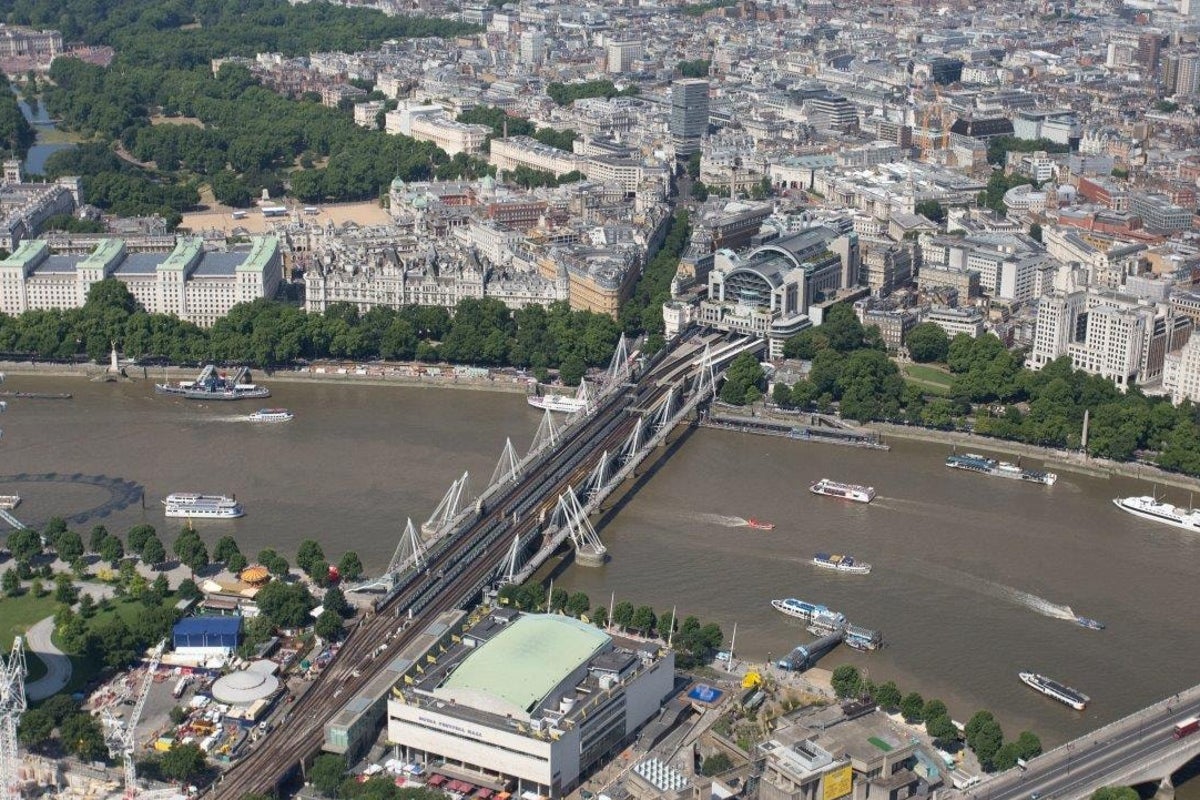
Two major railway stations in London will close for over three weeks this summer, affecting travel into the capital, as maintenance works are carried out.
Charing Cross and Waterloo East stations will be closed for a total of 22 days between 26 July and 16 August.
Network Rail says trains will continue to run, and routes into London will remain open, but passengers can expect their journeys to be different and may take longer.
Customers are encouraged to think ahead about how the changes might affect their travel.
Southeastern services that normally run into Charing Cross will be diverted to London Victoria, London Cannon Street and London Blackfriars, with some trains terminating at London Bridge.
Tickets will be accepted across all alternative rail routes, the London Underground and London buses.
The stations are closing so engineers can replace 1,800m of “life-expired” track between Waterloo East and Charing Cross, among other upgrades.
The track, last replaced in the early 1990s, has already caused more than a hundred hours of delays due to faults on approaches to Charing Cross.
Waterloo East will also undergo drainage improvements, and Hungerford Bridge, which crosses the River Thames, will have structural repairs.
Network Rail said a continuous 22-day closure, rather than over numerous weekends or bank holidays, was the best option as schools are off, commuter numbers are lower, and customers have more flexibility.
Scott Brightwell, director of operations and safety at Southeastern Railway, said: “We know closing Charing Cross and Waterloo East for 22 days is a significant change, and we’re sorry for the disruption it will cause.
“This is not a decision we’ve taken lightly. We’ve looked long and hard at every possible option, and although none of them are without impact, a single summer closure is the least disruptive and most efficient way to carry out this vital work.
“This section of track is more than 35 years old and has caused thousands of minutes of delays for passengers in recent years. By replacing it now and combining that with platform, drainage and bridge works, we’re tackling the root causes of disruption in one go. This means fewer closures in the future and a more reliable railway for everyone who depends on these routes.
“We’re working closely with transport partners, local businesses and communities to keep people moving with ticket acceptance on alternative rail routes, London Underground and London Buses. We are committed to ensuring customers are informed, supported and cared for throughout the 22-day closure.”
Read more: Can I get a railcard and will it save me money on train tickets?