
Credit: GEL
Save
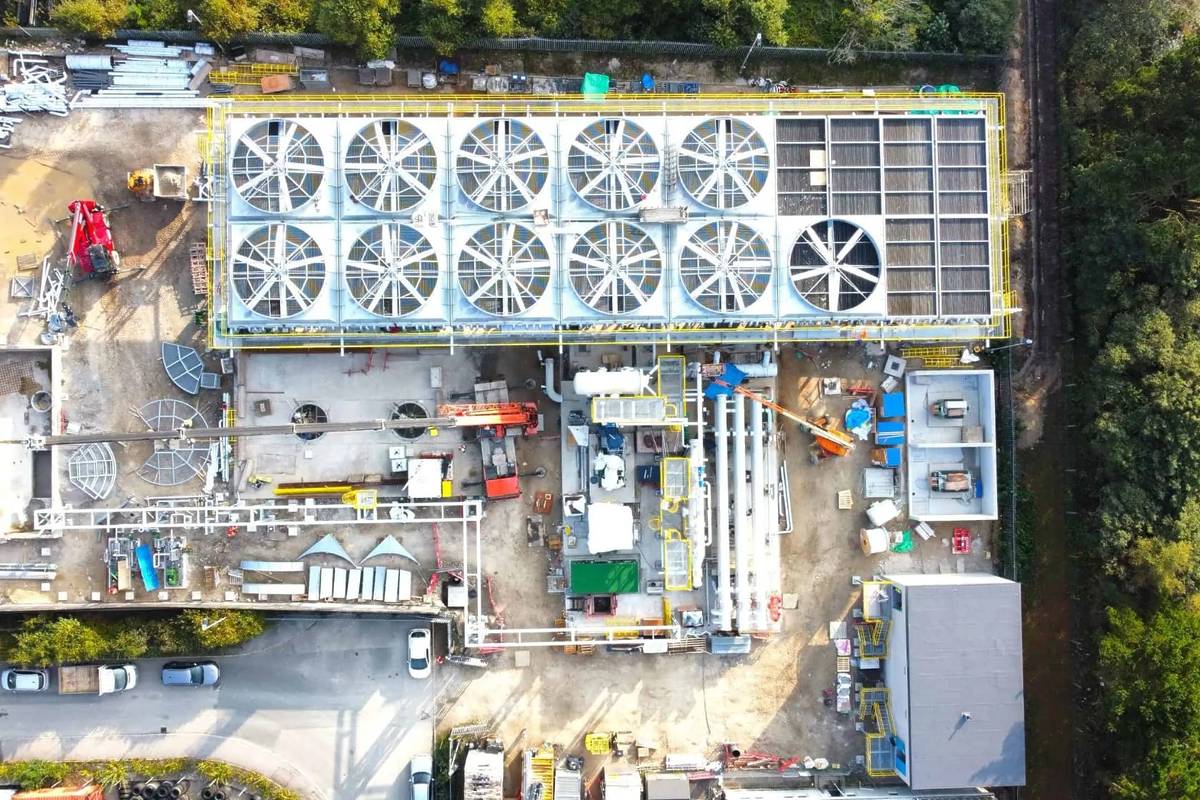
This morning (Thursday, February 26, 2026), the UK’s first geothermal power plant switched on. United Downs power plant will now produce three megawatts of electricity and power 10,000 UK homes using the Earth’s own heat, utilising the deepest onshore well in the UK.
It has taken Geothermal Engineering Ltd (GEL) 15 years to drill the hole, which goes three miles below the surface, and create the infrastructure for the power plant. On top of producing a completely new type of renewable electricity, the project has also provided the UK’s first supply of lithium, integral to storing renewable energy.
How does the geothermal power plant work?
At its most basic understanding, geothermal power is when water hits super-hot rocks (nearly 200°C), creating high-pressure steam that drives the turbines, which then creates electricity. With two more sites in the pipeline, Octopus Energy has already signed a long-term deal to purchase three megawatts of electricity.
“I’m tremendously excited after 15 years of hard graft, difficulties, we’re finally there,” said Ryan Law, CEO of GEL. “And unlike other renewable sources like wind and solar, we are constantly on 24/7 electricity.”
What about the lithium supply?
Alongside the geothermal power, GEL is also able to extract lithium carbonate from underground. This will be the UK’s first commercial source of the mineral, which is essential in the production of electric batteries, which are not only useful in powering electric vehicles (EVs), but storing renewable energy.
At first, only 100 tonnes of lithium will be produced, enough for 1,400 EVs annually, but the plans are to scale this to 18,000 tonnes annually. Currently, China controls more than 60% of the world’s lithium processing, and with demand only expected to rise, this supply may prove beneficial in the UK’s green future.