
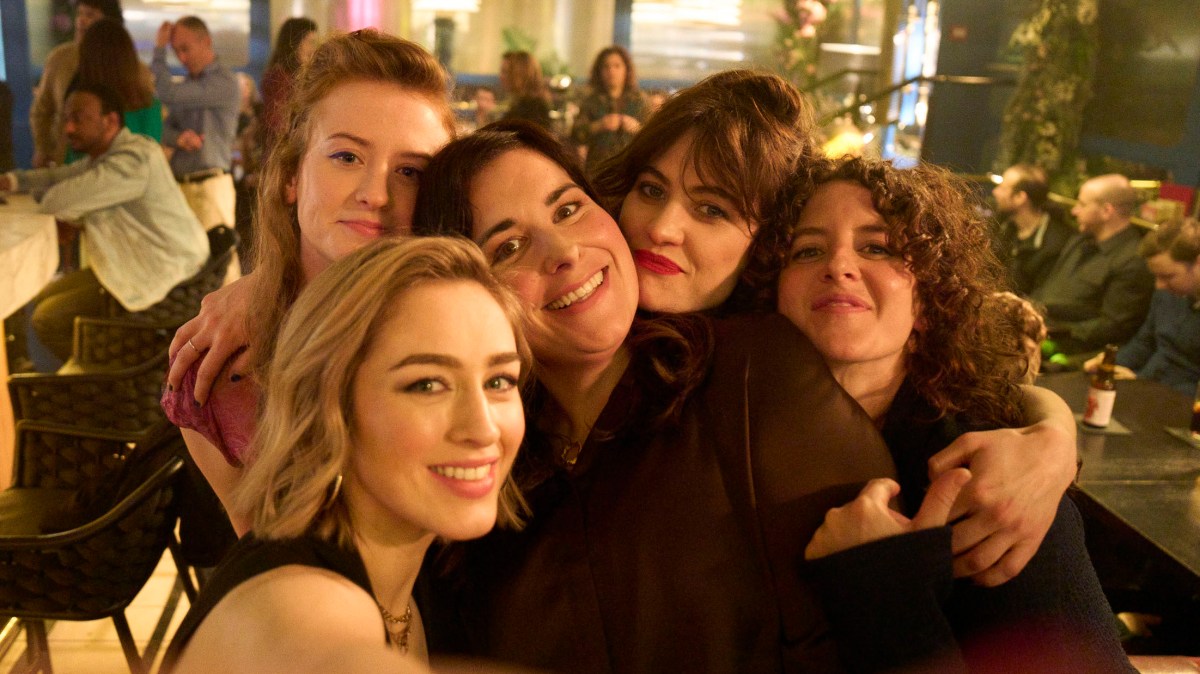
You couldn’t pay me to adapt a Marian Keyes novel for TV. Well, obviously you could — and frankly, I wish someone would — but what I mean is: turning two books by the mega-selling, pocket-sized Irish writer into a mini-series, as the BBC has just done, was always going to throw up some challenges.
Keyes specialises in blackly comic family dramas about loveable, mentally unstable women. The Walsh Sisters is a squashing together of two novels from her series about five siblings in suburban Dublin, Rachel’s Holiday from 1997 and Anybody Out There? from 2006. Dropping it on BBC iPlayer must have felt a bit like serving your first attempt at a lemon meringue pie to a table of ravenous shortcrust pastry aficionados. How would it go down? Keyes’s army of largely female fans — by one estimate, she sells 28 books in the UK every hour — have been waiting decades to see these stories on screen. Although Keyes, a factory of one, has produced 18 novels since 1995, only two have been adapted previously (which is a bit pathetic and points to the impressively resilient, against-all-evidence belief that women’s stories don’t sell).
So there’s a lot of excitement — not least from this particular evangelic Keyes fan — but also, a sense of: please don’t muck it up. No pressure, then, on Stefanie Preissner (who also stars as the only sensible Walsh sister, Maggie) and Kefi Chadwick, who adapted the books.
• Marian Keyes on The Walsh Sisters: ‘I was just so careless with myself’
The wizardry of Keyes’s writing is its tone: Febreze-fragrant, funny and comfortable, even as she steers you towards some of the more miserable parts of human experience. Her trick is the self-delusion of her narrators, who are usually charming Irish women up to their necks in denial about addiction, grief or despair. (“They said I was a drug addict… surely drug addicts were thinner?” is how Rachel begins Rachel’s Holiday).
By the time the reader has cottoned on to just how serious these stories actually are, it’s too late: we’re locked in. But without the crutch of a voiceover, which The Walsh Sisters eschews, how do you translate that delicate tonal balance of flippant and fraught to the screen? What sort of job does the show do at capturing Keyes’s peculiar charm?
A pretty good one, is my irritatingly vanilla answer (I can just imagine a Walsh sister eye-roll: “Is that a boring thing to say or what?”). The show takes a minute to warm up — I didn’t much like the first episode, but cheered up during the second and third — and a couple of the adaptation decisions are a bit baffling. Why, for instance, have the writers turned Mammy Walsh, played by Carrie Crowley, from a self-involved but loveable figure into a cartoon ice-monster? And why have they collapsed the transatlantic geography of the books — in which Rachel starts out as a party girl in New York — down to just Dublin, which strains the credulity of a key premise: that Rachel has become a depressed drug addict without anyone noticing? If it was a cost-saving choice, it was not a smart one. But put these niggles aside and it’s a very sweet watch.
The show preserves Keyes’s gift for sister-sister patter — an idiomatically Irish kind of brutality, undergirded by love. “I have news,” announces the about-to-be-divorced Claire (Danielle Galligan) at Sunday lunch. “Has Black Friday come early?” the stroppy youngest, Helen (Máiréad Tyers), deadpans back. We see drug-addled Rachel (Caroline Menton) and kind Anna (Louisa Harland) drunk in a bathroom one night, discussing their imminent conquests. “Do I look OK?” Rachel asks. A quick, appraising glance from Anna: “Yeah.” “Yeah, but would you want to ride me?” Another quick, appraising glance, and then a more forceful: “Yeah.” Friends are for sweetness and support — sisters are for telling you the truth.
• Read more TV reviews, guides about what to watch and interviews
It works because of the script (Keyes has a writing credit), but also the strong central performances from fairly new faces. Menton does a good job with the tricky task of conveying a character wobbling on the line between normal life and total self-destruction, but the stand-outs are Galligan (real warmth) and Harland, who is stiller and quieter than the others and seems to stockpile big reserves of emotion beneath all those red ringlets. The moment in the third episode when she receives some catastrophic news and immediately starts fussing about her Glastonbury ticket is viscerally upsetting.
Not a perfect adaptation but a pretty good one — and at least Keyes is finally on screen where she belongs. Actually, it’s striking how much stand-out TV comedy and drama of the past half-decade has been about young Irish women: Derry Girls, Normal People, Bad Sisters… At this point they are pretty much powering Britain’s cultural economy.
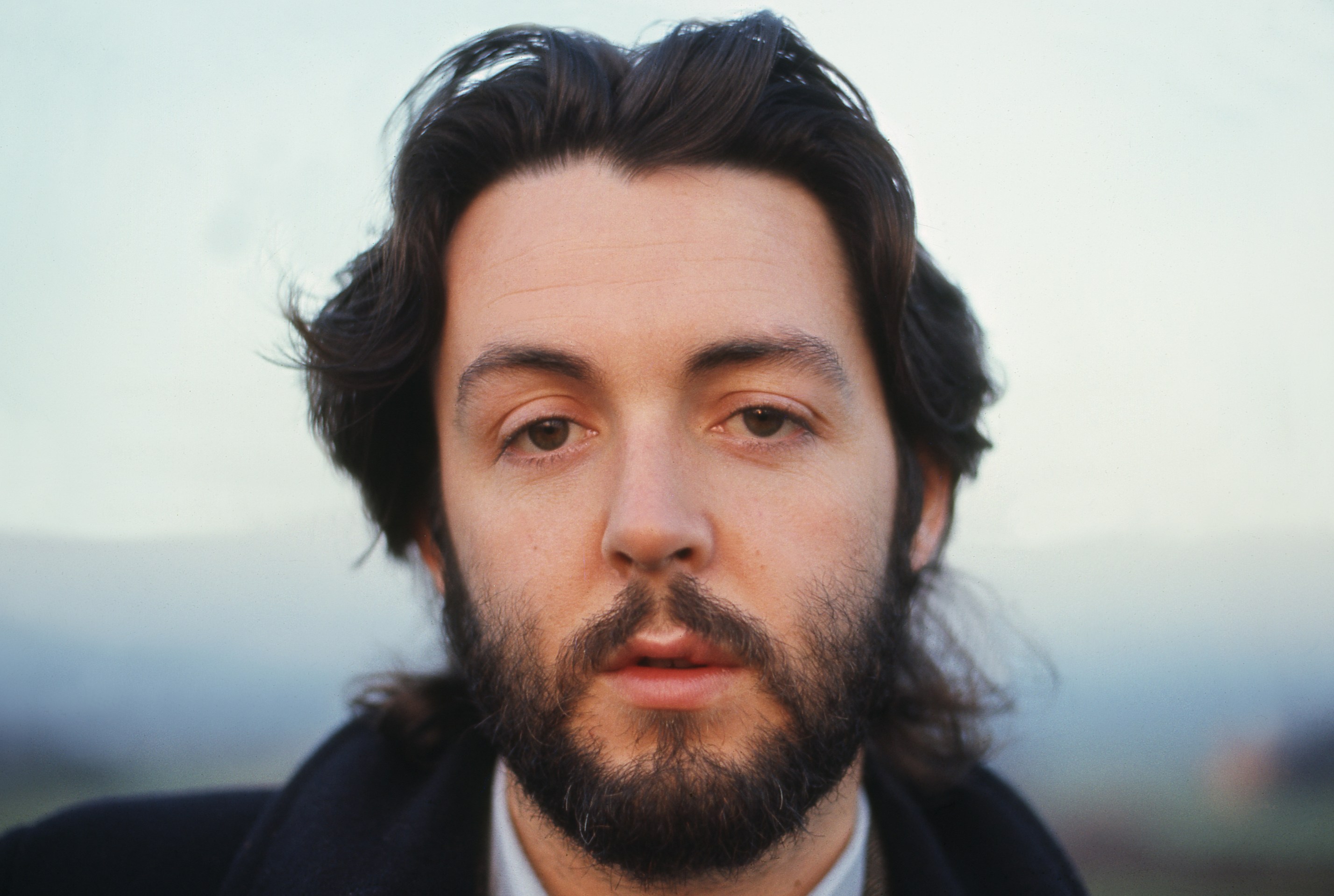
Paul McCartney is an executive producer of Man on the Run
Against my instincts as a good, eye-rolling, not-the-effing-Beatles-again Gen Zer, I fired up Amazon’s Paul McCartney documentary Man on the Run, directed by Morgan Neville. I feel I have to start preparing myself, spiritually and intellectually, for The Beatles — A Four-Film Cinematic Event, as the Wikipedia page modestly calls it, Sam Mendes’s flashy quartet of Fab Four biopics that somehow already has a release date, April 7, despite it being in 2028.
One person it’s tempting to blame for the endless Beatles circus is McCartney, who has seemingly rarely tired of retelling his own myth and is an executive producer of this film about his post-Beatles band, Wings, as is now customary with streamer celebrity hagiographies (see also Netflix’s Beckham and Amazon’s Melania).
But Man on the Run is not quite the two-hour puff job I had expected. It’s a surprisingly thoughtful, slightly melancholy portrait of a man wobbling at the end of a long adolescence, half wanting to stay young for ever, half desperate to grow up. McCartney was 27, my age, when the Beatles broke up, his life barely begun and yet somehow over.
“Historians may one day view this as a landmark in the decline of the British empire,” explains an earnest young American reporter from 1969 in shirt and tie. McCartney’s avuncular voiceover seems epochs away from the bristling, goofy young man bestriding his Scottish vegetable garden in the wonderfully intimate footage shot by Linda McCartney, much of it seen here for the first time. He is tugged in two directions.
On the one hand, newly married with young kids, he wants to burrow away on his Kintyre farm with his sheep and knitted jumpers. But he’s also addicted to the music, the writing and the road — the Beatles had barely broken up when he released his first solo album, McCartney, which was widely panned. And so, being not just anyone, but Paul McCartney, he comes up with a brilliant solution: instead of choosing between these two modes of living, he combines them. He turns the family life and the Scottish farm and the knitted sweaters into a band.
The music of Wings, which includes hits such as Silly Love Songs and Jet, has always been divisive (“Monumentally irrelevant,” said one critic), but what I realised while watching Man on the Run is that its cultural legacy had nothing to do with music. What Wings did was turn a family into a lifestyle brand. Today you can still see the influence of the wholesome, so-uncool-it’s-cool bohemia peddled by Paul and particularly Linda everywhere: in Glastonbury, Cool Britannia, chunky knitwear, hipster beards and a kind of middle-class metropolitan yearning for the good life in the country. Disconcerting to realise: I’ve been aping the Beatles.
Love TV? Discover the best shows on Netflix, the best Prime Video TV shows, the best Disney+ shows, the best Apple TV+ shows, the best shows on BBC iPlayer, the best shows on Sky and Now, the best shows on ITVX, the best shows on Channel 4 streaming, the best shows on Paramount+ and our favourite hidden gem TV shows. Don’t forget to check our critics’ choices to what to watch this week, and browse our comprehensive TV guide