
Introduction
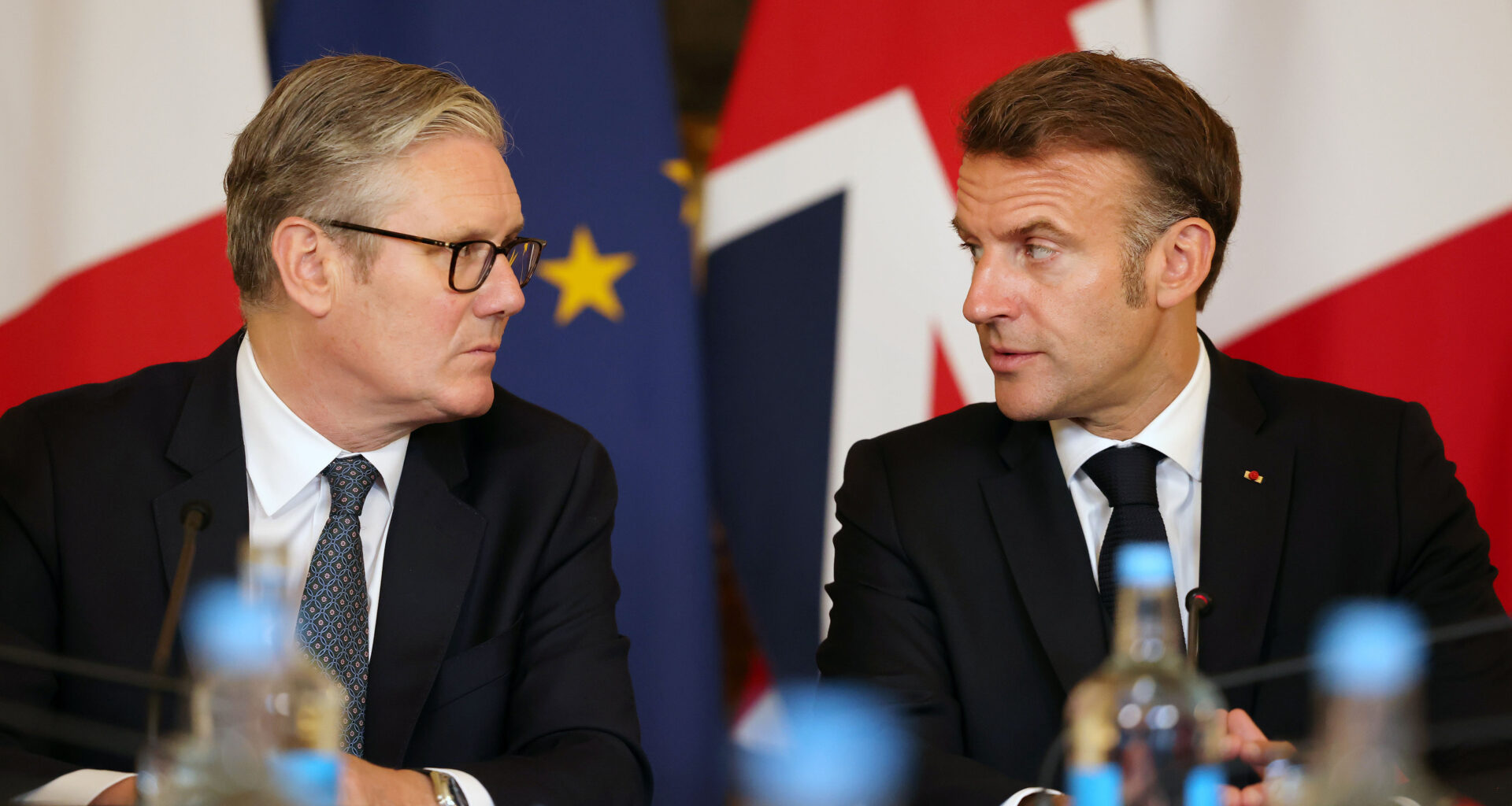
At the Munich Security Conference two weeks ago, British Prime Minister Keir Starmer and French President Emmanuel Macron underscored a deepening strategic alignment between their countries. Starmer emphasized “enhancing nuclear cooperation with France,” reflecting commitments under the Northwood Declaration signed last summer. Macron, meanwhile, argued that “this is the right time for audacity” in strengthening Europe’s security posture and support for Ukraine, reflecting a broader push for a strategically autonomous Europe. Together, these statements highlight the political context underpinning Northwood and its implication for the future of European deterrence.
The Northwood Declaration is an updated bilateral framework for nuclear coordination and introduces two major developments to reflect evolving strategic thinking in both Paris and London. On the one hand, the United Kingdom, whose nuclear deterrent has traditionally been closely aligned to the United States and declared to NATO, has emphasized a strengthened British contribution to the security of the European continent while remaining firmly embedded within the NATO alliance framework. On the other hand, France has moved beyond limited cooperation with the United Kingdom to establish a formal “coordination” on nuclear policy, capabilities, and operations. This is an unprecedented move from Paris, which has historically guarded its independence against any perceived encroachment.
While UK and French nuclear forces remain operationally independent, Northwood strengthens Euro-Atlantic security. With growing U.S. pressure for European burden-sharing, this declaration signals a stronger European pillar of deterrence that complements, not replaces, U.S. extended deterrence. Its dual approach—maintaining independence, whilst enabling coordination—represents a significant evolution in strategic thinking. This shift strengthens coordination between two sovereign nuclear forces without compromising their independence, framing deterrence as a shared response to extreme threats against the continent.
Ultimately, Northwood is politically significant because it enhances the credibility of a genuinely European contribution to nuclear deterrence and deepens Franco-British burden sharing. It serves to both reassure European allies and signal to Washington that London and Paris are stepping up as independent contributors to transatlantic security.
The real credibility of this shift, however, depends on translating these high-level commitments into concrete, practical measures. If realized, the declaration could catalyze a new European approach to nuclear deterrence more broadly, establishing a foundation for collective security while preserving national sovereignty.
A Heightened Franco-British Nuclear Cooperation
Franco-British nuclear cooperation has developed incrementally over the past three decades, driven by converging threat perceptions and a pragmatic recognition of each country’s role in European security. During the Cold War, nuclear relations between Paris and London were limited, reflecting divergent doctrines and contrasting alliance choices after the Suez Crisis. The United Kingdom embedded its nuclear deterrent within the U.S.-led NATO framework, whereas France pursued a strictly independent path outside of the alliance’s nuclear structures.
The mid-1990s marked the first meaningful convergence in Franco-British nuclear relations. The 1995 Chequers Declaration, negotiated after the U.S. cancellation of a planned British nuclear test in Nevada, marked the start of bilateral nuclear cooperation, focusing on information exchange, technical support, and reciprocal consideration of vital interests. Chequers remains a keystone of the partnership and has provided the foundation for later agreements.
The 2010 Lancaster House Treaties further deepened this cooperation, formalizing scientific collaboration through the Teutates program on warhead stewardship. These agreements built the necessary trust and interoperability for closer alignment while maintaining full national control over nuclear forces.
Building on this foundation, the United Kingdom and France refreshed their defense partnership in 2025 through the Lancaster House 2.0 agenda, which expanded cooperation into conventional mass, munitions, air and missile defense, and industrial resilience. This broader agenda reinforced the strategic context in which nuclear coordination under Northwood would occur, highlighting a comprehensive Franco-British approach to European and transatlantic security.
The 2025 Northwood Declaration represents the next stage in this 30-year arc of nuclear convergence, fitting a recurring 15-year cycle of renewal. Northwood sets out “three buckets” for formal coordination: nuclear policy, operational planning, and capability development. Central to this shift is the establishment of the Franco-British Nuclear Steering Group. Its inaugural meeting in December 2025, held alongside the unprecedented British observation of France’s Operation POKER, signals a willingness on both sides to invest political and bureaucratic capital in a long-term nuclear partnership. Beyond the symbolic gesture, the unprecedented presence of British observers at France’s sensitive Operation POKER was hailed by senior officials as a profound sign of confidence, signaling a shift toward genuine strategic intimacy.
The updated declaratory policy, stating that “there is no extreme threat to Europe that would not prompt a response by our two nations,” explicitly anchors both deterrents in a European dimension while reaffirming their contribution to NATO’s collective security. Under Northwood, the United Kingdom and France emphasize that their “nuclear forces are independent, but can be coordinated and contribute significantly to the overall security of the Alliance, and to the peace and stability of Euro-Atlantic area.” In France, President Macron will announce a new doctrinal discourse on nuclear issues in March 2026 which is expected to cover the “European dimension” of French deterrence. In the United Kingdom, a decision to acquire F-35As to support NATO’s nuclear mission signals a desire for greater operational flexibility. UK efforts to deepen cooperation with France through Northwood as well as joining the NATO mission—and initiating both almost simultaneously—could be interpreted as a dual strategy of strengthening both U.S. and French relations on deterrence.
More broadly, Northwood is also a direct response of the two countries to a deteriorating European security environment. Both the United Kingdom and France explicitly identified Russia as a direct threat in their 2025 strategic defense reviews, a shift that—combined with growing U.S. pressure for European burden sharing—forms the strategic backdrop to the renewed cooperation. Though under-recognized in Washington, Northwood demonstrates an unprecedented willingness to advance a European approach to deterrence. With Northwood, London and Paris are setting the stage for a more substantive, coordinated role in transatlantic security.
Milestone for Substantive Work Ahead
As Washington explicitly calls for Europe to assume more responsibility for its own defense, especially in the conventional domain, Northwood and Lancaster House 2.0 offer a blueprint for credible European deterrence, not only between France and the United Kingdom but with other European partners as well. Integrating the nuclear and conventional tracks in this way signals that London understands Washington’s burden-sharing message across domains and is investing in both the strategic and conventional foundations of European defense.
This is not a move toward isolation but an urgent necessity as European capitals weigh the long-term consistency of U.S. strategic priorities. Indeed, the language in the 2026 U.S. National Defense Strategy that a threat to a person halfway around the world is not “the same as to an American” has underscored the need for a more self-reliant European deterrent architecture. Crucially, operationalizing Northwood will require diplomatic finesse to ensure that this bilateral strategic cooperation reinforces, rather than undermines, the P3 (the United States, United Kingdom, and France) as well as European security. While Washington likely welcomes such tangible proof of burden sharing, U.S. officials will remain attentive to how this enhanced European deterrent pillar aligns with the broader NATO framework.
As previously mentioned, Northwood identifies three “buckets” for future Franco-British work: policy, capabilities, and operations. When accounting for their respective doctrinal red lines and the specific technical constraints of their arsenals, the scope for practical cooperation is naturally circumscribed to a few options.
Policy
First, Paris and London could move beyond traditional bilateral dialogue by systematically coordinating their positions in international disarmament and nonproliferation forums, building on Northwood’s commitment to uphold and reinforce international and nonproliferation architecture. This represents “low-hanging fruit” at a moment of perceived U.S. retreat from multilateralism, providing a way to uphold vital norms—such as the Comprehensive Nuclear-Test-Ban Treaty—in an increasingly competitive global environment. Furthermore, France and the United Kingdom could initiate in-depth doctrinal reviews as a first step toward defining the “European dimension” of the Northwood Declaration. Subsequently, they could convene strategic dialogues with interested partners, such as Sweden. Reaffirming that French and British deterrence are inextricably linked to, and not a replacement for, U.S. extended deterrence would serve to reassure both Washington and anxious allies alike.
Second, France and the United Kingdom could elaborate on their new declaratory policy with European allies through its reference to “extreme threats to Europe.” By adding this shared category to their sovereign definition of vital interests, the two governments create a broader, collective escalatory band that signals to Moscow that large-scale aggression against Europe could trigger a coordinated response. This layered approach strengthens deterrence by complicating an adversary’s calculations and widening crisis management options. Yet, expanded ambiguity is a double-edged sword: While advantageous against adversaries, it can create friction among allies if left unexplained. France and the United Kingdom will therefore need to reassure NATO partners that: (1) this language reinforces, rather than substitutes for, U.S. extended deterrence; and (2) their independent, coordinated deterrents continue to contribute meaningfully to the alliance’s collective security as well as peace and stability across the Euro-Atlantic area.
Capabilities
Deepening scientific synergy through the Teutates program would allow both nations to build a structurally resilient alliance capable of sustaining high-end deterrence independently. In particular, Paris and London could further standardize their diagnostic protocols through a “rapprochement” of their high-performance computing environment or quantum diagnostic tools. By aligning these underlying architectures, both nations can accelerate technical breakthroughs without compromising national warhead design secrecy.
Strategic cooperation should also continue in the non-nuclear domains with strategic weight, specifically Deep Precision Strike and Integrated Air and Missile Defense. These areas bypass a primary friction point in the nuclear domain: the difficulty of separating U.S.-sourced components from UK-origin elements in British nuclear architecture. From a French perspective, fostering such high-end capabilities could operationalize the doctrine of “mutual support” (épaulement) between nuclear and conventional domains, thereby providing European capabilities that strengthen the European collective posture. Building on the success of the SCALP-EG/Storm Shadow, Paris and London should continue pursuing joint development for next-generation strategic non-nuclear systems to reinforce NATO deterrence and defense as well as the broader European security dimension. While the primary objective is not the creation of a common nuclear weapon, such cooperation would provide a robust industrial foundation should the United Kingdom choose to pursue a future air-launched nuclear capability.
Any cooperation that touches UK systems with U.S. origin components will, however, require careful coordination with Washington. This is particularly relevant as the United Kingdom prepares to field the F35A for NATO’s nuclear mission, which aligns London more closely with established NATO nuclear architecture and contributes to alliance burden sharing, a priority for both Washington and the United Kingdom. Yet this step does not constrain longer-term options. It does not preclude a distinct Franco-British airborne pathway, which would require deeper integration between the United Kingdom’s Atomic Weapons Establishment and France’s Alternative Energies and Atomic Energy Commission, as well as potentially a “convertible” warhead design independent of U.S. components. Any such development would need to be positioned as complementary to NATO’s Dual-Capable Aircraft mission, reinforcing allied capabilities rather than duplicating or competing with them.
Operations
Finally, several concrete steps could be taken to give substance to the operational cooperation envisioned in the Northwood Declaration, beginning with peacetime operational synergy. Following the inclusion of UK officials in France’s Operation POKER, the next logical step would be the active participation of British conventional aircraft in an escort role or airspace-control missions during future iterations. Conducting these maneuvers outside French territory would amplify the European dimension of this cooperation and strengthen its deterrent signaling to adversaries.
Though less visible by nature, cooperation within the naval leg of the nuclear posture could be enhanced through coordinated submarine escorts prior to long-range patrols or synchronized port calls. These actions improve survivability by reducing predictability, sharing intelligence, and allowing limited mutual support—such as protective escorts or tracking of potential adversary antisubmarine activity—before the submarines enter deep patrol areas. They also provide a platform for deliberate strategic messaging.
As bilateral trust matures, this relationship could evolve to include joint training for nuclear command staff and complementary strategic signaling via coordinated sea patrols. Given that operational planning is a traditionally guarded sovereign domain, success will require a high degree of mutual confidence.
To ensure the long-term viability of these initiatives, both nations should focus on institutionalizing these workstreams. By embedding “Northwood” objectives into the career paths of senior military and civil-service personnel, the alliance can maintain strategic continuity and “weather-proof” the partnership against shifting domestic political climates in either capital.
From Declaration to Delivery
To provide substance to the Northwood Declaration, Paris and London must prioritize “quick wins” that signal tangible operational synergy. This should involve formalizing a structured sequence for 2026–27 POKER-type exercises, alongside reassurance flights and enabler events for ballistic missile submarines (SSBNs). To maintain strategic ambiguity, these commitments need not be date-specific; however, formalizing the sequence itself would demonstrate a meaningful shift toward deepened integration.
Politically, both capitals must further harmonize their definitions of “vital interests” and “extreme threats.” This is particularly timely if President Macron’s forthcoming doctrine speech further emphasizes the “European dimension” of French deterrence. However, this harmonization should be pursued through discreet strategic dialogues with allies rather than public codification, so that Paris and London can reassure European partners of a shared understanding of vital interests and extreme threats without revealing sensitive thresholds or operational intentions to potential adversaries. The articulation between these joint dialogues involving France and the United Kingdom, and the bilateral dialogues that France convenes on the “European dimension” of its deterrence (e.g., with Germany and Sweden) will have to be thought through as well.
While some analysts argue that France should join the Nuclear Planning Group (NPG), a smaller, dedicated European forum could allow more candid discussions on “vital interests” and conventional capabilities underpinning a “Europeanized” nuclear posture. This approach complements NATO, reflecting that the United Kingdom’s nuclear commitment remains firmly anchored in the NATO alliance, and offers a model for other European states to strengthen security without diverting focus or resources away from NATO. This does not preclude France from articulating how its policy aligns with NATO; rather, it provides a flexible architecture for those most directly affected by European security shifts. If Paris remains outside the NPG, the United Kingdom is uniquely positioned to bridge coordination between any European initiative and the broader NATO structure.
As the continent’s only two nuclear-armed states, the United Kingdom and France have a unique role to underpin the continent’s strategic stability. Yet nuclear forces are one part of a broader deterrence ecosystem that increasingly depends on credible conventional mass. Europe needs to develop interoperable strike, air defense, and enabling capabilities to ensure the overall European deterrence architecture is credible and flexible. This will allow the United Kingdom and France to anchor their nuclear dimension with conventional mass so that Europe can impose cost and manage escalation through non-nuclear means.
Finally, these advancements depend on proactive management of the U.S. relationship. For the United Kingdom, maintaining its nuclear partnership with the United States—anchored in the Mutual Defense Agreement—remains indispensable. To secure Washington’s endorsement and avoid miscalculation, France and the United Kingdom must maintain transparency regarding their deepened cooperation. Strategically, this cohesion is a necessity; Paris and London must avoid any vulnerability to Russian opportunism, which is often fueled by a perceived decoupling of transatlantic ties. This reassurance is vital for European allies and aligns with the Franco-British tradition of transparency within disarmament fora, demonstrating how the Northwood Declaration ultimately supports global nonproliferation goals and a stronger, more autonomous European pillar within NATO.
Astrid Chevreuil is a visiting fellow with the Europe, Russia, and Eurasia Program at the Center for Strategic and International Studies (CSIS) in Washington, D.C. Jonathan Burchell is a visiting fellow with the Europe, Russia, and Eurasia Program at CSIS.