
As one AI startup founder recently complained to me: “There’s a lot of slop in the air right now.”
He meant it as a double entendre.
While slop has come to refer primarily to low-quality, mass-produced digital content—specifically that which is generated by artificial intelligence (heck, the term is so pervasive that it was named the 2025 Word of the Year by Merriam-Webster)—he was also referring to it from a marketing perspective.
Simply put, many AI vendors and startups are trying to sell their wares to advisory firms that lack an adequate understanding of the technology and its underpinnings. And who can blame the advisors? They are busy working with their clients and within their established tech stacks, many of which have them locked into multi-year contracts.
Meanwhile, the world of AI is evolving at an unprecedented pace, far faster than those, like me, who either work in technology or have to keep track of it, can keep up with.
For example, we’ve already begun shifting from hearing about waves of generative AI products and services to what many now see as the next new thing: agentic AI.
I’ve been tracking the term’s use in the advisory tech world since 2024.
In the rosiest fantasy version of that world, every advisory firm will soon have at its disposal a virtual, fully digital workforce of autonomous agents handling the least glamorous work, freeing advisors, both experienced and new, to interact with clients and do more meaningful things—like focusing on organic growth.
Less clear is the architecture around agentic AI and who owns what and who has to manage and care for this new workforce, but for now, let’s start with how to think about agents.
My favorite explanation thus far comes from Vestmark Chief Technology Officer Freedom Dumlao, who said that an agent is a system that can do four things in a continuous loop: Sense, think, act and remember.
Sense refers to the ability to perceive its environment, not just through the user’s prompt but also with broader context, including the tools available to it (email, for example), what state the world is in and what has changed since its last interaction.
It can think in that it can reason on its own about what to do next, given its goal and its understanding of itself and the world’s current state. It can act on its own, whether that is calling on other tools, modifying data or triggering workflows; in other words, it produces observable effects. And finally, it can remember that the agent retains information across interactions and uses that information to improve future behavior.
“If your system does all four, it’s an agent. If it does two or three, it might be a useful tool, but calling it an agent sets expectations it can’t meet,” he said (and explicates this far more deeply himself in a very readable blog post).
Anthropic, at a mere five years old with around 3,000 employees, has now become one of the major players in the AI industry. Just a few weeks ago, it raised a $30 billion Series G funding round at a post-raise valuation of $380 billion (total funding of almost $64 billion).
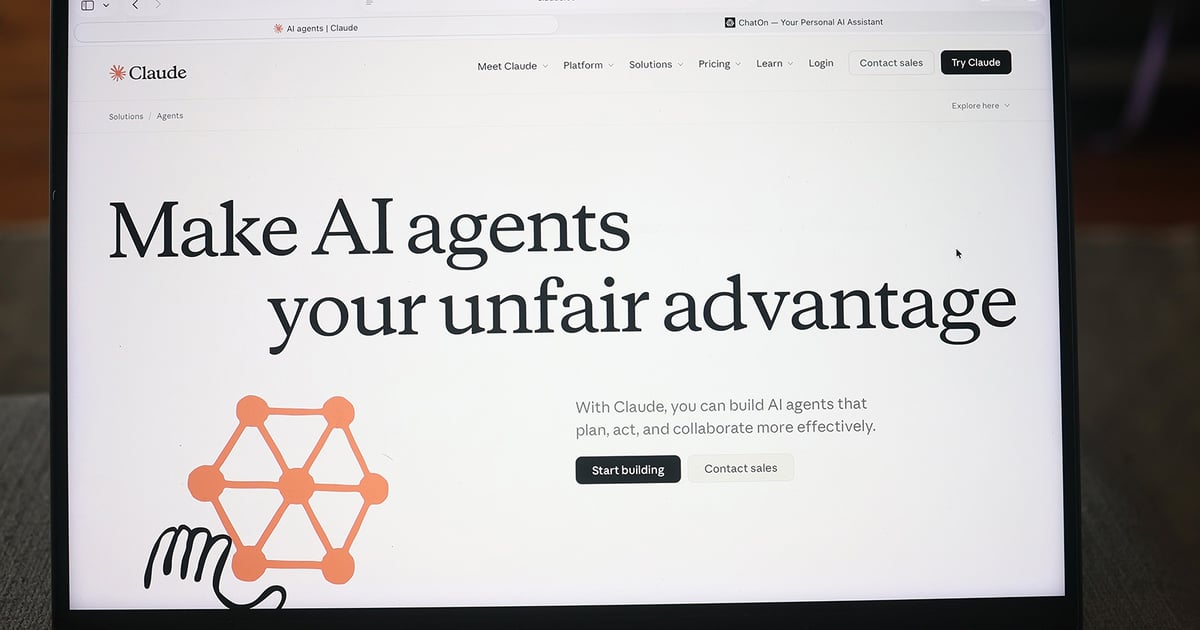
Earlier this week, Anthropic made big waves across much of the financial services world, including immediate ripples in advisory tech with its announced availability of Claude CoWork plug-ins, including some specific to wealth management. The latter, according to the company, will be able to perform automated portfolio and tax analysis, make rebalancing recommendations and execute rebalances at scale.
This has the potential to upend a developing ecosystem of entrepreneurs and developers within what I will refer to for the purposes of this column as AI middleware engineers and providers who have been hard at work taking the large language models of the major AI companies, including OpenAI, Anthropic and Google DeepMind and customizing them for advisory shops and firms.
Keep in mind that Anthropic is the second-largest (across several measures) of the big three, and its move this week could be followed by similar rollouts from the others and other large competitors looking to capitalize on the need within the wealth management and financial services sectors.
All that said, let’s not count out a tremendous amount of innovation that has gone on within the comparatively small but hot cauldron of RIA-driven, RIA-specific agentic or agentic-like startups. In my next column, I’ll share some of what I’ve learned and distilled of late from more than a dozen co-founders and developers working for and selling to advisory shops.
I’ll end this week on the words of one, Mike Shannon, co-founder and CEO of Impruve whom I’ve gotten to know over the last six months since meeting him and his co-founder brother, Danny, at the XYPN AdvisorTech competition in Austin.
They had already been working with advisory firms on the use of Anthropic’s Claude and various Claude tools long before this week’s announcement, in addition to their own development as an AI steward for wealth management, where they tailor agentic workflow development to a firm’s existing tech stack and data requirements.
“It’s why we think we have something with our Impruve Approach, our hybrid model where we begin with a consultative approach and identify the data or process gaps that will most immediately benefit the firm or improve ROI,” he said, noting one of the startup’s mottos, which is “realize your first valuable AI workflow in 30 days.”