
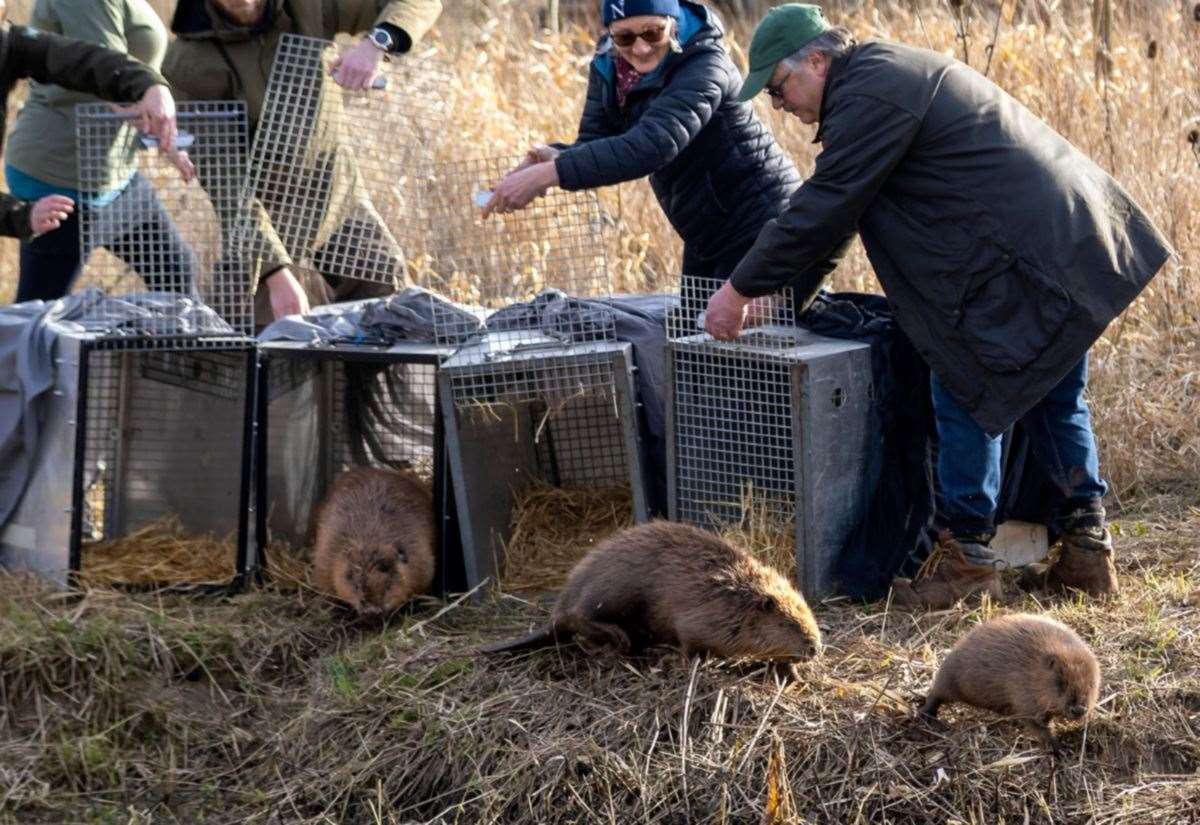
A family of beavers has been released into a nature restoration site near Grantham.
The four beavers were released into the 200ha enclosure at Boothby Wildland, a 617-hectare site near Grantham owned by Nattergal. It is England’s largest enclosure and will enable the beavers, from Scotland, to re-establish dynamic natural processes over a large area.
The release was facilitated by Beaver Trust and it will help restore the West Glen River to its natural shape after centuries of human engineering, restoring biodiversity and supporting local flood alleviation.
 A family of beavers has been released at Boothby Wildland near Grantham. Photo: Supplied
Lorienne Whittle, rewilding landscapes manager at Nattergal, said: “After much planning and preparation, we’re so excited to see the arrival of beavers at Boothby Wildland and cannot wait to track and share the impact of these fabulous ecosystem engineers.
“We’re equally overwhelmed with the response from the local community – whether its local children creating beaver inspired artwork, our volunteer taster session getting fully booked in a few days, the surge in interest in our wildland tours or businesses getting in touch to enquire about our biodiversity net gain units – it’s wonderful to see this support for nature recovery in Lincolnshire.”
The re-introduction marks a major milestone in Boothby’s long-term vision to restore natural processes across the West Glen River and wider site. Boothby, purchased by nature restoration specialists Nattergal in 2021, has completed a multi-year transition away from intensive arable farming of the grade three soils and is now letting nature take the lead.
A family of beavers has been released at Boothby Wildland near Grantham. Photo: Supplied
A natural solution to water, wildlife and landscape recovery, beavers are “ecosystem engineers”, renowned for their ability to re-shape waterways, create wetlands, and slow the flow of water. Their dams help alleviate flooding by slowing peak water flow and creating wetland habitats that attract a wide range of wildlife — from amphibians and birds to invertebrates and plants.
Their re-introduction is a key element in Boothby’s efforts to “re-wiggle” the historically straightened and deepened West Glen River, which had previously been modified to remove water quickly from surrounding farmland. Restoring the river’s natural hydrology is expected to help increase water retention on site, support the development of wildlife-rich wetland habitats, and help mitigate problematic local flooding.
Boothby’s on-site team has undergone specialist training and certification, completed the installation of over 6,000m of bespoke fencing, and captured two years of monitoring to understand the existing wildlife value, water quality, levels, and flow to then track improvements over time.
The enclosure and release were also guided by a feasibility study conducted by Beaver Trust, assessing habitat suitability, hydrology, and long-term management considerations.
A family of beavers has been released at Boothby Wildland near Grantham. Photo: Supplied
Community volunteers have helped with willow whip planting, maintaining monitoring equipment, and supporting the infrastructure needed for the UK’s most ambitious beaver rewilding enclosure.
The project builds on extensive community engagement, including early in-person and online consultations and monthly walk-and-talk events, ensuring local voices are part of Boothby’s evolving landscape story.
Dr Roisin Campbell-Palmer, head of restoration at Beaver Trust, said: “Our feasibility assessment showed that Boothby Wildland has the space, hydrology and long-term management commitment needed to support beavers successfully. Working with the Nattergal team and seeing that groundwork translate into this release is a great moment for this nature restoration project.”
The beaver re-introduction has been made possible by Nattergal’s blended finance model that includes private finance from the sale of natural capital units, such as through mandatory biodiversity net gain as well as carbon credit sales.
Boothby Wildland was also the first project to enter a 30 year agreement through the Government’s Landscape Recovery scheme which has supported the development of the wider project.
In the spring, Boothby Wildland will open for guided visitor tours. These immersive experiences will offer a rare opportunity to witness beavers’ transformative impact on the landscape and learn more about how rewilding supports natural flood management, biodiversity recovery and climate resilience. Family-friendly tours during school holidays have also been. Tours can be booked online at boothbywildland.com.
Volunteer Sue Gammons added: “Over the past two years, volunteering regularly at Boothby has been extremely rewarding, seeing the landscape evolve first hand and the diversity of mammals, birds, flowers, and insects flourish. I’m especially excited about the beavers’ role in shaping the ecosystem, as their efforts are likely to create new wetland areas, boosting biodiversity even further and contributing to a healthier, more dynamic environment.”