
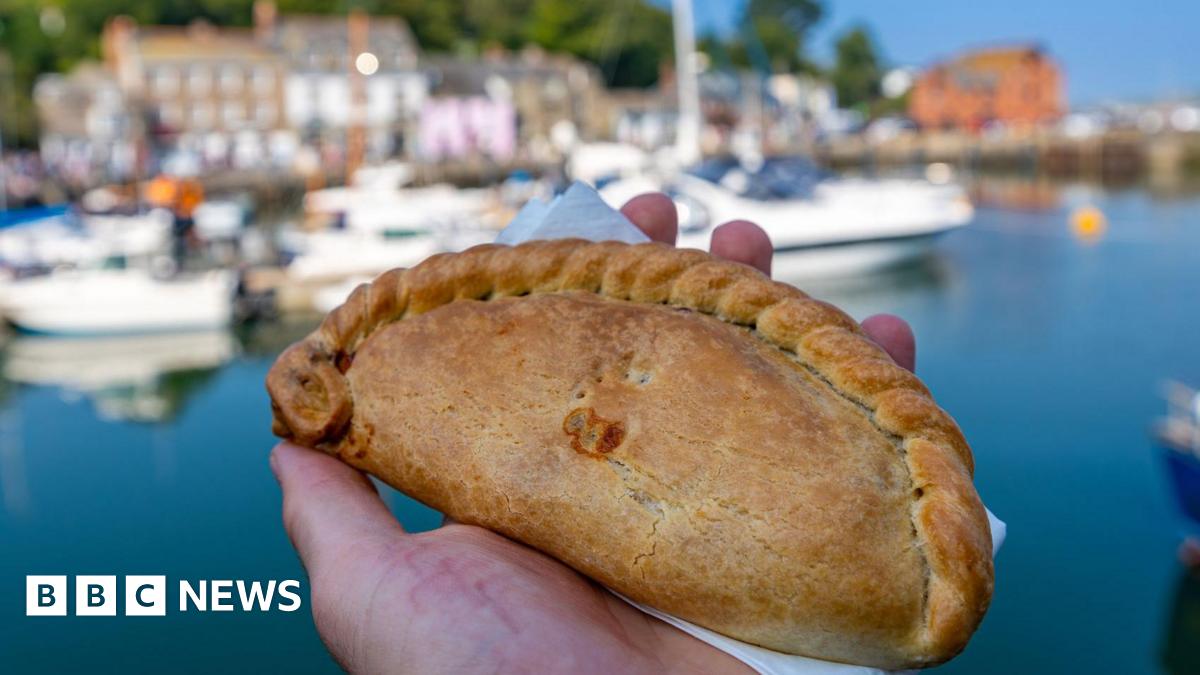
At Camborne Science and International Academy, students recently learned the art of crimping – the defining skill behind the pasty’s distinctive edge.
Grace Lobb, from the Cornish Pasty Association, said: “Pasties are tied up with our culture and heritage – it is part of who we are.
“I think it is essential all kids learn to cook but especially a pasty.”
Leia, 14, said her first time crimping a pasty had turned out “not that bad”.
The Cornish Pasty Association says an authentic example, external should have a distinctive “D” shape and be crimped, or folded into a rope-like pattern, on one side – never on top.
The rules also state that the filling needs to be “chunky”, made up of “mince or chunks of beef with swede, potato and onion and a light seasoning”.
The pasty itself should be made up of at least 12.5% meat. No artificial flavourings or additives can be used and all ingredients must go into the pasty raw.