
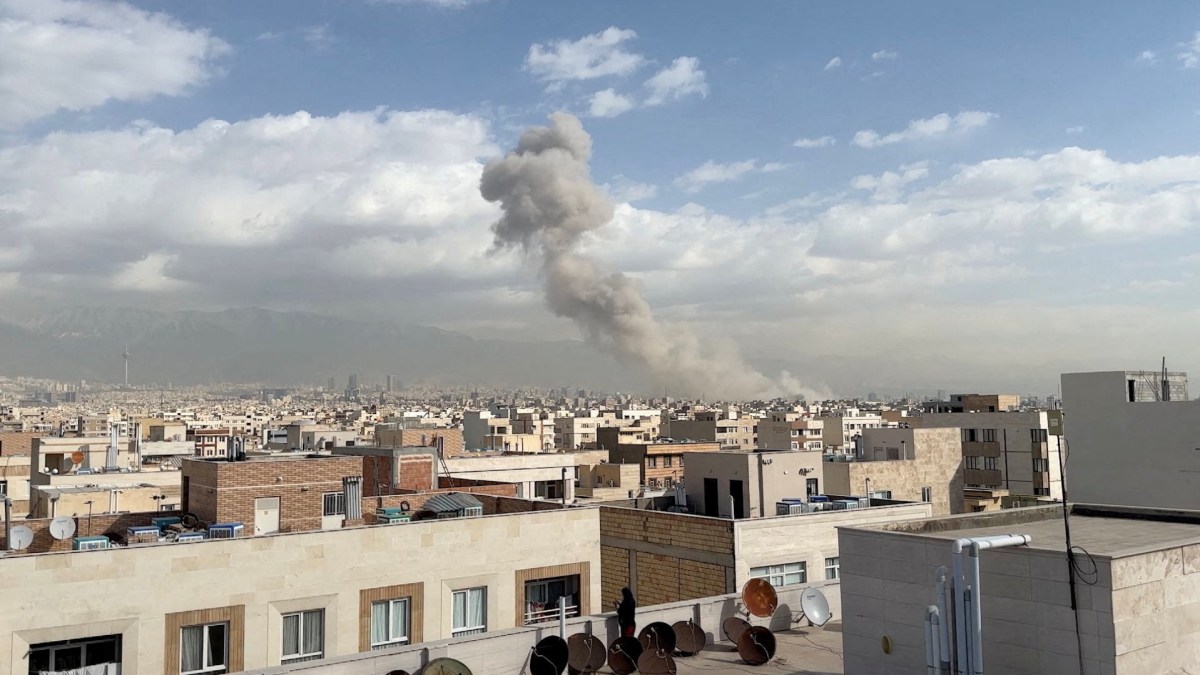
Patience with diplomacy has expired, and a major military onslaught against Iran has started. As with any strategy for victory, the military means will need to be matched to achievable ends.
It seems from the outset that President Trump is setting the most ambitious objective: toppling the Islamic regime of the supreme leader Ayatollah Ali Khamenei. Announcing the strikes on Saturday, he talked about the regime’s “unending campaign of bloodshed and mass murder” against the US and its allies, as well as telling Iranians, “your hour of freedom is at hand”.
Professor Ali Ansari of St Andrews University believes “it’s a huge gamble”. With talk now of deposing the Islamic regime, he adds: “A lot of assumptions will be tested in the next few weeks, but much will depend upon how the Iranian population reacts — that’s the key question.”
Despite the importance of this moment, the firepower that the US is able to devote to this task is far less than was used to topple Saddam Hussein’s Iraqi government in 2003, which poses many questions and will define certain aspects of the campaign. In the first place, the Pentagon is doing this hand in glove with Israel, whose powerful air force already demonstrated its ability to take control of Iranian skies during the 12-day war of last June.
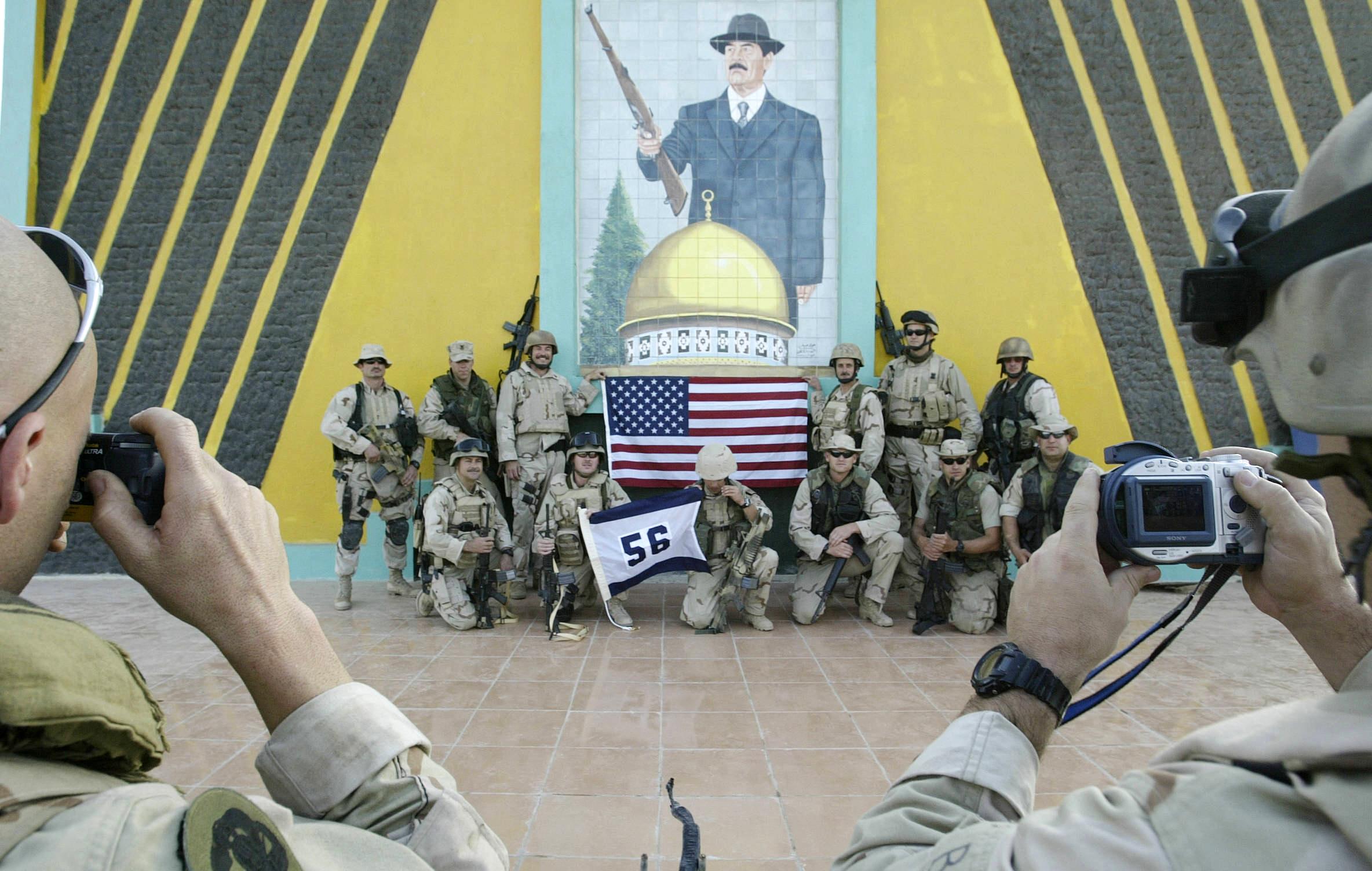
US navy personnel in Iraq in 2003. The US is not committing the same resources to topple the supreme leader
CHRISTOPHE SIMON/AFP VIA GETTY IMAGES
• Iran latest: US and Israel launch co-ordinated attack, says Trump
If the partners now attacking the Islamic Republic are in earnest about toppling its clerical leadership, they will have to reckon it could be a long war. Why would Iranian leaders make further concessions, for example on nuclear or missile questions, if they understand the survival of their 47-year-old revolutionary state is the real issue now at stake?
It is conceivable that these US messages about regime change, and similar ones on Mossad’s social media channels, are intended to frighten Khamenei’s people into capitulating rapidly on nuclear and other topics. In an apparent attempt to separate the fate of those opposing the regime and the deadlocked talks with that same government, Trump told the Iranian opposition to stay sheltered while strikes were ongoing and to take over their government “when we are finished”.
Will those around Khamenei appreciate that distinction? Given the language used by Trump, and the possibility that ordinary Iranians will now rise up, any deal with the existing authorities could end up looking like a betrayal of the blood price being paid on the streets.
The military planners must assume that messages about regime change will cause Iran to escalate to the limit of its abilities. These could range from attempts to close the Strait of Hormuz, a choke point for a big part of the global oil trade, to missile attacks on Israel or other US allies, and direct action against American interests throughout the region.
As Saturday progresses, the evidence appears to show that the Islamic Republic is following through on earlier threats to respond to any attack with a response across the region. There were strikes reported on the US navy headquarters in Bahrain as well as other facilities in Kuwait and the UAE.
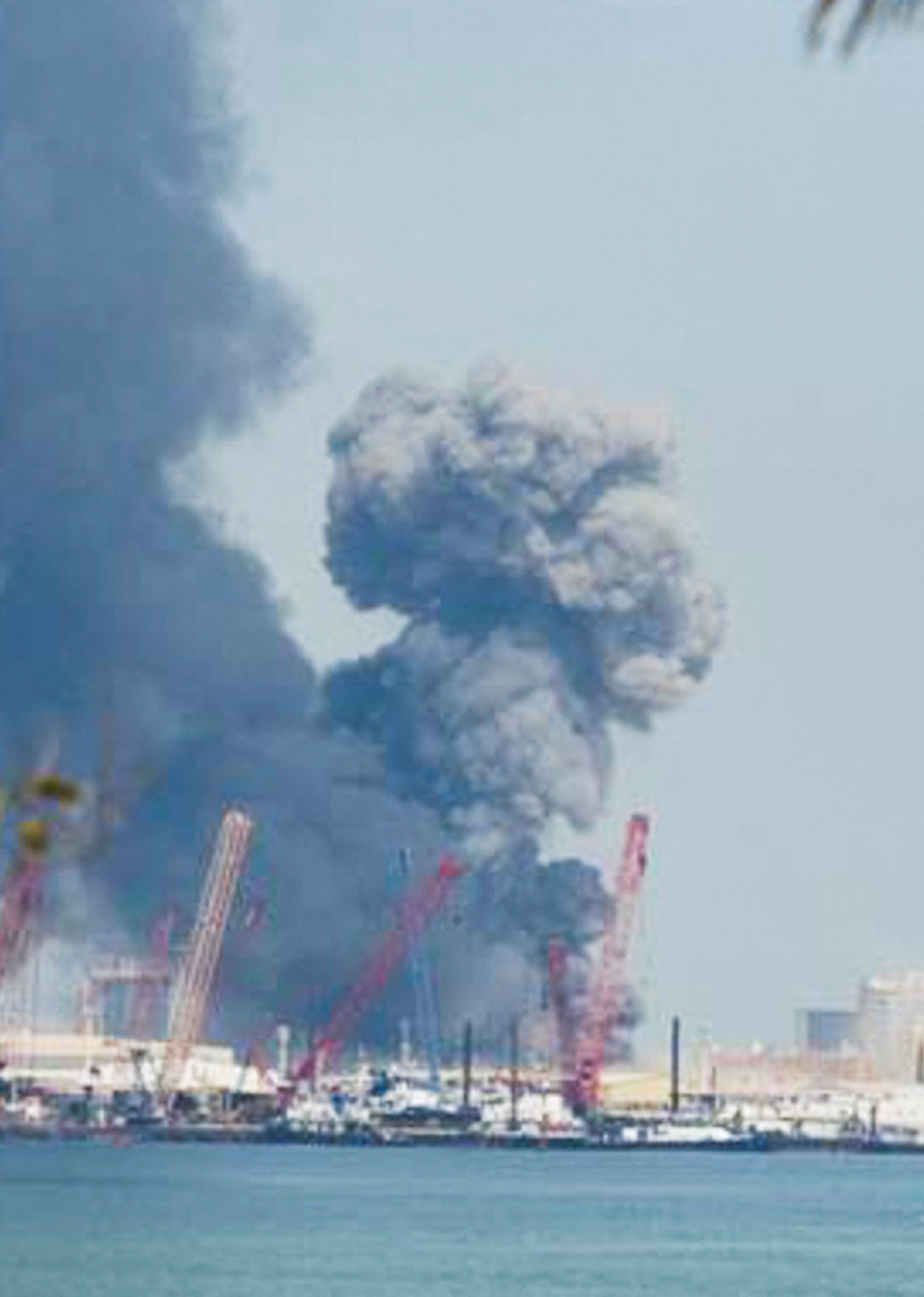
The US base in Manama, Bahrain, was attacked
REUTERS
In order to meet this challenge in a campaign that could easily last weeks, the US and Israeli military have therefore picked a range of targets. Early reports from Iran indicate that the allies struck leadership facilities, doing it in the morning to catch people there at work, as well as air defence sites, ballistic missile facilities and naval bases.
The question, though, is how long they can sustain this bombardment and whether Iran, sensing these limits, will hunker down to protect key weaponry, while maintaining its system of internal repression for as long as possible. There is evidently concern in the Pentagon about this, with leaks last week having suggested that if the bombardment continued for more than ten days, US stocks of certain missiles could start to run low.
During the long years of operating in Iraq and Afghanistan, the US cut investment in things irrelevant to fighting those insurgencies, such as missile stockpiles. Now, having expended large numbers of them supporting Ukraine, bombing the Houthis in Yemen and supporting Israel in its earlier battles with Iran, the lights are blinking amber on holdings of certain critical munitions.
In the coming days Iran will likely launch ballistic missile attacks at Israel and at US bases in the Middle East, this critical contest pitching the incoming Iranian warheads against a defensive shield of Arrow, Patriot and THAAD batteries. By using their launchers, the Iranians will expose them to destruction by US or Israeli jets, while thwarting the rockets that do get airborne poses its own challenge.
What we have already seen, through reprisal attacks on the Gulf states, is that attacking places much closer to Iran than Israel will allow them to use hundreds of short-range missile launchers that were not targeted by Israel last June. This will alarm Gulf rulers, while further taxing the Pentagon’s ability to protect its allies.
There are particular concerns about interceptor missiles that would be used to shoot down incoming warheads — 20 to 30 per cent of US stocks of the SM-3 (fired from warships) and land-based Talon were already used up during the exchanges of 2024 and 2025.
“Right now, I would not describe the situation as critical”, says John Ridge, an open source analyst, “but further significant expenditure would strain our ability to resource other operational plans, such those in the Indo-Pacific area, with respect to a China contingency.”
Containing Iran’s missile arm could expose the US to greater risks downstream, for example if China moves against Taiwan — and this creates unease in the Pentagon. If the Iranians get “lucky” and hit key targets in Israel or elsewhere, it will boost the morale of regime supporters and embolden them to continue the war.
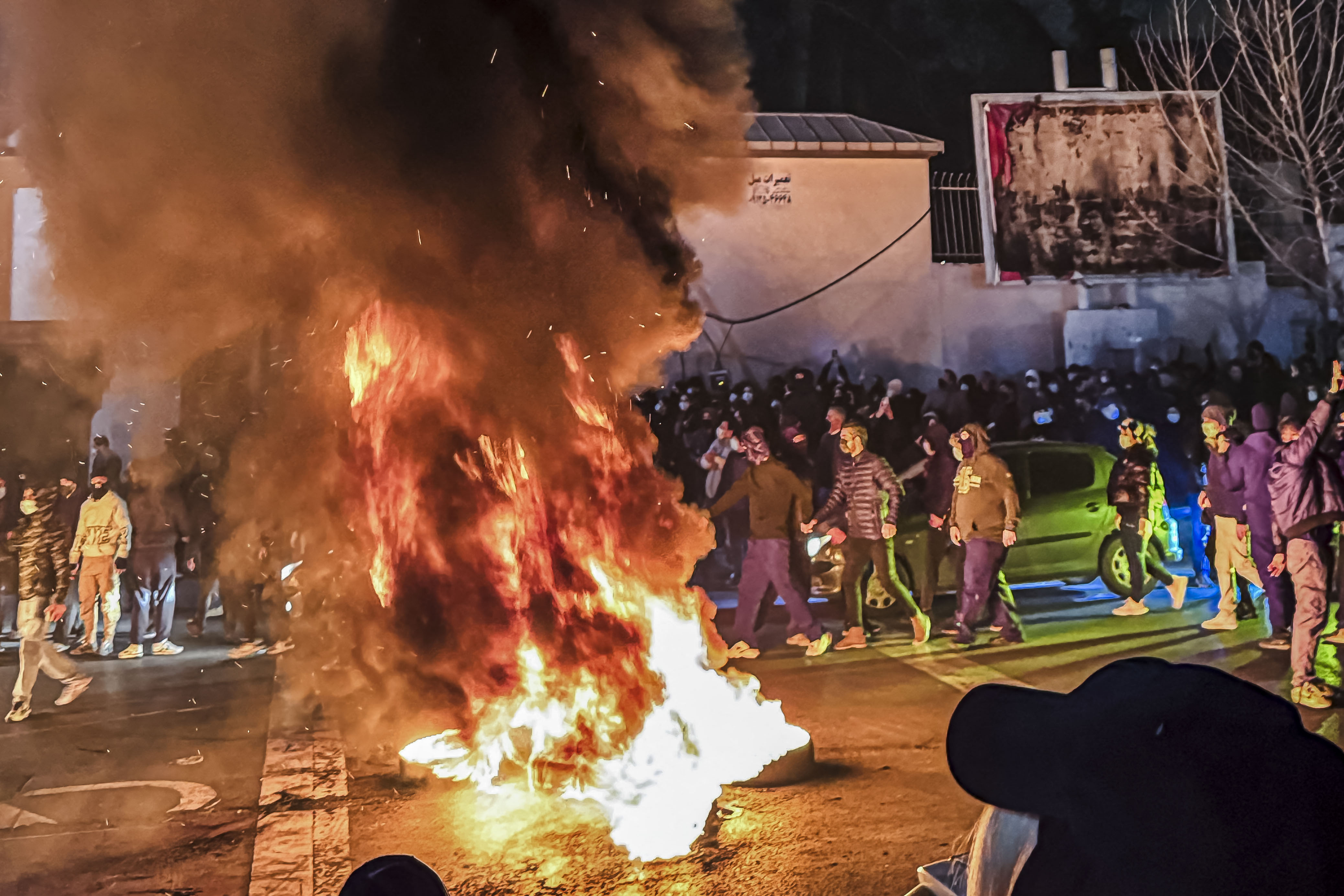
There were nationwide protests in Iran at the start of the year, which Trump promised to support
MAHSA/MIDDLE EAST IMAGES/AFP/GETTY IMAGES
If the regime resolves to fight to the last extreme, Trump could then face choices about whether to escalate the use of force, perhaps targeting oil installations to hurt Iran’s economy. Khamenei’s people will be hoping that, as the pain level increases, Iranians will rally round the flag — as they did to an extent during last year’s battle with Israel.
What if it goes the other way, and the opposition does begin to challenge their leaders again on the streets? Unlike 2003, when armoured divisions had been assembled on Iraq’s borders, the US has no meaningful force of “boots on the ground” to assist any uprising by the Iranian opposition.
The regime can still likely count on millions of supporters. January’s scenes, in which tens of thousands of protesters may have been killed, could be repeated on an even larger scale. And just as the Iranian regime portrayed the Israeli agreement to a ceasefire last June as a victory, so any attempt by Trump in the coming weeks to end this because it has become too messy, or the Pentagon is uneasy about an open-ended campaign, could simply end up strengthening the very system that the president would like to destroy.