
A worker’s club by tradition, the history of Ardeer Golf Club is closely linked to the local operations of chemicals manufacturer ICI in Ayrshire. In the past it drew much of its membership from the industrial works, but numbers have declined in recent years amid fierce competition from other clubs and courses in the area.
A former greenkeeper at Ardeer, George Taggart set up GT Groundcare, a specialist turf contractors, in 2018. In collaboration with the club’s management committee, his company recently took over operational control at Ardeer as part of a long-term development strategy with up to £200,000 of course investment to follow.
Ken Smith, the club’s treasurer and house convenor, has been a member of Ardeer for four decades and has served on the club committee for many of those years. He explains how the new structure will hopefully secure the club’s future.
Ardeer is the fourth-oldest golf club in Ayrshire – tell us a bit about its history.
The club was founded in 1880 on the seafront at Stevenson Shore. In 1903, due to subsidence and flooding, it moved to a site adjacent to ICI Nobel and then in 1965, ICI decided to build a factory on that land and wanted part of the golf course, so they agreed to purchase three separate pieces of land north of Stevenston, join them together and create a new Ardeer Golf Club on the current site.
The club has been there ever since, and many of the older members still remember literally lifting the original greens from the shore course, bringing them up to the new ground, and then relaying them.
Why has the club struck this deal with GT Groundcare?
At the moment we have 217 members, which really isn’t enough to sustain the club comfortably.
The cost of maintaining the course has risen sharply in recent years and golf generally has become incredibly expensive for people, so trying to balance rising costs against what members and visitors can realistically afford has been very difficult. Around Ardeer there are about 38 golf clubs within roughly 20-25 miles, so competition is intense and you’re constantly thinking about special deals and offers just to get people in the door.
The club and the golf course have effectively been split into two separate entities (Image: Supplied)
How does the new arrangement work in practice?
We were already using GT Groundcare to maintain the course, and we’ve now reached an amicable agreement on the cost of golf. This allows a practical approach to membership and a number of choices for members. That also allows us and GT to see clearly what income is coming in and gives them the confidence to invest in the course work that needs doing.
In parallel we’ve effectively split things in two: “Ardeer Golf Course” on one side and “Ardeer Golf Club” on the other. The club will continue to run the social and competitive side – competitions, memberships, handicaps, use of the hall, et cetera – while GT Groundcare looks after course management, cutting and presentation, and improving the course to the best possible condition.
What’s the legal framework?
Ardeer operates as a community amateur sports club, so it is guided by the relevant regulations on who it can admit and what it can charge. That means the club must be open to everyone regardless of ethnicity or background and that the asset can only ever be used or sold on to someone who will maintain a golf club on the site, not for other types of development.
An overview of the course from the mid-1960s, when the club moved to its current site (Image: Supplied)
The guidelines also influence how much we can charge for golf, and within that framework we’ve actually reduced prices: at weekends a round is £20, and Monday to Friday it is only £10, deliberately pitched to encourage people from the local community to come up, try the course, and hopefully join the club.
What about membership fees?
We’ve set £500 for full membership and £360 for other categories, which gives unlimited golf, and then £200 and £100 to join the club itself dependent on category. The club portion covers having your handicap looked after, access to competition golf, use of the function hall and all facilities, games room, snooker and simulator, and a discount at the bar, as well as the broader social side of being part of the club.
What’s in it for GT Groundcare?
They have set up a not‑for‑profit company specifically for this project, and part of the attraction is to showcase what they can do for their wider business. They already look after football pitches, bowling greens and some other golf courses, and recreational facilities, so Ardeer will be a live demonstration of their expertise.
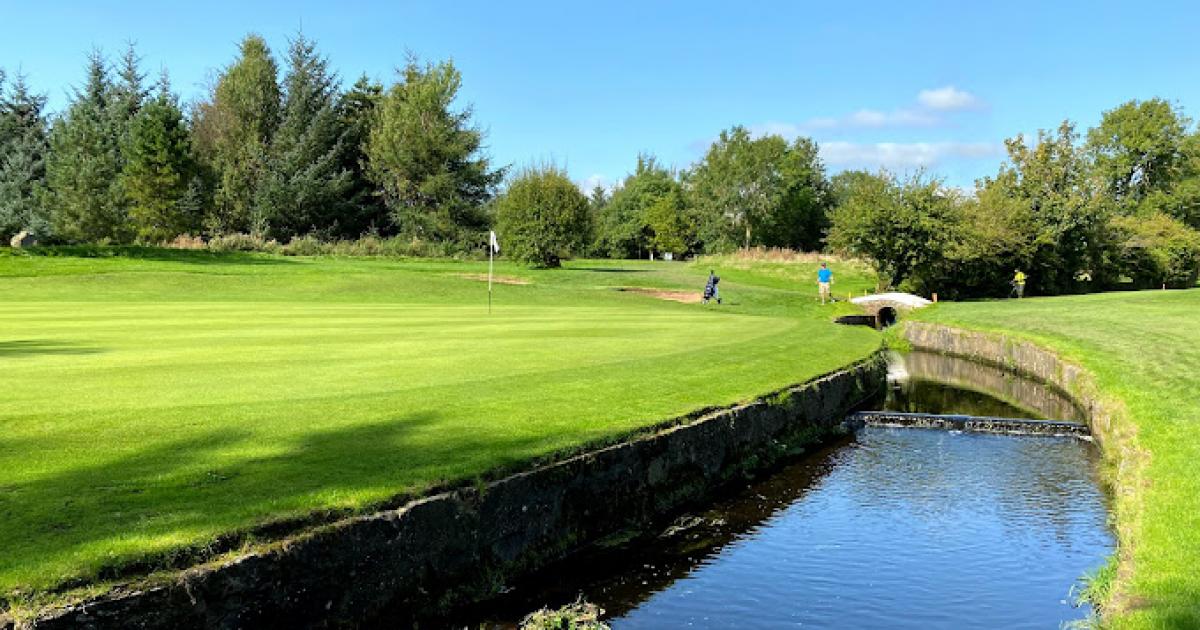
The 11th green at Ardeer (Image: Supplied)
The agreement is structured as a kind of lease arrangement and the hope is that it will run for around 10 to 15 years, giving enough time for investment in the course to pay off.
Where does junior and community access fit in?
They are the future and we have to be guided in a system that suits us looking forward.
More broadly, the whole direction of travel is about affordable golf: keeping the cost of play down, giving local people a realistic chance to take up the game and, at the same time, preserving a historic club and course that many in the area are very attached to.
Click here to sign up for The Herald’s Business of Golf newsletter, out every Sunday.