
When Domino’s Pizza came to Britain in 1985, its promise was simple: one call does it all. Pick up the phone, and you’ll have a steaming hot pizza at your door in less than half an hour.
A quaint prospect in the age of Deliveroo, perhaps, but it was revolutionary at the time. Four decades later, there are more than 1,300 Domino’s stores across the UK and Ireland, selling about 112 million pizzas every year, with sales of more than £1.5 billion in 2024.
This time two years ago it all seemed to be going so well. Domino’s was planning to open a further 70 sites and push into more rural areas, led by its well-liked and experienced chief executive Andrew Rennie.
Now though, the picture is very different. Rennie left abruptly last November after suggesting that Britain might have hit peak pizza. As it prepares to unveil its full-year results on March 10, shares in the company are trading at their lowest price in more than a decade.
So what’s gone wrong for Britain’s biggest pizza chain? Largely it is a question of economics. Profits plunged by nearly 15 per cent over the first half of its last financial year, which it blamed on weak consumer confidence and rising wage bills.
The latter issue has become particularly onerous since April last year, when high employer national insurance contributions introduced by the chancellor, Rachel Reeves, kicked in alongside a significant hike in the minimum wage.
The company has hit customers with higher prices, warning in early November: “Franchisees have had to tactically increase price alongside targeted value deals, in order to partially mitigate higher wages and employee taxation and maintain the high service that our customers expect.”
At the same time, competition has intensified. “The range of pizza brands that exist now, we are getting New York, Newhaven, Rhode Island, even ‘Grandma-style’ pizza — but Domino’s is still doing the same style,” said Simon Stenning, founder and chief executive of advisory firm Future Foodservice.
Newer chains such as Franco Manca, known for its sourdough bases, and Rudy’s, which sells more authentic Neapolitan pies, “moved the market on”, he added, although Franco Manca itself recently drafted in Alvarez & Marsal to explore a sale after racking up losses.
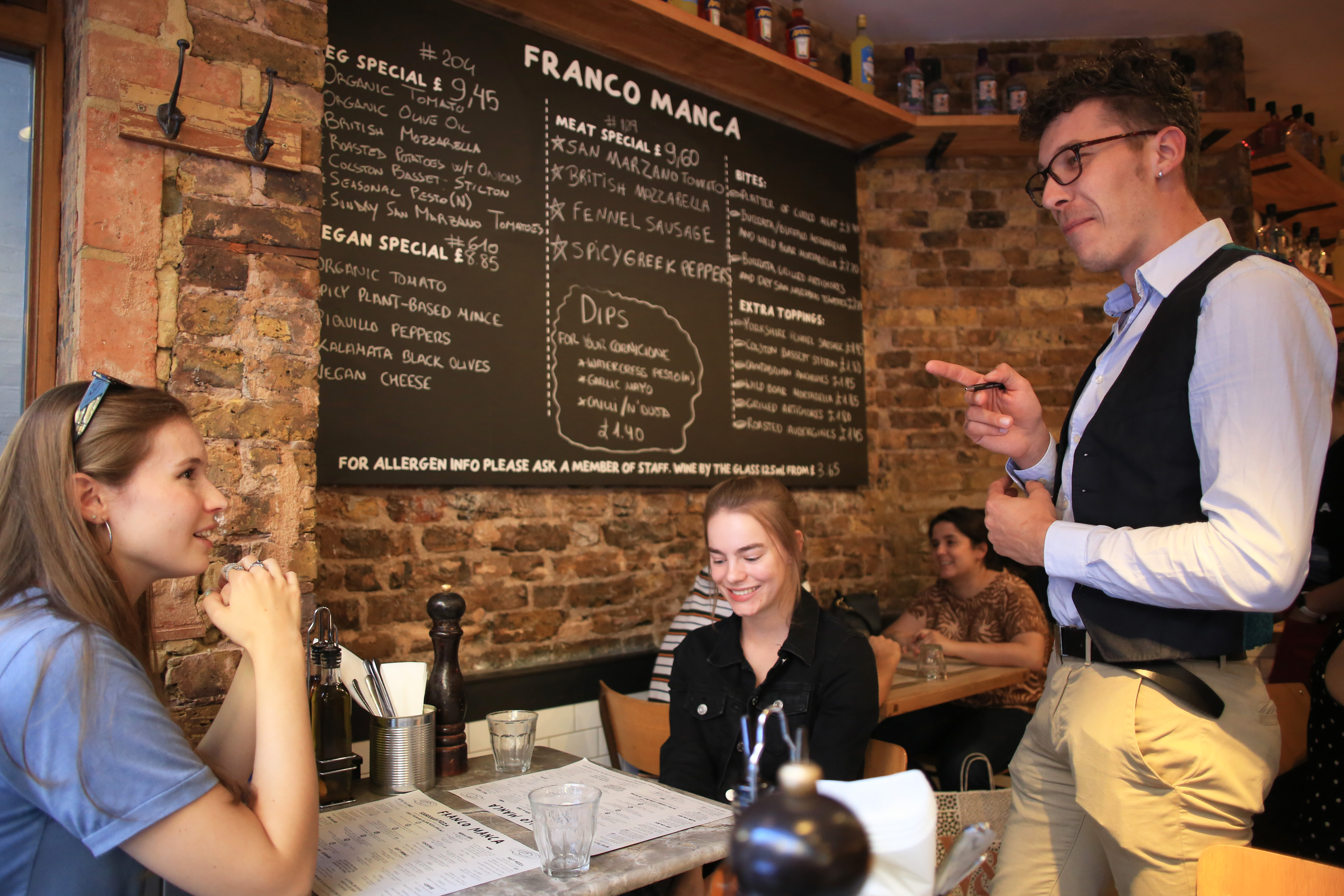
The Franco Manca restaurant in Covent Garden
TIMES NEWSPAPERS LTD
Domino’s has attempted to innovate. Under Rennie, the company added £4 lunch deals in a bid to lure workers away from Greggs, Subway and other chains, and introduced sub-600 calorie options to combat its reputation for being unhealthy.
But other food crazes are stealing a march — in particular, fried chicken. American chains like Popeyes have rapidly expanded across Britain, using smart social media marketing and celebrity endorsements to win over diners. Fried chicken sales in takeaways, restaurants and cafés grew by more than £700 million in the past three years, according to Worldpanel.
In 2024, Domino’s attempted to buy the chicken chain Wingstop. It ultimately lost out to investment firm Sixth Street, but the price tag — and Rennie’s apparent willingness to divert from the “core” business — are said to have rattled investors. Rennie told The Times last May that he was still keen to buy another brand.
By August, the company’s falling share price and declining profits had drawn the attention of activist investor Browning West, which railed against the board in a letter, saying it had “significant reservations” about Rennie’s strategy, and calling on him to launch a £100 million share buyback.
Following this, Rennie’s proclamation in a Financial Times interview that there was not “massive growth” left in pizza, reportedly inflamed tensions at board level. As the company announced his departure “by mutual agreement”, its chair, Ian Bull, reaffirmed the focus on “further growth and value creation in Domino’s core business” despite the “challenging environment”.
The dust has now settled, but one analyst said the question of “peak pizza” may have in fact been a storm in a teacup. “The reality is this has been one of the best businesses of Domino’s worldwide over the last 40 years. The pizza market and the delivery market are fine. [Domino’s has] not got the knockout high sales figures that you used to have … but it’s still growing,” they said.
Founded by the American businessman Tom Monaghan in 1960 in Ypsilanti, Michigan, Domino’s rose to prominence with the promise of rapid delivery and consistent quality. While the likes of Pizza Hut and Pizza Express had already turned legions of Britons on to the Italian staple in restaurants, the delivery market was ripe for a shake-up by the time of its UK debut.
“People were looking for pizza. They were fed up with substandard delivery times and poor product being received at their door,” said Andy Emmerson, who was business development director at Domino’s from 2006 to 2012.
Breaking with conventional thinking, bosses targeted properties closer to residential areas rather than on high streets to slash delivery times. The strategy paid off, and Domino’s grew into a major force in Britain.
“I remember being told when I first started there that we didn’t sell pizza, we sold convenience,” said another person who worked for Domino’s in the 2000s. “Franchisees were encouraged to have their drivers make ‘single-bag runs’ — you weren’t allowed to put loads of pizzas in one so the people at the end would be waiting for ages.”
The decision to take on a £2 million per year sponsorship of The Simpsons on Sky One in 1998, meanwhile, was one of its shrewdest moves. It translated into a daily “Simpsons rush” for franchisees over the course of a decade and heralded a golden era for Domino’s.
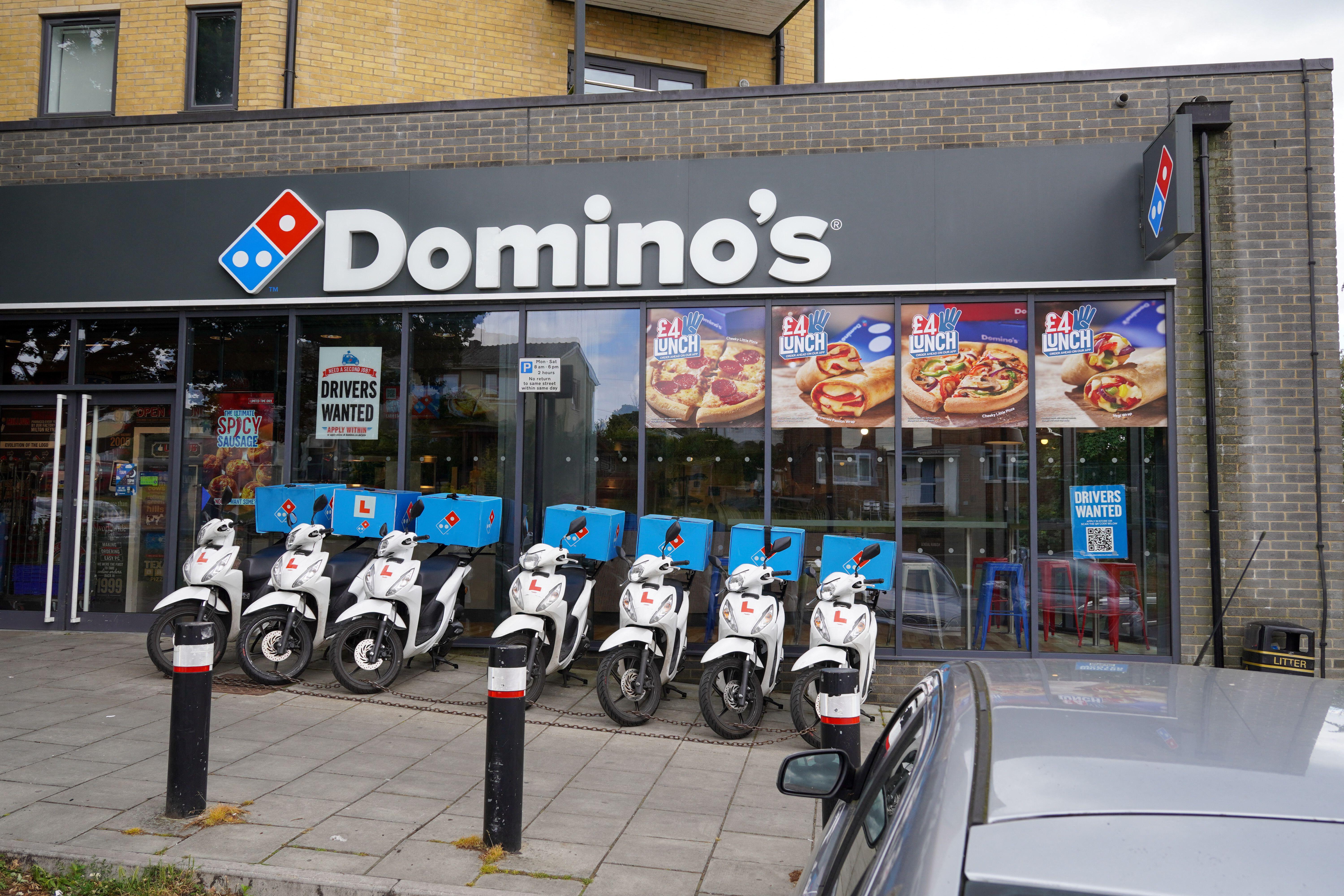
Fast delivery times have been a priority for the pizza company
ALAMY
Domino’s Pizza Group, the London-listed company, is the master franchisee for the brand in the UK and Ireland. But the company itself runs only a handful of stores; the bulk of its massive estate is run by franchise partners, the biggest of which turn over many millions per year.
They share profits with the company, and buy its proprietary pizza dough, which it manufactures in factories across Britain. Managing the relationship with franchisees is crucial: a long-running dispute over investment from the group ended in 2021 when Domino’s agreed to dole out £20 million in support and improve its support for new store openings.
• Fraudsters scam Deliveroo by making food look undercooked
“If your franchisees are happy, your whole life is happy as a franchisor. And what makes them happy typically is great return on their investment as well as a respectful relationship,” said Emmerson.
However, with costs soaring in 2025, franchisees have become more cautious about investing, Domino’s said last August. As a result, it struggled to hit opening targets, while planning delays made it harder to open stores in market towns and more rural locations.
Still, after a rough 2025, experts are more upbeat on the company as it prepares to update the market this month. In a note to investors last week, investment bank Peel Hunt said it expected like-for-like sales to improve and suggested the company could benefit from falling cheese prices and improvements in technology.
While Domino’s has backed off trying to buy a rival for now, it has continued with some of Rennie’s plans, such as the expansion of its own ‘Chick ‘n’ Dip’ fried chicken offer, which this month began rolling out across the entire company. One analyst said this was proving particularly profitable because people were ordering chicken dishes as well as pizza.

The company’s ‘Chick ‘n’ Dip’ fried chicken
Its interim boss, Nicola Frampton, has been with the company for five years and is said to be a safe pair of hands. The appointment of Andrew Andrea, who formerly led the listed pub group Marston’s, as chief financial officer, could further soothe investors’ worries. Shares have edged upwards in recent weeks ahead of its results.
The two will hope to prove over the coming months that “peak pizza” has not been reached after all.