
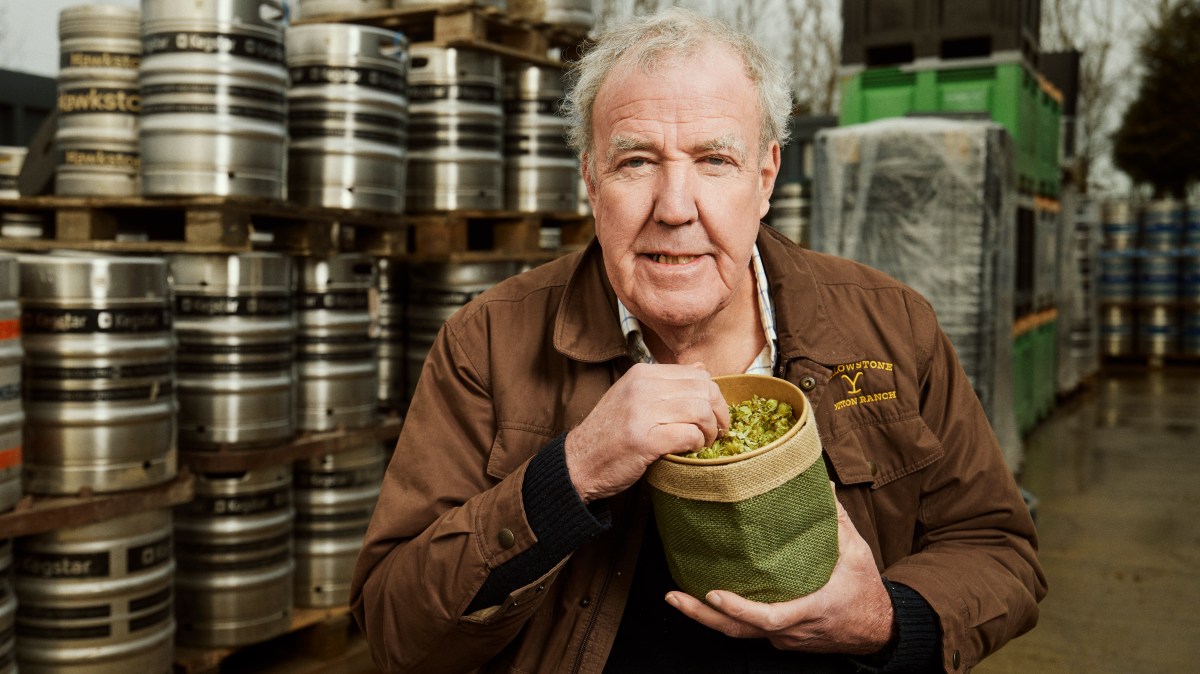
‘I’ve never before actually got hops, rubbed them between my hands to get the oils out of them, and then smelt them,” says Jeremy Clarkson, sitting on an upturned beer barrel and squeezing a handful of strobiles — hop flowers.
“When people say there are different varieties that smell of lemon and pineapple you think, no, they don’t, but they do. People talk about the bouquet of wines and you think, it’s all just wine nonsense. But the hops smell is genuine and astounding.”
From Top Gear to top beer, Britain’s most famous farmer is jumping into hops. As co-owner of Hawkstone, ranked in the Sunday Times list of top private companies last year as Britain’s fastest-growing brewery, he is using his commercial muscle to fund British hop farmers in an attempt to rescue an industry in peril. The brewery, based in Bourton-on-the-Water, Gloucestershire, is advance-buying output over three years from Charles Faram Farms, Britain’s main hop farming collective, to give farmers security in the face of what Clarkson says is a lack of government direction or help. The first phase will involve 153 tonnes of hops worth £2.77 million and will boost UK hop production by 15 per cent.

Hawkstone was named Britain’s fastest-growing brewery last year
TOM BARNES FOR THE SUNDAY TIMES
Farmers have welcomed the initiative. Some say it could save commercial hop growing from disappearing from the British countryside, where it’s been a staple for 500 years. Paul Corbett, 62, managing director of Charles Faram, said: “It’s no exaggeration to say that Clarkson’s intervention will reverse a decades-long downhill slide.”
Clarkson considered growing hops on his own land but the exposed position and shallow soil meant his 1,000-acre Cotswolds farm, Diddly Squat, was unsuited. “Ideally you need deep fertile soil and protection from the wind. I’m 1,000 feet up in the Cotswolds, where conditions unfortunately aren’t right.”
Hop growing was once a huge undertaking in the UK. Now only 42 hop farmers are left, scattered across the southeast and West Midlands. As recently as 1979, there were still 5,709 hectares of hops under cultivation in the UK. In 2024 only 542 hectares were planted. Most beer hops now arrive at British breweries from the United States and Germany.
Alison Capper, 57, and her husband, Richard, 58, farm hops in the village of Suckley, Worcestershire. The new contracts will enable her to restore production to pre-Covid levels, she says. “Jeremy Clarkson is doing a fabulous job for farmers and for hop farming. We’ve been going from year to year on reduced acreage, watching other farms give up, it’s been very painful.” She sees his involvement as a turning point; “It is enabling us to plant new varieties this year, and it will be the first time in years we’re planting at [full] scale.”
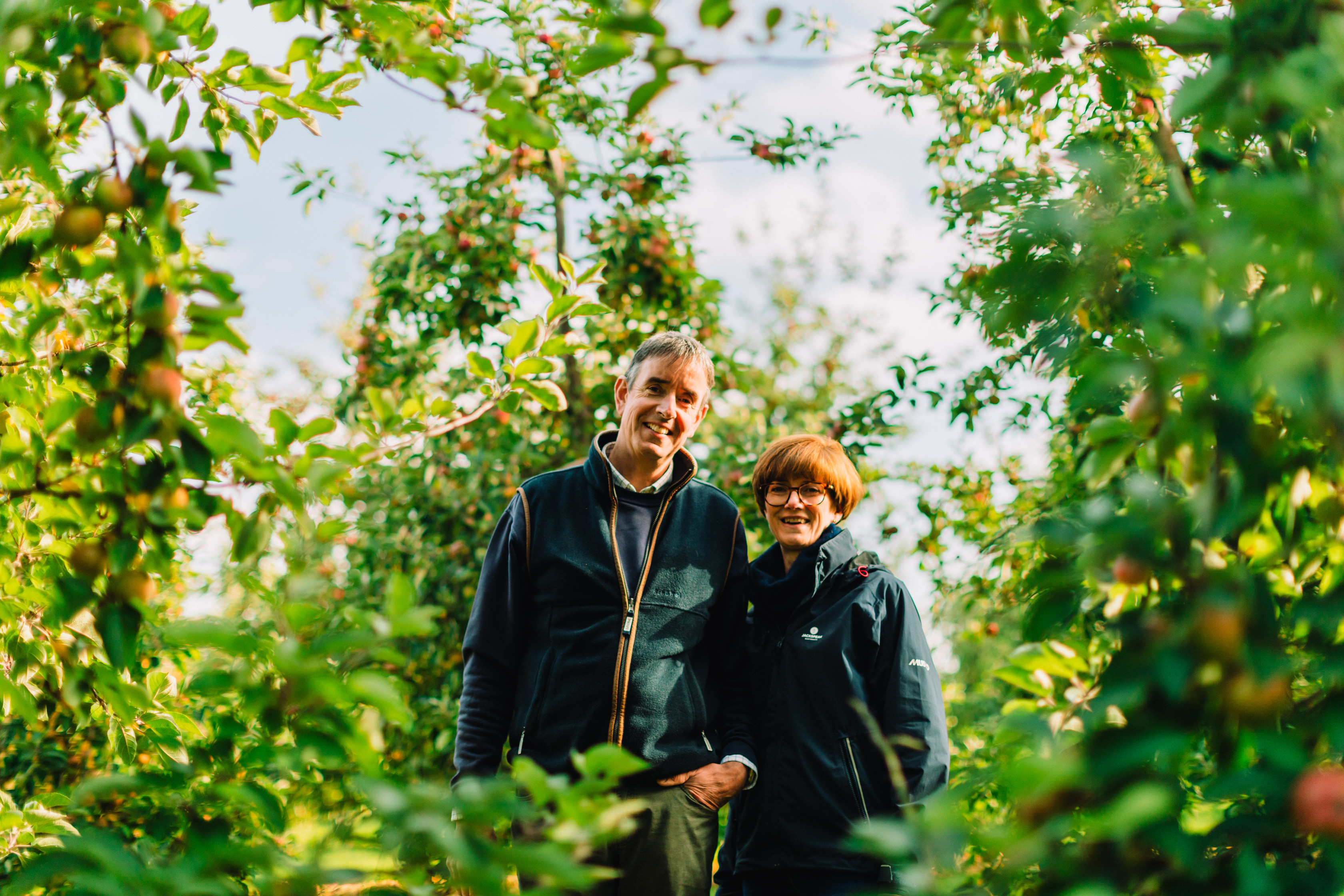
Richard and Alison Capper
• What’s the best beer? Let our expert guide you
Some of the industry’s problems are historical. A succession of 19th-century governments, burdened with debt, demanded higher and higher “hop taxes” from farmers, driving landowners to hardship and bankruptcy. Over the years, hop cultivation shrank to a few areas mainly in Kent, Worcestershire and Herefordshire. It continued to decline after the Second World War as cheap imports made inroads. If you detect parallels with modern Britain and Rachel Reeves’s inheritance tax raid on farmers, so does Clarkson. “Down the ages we’ve had high-spending governments that ratchet up taxes until they kill the goose that lays the golden eggs,” he says.
Clarkson is branching out partly because of a sharp fall in the price of wheat, hitherto his principal crop. “We have got a very problematic year coming up. We know for a fact we won’t make money on wheat and barley. And we’re still closed down with TB [cattle tuberculosis].” In its place he is taking up market gardening with the aim of developing a line in fruit and vegetables.
He also sees a commercial lifeline in the fashion for boutique ales. His Hawkstone range is sold in supermarkets and in about one in ten pubs and bars in the UK. It may sound like small beer, but he points out demand is strengthening internationally and Hawkstone is now exported to ten European countries, including Ireland. “It’s not an easy time for the pub trade but one thing that’s happening is that more people than ever are enjoying specialty beers,” says Clarkson. “There’s an opportunity to ride the wave and revive British hop growing and maybe even restore it to its former glory. When I was young, people used to go to hop farms for their holidays. You know, they’d go from the East End of London and from South Wales and pick hops and it would be their summer holiday.”
Using British malt and hops, the company is aiming to reach 200,000 outlets from Australia to Canada, up from 4,000 at present. “I know even less about brewing than I do about farming but there are plenty of competent people who do and mercifully, some of them work here,” Clarkson admits.
He hopes home-grown hops will eventually supplant the foreign-sourced hops in the beer sold in his own pub, The Farmer’s Dog in Burford, Oxfordshire, in line with his policy of favouring domestically sourced products. He’s been lucky, he says, to so far survive the downturn that has led to UK pubs closing at the rate of one a day, according to the British Beer and Pub Association. He feared The Farmer’s Dog would be another victim despite the fanfare around its opening in August 2024. Instead it has proved a runaway success. “I’ve got 156 people on the payroll and we’re lucky — the pub is busy as hell. The message we try to get across in the pub is everything you eat and drink was reared or grown by British farmers, with the exception, for now, of the hops in the beer and the tonic in the gin and tonics. No coffee, no Coca-Cola, no avocado. And that does resonate very well with people who go there to eat,” Clarkson says.
He has taken particular pleasure in defying sceptics. “I haven’t heard of another pub trying to do ‘all British’. Jeremy King — as in London’s greatest restaurateur — told me, ‘You’ll never be able to do it.’ So I wake up with a sense of quiet pride to think that we have. Also I smirk when I go to Jeremy’s restaurants and see him and go: ‘What was it you told me?’”