
So far, there have been only cautious warnings – almost whispered – and no outright condemnation of the US-Israeli offensive against Iran. While deeply concerned by the prospect of a regime change imposed by outside force, the main European allies of the United States and Israel – France, Germany and the United Kingdom – exercised great caution on Saturday, February 28, following strikes against Iranian regime officials and the country’s nuclear and ballistic facilities. At the same time, they strongly condemned the retaliation orchestrated in the region by Tehran.
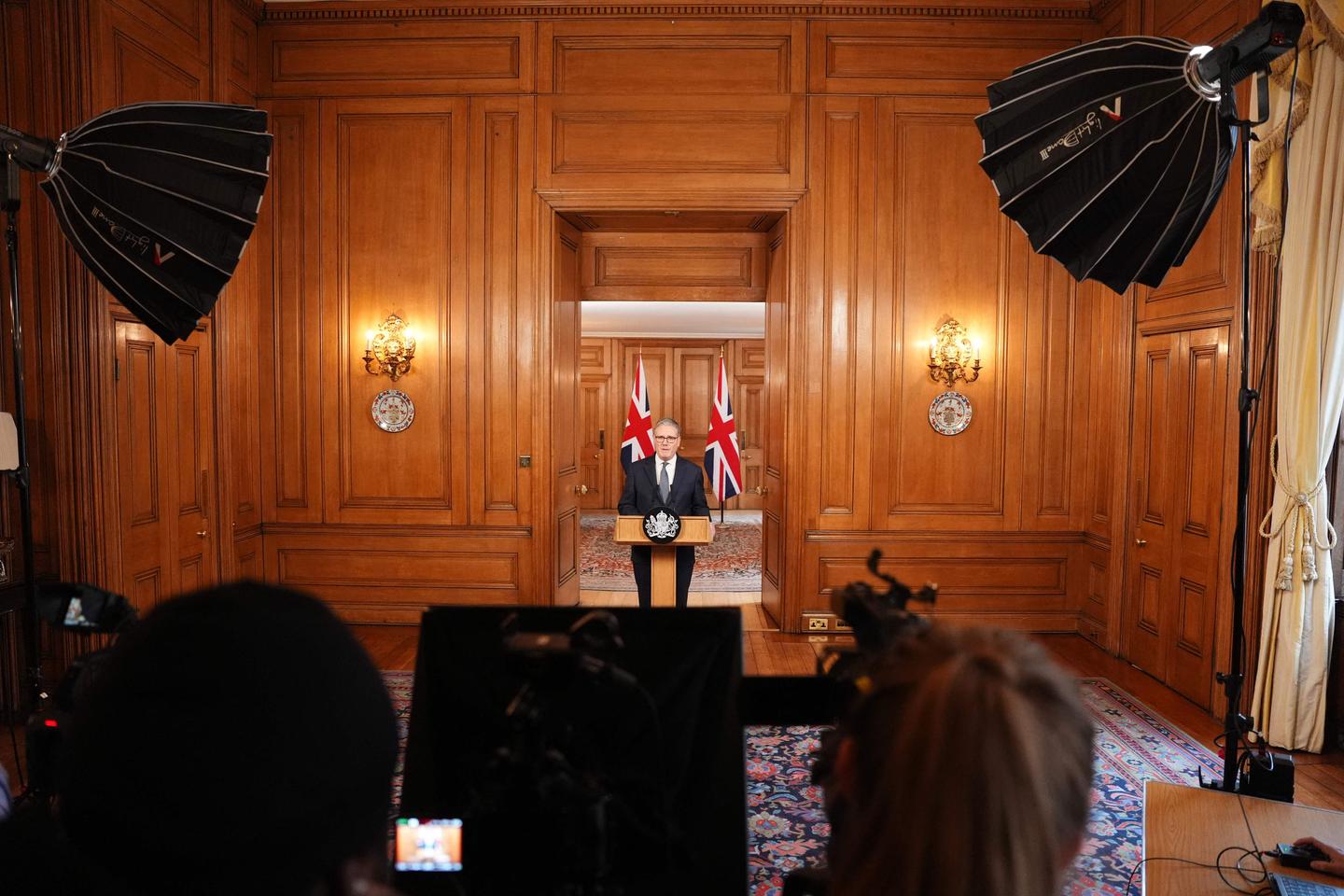
In a joint statement released Saturday afternoon, French President Emmanuel Macron, German Chancellor Friedrich Merz and British Prime Minister Keir Starmer reaffirmed their “commitment to regional stability and to the protection of civilian life,” neither providing further comment nor calling for restraint.
“We did not participate in these strikes, but are in close contact with our international partners, including the United States, Israel and partners in the region,” the three leaders (France, the UK and Germany, the E3) – signatories in 2015 alongside China, Russia and the US to the agreement meant to regulate Iran’s nuclear activities – noted in a brief statement. That agreement was unilaterally repudiated three years later by Donald Trump.
Marginalized countries
Earlier, the UK had indicated that British armed forces’s aircraft was participating in joint exercises to protect UK and allied interests in the region. Meanwhile, Macron stated in the early hours that “France also stands ready to deploy the necessary means to protect its closest partners, should they request it.” He did not provide further details.
This tacit support without direct military involvement echoed the stance adopted last spring during the “12-day war.” After the initial Israeli strikes against Iran and its nuclear program, the French president first questioned their legality, before ultimately appearing to support them: “When I look at the results of these strikes, they reduced enrichment capabilities, they reduced ballistic capabilities. So, they had effects that aligned with the intended goals,” he said. Chancellor Merz, for his part, asserted that Israel had done the “dirty work” to slow Iran’s nuclear program, even before the US intervened.
You have 62.33% of this article left to read. The rest is for subscribers only.