
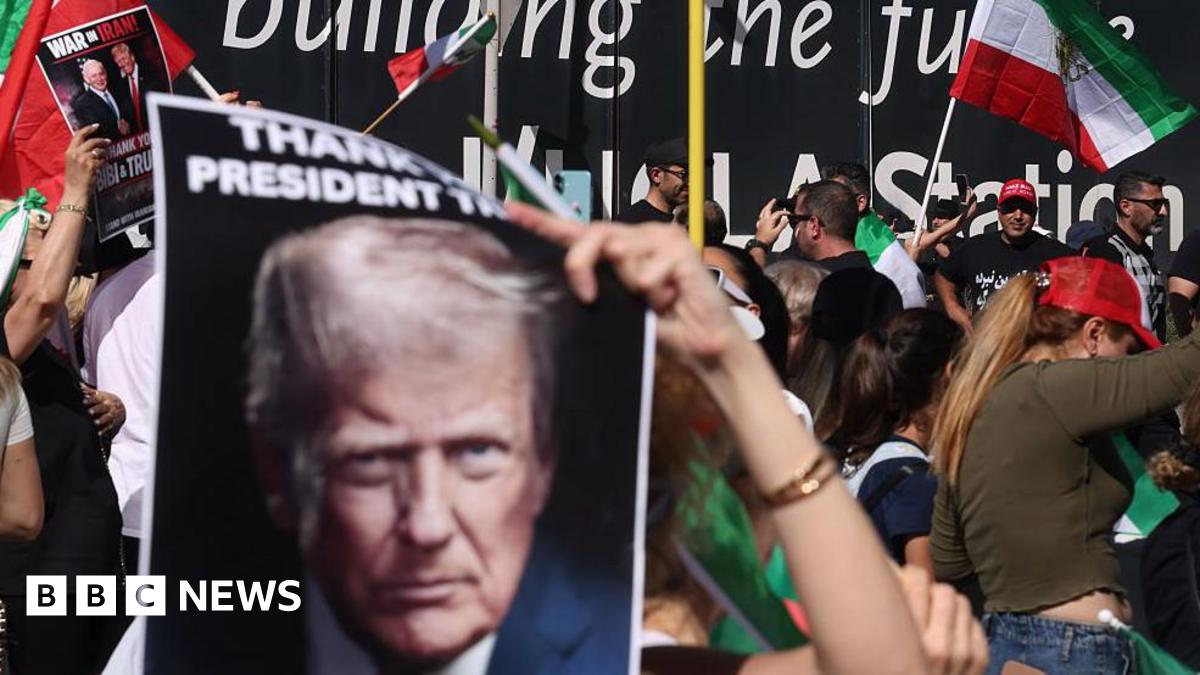
It’s a pivotal moment for Trump, who returned to office little over a year ago with a promise to end so-called “forever wars” like those the US fought in Afghanistan and Iraq but has launched military operations in Iran, Venezuela and Syria, among other countries.
The US and Israeli bombing came after the White House warned of an attack if the regime did not agree to a deal to abandon its nuclear weapons programme, stop producing ballistic missiles and drop its support for proxy groups like Hamas and Hezbollah.
After amassing enormous military force in the region, Trump spent Friday night monitoring the attack as it unfolded with top advisers at his Florida estate Mar-a-Lago.
In Washington, Vice-President JD Vance, Director of National Intelligence Tulsi Gabbard and other senior administration officials gathered in the Situation Room at the White House, according to a source familiar with the matter, and dialled into a conference line with Trump to follow the bombing in real-time.
Khamenei’s killing signifies a major escalation, but analysts warn it could spiral out of Trump’s control.
“The die is cast and the US has to go all the way now to effect regime change. The problem is, you can’t do that without boots on the ground,” said Mohammed Hafez, a professor at the Naval Postgraduate School.
Iran’s retaliatory strikes on a host of US allies in the region – Bahrain, the UAE, Qatar and elsewhere – signalled the regime plans to fight back more aggressively than it did after the US strike on the country last year, he added.
“The Iranian regime’s strategy is [going to be] to create a regional conflict that affects the global economy, and the US economy, and that would not be a good thing for Trump,” said Hafez, an expert on Islamist political violence and Middle East politics. “This could lead to a quagmire.”
A protracted conflict in the Middle East could impact Trump’s other priorities in the region, such as rebuilding Gaza after the Israel-Hamas war and strengthening ties with Saudi Arabia.
It could also alienate supporters back home at a time when his presidential approval ratings have taken a hammering over voter frustration with the cost of living and other domestic issues.
In recent weeks, several senior administration officials voiced concerns about a major military operation in Iran, according to a former senior administration official in Trump’s first term who remains close to his team and has knowledge of internal policy deliberations.
The divisions are said to have played out in private as Trump publicly threatened to attack Iran and ordered the largest US military buildup in the Middle East since the invasion of Iraq in 2003.
Trump projected confidence about the mission on Saturday after choosing to launch the attack and end weeks of speculation about a possible strike. But he also sent mixed signals that raised new questions about what the US war aims are.
“I can go long and take over the whole thing, or end it in two or three days” and keep the threat of further strikes on the table, Trump told Axios.
He later said on social media that “the heavy and pinpoint bombing… will continue, uninterrupted throughout the week or, as long as necessary”.
The remarks underscored what critics say is Trump’s free-wheeling approach to foreign policy, and his disinterest in laying the groundwork to bring lawmakers and the public on board before launching military attacks.
It’s that same unconventional approach that the president’s allies and supporters say has allowed him to notch up successes, including an agreed ceasefire in Gaza and an increased European financial commitment to Nato.