
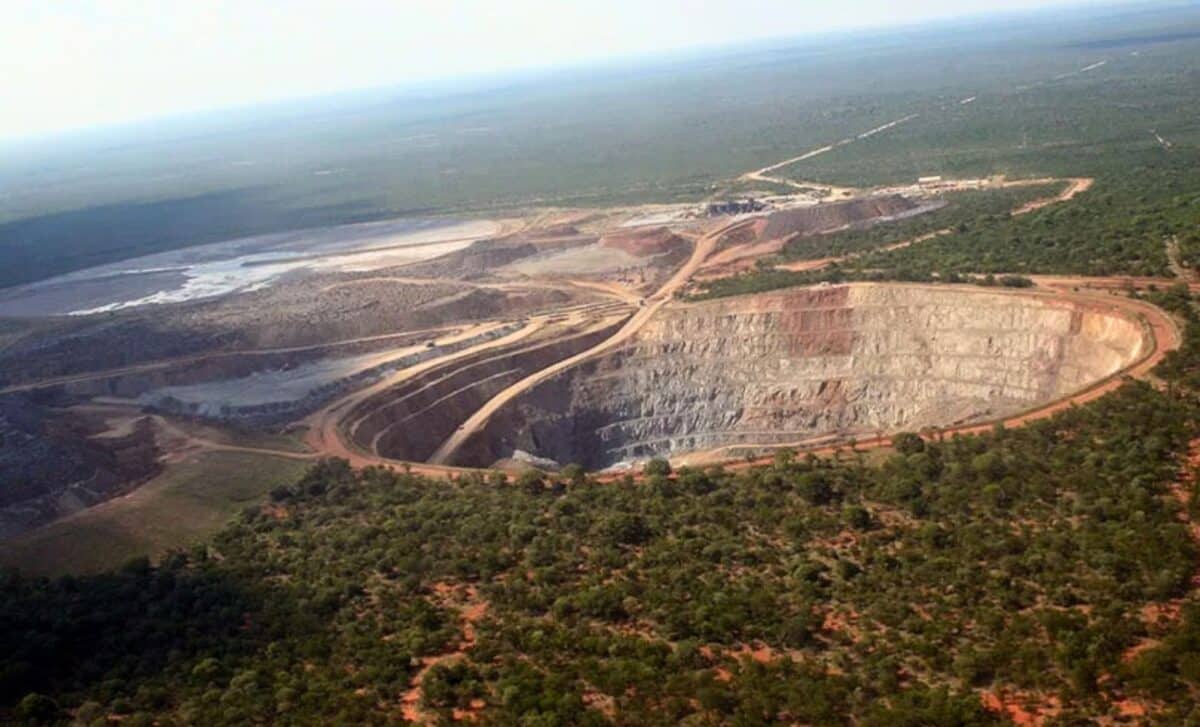
The Kavango Zambezi Transfrontier Conservation Area spans 520,000 square kilometers across five southern African nations. It contains more elephants than any other protected region on Earth. Tourists come for wildlife, not geology.
Several hundred kilometers southwest of the conservation zone’s wetlands, in a stretch of northwest Botswana near the village of Shakawe, exploration crews have been drilling into rock that tells a different story about the region’s value. They found something underground that has nothing to do with animals or tourists.
A Canadian company called Tsodilo Resources Limited has spent months running core samples from two geological targets it calls C26 and C27. The results, released in late February 2026, show the rock contains all 15 rare earth elements listed on the United States Geological Survey’s 2025 Critical Minerals List. Business Insider Africa was among the first to report on the find, describing it as a significant development in the intensifying competition between the United States and China over strategic supply chains.
The Discovery at Gchwihaba
The mineralized zone sits between 20 and 50 meters below the surface. That depth matters because shallower deposits cost less to mine. The company’s drilling intercepted skarn type mineralization, a kind of rock formed when hot fluids from cooling magma alter surrounding carbonate rocks, often concentrating metals in the process.
Tsodilo reported that in addition to the full suite of rare earth elements, the system contains copper, cobalt, nickel, vanadium, and silver. The company identified the targets originally through ground magnetic and gravity surveys before drilling confirmed what set off the geophysical anomalies.
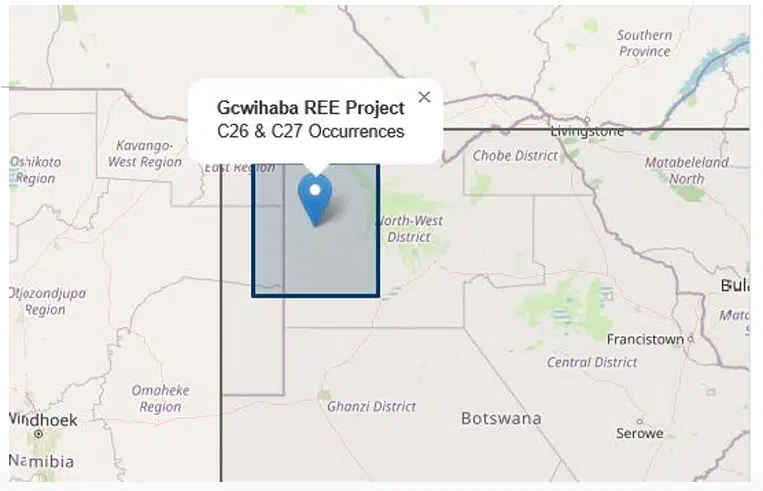 The Gcwihaba REE Project is located in the strategically important Northwest region of Botswana, representing an extension of the mineral-rich Central African Copper Belt. Credit: Gcwihaba REE Project
“The targets were originally identified as geophysical anomalies through ground magnetic and gravity surveys,” the company stated in its February 2026 announcement. “Subsequent diamond core drilling has confirmed that these anomalies host skarn-type mineralisation containing an extensive suite of minerals.”
The Gchwihaba Metals project, named after the nearby Gewihaba Caves, sits in a region known more for diamonds than for the metals that go into electric vehicles and wind turbines. Botswana has built its mining economy on gemstones through a long partnership with De Beers Group. That may be shifting.
Strategic Minerals in a Stable Jurisdiction
Botswana’s government has made critical mineral exploration a priority. The Botswana Chamber of Mines has noted the country’s push to diversify beyond diamonds by attracting foreign investment into base metals, coal, and the minerals now classified as critical by industrialized economies.
The country offers something rare in resource extraction: political stability. Mining companies rank Botswana among Africa’s most predictable jurisdictions, with established infrastructure and clear regulatory processes. For Western governments trying to secure supply chains for energy transition metals, that stability matters as much as the grades in the drill core.
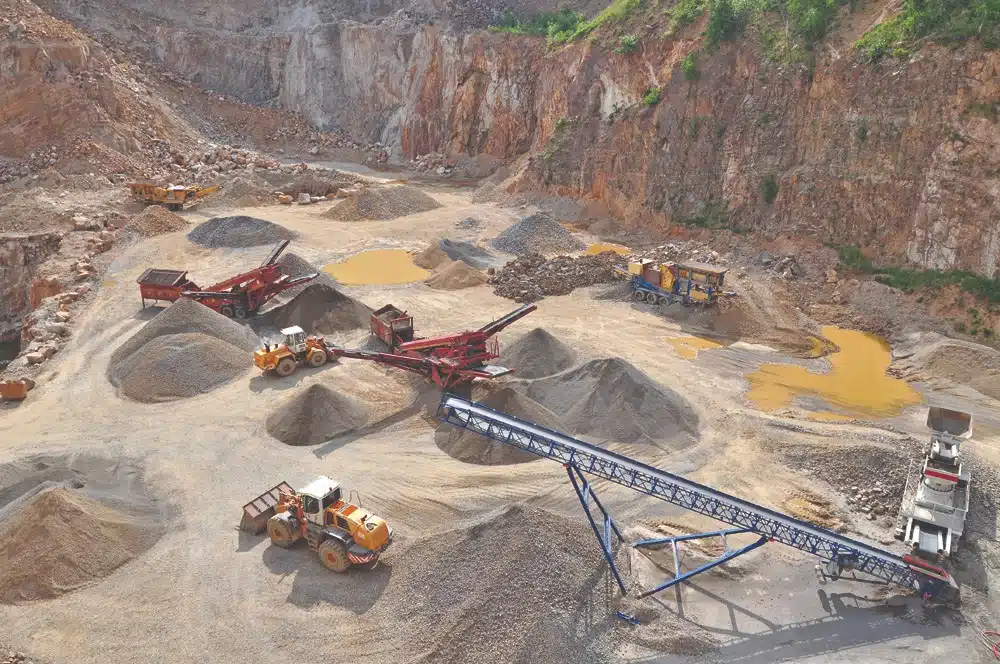 Botswana’s political stability and pro-mining policy position it as a strategic alternative for Western critical mineral supply chains. Credit: BCM
Demand forecasts explain the interest. The International Energy Agency projects that demand for key critical minerals could more than double by 2030 under current energy transition policies. Electric vehicles require rare earth elements for their permanent magnets. Wind turbines use similar magnets in their generators. Defense systems depend on the same materials.
The Processing Bottleneck
Finding the rock solves only part of the supply equation. The harder problem sits downstream. China currently controls approximately 85 percent of global rare earth processing capacity. Mining companies elsewhere can dig up ore, but without access to separation technology and chemical processing facilities, that ore often ends up shipped to China for refining.
The United States and European Union have introduced policies aimed at breaking that dependency, but alternative separation capacity remains limited. Industry analysts at Rare Earth Exchanges have cautioned that while the Botswana discovery is promising, it remains early-stage exploration without a compliant resource estimate or proven metallurgy, meaning it cannot yet be considered a supply chain solution.
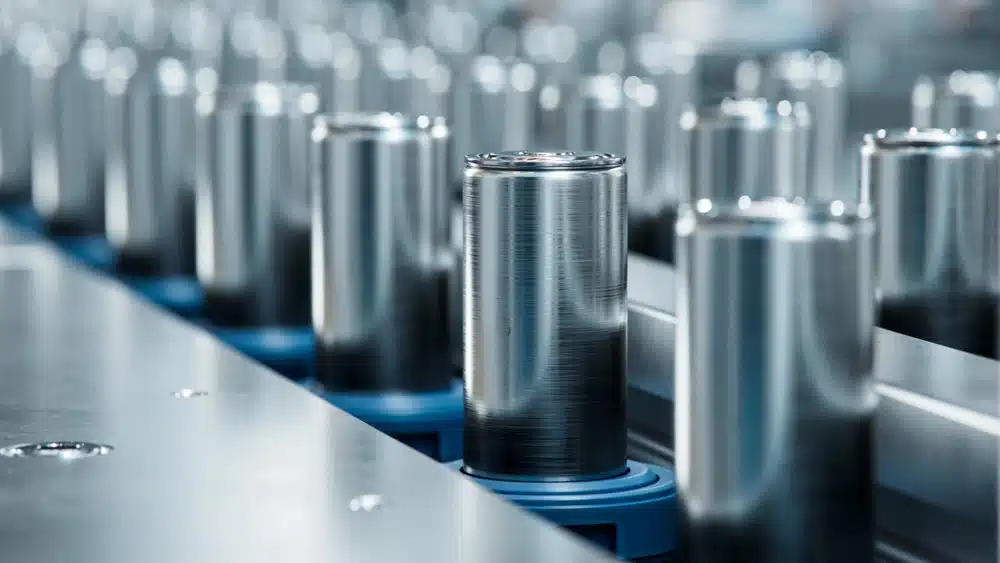 Despite the discovery, China controls 85% of rare earth processing, leaving separation and refining as the key constraint. Credit: Shutterstock
Tsodilo is not a mining giant. The company trades on the TSX Venture Exchange as a junior explorer, which means it finds deposits and hopes to develop them or sell them to larger companies that can build mines. The company’s October 2025 stakeholder presentation, which provides detailed technical information about the project, outlined an exploration target of 81 to 97 million tonnes of skarn ore with total rare earth oxide grades ranging from 0.05 to 1.5 percent.
The highest recorded grade so far came from drill hole 1822C27_6, which returned 1.49 percent total rare earth oxide. Those numbers sit within ranges seen at other rare earth projects around the world, but grade is only one variable. The mineralogy determines whether extraction is feasible.
From Drill Core to Reality
Tsodilo said the rare earth minerals identified include carbonates like bastnäsite, silicates like allanite, and phosphates like monazite. These are known minerals with established processing pathways, which reduces one variable of technical risk. The company also reported the polymetallic nature of the deposit could allow sequential recovery of base metals alongside rare earth elements, potentially improving project economics.
The company plans to continue exploration to define the extent of mineralization while engaging with local authorities and communities. Any future development remains subject to environmental impact assessments and regulatory approvals. More details on the project’s status and future plans are available through Tsodilo Resources’ official updates.
For Botswana, a commercially viable rare earth development would broaden the country’s export base beyond diamonds and reinforce its position in supply chains tied to clean energy and advanced manufacturing. For Canada, the project keeps the country connected to allied supply chains as the United States pursues its own reshoring strategy for critical materials.