
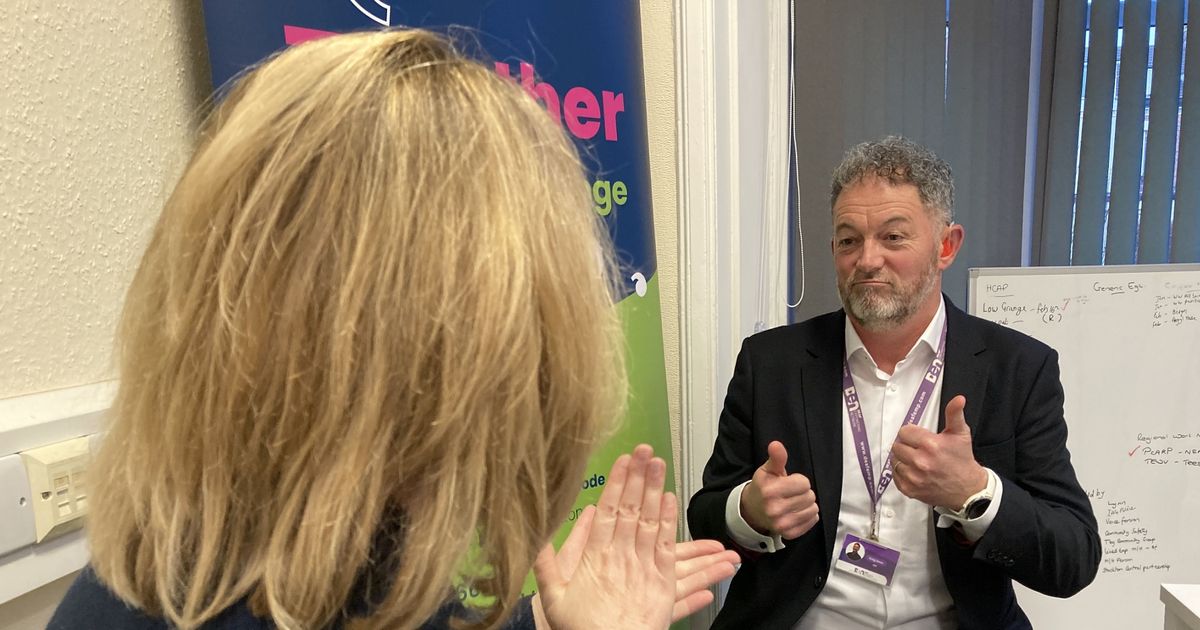
Waiting for a doctor’s appointment through the haze of illness can be stressful enough. For a deaf person in a surgery which only calls out people’s names verbally, with no visual aids or interpreter, it’s a “tiring experience”, says Craig Jones.
He talks of the struggle people can face relying on lip-reading, which is “70% guesswork”, and the intense concentration needed in such situations to catch the right information.
“You’re constantly watching medical staff coming out, making sure you’re not missing your name. It becomes a blur.”
Members of the deaf community have told of delays, isolation, missed appointments because of verbal name-calling, and patients leaving hospitals or GP practices without being seen. They say they have felt forgotten, ignored, treated as second-class citizens or “bottom of the pile” as they navigate inconsistent healthcare systems.
These are the findings of a major report into the barriers facing deaf people in health and care, titled ‘Why Aren’t We Being Heard?’, from health and social care champion Healthwatch Stockton. It reveals widespread, persistent barriers for people who have been calling for clearer communication, greater understanding and fair access to health information for more than 25 years.
‘Many feel that little has changed’
Sadly, it says, “many feel that little has changed”. Services still rely heavily on phones for booking appointments or leaving messages, excluding deaf patients entirely.
Even the James Cook University Hospital audiology department, which helps people with hearing loss, is not immune, the Local Democracy Reporting Service is told, with similar waiting room difficulties reported and the use of voice messages for appointments, leading to patients having to walk in with hospital letters to make queries, sometimes with written notes from interpreters, with one patient described as still waiting when reception closed and the lights were turned off.
Mr Anirvan Banerjee, clinical director for ear, nose and throat and audiology at the University Hospitals Tees (UHT) group which covers North and South Tees NHS trusts, responded: “All patient correspondence includes a dedicated departmental email address which is actively monitored and well utilised. Our audiologists receive an electronic prompt when completing audiograms to remind them to inform patients of the email contact option.
“We remain committed to delivering safe and accessible care and will continue to review service processes and available resources, including an accessibility review of our outpatient calling system and a demand and capacity analysis of telephone access.”
‘Systemic and recurring barriers’
In another case, while one GP’s receptionist took care to text before calling, another staff member called without warning and left a voicemail which a deaf patient could not access. The patient was later told someone would wave when it was their turn for an X-ray, but their name was called instead, they missed their appointment and left hospital in pain.
“Systemic and recurring barriers” include interpreters not being booked, arriving late or not turning up, lack of visual alerts, medication errors, miscommunication, misinformation and inconsistent staff training, with patients sent back and forth with unclear instructions and left to rely on family members to interpret sensitive medical information. Many still struggle to receive safe, accessible and respectful care across GP practices, hospitals, pharmacies, and emergency services, the report found, as making information accessible was “complex, time-consuming and resource-heavy”.
“There’s a lot of barriers,” says Craig, who is CEO of the Deaf Empowering Network charity which covers Teesside and Durham. “It’s a frustrating experience when you do not have access to a public service and your needs are not being met.
“You’d hope in this day and age in the 21st century things would have improved. It’s really sad because I’m still having the same conversation as 20 years ago. I’ve been deaf all my life and we’re still having these challenges.
‘Almost like a forgotten community’
“There are solutions. It’s how we work together to educate and raise awareness, and training.”
He stresses he is not criticising staff, more the system and how it responds to people’s needs and makes information available, particularly in the tricky task of explaining and diagnosing illnesses. He says things have improved, but not massively.
He adds: “It goes back to communication and language, having the right support in place. It’s about ensuring these public sectors work with the right people, work with organisations like ours.”
Natasha Douglas, manager of Healthwatch Stockton who wrote the report, shares his exasperation: “It’s almost like a forgotten community. 25 years we’ve been campaigning for change, and it’s just not happening.
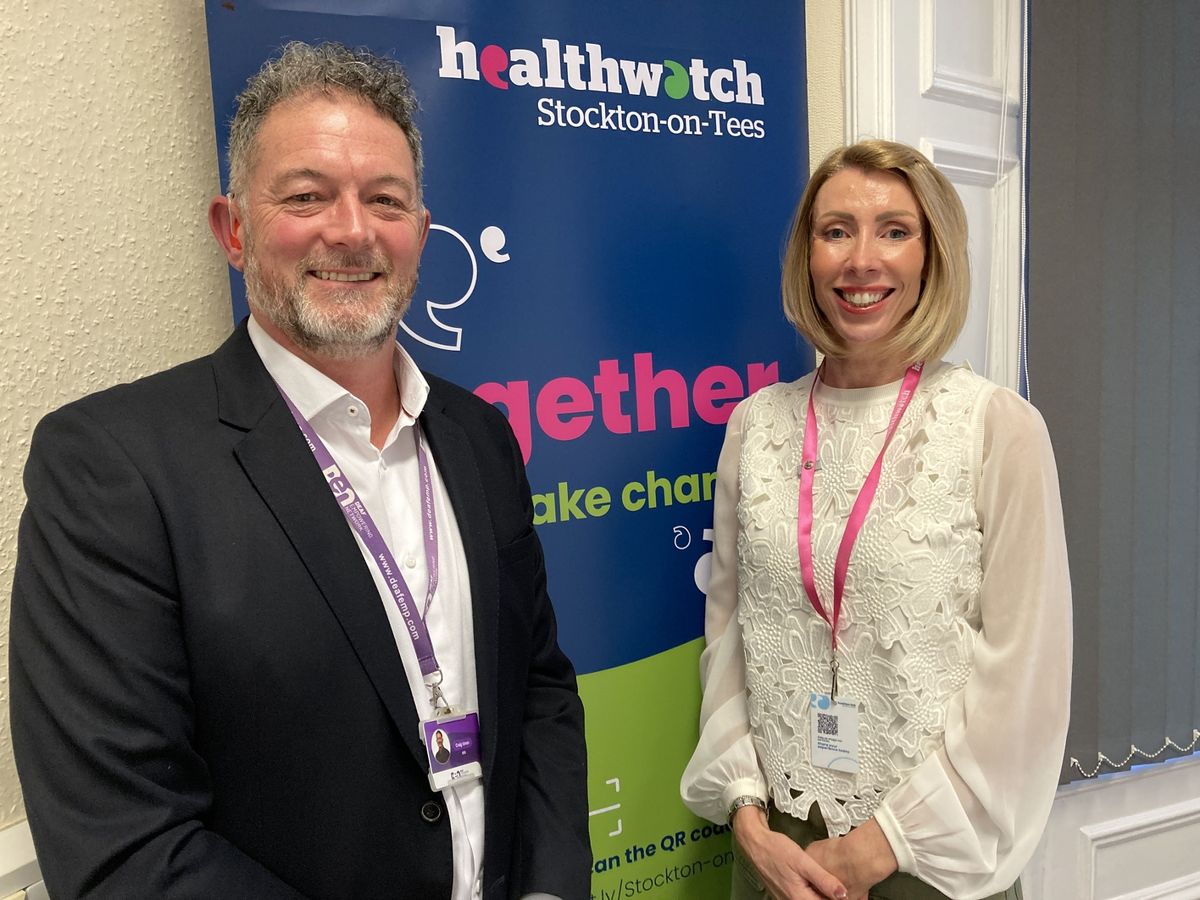
Craig Jones, CEO of the Deaf Empowering Network, with Natasha Douglas, manager of Healthwatch Stockton(Image: LDRS/applicable for all partners)
“It’s a constant battle, that’s what we were hearing. There’s an exhaustion there as well, so you may ignore ailments and think, I can’t be bothered with going through that, especially if you’re not feeling well.
“Communication barriers are huge. There’s also a lack of understanding about the different ways people in the deaf community communicate.
“We hadn’t realised how bad it was. Sometimes I think we take for granted communication, and it’s not as easy as people think it is.
“We’re trying to champion the training of front-line staff. There needs to be adequate funding in place.
‘We have to start listening’
“Accessibility isn’t a nice extra, it’s a legal duty. We need national consistency, not good will and guesswork.”
The report calls for nationally consistent and enforced accessibility standards, mandatory deaf awareness training for frontline staff, clearer processes for booking interpreters, use of visual alerts and accessible communication tools in clinical settings and investment in sustainable communication support.
There is optimism as Natasha said the deaf community was pleased they were being listened to with the report’s findings, with walk-arounds in hospitals and care homes planned: “We can’t know everything all of the time. But we have to start listening in order to learn and make changes.
“What we’ve heard from the deaf community is raw, honest and impossible to ignore. People trusted Healthwatch to tell these stories because they know we will use them to fight for change.”
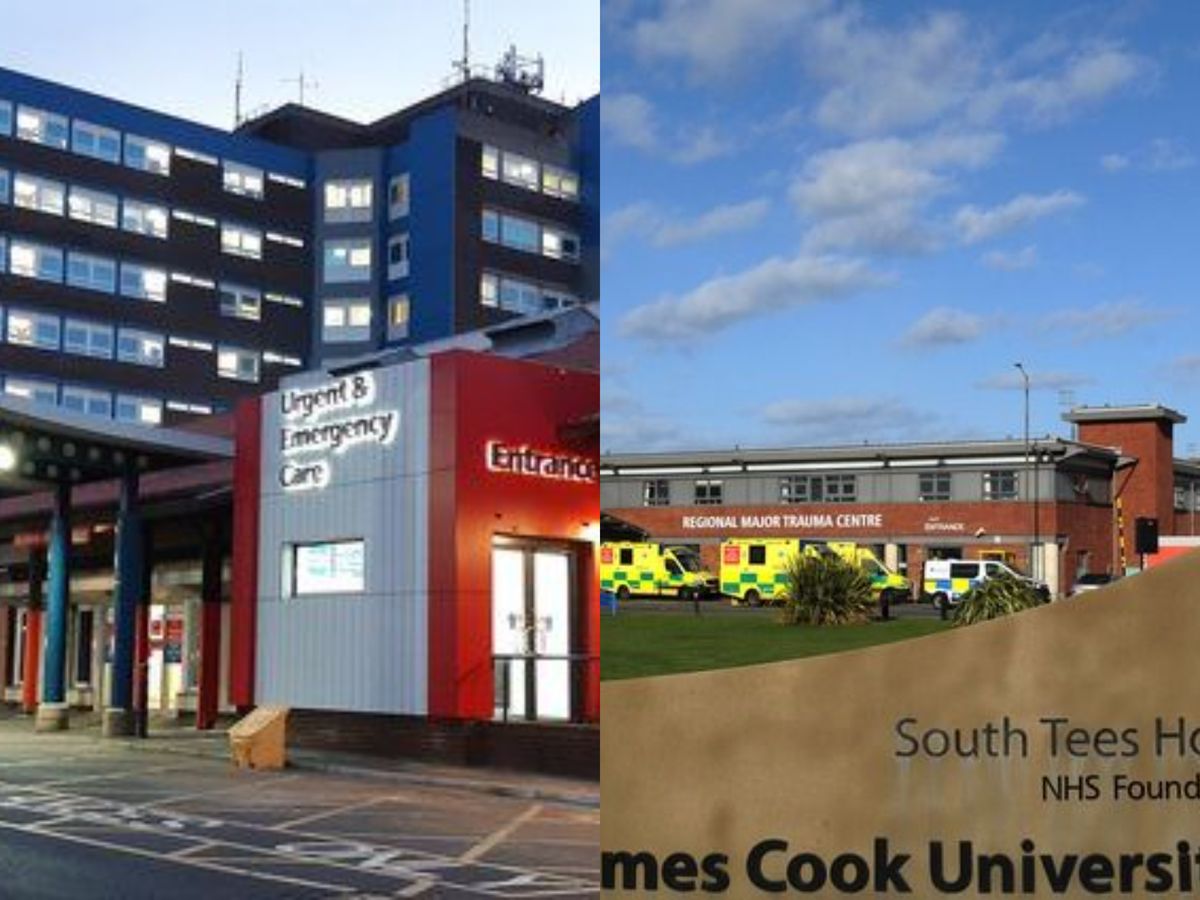
The University Hospital of North Tees in Stockton, part of the North Tees and Hartlepool NHS Foundation Trust, left, and right, The James Cook University Hospital, part of the South Tees Hospitals NHS Foundation Trust.
She said this prompted “a clear commitment… to work with us as we push forward” from UHT and the integrated care board which plans health services: “It proves something important: when people speak openly, and the whole system stands alongside us, we don’t just highlight problems, we create the conditions for real, lasting change to happen.”
UHT associate director of nursing Melanie Cambage said: “University Hospitals Tees thanks Healthwatch Stockton for providing the opportunity to comment on their recent Deaf Community Experiences in Health and Care report. As a group we acknowledge that there are some challenges across the Tees Valley to ensure that we are making the reasonable adjustments required to ensure safe access to healthcare services for deaf users when required.
“We would welcome a wider discussion at our Experience of Care Council meeting and look forward to engaging with enter and view visits to support the work plan of Healthwatch Stockton so that we can work together to find positive solutions to the issues being raised.”
Did you know you can make Teesside Live a preferred source of Teesside news in Google, which will mean you get more of our breaking news, exclusives, and must-read stories straight away? Here’s more information about what this means and how to do it – you can also do it straight away by clicking here.
Go here for the latest NHS news and breaking Teesside public health news
 Join Teesside Live’s WhatsApp community for top stories and breaking news sent directly to your phone
Teesside Live is now on WhatsApp and we want you to join our community.
Through the app, we’ll send you the latest breaking news, top stories, exclusives and much more straight to your phone.
To join our community group, you need to already have WhatsApp. All you need to do is click this link and select ‘Join Community’.
No one will be able to see who is signed up and no one can send messages except the Teesside Live team.
We also treat our community members to special offers, promotions, and adverts from us and our partners. If you don’t like our community, you can check out any time you like.
To leave our community click on the name at the top of your screen and choose ‘Exit group’.
If you’re curious, you can read our Privacy Notice.