
(Credits: Far Out / Alamy)
Mon 2 March 2026 0:00, UK
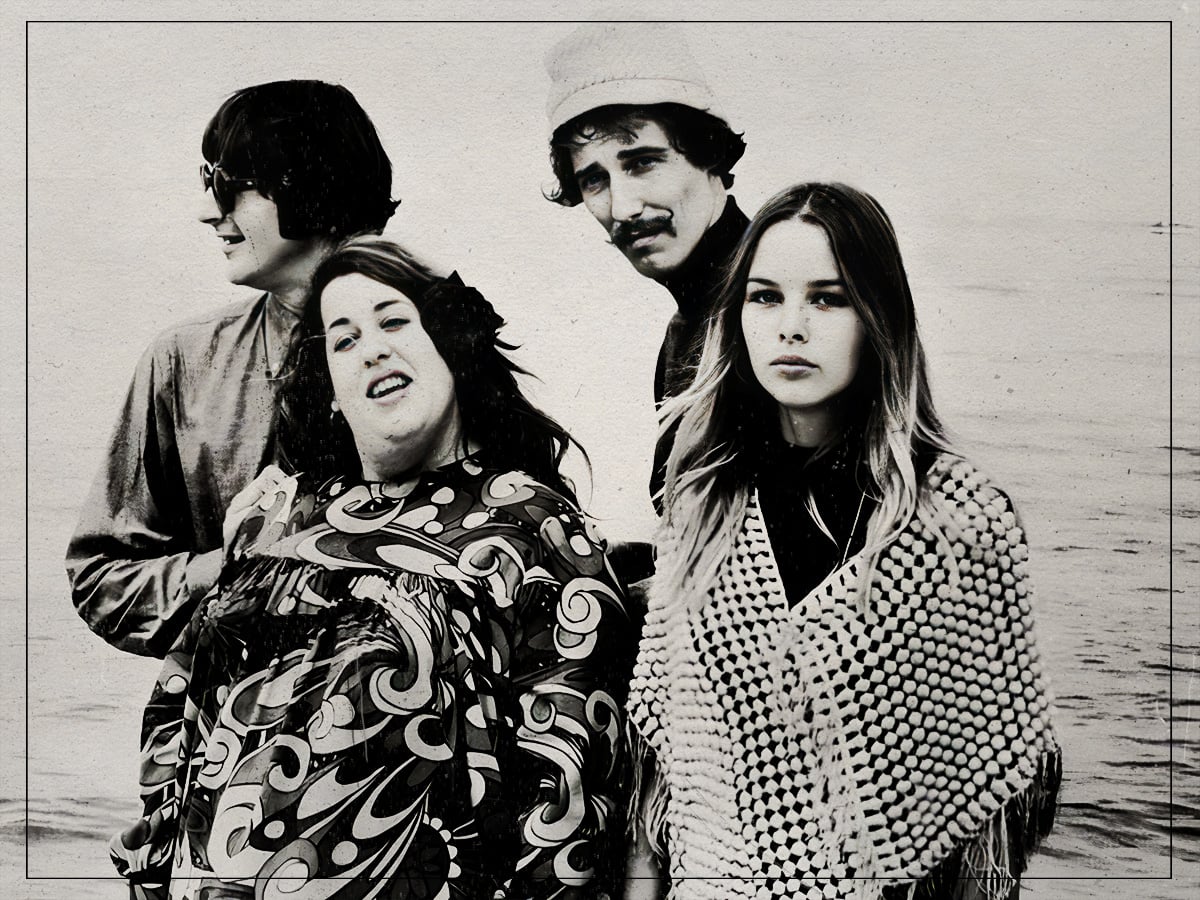
Before they were ‘California Dreamin’, the seeds for The Mamas and The Papas were first planted in New York City, where Michelle and John Phillips moved from San Francisco, at John’s whim.
Michelle had spent a summer break from high school living and modelling in San Francisco with a friend, Tamar Hodel, where she met and fell in love with John and wanted to follow him to New York. Being that Michelle was 17 years old at the time, she and John got permission from her father: “Remember, you can always come home, Michelle,” she recalled her father telling her, to The Strange Brew. “Then he turned to John and he said, ‘At least throw her a book every now and then.’ That’s how John and I started our life together.”
The two lived together in the Village; Michelle was successfully working as a model, while John had been a member of The Journeymen, a folk trio that had broken up. Wanting to put together a new group, John, as Michelle recalls, convinced her to forgo a major modelling contract in favour of joining his band.
“I had no ambition to be a singer and I had no interest in working that hard,” Michelle admitted. But John convinced her that because they were a couple, they would take home two-thirds of the pay, making Michelle more money than she would as a model. “So by greed alone,” she said, “I decided to become a singer.”
They formed The New Journeymen, initially alongside musician-turned-writer Marshall Brickman, before being joined by Denny Doherty, who’d been a member of the Halifax Three. The two bands had toured together in the past and, when the latter broke up, John and Michelle set out to find and recruit him. Doherty knew Cass Elliot from their time together in the rock band The Mugwumps.
 (Credits: Far Out / YouTube Still)
“Then Denny joined us and then he introduced us to Cass and she became my instant best friend,” Michelle recalled. “I didn’t know any women on the East Coast. Also I was so young that the women that were there weren’t really my age. They were a little older. Then Cass came along.” The first night they met, Elliot went to the Phillips’ apartment in the Village, and the quartet would bond for the first time over music and mutual friends, all under the influence of psychedelics.
“The first time we ever took any acid was that night that Cass came over to visit, and boy, did we have a good time!” Michelle revealed with a laugh. Along with the acid, Elliot brought along The Beatles’ 1964 album Meet the Beatles, one which she and Doherty were ardently trying to convince the Phillips to give a chance.
“I think [Cass] was the one who brought The Beatles album with her. That was the first time that we had actually really sat down and listened to The Beatles,” Phillips remembered. “Denny kept saying, ‘That’s what we have to do. They’re the kind of songs you have to write, John. Enough of me and my uncle and make me a pallet on the floor.’ Denny was the one who really changed the direction of our sound.”
Then, in the throes of Beatlemania, the Fab Four were headed towards world domination. They’d conquered the United States with their groundbreaking appearance on The Ed Sullivan Show in 1964 and inadvertently sparked a revolution, altering the youth culture’s perception of style and sound that set the first wave of the so-called British invasion. Their impact on popular music was already beginning to be felt, and even for the most strict of folk fans, as John Phillips was, there was no denying that music was beginning to take a necessary shift.
Naming themselves The Mamas and The Papas, inspired by the Hells Angels’ female associates being called “mamas”, the Phillips, Elliot and Doherty soon travelled to the Virgin Islands in the early spring of 1965, staying until midsummer to start conceptualising their sound, as a band, jamming and placing their puzzle pieces together. “We started singing with Cass and Denny and, my God, that was a complete revelation for us, when the four of us were singing John’s arrangements,” Michelle remembered. “We would sit on the beach in St John and just light a great big bonfire and pass around a bottle of whiskey and singing and singing and singing.”
Soon, a radio station in Boston would propel The Mamas and The Papas’ recording of ‘California Dreamin’ into a sensation, forever synonymous with its namesake and defining the sound of the counterculture.