
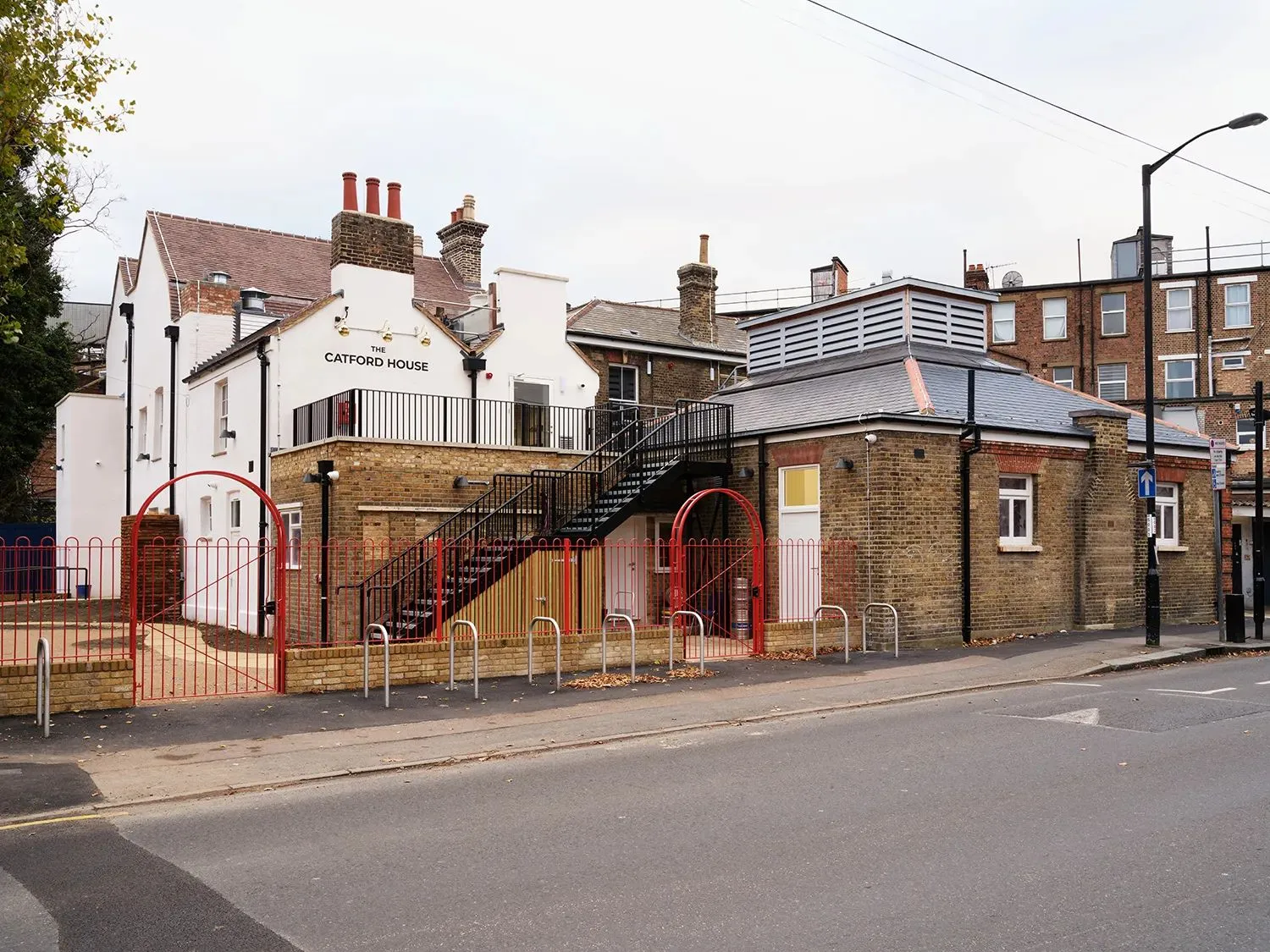
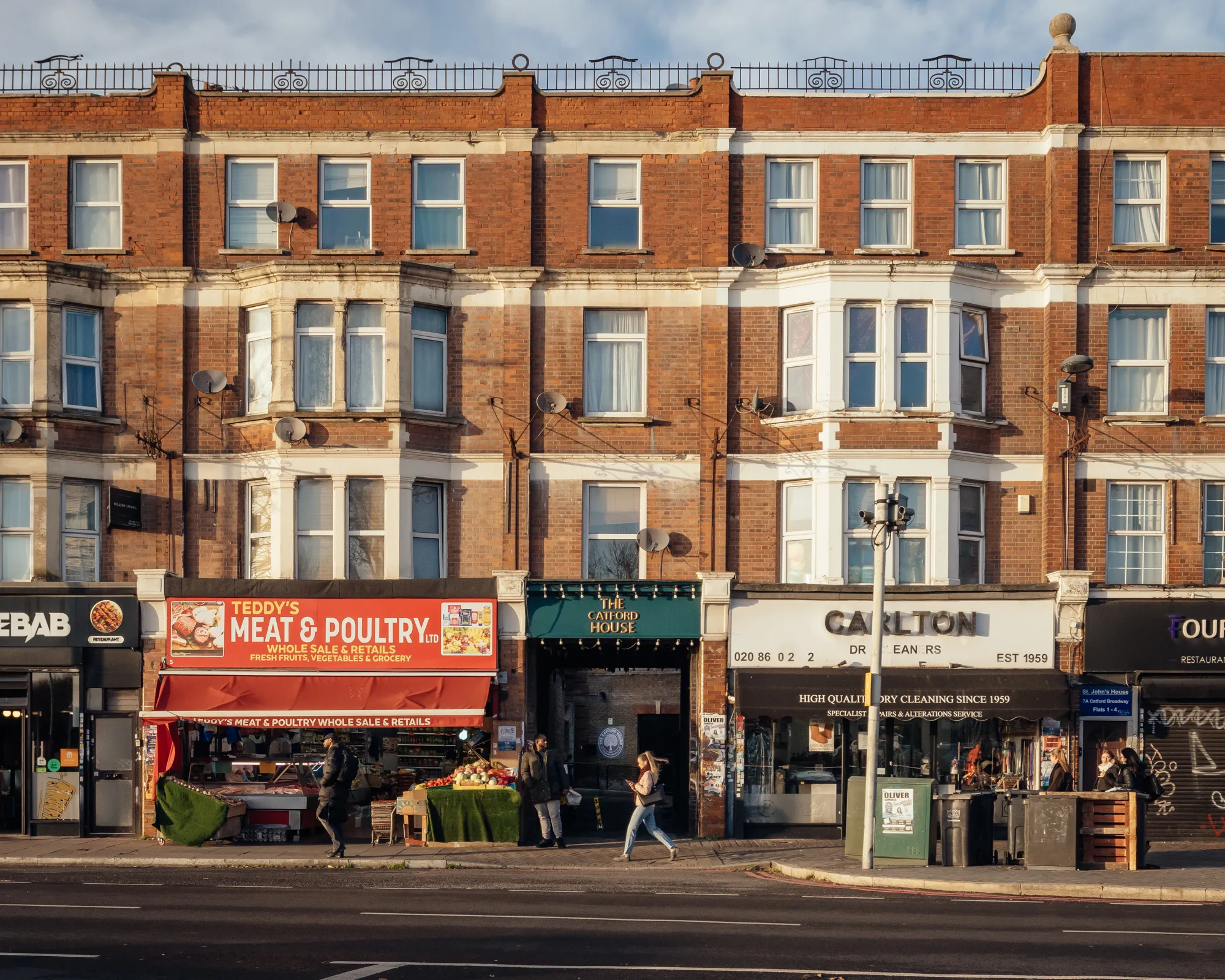
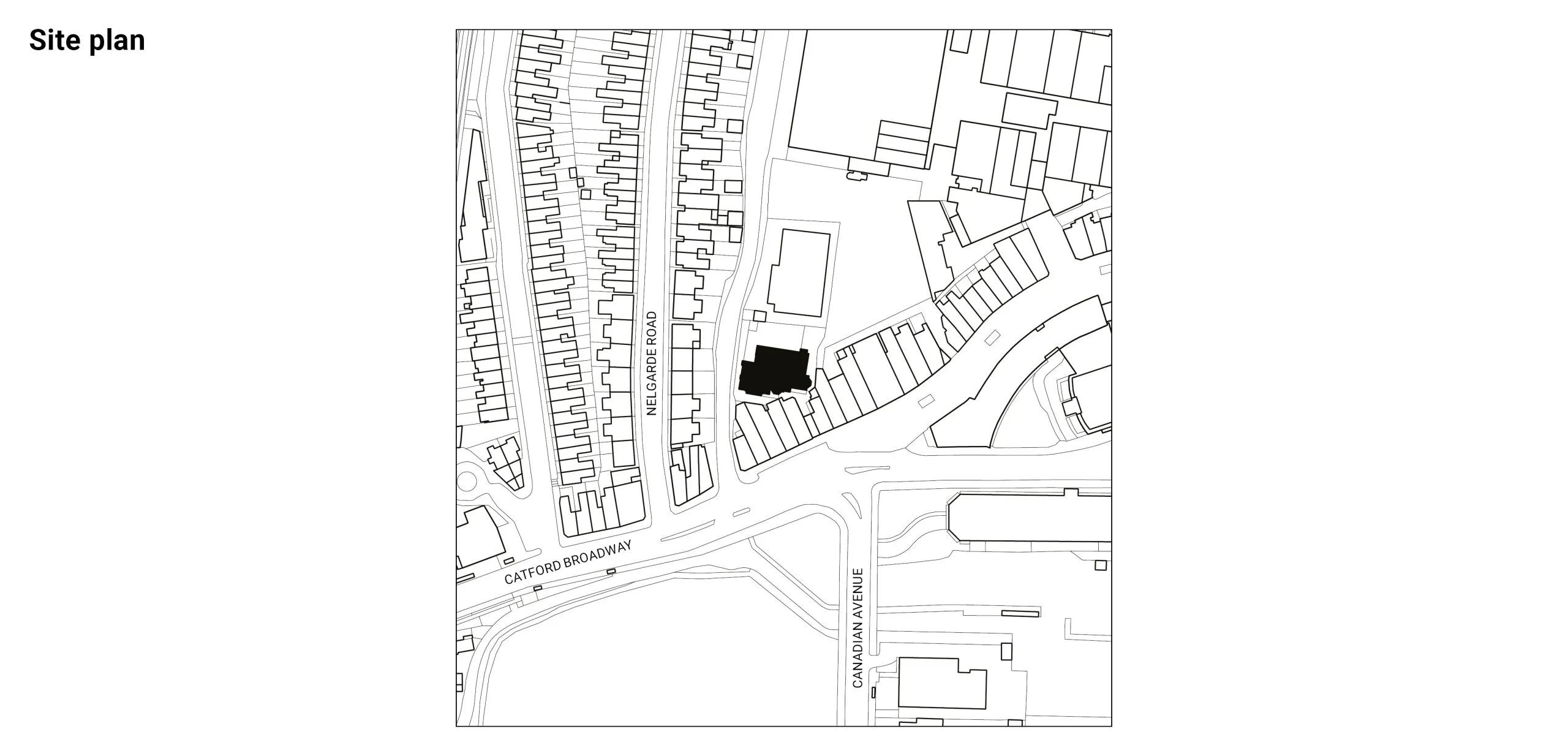
Hidden behind a narrow passageway on Catford Broadway shopping parade is an amalgam of a building: part-farmhouse, part-Victorian pub, part-clubhouse. In 2020, Hayatsu Architects was commissioned by Lewisham Council with a deceptively simple task: to bring this venue, the oldest building in the town centre, back to use as a contemporary pub and community space.
The 605m2 building is an accumulation of four eras of construction. The oldest section, a former farmhouse, dates from 1736. Following this came Victorian, then early- and mid-20th century extensions. The building was home to the Catford Conservative Club for much of the last century, reopening as a pub (the Catford Constitutional Club) in 2013, before being found structurally unsafe and eventually shutting down in 2019.
Photography: Max Creasy
The building is hemmed in by 20th century developments and located in the centre of Catford’s new masterplan. Hayatsu began by assessing the condition of the building to discover the scope of the restoration works required. The 18th-century wing had never been publicly accessible and had suffered decades of neglect. In fact, when the practice first surveyed this part of the building – then at serious risk of collapse – the only way in was with a drone through a hole in the roof.
Photography: David Grandorge
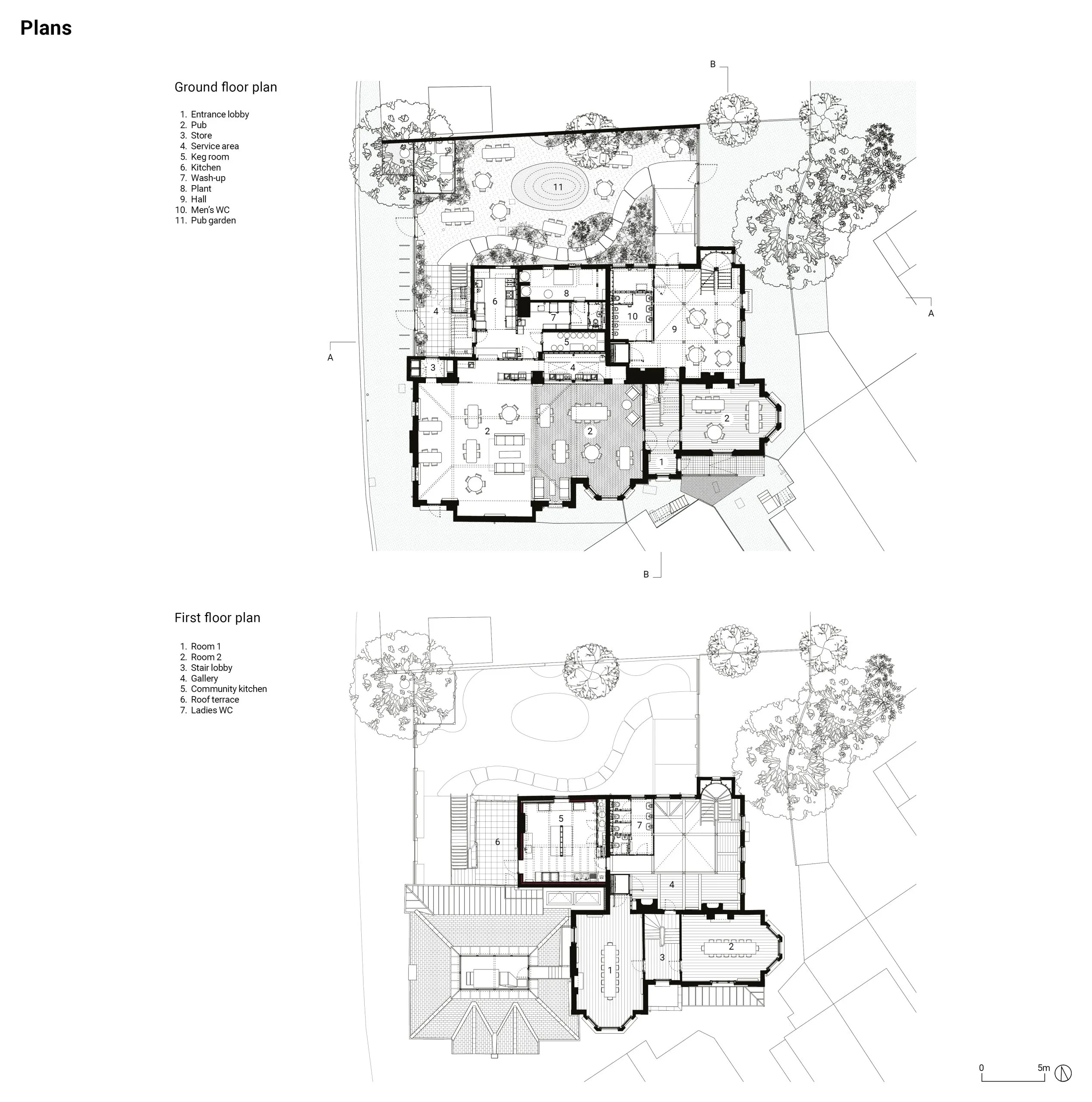
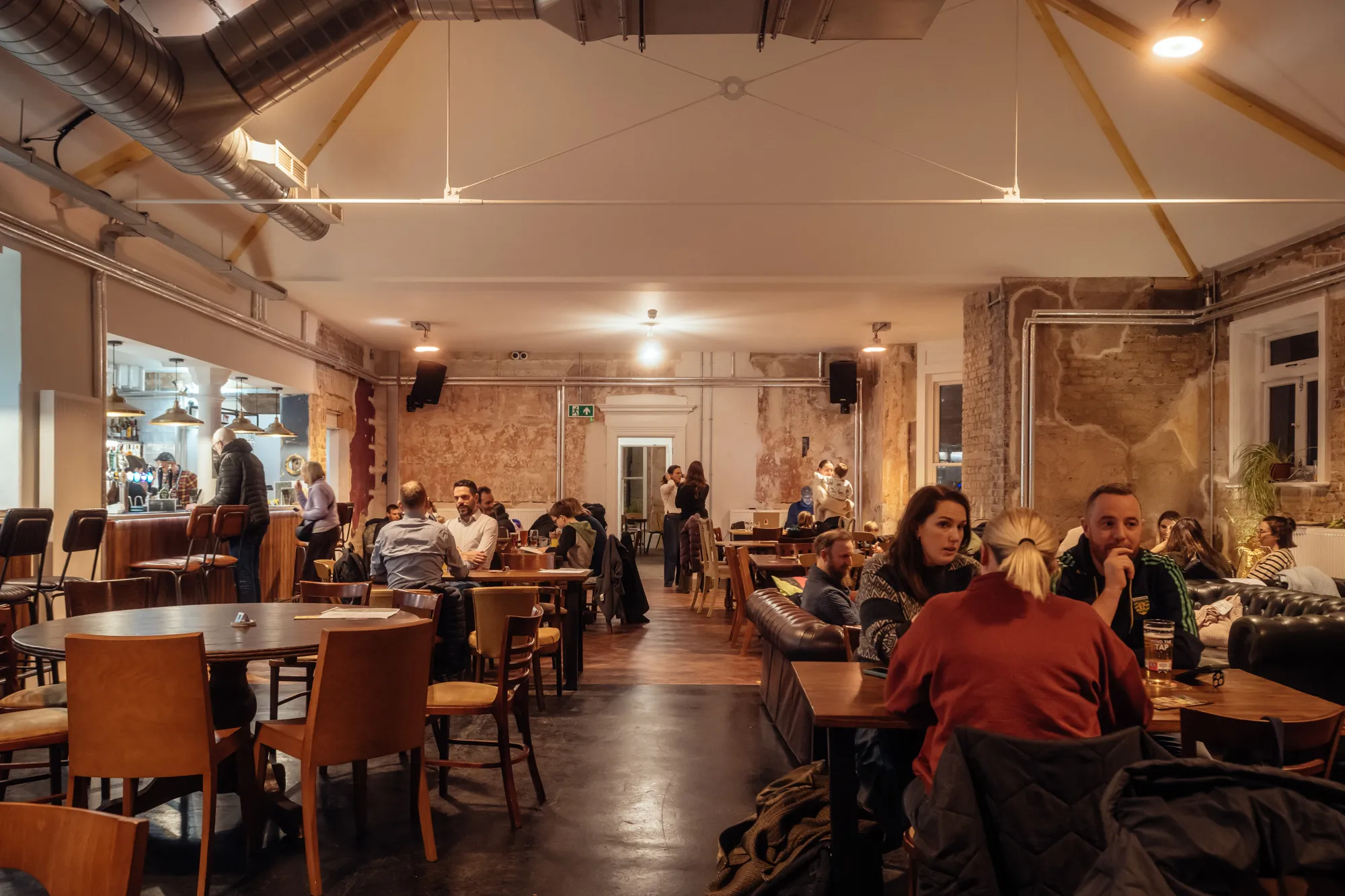
‘Not a pub, but a diverse set of functions,’ is how practice director Takeshi Hayatsu describes the building today. The ground floor bar and dining room have been reinstated while, above them, a series of spaces – including a community kitchen and an events room – provide more enclosed, structured rooms suitable for holding training courses. Together, these uses extend the building’s life well beyond the rhythms of a typical pub.
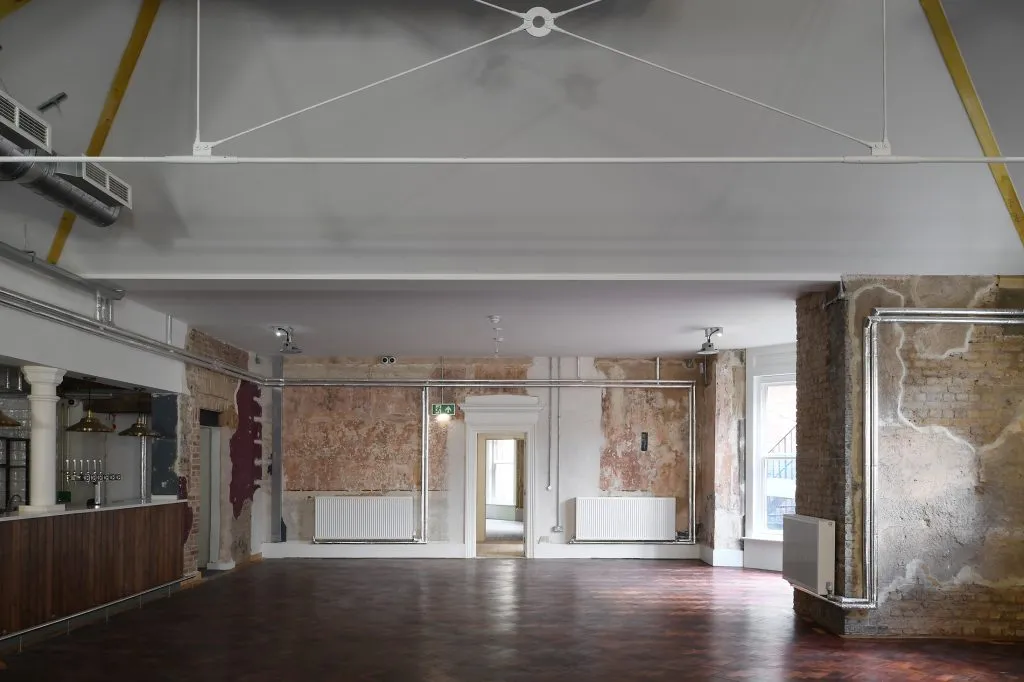
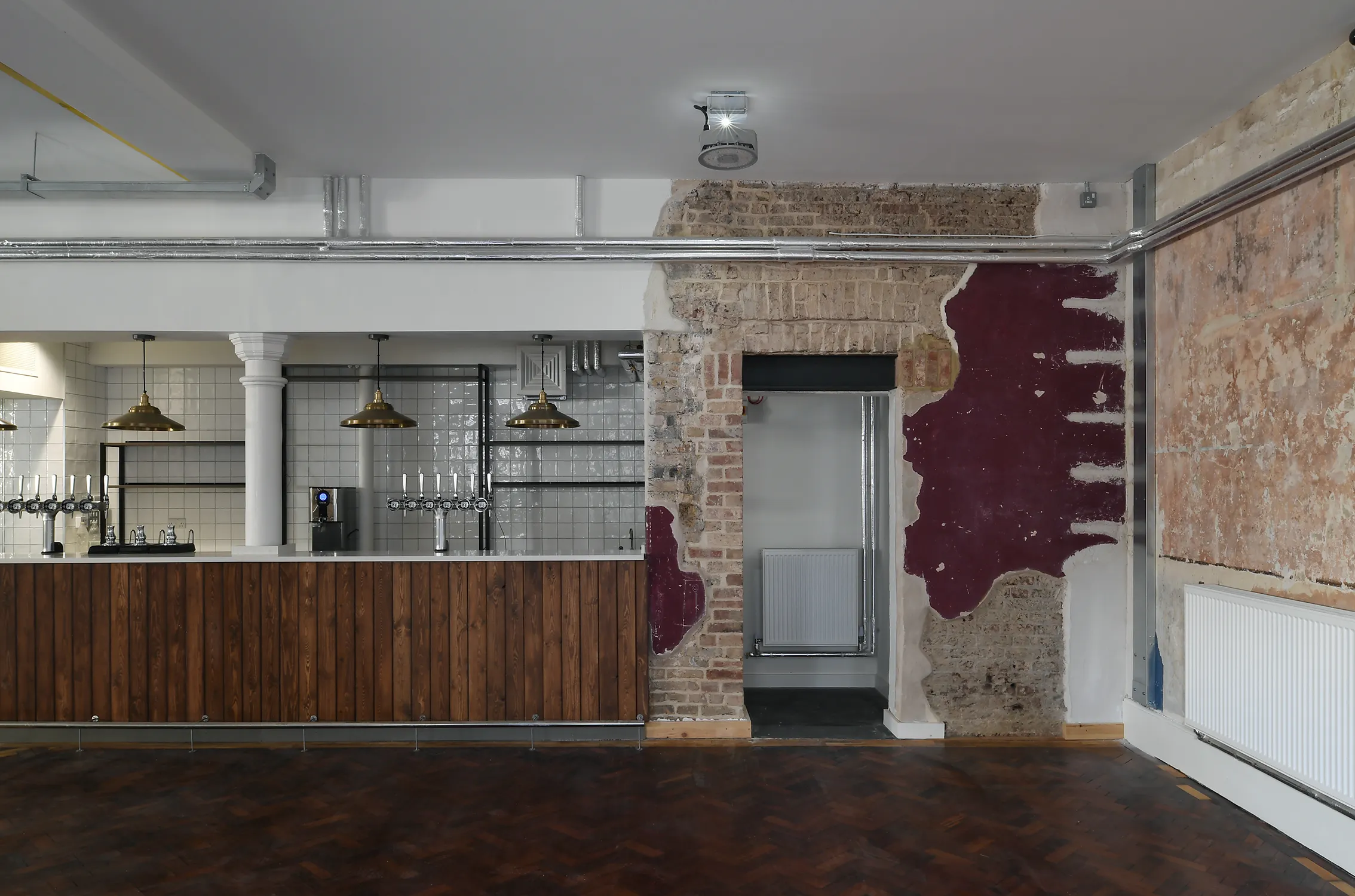
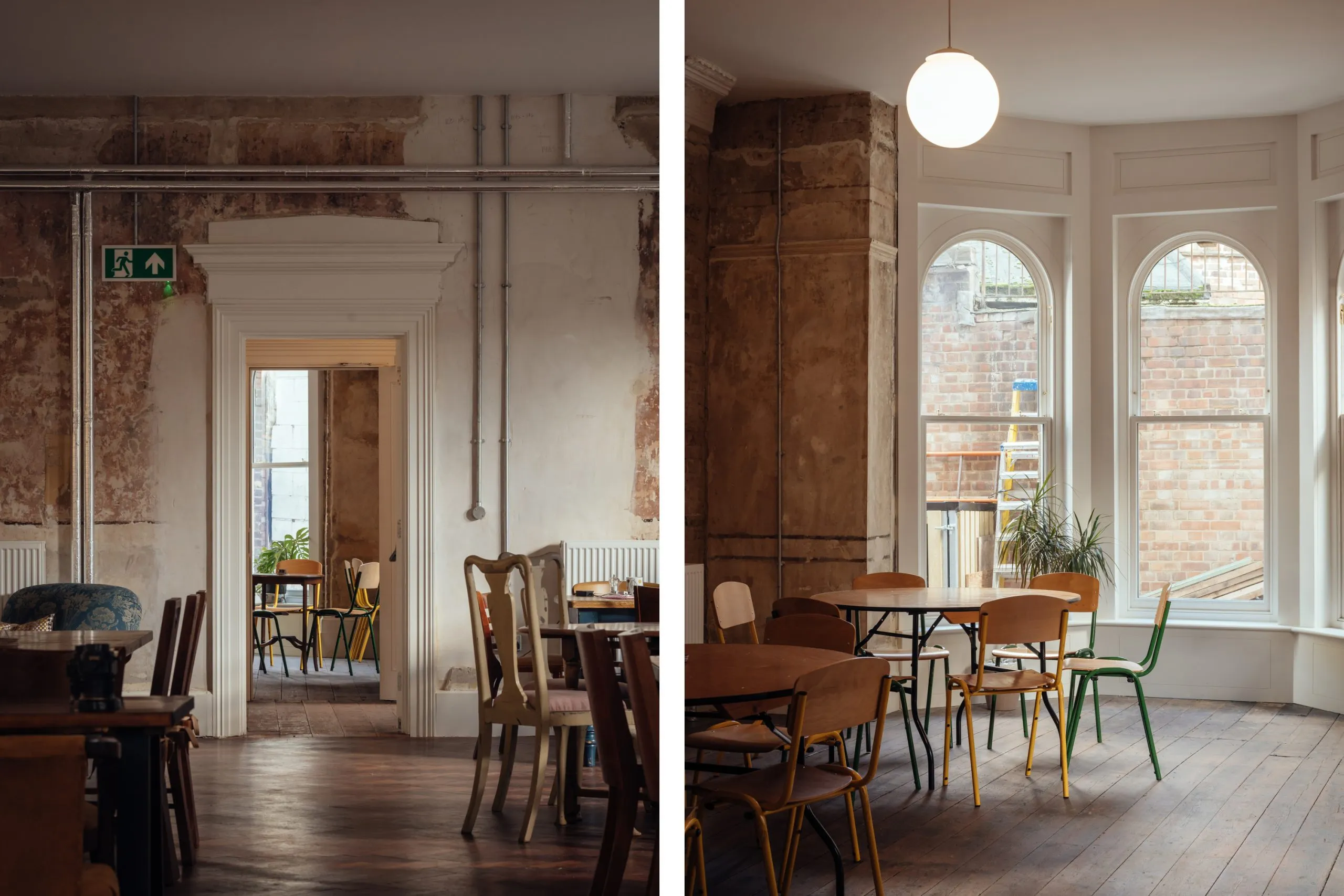
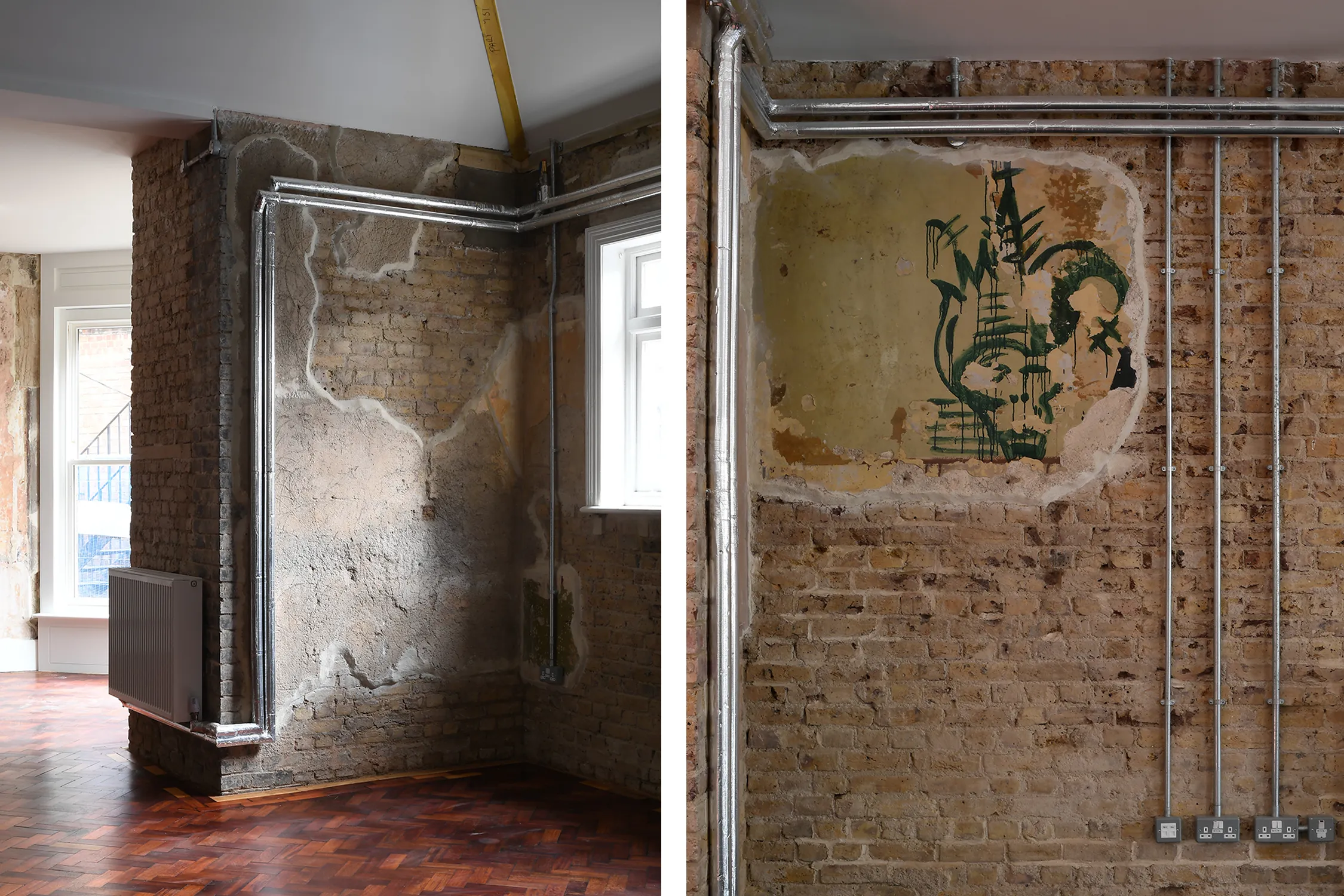
Elsewhere, spaces are deliberately under-programmed, allowing their natural material finishes to do much of the work. Walls have been left bare, repaired only where necessary with lime plaster, while original mouldings, architraves and cornices have been retained or carefully reinstated. All new electrical, plumbing and ventilation runs are now surface-mounted and a small serving hatch between the Georgian and Victorian sections – once the only way to glimpse the farmhouse – remains in place. Throughout, Hayatsu’s interest lies in allowing the building’s four architectural languages to overlap, rather than resolving them into a single voice.
Photography: Jim Stephenson
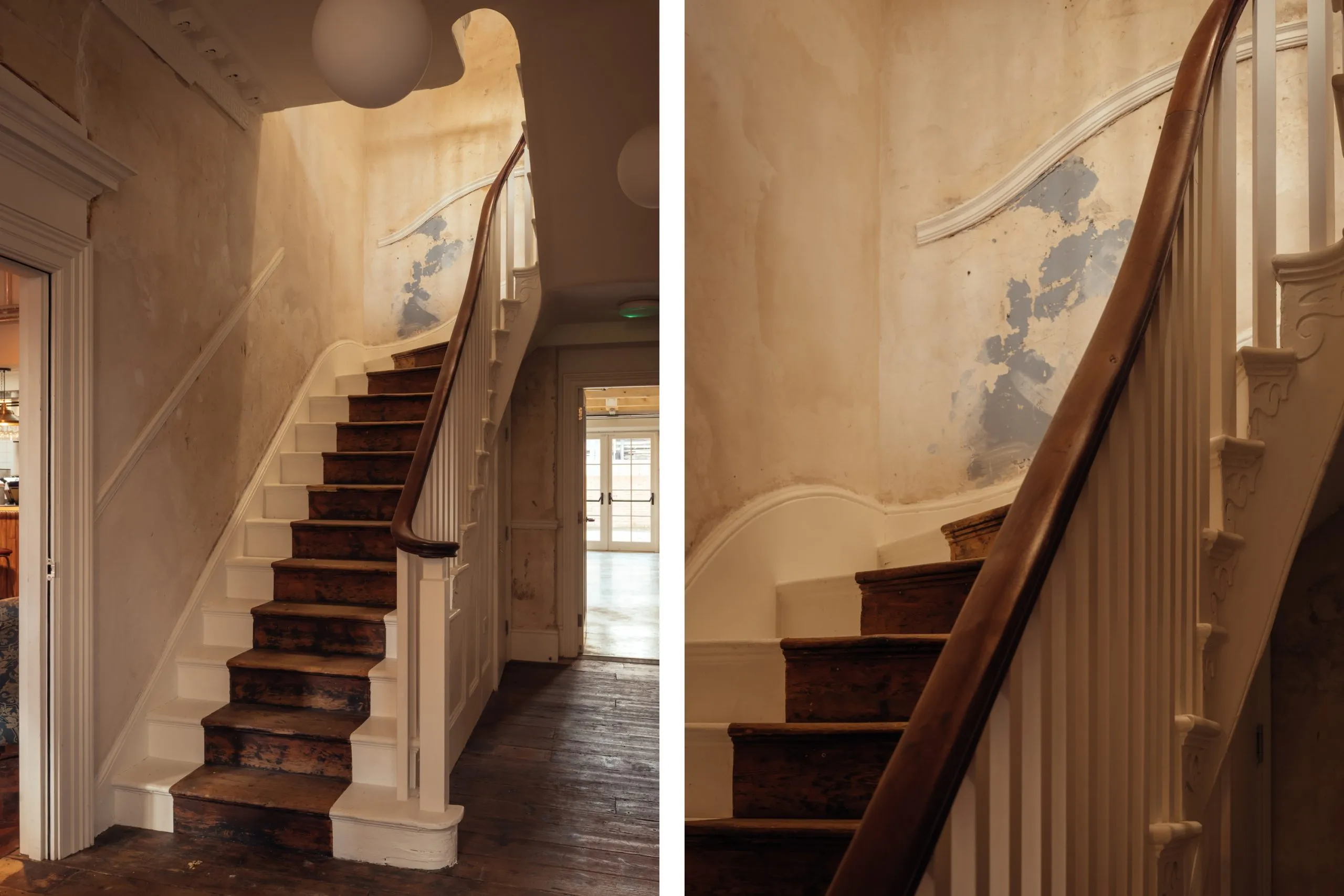
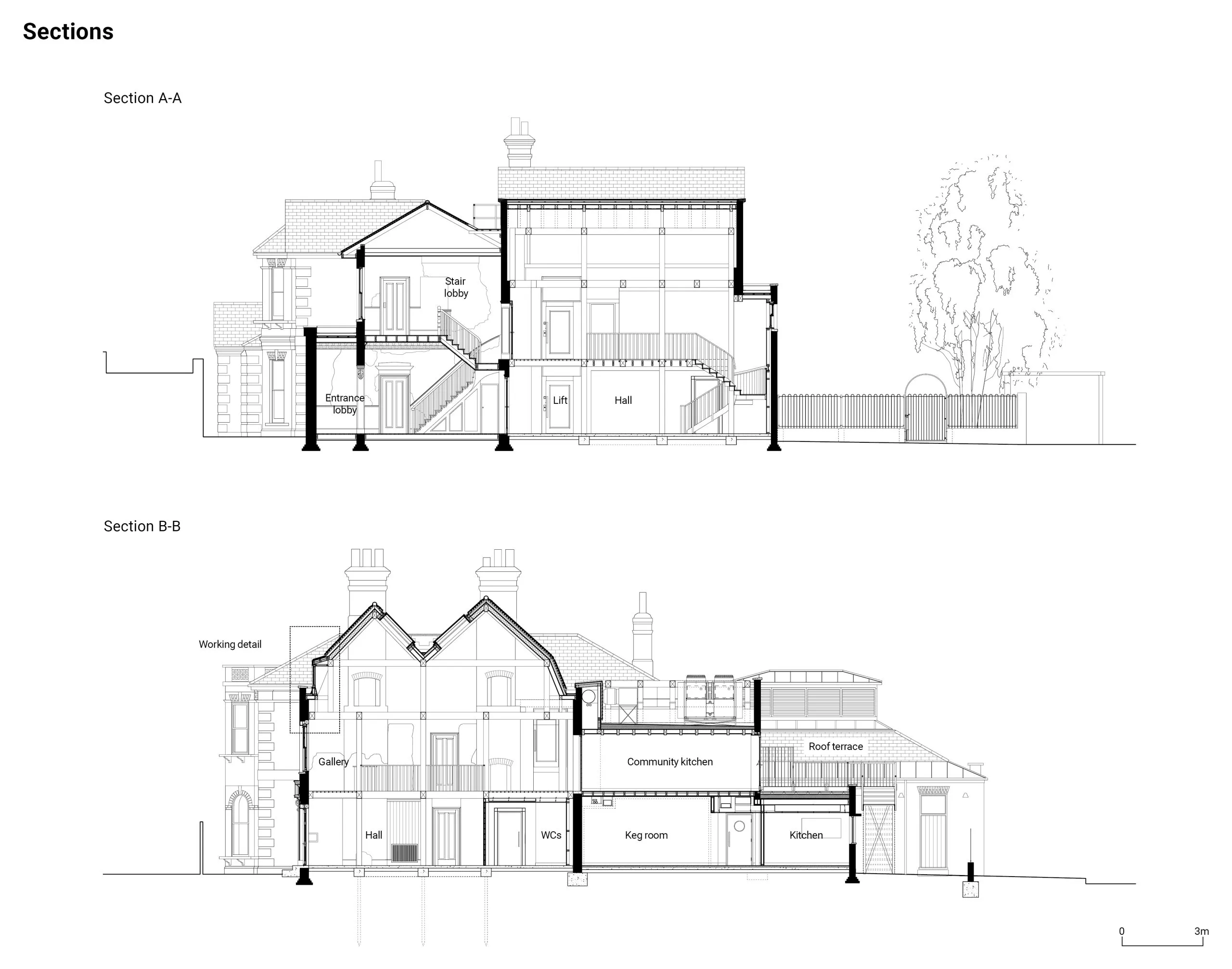
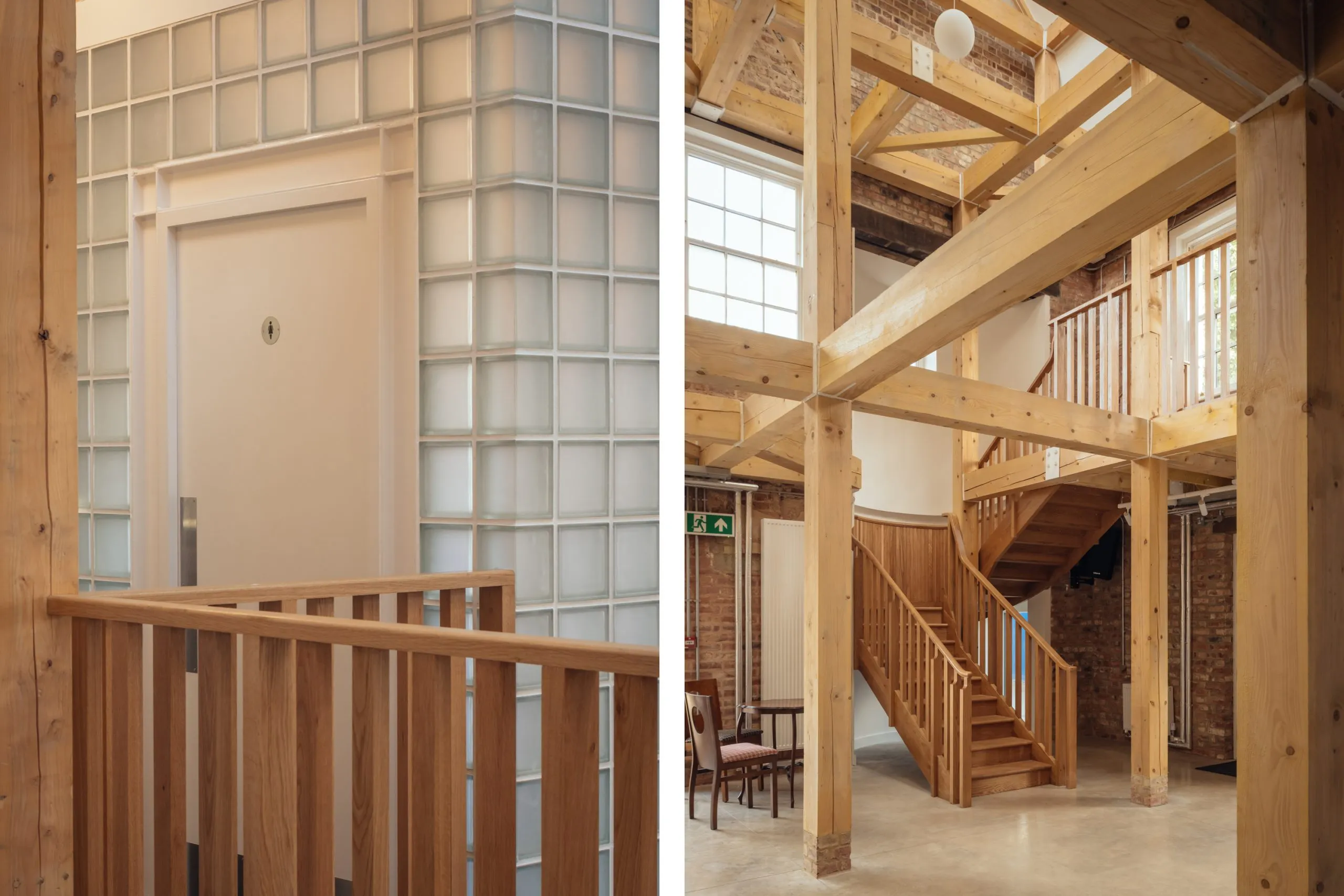
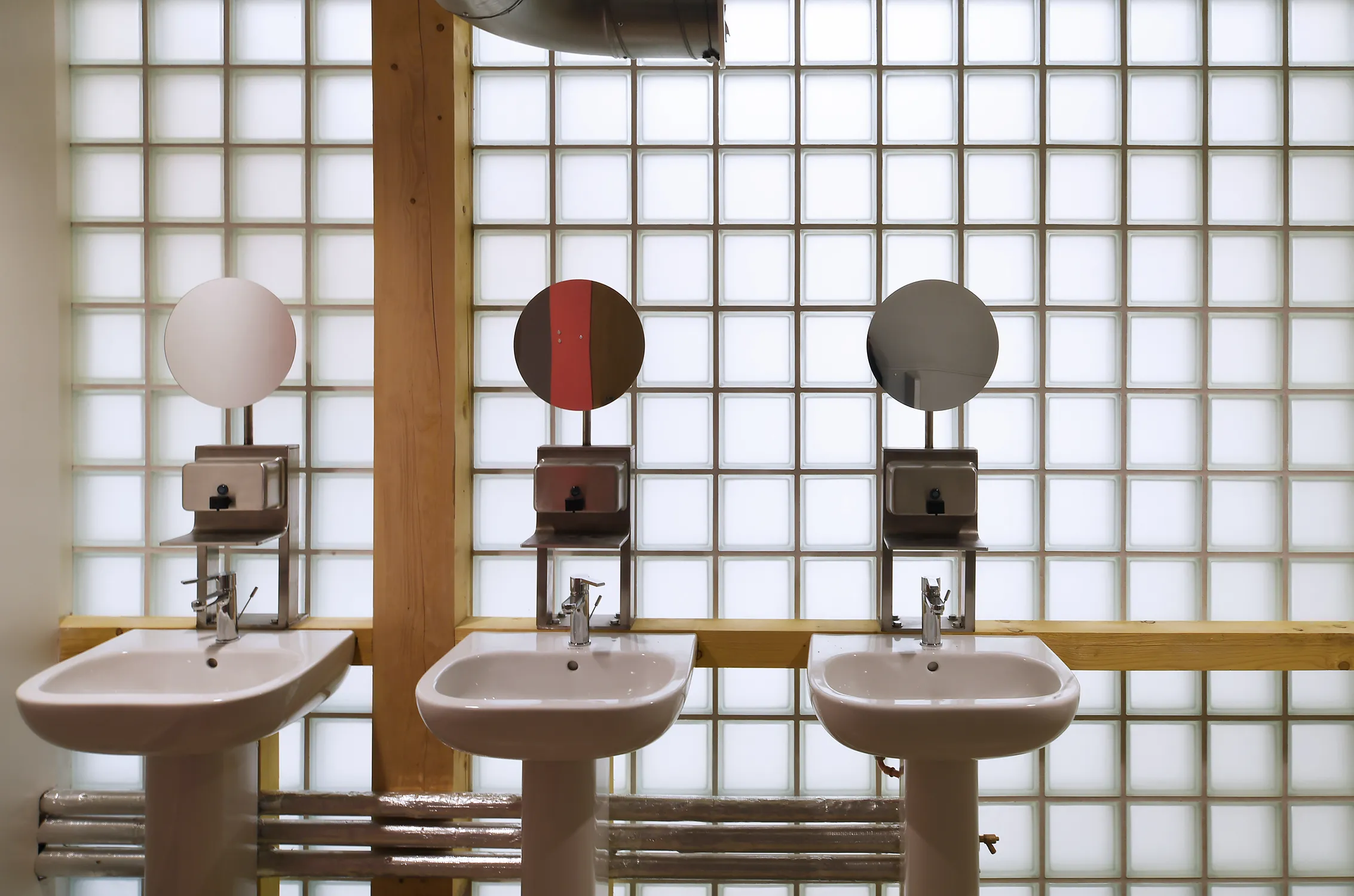
This approach is perhaps clearest in the triple-height space to the rear, which has been carved from the shell of the Georgian farmhouse and is easily the project’s boldest move. A lattice of C24-grade European spruce – described by Hayatsu as ‘permanent scaffolding’ – fills this volume. Within it sit a glazed-brick toilet block, a perforated metal gallery floor and a curving oak staircase rising from ground to first floor. These elements combine to draw daylight down from a glazed roof into the deepest part of the plan.
Structural engineer Webb Yates developed a strategy for the timber framing that required stripping the farmhouse back to its external walls, a process involving a forest of temporary scaffolding and ‘massive’ water ballast tanks. According to Hayatsu, the main contractors, Claremont Refurbishment, only fully ‘got the vision’ once the scaffolding was removed and the void that remained was gradually revealed. The practice saw this as a setting for performances and events, but it has already been claimed in more informal ways; the nook behind the staircase is now a favourite den for local children.
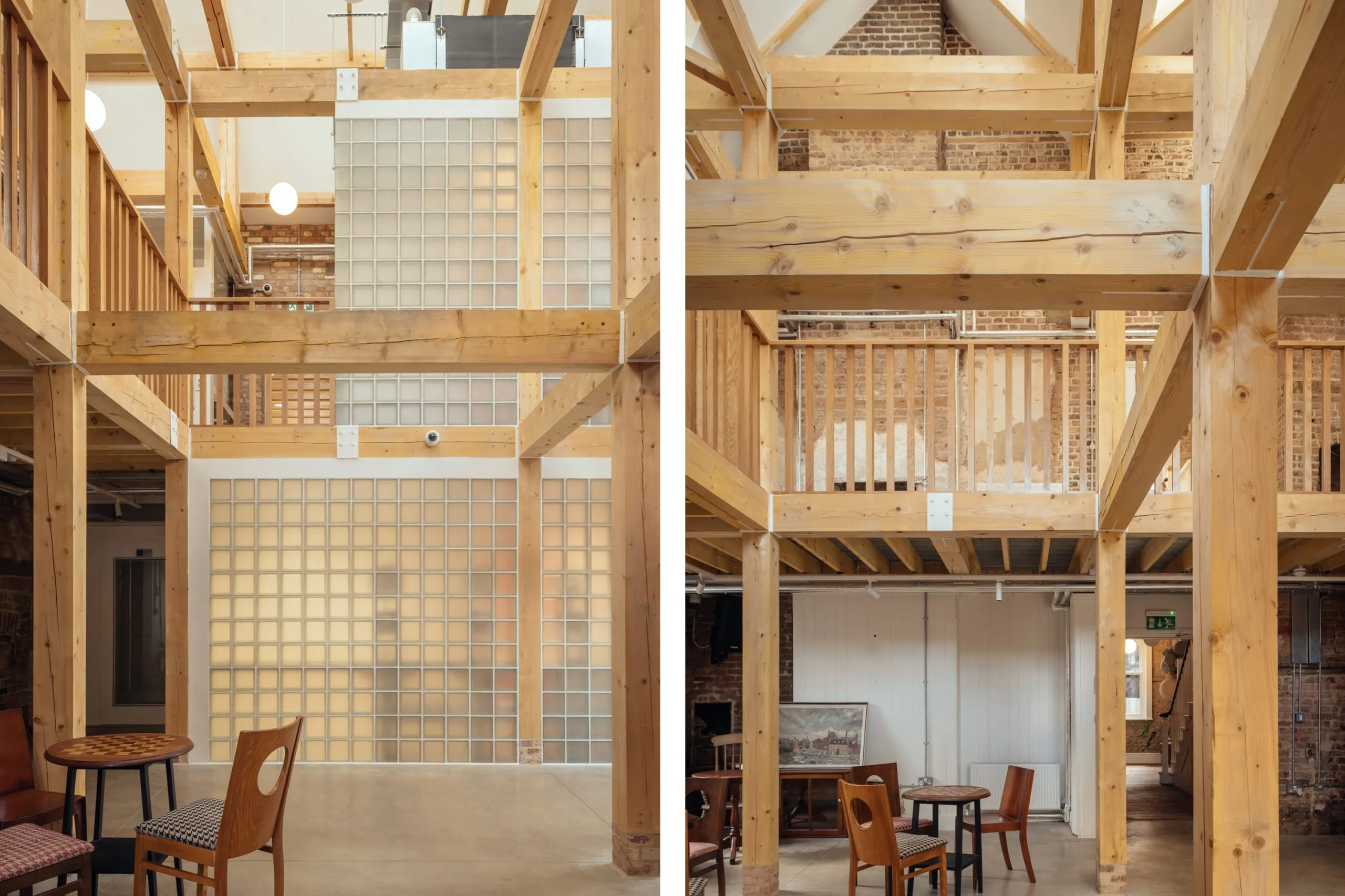
Photography: Jim Stephenson
Lewisham Council secured funding for the project through a £1.8 million grant from the Mayor of London’s Good Growth Fund. Public consultation, awkwardly timed during the height of the pandemic, shaped a brief that positioned the building not just as a pub, but as a shared community resource with a wider range of uses.
This process was eased by the fact that the new operator, Greenwich Co-operative Development Agency (GCDA), was selected early in the project’s life. Helping to shape the brief, GCDA brought three decades of community-led development experience to the scheme, also partnering with Portobello Brewery – operator of the nearby Catford Bridge Tavern – to handle the commercial operation of the pub.
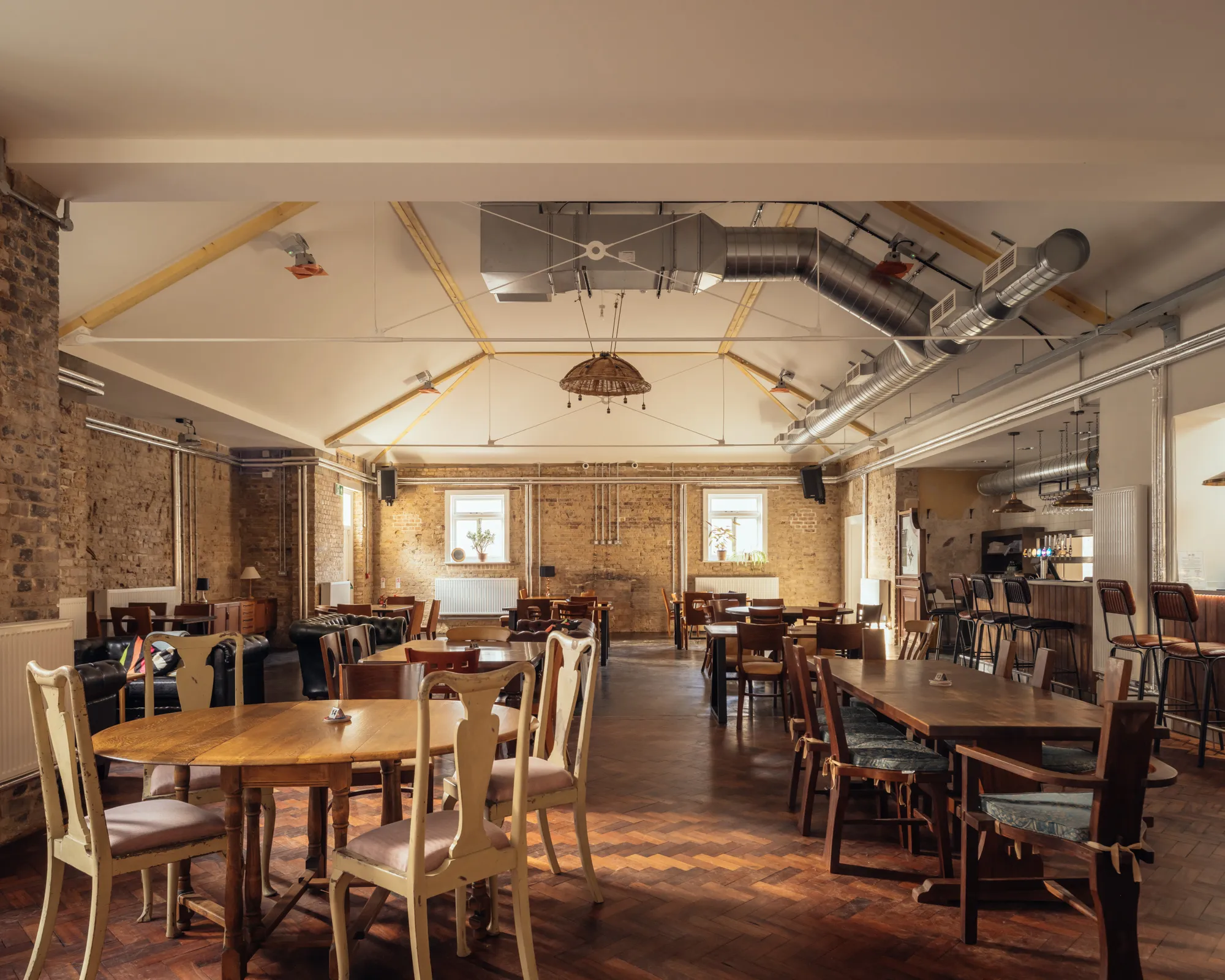
Photography: Jim Stephenson
Hayatsu delicately refers to the construction as ‘challenging’. It was approached with restraint. The aim was to demolish only where it was unavoidable, retaining as much of the existing fabric as possible. This extended to the unglamorous 1950s additions at the rear, now home to the pub’s compact commercial kitchen, which is squeezed further by the presence of a Georgian chimney breast, one of the building’s many spatial oddities.
In the Victorian sections, Hayatsu has adopted a pragmatic but quietly celebratory approach to restoration, where age and repair sit side-by-side. Some mouldings have been replaced, while others are left as worn fragments. Externally, stonework has been selectively restored where most visible, and elsewhere it is wrapped in lead flashing.
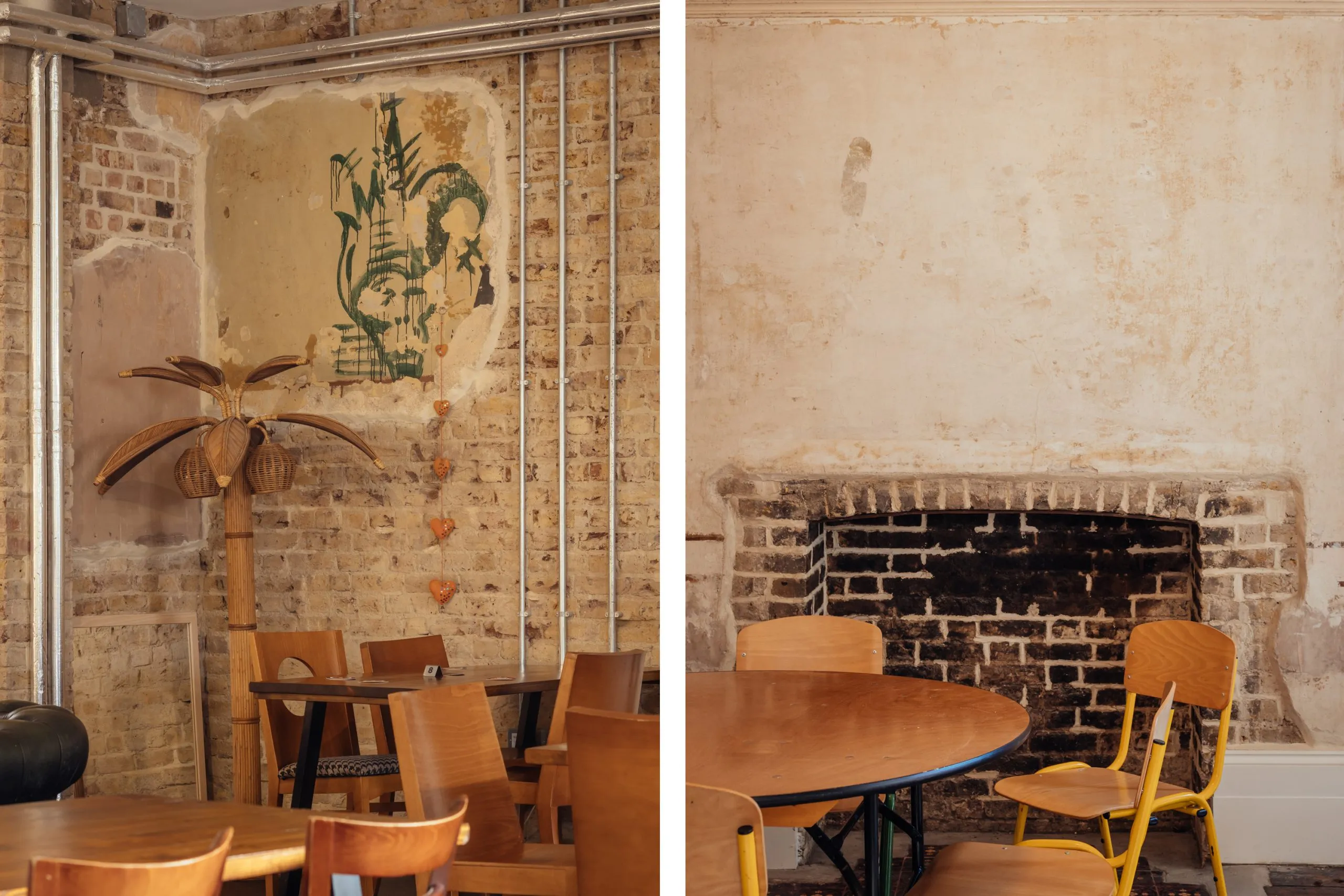
Photography: Jim Stephenson
Budgetary pressures shaped many of these decisions. The discovery that the roof and lantern in the former billiards room would need to be replaced significantly impacted the project’s timescale and build costs. Its replacement now houses the building’s heat pump – from the outset the operator insisted the venue should function with a low-carbon energy source.
One notable omission (a victim of budget constraints) is internal wall insulation, however. Despite being considered in earlier iterations, Hayatsu and Lewisham Council recognised that wall insulation would have concealed the layers of construction that tell this locally listed building’s story. In its absence, thick masonry walls, patched and stitched with brickwork and lime repairs, remain exposed. This approach also allowed for pipework, conduits and ducting to be surface-mounted, keeping future maintenance simple.
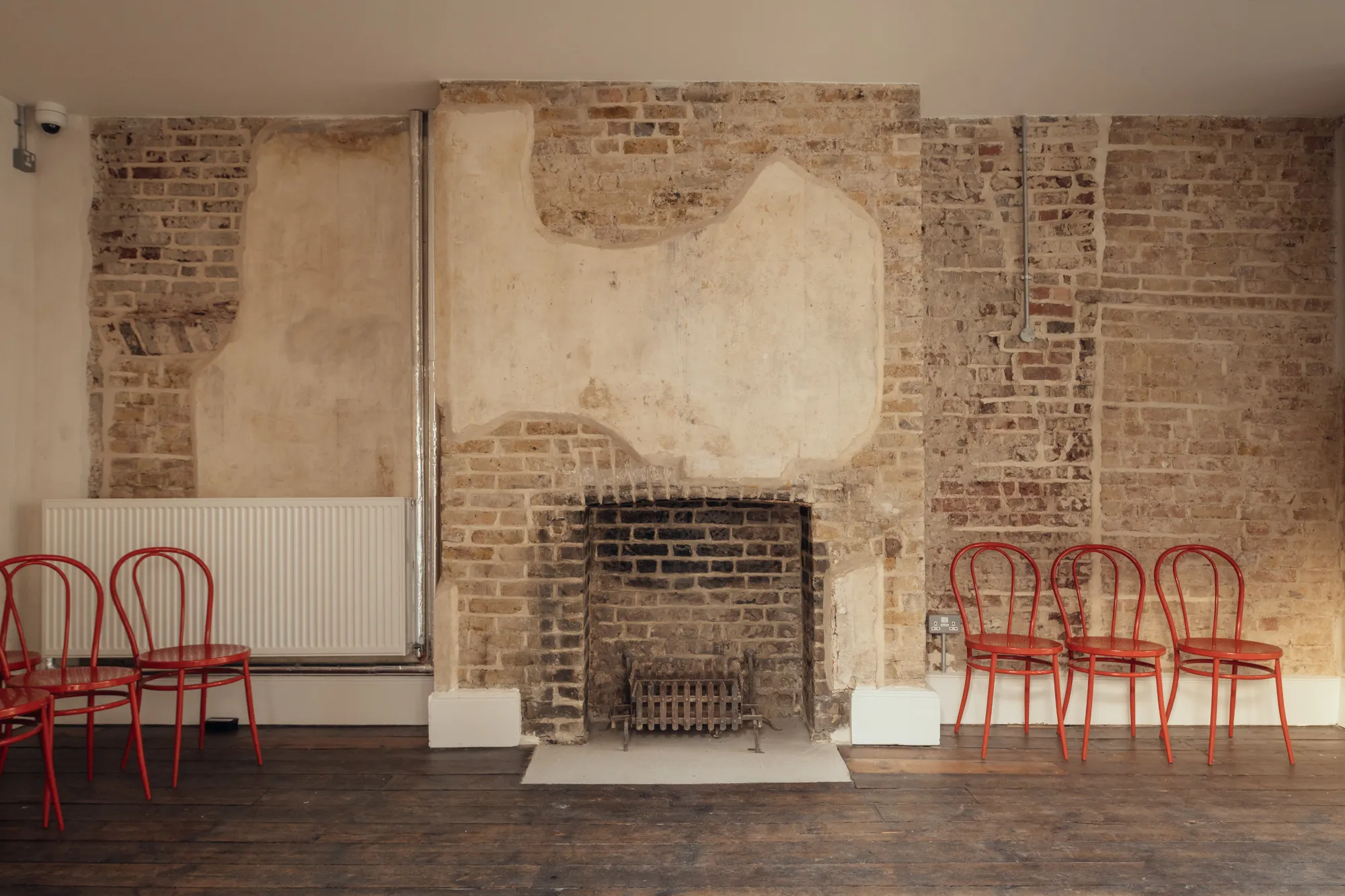
Photography: Jim Stephenson
To the rear, the venue’s outdoor space feels more like a mews yard than a beer garden. Led by Jonathan Cook Landscape Architects, the area features bound gravel, a playable mound and newly planted street trees. Lewisham and GCDA hope that food growing along the venue’s boundary wall will gradually soften the hardscaping. Deliberately modest, the space is designed to integrate with later phases of the Catford Town Centre Framework – first adopted in 2021 and set to bring 2,700 new homes to the town centre.
To the north of the venue lie a set-makers workshop and a car park, which, together with Catford House, form Phase 1 of the new masterplan. Turner Works is leading the multidisciplinary team for this phase, whose first new-build scheme, Thomas Lane Yard, was approved in April 2025. It will provide 113 affordable homes across a pair of eight- and 12-storey towers. Once the Turner Works-designed development is completed, this rear yard will become Catford House’s main entrance, linking the town centre’s oldest structure with its newest and forming a continuous strip of pedestrianised public realm.
Photography: Jim Stephenson
With the imminent reopening of Catford House and the refurb of the nearby Brookdale Club – a community-owned music venue led by co-operative Sister Midnight – the cultural landscape for Catford looks exciting. The real test, however, will be how spaces of such different scale and intent hold their ground alongside the larger developments yet to come.
Krish Nathaniel is principal urban designer for the London Borough of Harrow
Architect’s view
Our design approach was to express the process of repair as a visible trace of human intervention embedded in the building fabric. Stitched brickwork and patchwork plaster repairs are exposed and celebrated, rather than concealed, at the same time that roofing and services have been upgraded. Speaking to members of the community, we were happy to learn that the special feeling of the spaces before the pub’s closure – its layered rooms and material texture – was still present after our interventions.
The project addresses sustainability primarily through retention and refurbishment of existing fabric, minimising demolition and using salvaged materials where possible. This approach respects the cultural significance of Catford’s oldest building while considering whole-life carbon. Where possible, bio-based materials were specified for new fabric, including woodfibre insulation between rafters and solid softwood members for the new bracing structure within the Georgian hall. An oak staircase leads up to the gallery, bringing visitors up close to the timber structure in this daylit, triple-height space.
Photography: Jim Stephenson
The design aimed to balance heritage conservation with opportunities to upgrade the building fabric – new slabs, roofs and openings were designed to meet current thermal performance standards. The unfinished nature of the existing walls, together with exposed services, are open to future adaptation, including new wall insulation and linings when budgets allow.
Together with Webb Yates, a mixed-mode ventilation strategy was developed, using mechanical ventilation with heat recovery to provide fresh air in winter, complemented by natural ventilation in summer, aided by openable rooflights. Air source heat pumps for heating and hot water further reduce operational energy consumption.
The landscape strategy by Jonathan Cook draws on the ecological context, proposing resilient, self-seeded flora and edible planting, while introducing a grass mound and winding pathways for incidental play. The sustainable drainage strategy incorporates water butts and permeable paving.
Takeshi Hayatsu, director, Hayatsu Architects
Engineer’s view
The principal structural challenge was how to stabilise the severely degraded Georgian shell without overwhelming it. Large areas of floor and roof had failed over time, and with them the lateral restraint that kept the masonry walls in balance.
Rather than treating the walls as elements to be replaced, we worked with the architect to design a new internal timber frame that re-established the missing relationships between them. The frame acts as a series of horizontal ties and diaphragms at each level, restoring lateral stability and robustness while allowing the restored existing envelope to remain the primary structure. It is arranged around the original floor and roof levels, so those elements, whose integrity has been renewed through sensitive repairs, once again fulfil their role in tying the building together. Connections between the new timber frame and old walls were designed to restrain movement and cater for accidental load paths, but without imposing rigid fixity that the historic structure would struggle to accommodate.
The result is a space for the community that tells the building’s story, with historic and new fabric legible together.
John Gerrard, director, Webb Yates Engineers
Client’s view
As a locally listed 1736 building, the former Catford Constitutional Club presented challenges but also real opportunity. Retaining and repairing it was a deliberate choice to avoid the carbon impact of demolition, honour Catford’s heritage and respond to how strongly the community felt about the building.
The building had suffered from significant disrepair, requiring complex remedial works. The approach prioritised conservation and responsible material intervention, despite increased cost and programme pressures.
Photography: Jim Stephenson
Reopening the building as The Catford House marks an early milestone in delivering the Catford Town Centre Framework and its ambition for a greener, more resilient and community-centred town centre. The project supports this vision through the reuse of historic assets, enhanced accessibility, improved building performance and flexible spaces that can accommodate a range of uses.
Supported by funding from the Mayor of London’s Good Growth Fund and Lewisham Council, the refurbishment has created a high-quality, low-carbon building rooted in its heritage but equipped for varied community use. The Catford House now supports local enterprise, creativity and everyday social life, demonstrating how thoughtful, heritage-led regeneration can deliver long-term value for Catford.
Charlotte Harrison, head of strategic regeneration, Lewisham Council
Working detail
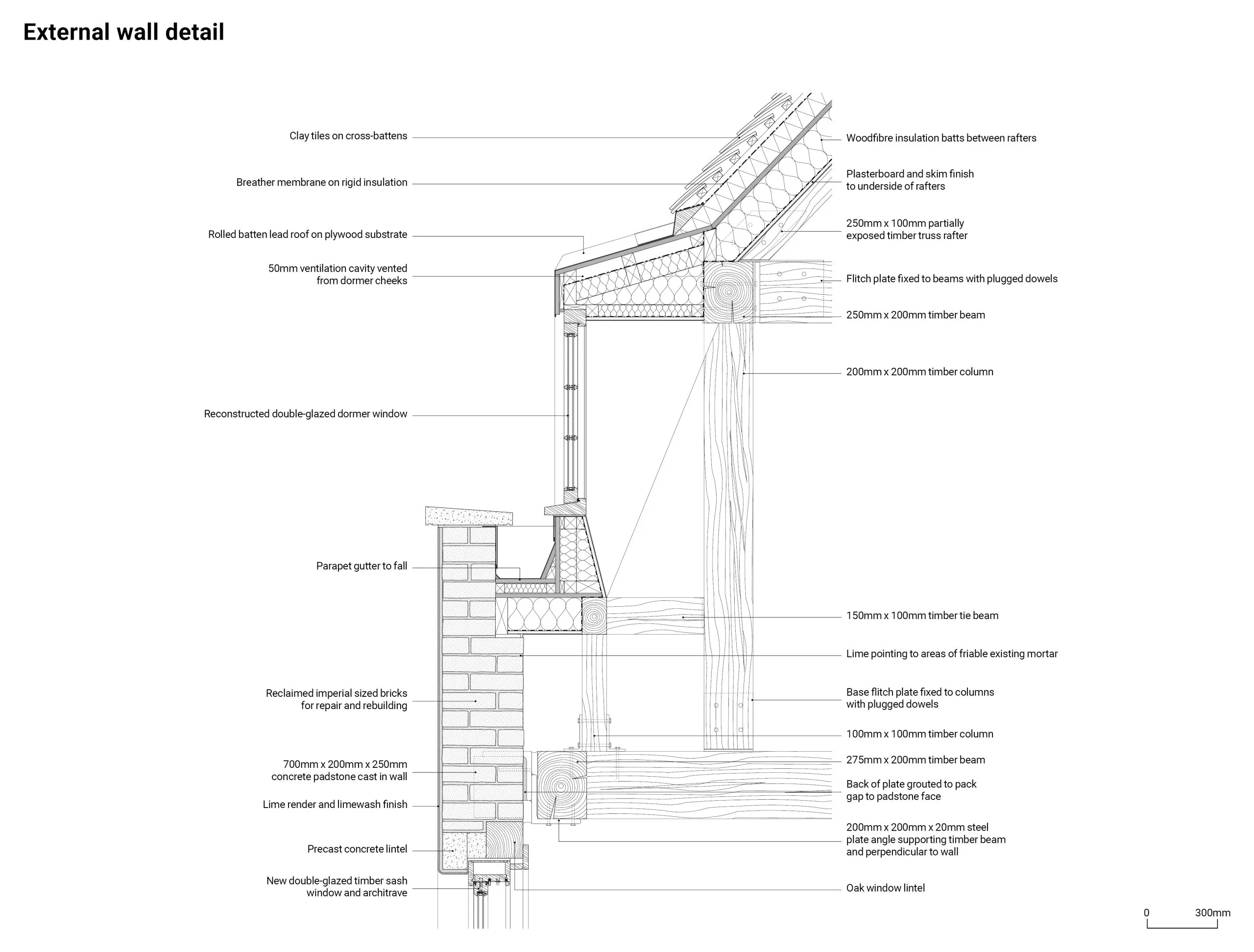
The detail shows a junction in the Georgian section of the building, where the new timber frame meets existing masonry walls and forms the new roof structure. Our idea was for the frame, in effect a permanent scaffold structure, bracing and tying together the historic walls, to become the architecture of the Georgian hall, embodying the project’s ideas of visible repair.
The timber structure sits proud of the wall face, reading clearly as a contemporary intervention stabilising the walls after the removal of the old floor joists (due to rot). At the wall junction, bespoke steel brackets transfer loads while minimising alterations to the historic fabric. Only the perpendicular beams connect to Z-brackets supported from concrete pads cast into the wall.
Photography: Jim Stephenson
At roof level, the timber frame extends upward to support new rafters and conservation-style rooflights. The roof build-up incorporates woodfibre insulation between the rafters, with clay roof tiles replacing the existing, allowing for thermal upgrading without altering the external envelope of the building.
The timber members are solid softwood in order to minimise the use of industrially engineered timbers and are in keeping with the use of solid oak lintels over the existing window openings. The windows themselves have been upgraded to Secured by Design double-glazed units, while retaining their original proportional divisions. On the internal wall faces, loose plaster was removed, leaving patches of plasterwork and brick faces, which were repointed and sealed. Areas where cement render had failed externally were removed and replaced with lime render to allow the walls to breathe.
Ethan Loo, architect, Hayatsu Architects
Photography: David Grandorge
Project data
Location: London SE6
Start on site: April 2023
Completion: October 2025
Gross internal floor area: 626m2
Construction cost: £4 million
Construction cost per m2: £6,390
Architect: Hayatsu Architects
Client: London Borough of Lewisham
Structural engineer: Webb Yates Engineers
M&E consultant: Webb Yates Engineers
Quantity surveyor: Stockdale
Project manager: London Borough of Lewisham
Principal designer: Turner Works
Approved building inspector: London borough of Lewisham
Lead consultant: Turner Works
Housing/mixed-use scheme architect: Turner Works
Landscape architect: Jonathan Cook Landscape Architects
Fire engineer: Semper Fire Engineering
CDM consultant: Msafe
Planning consultant: Longboard Consulting
Sustainability and ecology consultant: Greengage
Transport consultant: Civic Engineers
Kitchen specialist designer: Space Group UK
Pub operator: Greenwich Co-operative Development Agency
Main contractor: Claremont Refurbishment
CAD software used: ArchiCAD
Photography: David Grandorge
Sustainability data
Percentage of floor area with daylight factor >2%: N/A (existing building)
Percentage of floor area with daylight factor >5%: N/A (existing building)
On-site energy generation: 57.21% (estimated for ASHP provision)
Heating and hot water load: 70.52 kWh/m2/yr (estimated)
Operational energy: 123.26 kWh/m2/yr (estimated)
Total energy load: 123.26 kWh/m2/yr (estimated)
Carbon emissions (all): 1,027.8 kWh/m2/yr (estimated), 440 kgCO2/m2 (if including grid decarbonisation)
Annual mains water consumption: 2.6 m3/occupant (estimated)
Airtightness at 50Pa: 15 m3/hr/m2 (estimated)
Overall thermal bridging heat transfer coefficient (Y-value): N/A (existing building)
Overall area-weighted U-value: 1.16 W/m2K
Annual CO2 emissions: 17.13 kgCO2/m2/yr (estimated)
Embodied carbon: 171 kgCO2eq/m2 (estimated)
Whole-life carbon: 732 kgCO2eq/m2 (estimated)
Predicted design life: 60 years
Energy Performance Certificate rating: B