
Late last year, we lost one of the world’s greatest film makers when Rob Reiner was murdered alongside his wife. He was a gifted comedic actor, a screenwriter, the director of two of my all-time favourite films, and most importantly, a mensch.
A quote from one of Reiner’s films that I regularly use is from the Man in Black in The Princess Bride. He says, ‘Life is Pain, highness. Anyone who says differently is selling something.’
We were raised to believe that life should be better than this – more fun, more successful, more comfortable, more cool stuff, less sadness, less worry, less bad stuff. We’re given this message repeatedly: Be good and good things come to you; work hard and you’ll get what you deserve. Every ad promises happiness, every social media influencer promises success. Parents, teachers, religions, and politicians all promise us that we should be able to get more if we work for it and deserve it.
We are left feeling bad for having feelings that we can’t avoid.
Pain comes to all of us at different times, in different forms, and different sizes. Often it feels awful or unfair. Pain doesn’t only befall those who deserve it or have done bad things or haven’t looked after themselves.
There are sensible things we can do to reduce pain. Painkillers help…except when they don’t. Thinking positively helps…except when it doesn’t. Exercise and nutrition are great but no guarantee of a healthy, happy life.
Sometimes, our attempts to avoid pain lead to more suffering. We might take medication, drink alcohol, go to therapy, avoid people, say positive affirmations, miss work, or do mindfulness meditation and feel better briefly, only to find that the pain comes back, maybe even a bit stronger or louder.
Instead, we need to find a way to accept the thoughts we don’t like, the feelings that hurt, and the physical symptoms that cause discomfort. But acceptance is not simple.
Acceptance is a word that seems to be used everywhere now. Sometimes, it’s used dismissively. People might tell you to just ‘accept it’, meaning ‘suck it up’, ‘ignore it’, or ‘stop talking about it’. Others were taught to associate acceptance with surrendering, giving in, or putting up with injustice. I’m sorry if you’ve had this experience.
Acceptance can also be confused with tolerating a feeling. You might tell yourself you can ‘put up’ with a feeling, as long as it doesn’t get too intense or stick around for too long.
Other times people try to treat acceptance as a clever therapy trick. If you can just ‘accept’ this sadness or anxiety or trauma or chronic pain, then you won’t have to have it anymore. Wouldn’t it be great if this were true? If you could just use acceptance as a tool to avoid accepting what you’re feeling? But acceptance isn’t a trick or a technique. It’s about genuinely making space for discomfort. So, why on earth would we want to learn to hold our internal pain? It’s heavy. It hurts. And right now, you have it whether you want it to be there or not (although I’m not making any statement about whether you will always have it).
So, let’s use our curiosity and noticing skills to get to know our pain.
Take in a breath.
As you breathe in, what does it feel like to be breathing in?
As you breathe out, what does it feel like to be breathing out?
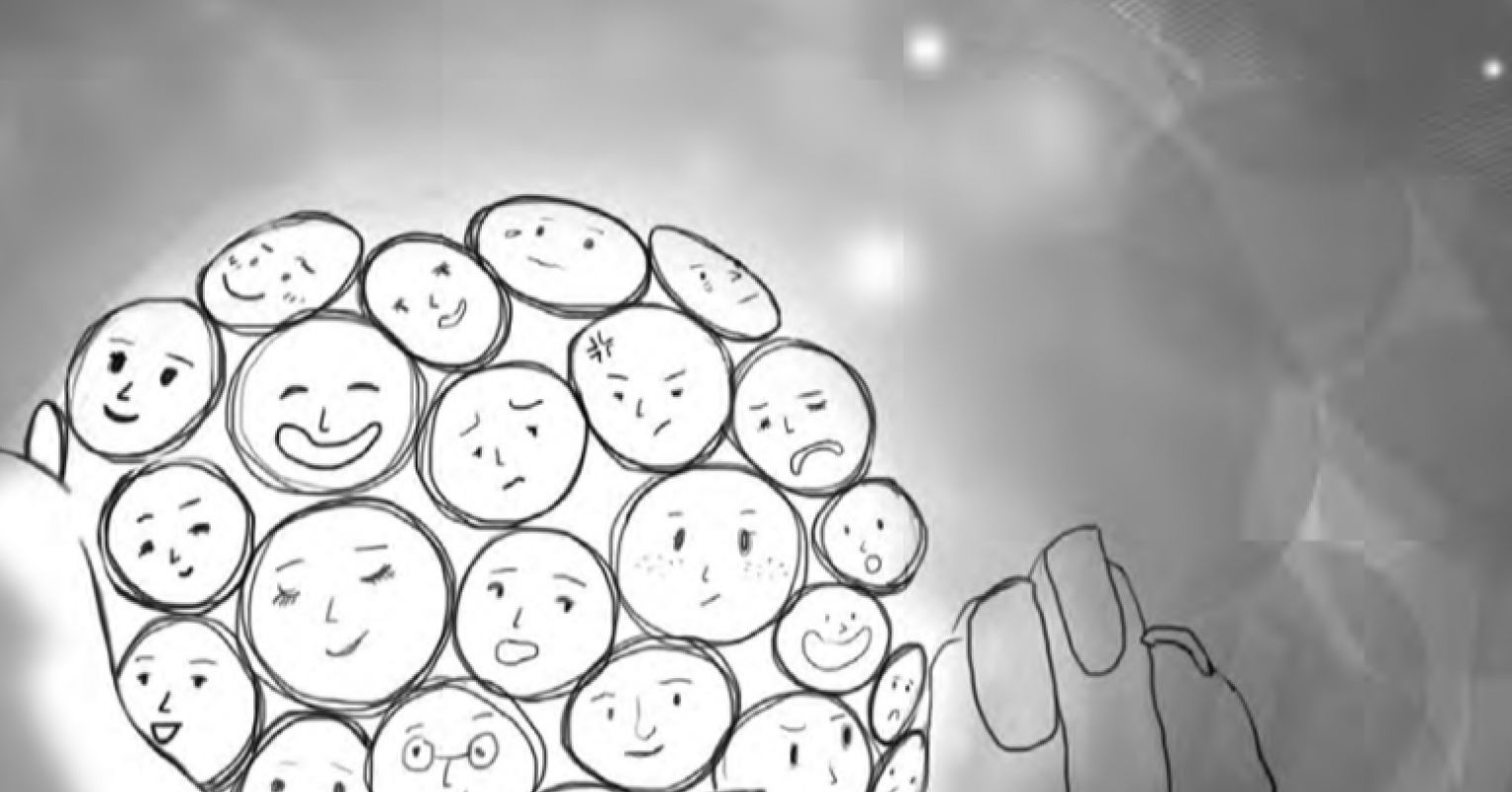
Now have a look around inside your body. What feelings, emotions and sensations can you notice? Are there any that feel raw or uncomfortable? Let’s spend some time with those. Don’t try to remove them or change them; rather, notice them with curiosity. Like you’ve never felt these feelings before.
Where do these feelings sit inside your body? How big are they? Do they have a shape? Do they have a particular texture or colour? Are they jagged or smooth? Are they heavy or light?
As you observe these feelings, are you also able to observe your breath? Watch as your breath comes into your body, passes around the feelings wherever they are sitting, and goes out of your body again. Let your breath do whatever it needs to do to care for you and nourish you. Observe this for a few cycles of breath.
Your mind might tell you that there is no room inside you for these feelings. Yet, what is your experience telling you right now? You can breathe around these feelings. There is room inside you for these emotions and sensations, even the feelings that are uncomfortable and you really wish weren’t inside you. Notice your breath is able to pass around these feelings too. Keep coming back to your breath. You’ve got this.
Now I invite you to take a warm compassionate hand and place it on the part of the body that is experiencing these feelings. What does it feel like to have the feelings and to have the breath and to have the warmth and compassion? Can you observe them all? Observe this as you breathe in and breathe out. Then slowly, when you’re ready, take three more breaths before bringing your focus back to the world around you.
Now, take some time to notice what it was like to do that. What was it like to observe your discomfort rather than fight it? To see the discomfort for what it is rather than to listen to your mind telling you that it shouldn’t be there or that you won’t cope if it continues?
Did you notice that there is room inside you for the discomfort? For the emotions or judgemental thoughts? Even for those things you really wish that you didn’t have to be holding? You are bigger and stronger that any of these thoughts or emotions or sensations or urges or memories. Knowing that doesn’t stop it hurting, but maybe the awareness that you can hold it frees up some energy that you would have spent fighting it, and allows you to do things that matter to you.
Adapted from my book Holding the Heavy Stuff: Making Space for Critical Thoughts and Painful Emotions.