
Oil prices rose and stock markets came under pressure on Monday after intense US-Israeli strikes on Iran prompted fears of significant global economic disruption.
Brent crude jumped by as much as 13% during early trading – to hit $82 per barrel, a 14-month high – as the effective closure of the strait of Hormuz, one of the most important arteries for global trade, intensified concerns over oil supplies.
In Tokyo, the Nikkei 225 fell by nearly 2.4% as traders in Asia responded to the weekend’s developments. It later pulled back, to trade down 1.5%. Pre-market trading also put Wall Street on course to open lower on Monday.
In Sydney the ASX 200 opened down sharply, before recovering, to finish the day flat. In Shanghai the CSI 300 fell 0.6%, before breaking out of the red to trade 0.4% higher.
Gold, often deemed a safe-haven asset by investors during times of crisis, rose 2.8% to $5,397.10 per ounce.
Military strikes by the US and Israel on Iran showed no sign of lessening, with Donald Trump suggesting the conflict could last for four more weeks and saying that attacks would continue until US objectives were met.
While oil fell back slightly from its initial highs, Brent remained up 7% during early trading, above $77 per barrel.
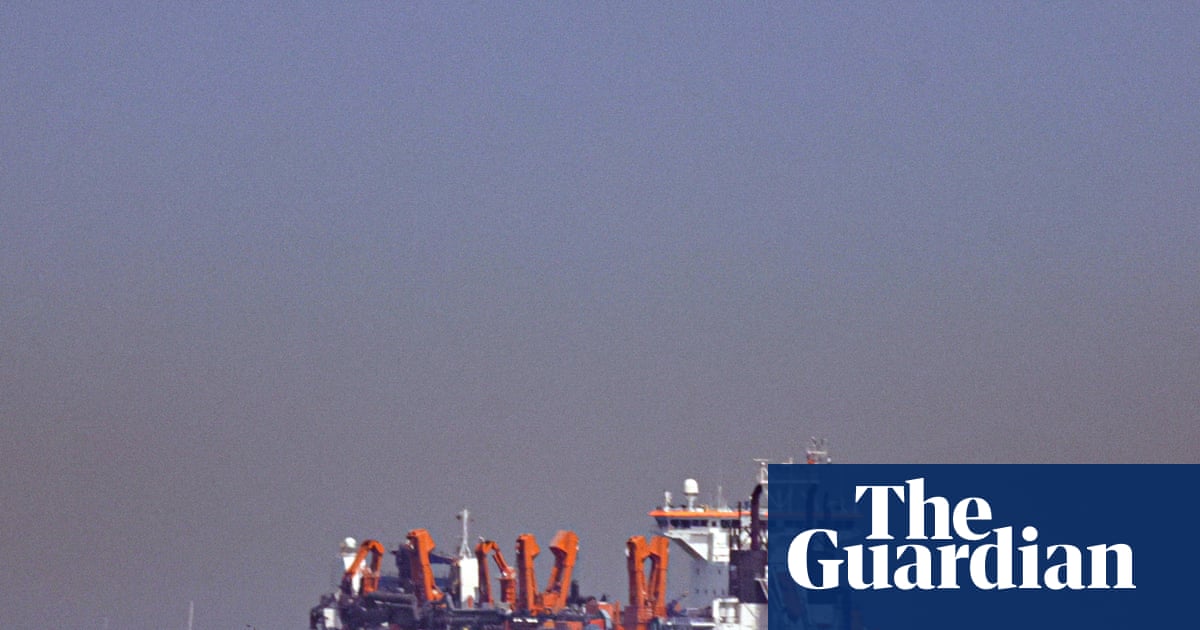
As prices rallied, all eyes were on the strait of Hormuz – with about a fifth of oil supplies and seaborne gas tankers passing through it.
Within hours of Saturday’s US-Israeli strikes, Tehran had reportedly warned tankers in the strait that no ship would be allowed to pass through.
A map showing the Strait of Hormuz
Two ships have been attacked in the strait, one off Oman and the other off the UAE, according to United Kingdom Maritime Trade Operations (UKMTO), the British maritime security agency.
While Iran has yet to officially confirm that the vital waterway has been blocked, marine tracking sites showed tankers piling up on either side of the strait wary of attack or maybe unable to get insurance for the voyage.
The International Maritime Organization urged ships to avoid the strait of Hormuz. Arsenio Dominguez, its secretary-general, expressed deep concern over reports that several seafarers had been injured in attacks.
“I urge all shipping companies to exercise maximum caution,” said Dominguez. “Where possible, vessels should avoid transiting the affected region until conditions improve.”
Maersk, the shipping multinational, announced on Sunday that it was halting passage through the strait of Hormuz and the Suez canal, another vital artery of the world economy, citing “safety” reasons.
Some analysts suggested oil prices could exceed $100 per barrel unless flows through the strait of Hormuz are quickly restored.
The Opec+ cartel of producing nations agreed a modest oil output boost of 206,000 barrels per day for April on Sunday, but a lot of that product still has to get out of the Middle East by tanker.
Iran is one of the cartel’s largest producers, pumping 4.5% of global supplies, so any disruption to its own shipments is likely to have an impact on the wider market.
“The disruption creates a dual supply shock: not only are current exports through the Strait halted, but OPEC+ additional volumes and ultimately most of OPEC’s spare capacity – typically a key lever for balancing the global oil market – are inaccessible while the waterway remains closed,” analysts at energy consultancy Wood Mackenzie said in a note.
Reuters and AFP contributed to this report