
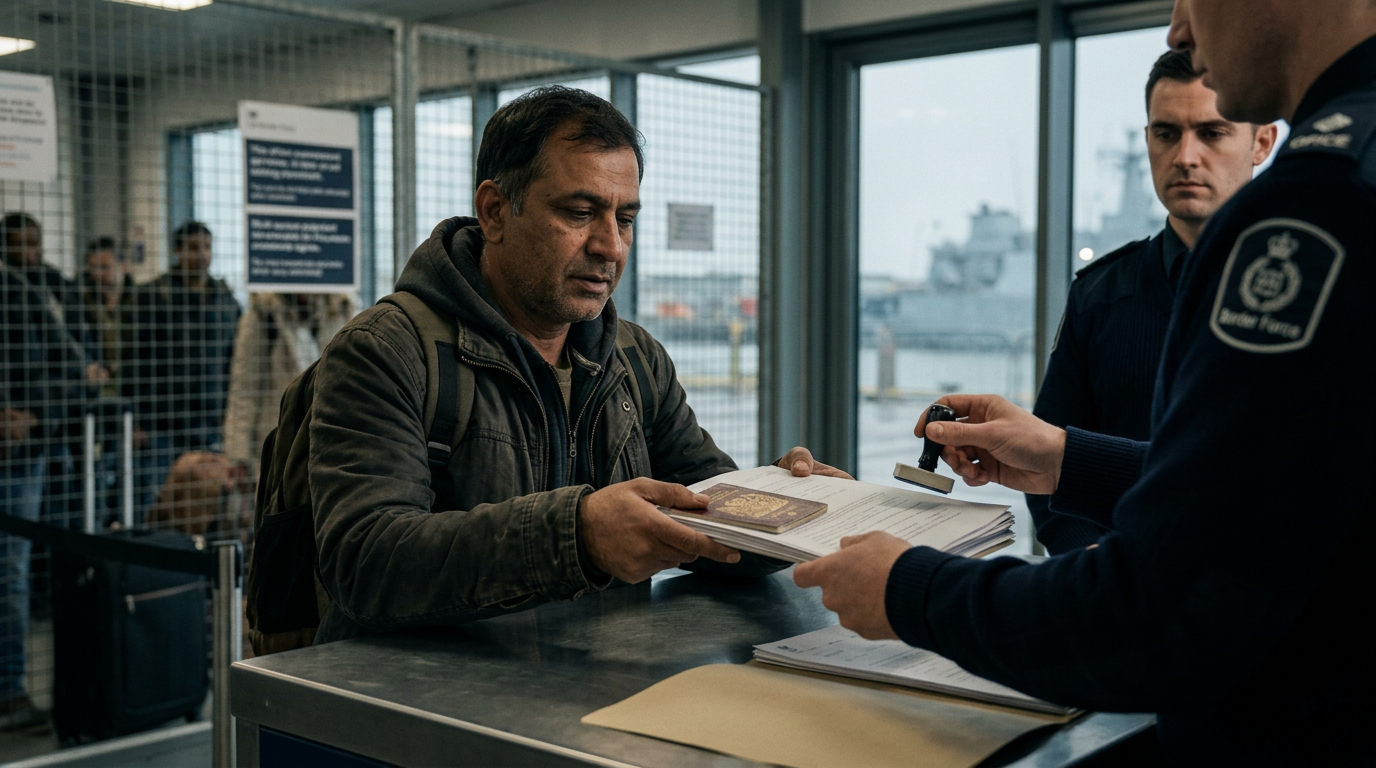
The UK Home Office has enacted sweeping asylum reforms, reviewing refugee status every 30 months in a controversial bid to slash immigration numbers.
Taking effect this Monday, the draconian overhaul systematically dismantles long-standing protections, transforming permanent sanctuary into a precarious, temporary reprieve for thousands of asylum seekers.
This policy pivot highlights a deeply polarized Britain buckling under the political weight of mass migration. Driven by the electoral threat of hard-right factions, the government is aggressively dismantling the pull factors that draw vulnerable populations across the English Channel, fundamentally rewriting the nation’s human rights legacy.
A Regulatory Tightrope on Human Rights
Home Secretary Shabana Mahmood has engineered a system directly modeled on Denmark’s notoriously strict immigration playbook. Under the new regime, adult refugees and their children will no longer receive permanent settlement guarantees. Instead, their status will endure rigorous re-evaluation every two and a half years. If their country of origin is suddenly deemed ‘safe’ by Home Office algorithms and geopolitical assessments, they face immediate deportation. The only notable concession is a five-year protected status period granted exclusively to unaccompanied minors.
The international reverberations, particularly across the African continent, are immense. For East Africans fleeing conflict zones in Sudan or Somalia, the UK is no longer a viable endgame. Kenyan diplomatic channels are bracing for the inevitable fallout, as displaced populations are forced to redirect their trajectories, potentially straining resources within the East African Community (EAC) as internal regional migration intensifies.
The Financial and Social Architecture of Exclusion
The restructuring of the asylum system is engineered to create a hostile environment, stripping away the financial and social safety nets previously afforded to new arrivals.
Implementation of advanced AI age-verification technologies to heavily scrutinize minor applicants.The mandatory waiting period to apply for permanent residency has skyrocketed from five years to an agonizing 20 years.Charities estimate the legal challenges and administrative burden will cost the UK taxpayer over £500m (approx. KES 82.5bn) annually.
By effectively withdrawing guaranteed housing and weekly financial allowances, the government intends to starve the human trafficking syndicates of their primary selling point. However, human rights organizations vehemently argue this will only push desperate migrants deeper into the shadows, fostering a massive undocumented underclass vulnerable to severe exploitation.
The African Diaspora Dilemma
As Fortress Britain pulls up the drawbridge, the narrative of seeking a better life in the West is being violently rewritten. For the extensive Kenyan and East African diaspora communities already embedded in the UK, these laws signal a chilling new era of hostility and bureaucratic harassment.
The era of compassionate sanctuary is being systematically replaced by a regime of suspicion and impermanence, forcing a global reckoning on how the Global North handles the escalating crisis of human displacement.
“We are witnessing the institutional weaponization of uncertainty, designed not to manage migration, but to inflict psychological defeat on those seeking refuge,” stated a prominent London-based human rights lawyer.