
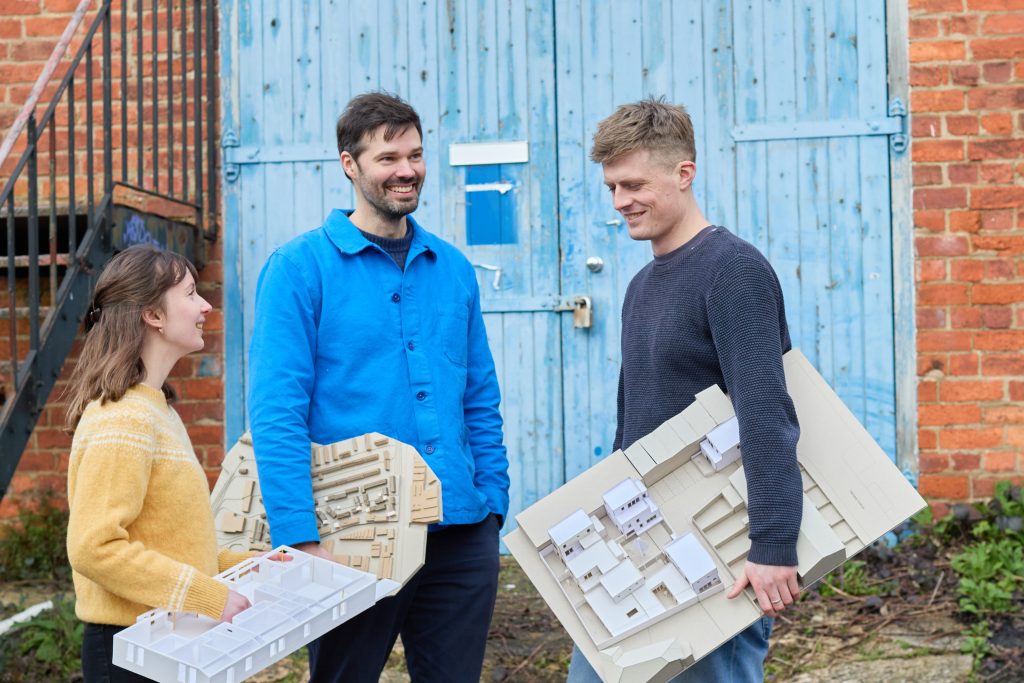
Practice name: Common Works
Based: Stroud, Gloucestershire
Founded: May 2025
Main people: Tom Sykes, director; Leah Davis, architect; Rory Kavanagh, graduate
Where have you come from?
Tom was previously head of design for Transport for London’s commercial development arm, Places for London, a role originally facilitated through Public Practice. Before that he was an associate at Burd Haward Architects and a Design Council expert. Alongside practice, he’s always been involved in community organisations and continues to run sessions for Urban Design Learning.
This combination of client-side leadership, design-led practice and hands-on work with community organisations shapes how we approach projects today.
Leah and Rory have also worked across a range of thoughtful practices, including Design Storey, Pentan and WT Architecture. Their experience of community, Passivhaus and housing projects brings extra technical depth, and they’ve both got strong roots in their communities.
What kind of work do you specialise in?
Projects that put communities first, delivering schemes for public sector clients, community organisations and values-led developers.
That might mean a whole new community centre, a growing garden on a street corner, infill housing on backland sites, design guides, affordable workspaces in railway arches, learning kitchens or retrofitting existing community buildings. The scale varies, but the thread running through is the same.
What work do you have and what kind of projects are you looking for?
Current work includes the retrofit of a doctors’ surgery into a council office and community hub, which has just started on site; a community composting site; affordable workspaces in railway arches; and clusters of intricate housing on small sites.
By far and away our happiest work development is through the small sketch study that unlocks a project we can continue to support. We’ve found that our background as a client has meant our early-stage deliverables are unlocking projects, and we’ve learnt that getting a project moving is about much more than the design inputs.
We do tender for some work. We’ve won four out of the five GLA Small Sites Small Builders tenders we’ve entered, and recently we have also won a couple of tenders for feasibility studies for new housing and community assets. This has given us more confidence in competitive processes.
But tendering can be a significant bureaucratic drain, so we’re selective about when we enter.
When we’re choosing projects, our biggest concern is social impact. We find ourselves asking: ‘Does this have the potential to build community? Will it bring people together? If the answer’s yes, that’s usually a good sign.
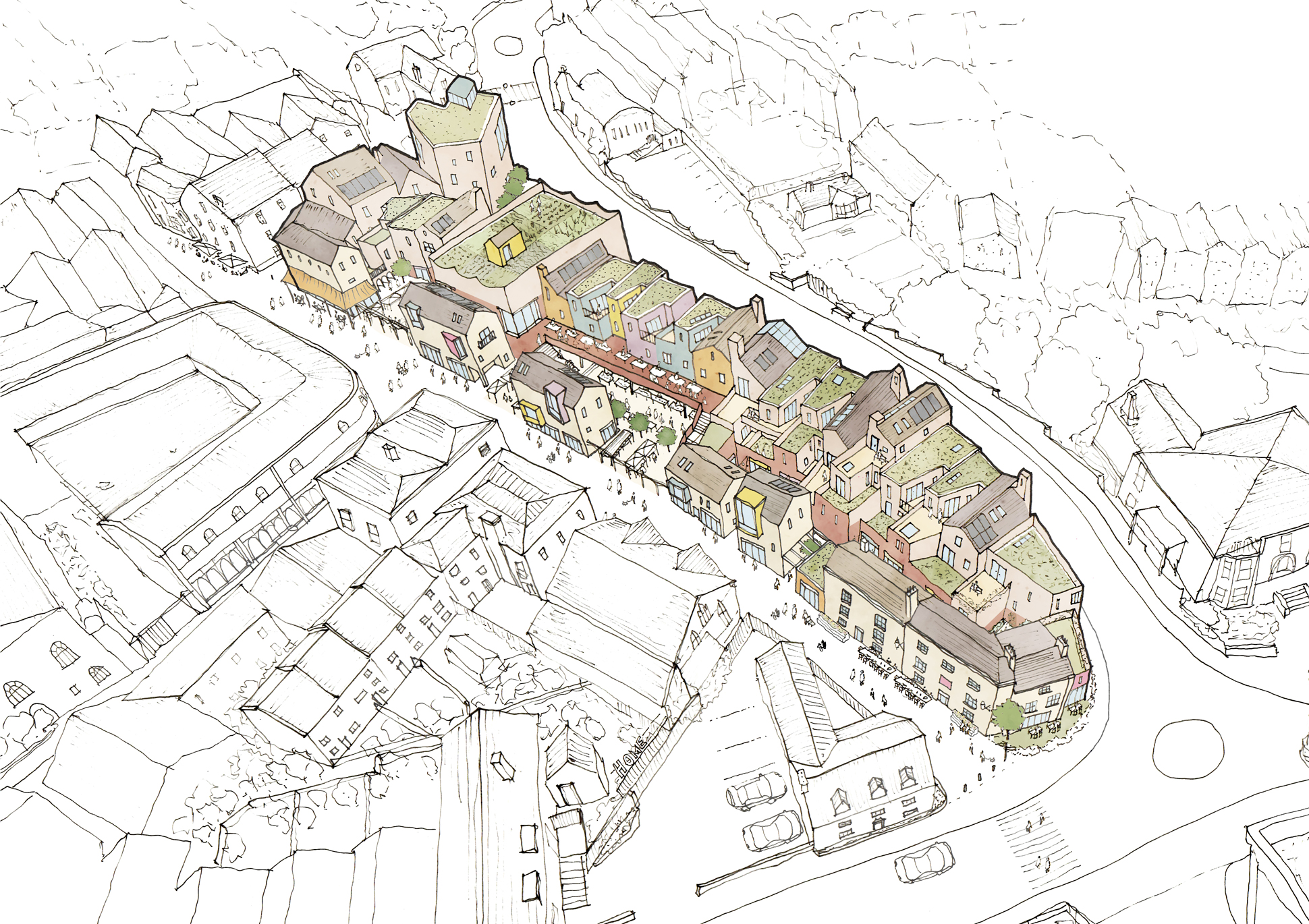
Stroud masterplan by Common Works
What are your ambitions?
Our biggest ambition right now is to get a shop front. We love talking about good places and good design, and see the potential of a big bit of window on a high street as an amazing opportunity to share that thinking more openly. We make so many beautiful things, think so hard about our projects, care so deeply about this work that it can feel almost painful that it’s hidden away in a studio.
‘We run on a nine-day fortnight on full pay’
This sits alongside another thing we care about, which is upending the idea that architecture requires some kind of pact with the devil in terms of commitment.
We run on a nine-day fortnight on full pay, have six days of volunteering leave, three days of research time and extra holiday all built into our contracts because these things are what socially minded work is about: looking outward from the studio and connecting with the world, and then bringing those experiences back in as new knowledge and new ways of seeing an architects’ contribution.
We’d like to grow slowly and sustainably over the next few years. As a studio out of London, we need to be thoughtful about how we do that. We know the way we work is unusual, so finding the right people is key. We’ve also taken lessons from Public Practice’s recruitment process that have really helped build the team we have now.
Our value to clients is our ability to give new life to traditional briefs: the community hub, the village hall, the council office, the backland site. Often, those clients are looking for something specific to them, to respond to their particular needs, rather than something generic or off-the-shelf.
We thrive on this. We try to avoid repeating process for the sake of it, looking for those special moments that bring a project to life, get people excited.
It may not always be the most streamlined route, but our experience is that the most ‘efficient’ places are also the least human. Built form tends to follow process.
What are the biggest challenges facing you as a start-up and the profession generally?
Our biggest challenges are bullshit procurement processes that are counter to clients’ actual ambitions. To that end, we’ve prepared a series of presentations on quality-led procurement for public sector and community clients, and we’ve been sharing these as widely as we can. It’s not about getting us to do more projects (we’re not big enough!), but just to help people get better results when they do look for architects.
‘Our biggest challenges are bullshit procurement processes’
The other challenge is geography. Outside of London, the level of design resource in the public sector is lower. While the provinces may work well for commercial boshers and private resi firms, it’s a different challenge for design-led public sector firms like ours. At the moment, we’re enjoying this challenge as we’re able to differentiate ourselves, but we still find it hard to get projects where we could do the most good.
Which scheme, completed in the last five years, has inspired you most?
We love collaging projects over our sites to get an immediate sense of scale and complexity. Bringing together snippets from practices like Peter Barber, Ash Sakula and Proctor & Matthews in the early stages of a housing scheme is always an inspirational way to begin.
We’re also continually learning and testing new approaches to community engagement, from participatory budgeting workshops to photography masterclasses. Daisy Froud’s work has been a particular inspiration.
Our other biggest inspiration is the shit developer housing that crops up all around us like weeds. These dreadful non-places are diluting the souls of their host settlements, and we are fighting for the chance to intervene to undermine these.
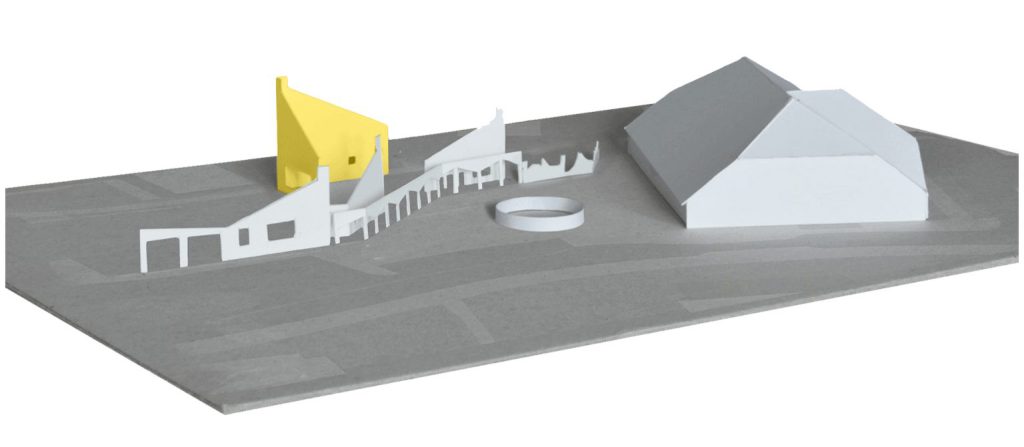
New community centre proposals – model
Are you using any new design techniques, such as AI?
We use a little bit of AI now and then, but we still value the legwork. One of the misconceptions around automated workflows is that production itself isn’t worthwhile. For us, that’s often where the learning happens, when we draw something out or try to put it clearly into words.
In our experience, clients get better outcomes when we apply our full attention and thinking to the problems in front of us, rather than delegating too much of that process and losing the insight that comes from doing the work.
How are you marketing yourselves?
A bit of LinkedIn, speaking at conferences to our core client groups, and getting out and meeting people face to face as much as possible. Often, prospective clients aren’t yet familiar with the value our process can bring, so we try to make our way of seeing the world tangible, helping them to feel confident in taking the step to appoint us.
Ultimately, nothing beats a face-to-face conversation and a short walk around a bit of town to share enthusiasm and values.
Website address www.common-works.co.uk
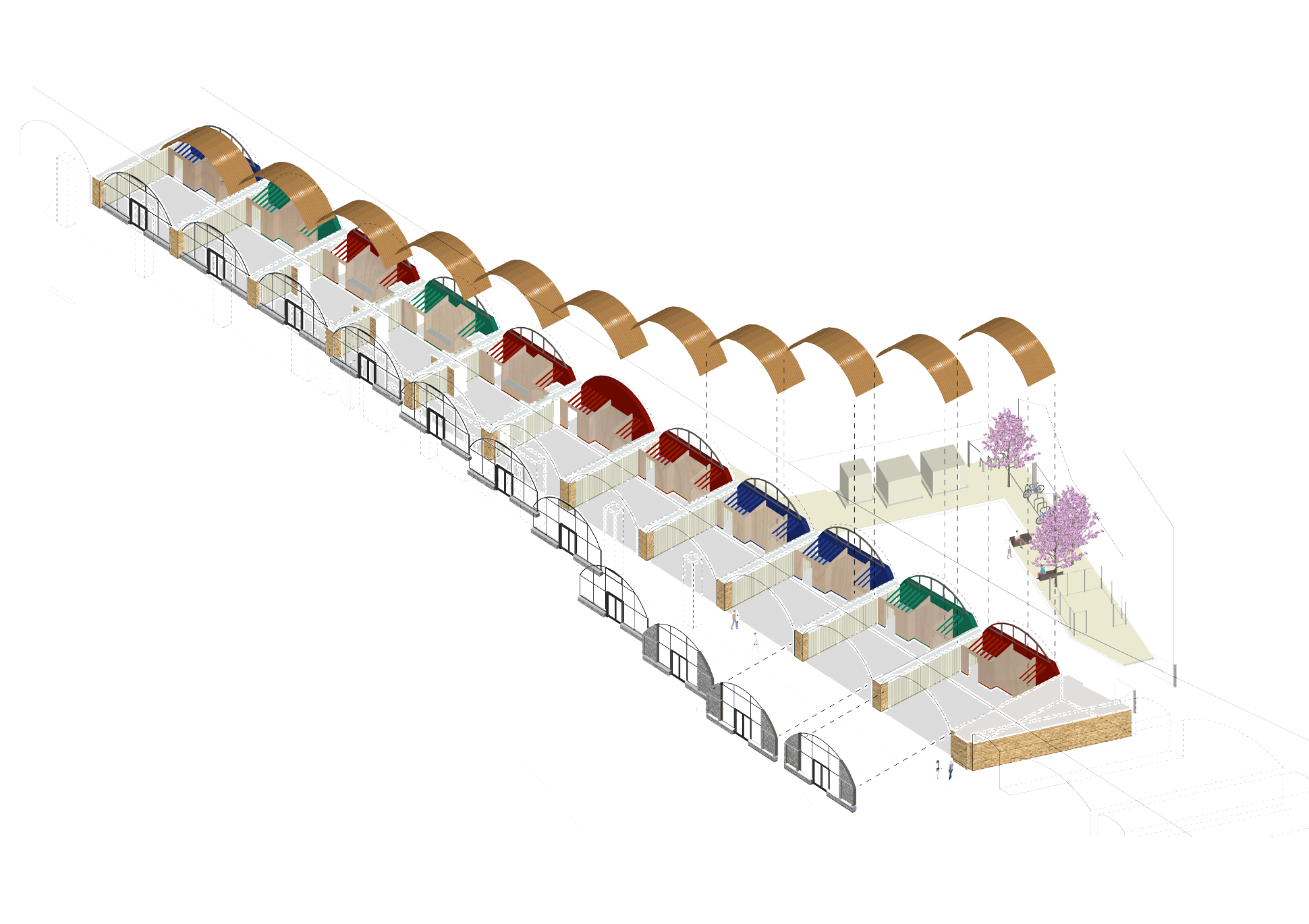
Lockton Street – axonometric