
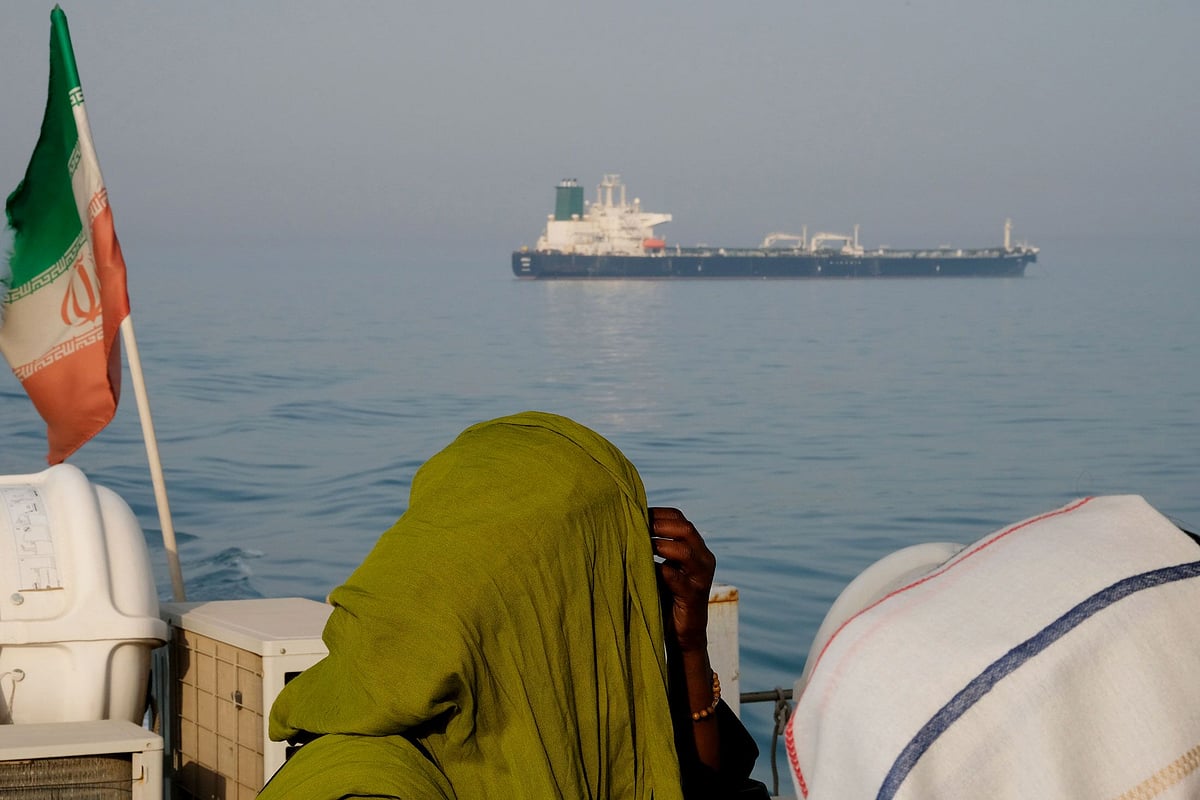
The waterway handles roughly one-fifth of global oil trade and a large share of liquefied natural gas shipments, making it one of the most critical energy corridors on the planet. Markets react to developments there almost instantly, and recent tensions have already triggered sharp moves in oil and gold prices as investors brace for potential supply shocks.
Stay updated: Get the latest faster by downloading the Gulf News app – it’s completely free. Click here for Apple or here for Android. You can also find it us on the Huawei AppGallery.
The first impact comes through energy costs
Economists say the earliest effects would likely appear in wholesale energy markets rather than immediately at the consumer level. Rising risk premiums, insurance costs and freight surcharges tend to push oil prices higher even before any physical shortage occurs.
Ahmad Assiri, research strategist at Pepperstone, said the transmission to households begins through energy costs.
“In the event of a significant disruption to shipping through the Strait of Hormuz, the shock to consumers in the UAE and the Gulf would manifest through two primary channels. First, there would be an increase in energy costs. Second, rising transportation and insurance expenses would gradually trickle down into the prices of imported goods.”
This initial impact hits wholesale markets quickly, he noted, with shipping costs, insurance premiums and risk surcharges climbing within days.
“These costs then begin to pass through to the end consumer,” he said.
“During the first few days, residents may notice a rise in transport and delivery service costs, while fast priced items like fresh produce or air freighted goods may see immediate hikes due to the disruption of smooth supply flows.”
These initial changes reflect rising freight and insurance charges rather than actual shortages.
Imported goods face longer-term pressure
The UAE’s heavy reliance on imports means prolonged shipping disruption could eventually raise the price of consumer goods across sectors.
Assiri said increased transport and storage costs tend to spread through supply chains over time.
“A prolonged closure of the Strait of Hormuz could trigger inflationary pressures across several sectors, most notably transport, energy and food. Increased shipping and insurance rates can drive up the price of imported food, a critical factor in import dependent economies like those in the Gulf.”
Electronics, vehicles and spare parts are particularly sensitive to rising logistics costs since they rely on global supply networks.
Inflation risks remain contained for now
Even in a prolonged disruption scenario, economists say the UAE’s economic structure provides significant buffers against severe inflation shocks.
Why UAE residents may feel it gradually
Despite the strategic importance of Hormuz, economists stress that the effects on daily life typically unfold in stages rather than overnight.
Hamza Dweik, head of trading for the Middle East and North Africa at Saxo Bank, said financial markets tend to react far faster than households.
“In the event of material disruption to shipping through the Strait of Hormuz, financial markets would likely react quickly, but the transmission to consumers in the UAE and wider Gulf would typically be more measured.”
Fuel prices in the UAE are adjusted monthly, meaning higher global oil prices usually feed through with a delay rather than immediately appearing at the pump.
Historically, persistence rather than the initial shock determines whether households feel tangible impact, he said.
Where consumers could feel it first
Short-term disruptions typically show up in specific areas before broader inflation takes hold. Analysts say transport services, delivery fees and time-sensitive goods tend to react fastest.
Assiri said residents may notice early changes in logistics-linked costs.
Dweik said the country enters such periods from a position of relative strength.
“The UAE starts from a position of relatively low inflation and benefits from diversified supply routes and long term energy arrangements. Utilities and domestic energy prices are less exposed than in many other economies.”
Inflation may rise at the margin if disruption persists, but a sharp spike would require sustained and severe supply interruptions, he said.
Government finances and economic stability
Higher oil prices can create complex effects for energy-exporting economies such as the UAE. Increased prices may boost government revenues, but physical disruption to exports could offset those gains.
Assiri said fiscal impact depends on whether shipments continue flowing.
“While high oil prices can boost government revenue, provided exports remain near current levels, they can also create fiscal strain if the ability to export is physically hindered.”
The UAE’s diversified export routes, storage capacity and financial reserves help cushion such risks.
Dweik said strong sovereign balance sheets and large reserves play a stabilising role.
“These buffers are designed to smooth economic cycles and protect public spending and employment during periods of volatility.”
Global supply chains face rising costs
Beyond energy, higher shipping and insurance costs can ripple across global trade networks, raising costs even without physical shortages.
Dweik said supply chain costs would likely increase first.
“If tensions lead to higher shipping costs and war risk insurance premiums, global supply chains would face higher costs, especially for energy intensive and time sensitive goods.”
The UAE’s role as a global logistics hub provides some insulation, but prolonged disruptions would still push import prices higher.
What it means for households
Analysts say the overall impact on daily life would likely remain gradual unless disruption persists over time.
Fuel prices would adjust first, followed by transport costs and then broader consumer prices if elevated costs continue.
For most residents, immediate lifestyle changes are unlikely unless tensions escalate significantly and remain unresolved.
Markets react instantly to geopolitical risks, but household costs move more slowly through the layers of the economy. The Strait of Hormuz sits at the centre of that dynamic, making it one of the most critical economic pressure points to watch in the coming weeks.
– With inputs from agencies.

Nivetha Dayanand is Assistant Business Editor at Gulf News, where she spends her days unpacking money, markets, aviation, and the big shifts shaping life in the Gulf. Before returning to Gulf News, she launched Finance Middle East, complete with a podcast and video series.
Her reporting has taken her from breaking spot news to long-form features and high-profile interviews. Nivetha has interviewed Prince Khaled bin Alwaleed Al Saud, Indian ministers Hardeep Singh Puri and N. Chandrababu Naidu, IMF’s Jihad Azour, and a long list of CEOs, regulators, and founders who are reshaping the region’s economy.
An Erasmus Mundus journalism alum, Nivetha has shared classrooms and newsrooms with journalists from more than 40 countries, which probably explains her weakness for data, context, and a good follow-up question.
When she is away from her keyboard (AFK), you are most likely to find her at the gym with an Eminem playlist, bingeing One Piece, or exploring games on her PS5.