
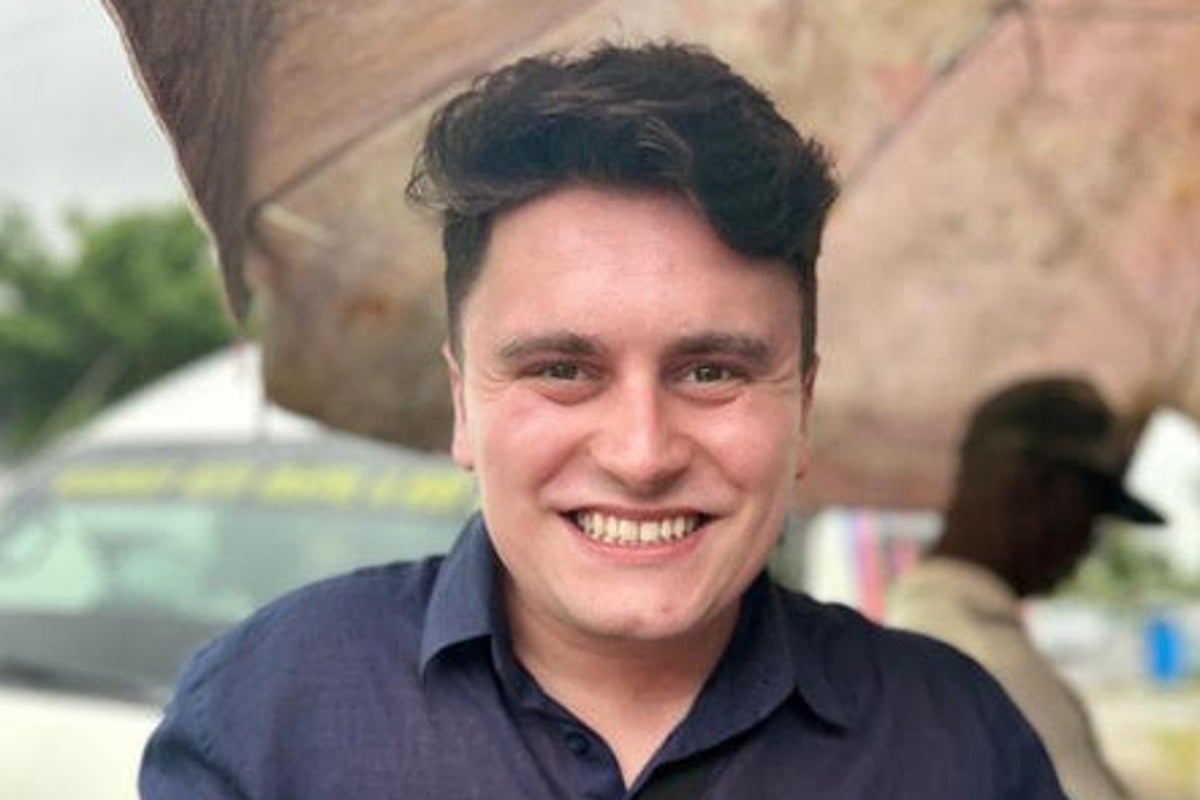
One evening last May, Alex Warwick, a fourth-year Liverpool University medical student, was having dinner with his friends when he suddenly developed stroke-like symptoms.
“Alex phoned us at midnight apologising, because one of his siblings was getting married in two days and he did not want to worry us,” says his father, Ian. “Obviously, we ignored that and drove straight up.”
As Ian and his wife, Indira, drove through the night from their home in Dorset, Alex’s friends rushed him to hospital, and Ian credits them with saving Alex’s life. “As soon as he got there, he had seizures that would have been potentially fatal if they had not been there. They would not let him go to sleep and took him to A&E. Without them, there is a chance that Alex would not be here.”
However, what followed was the stuff of parental nightmares. After undergoing emergency brain surgery, Alex was diagnosed with a brain tumour that was cancerous, aggressive, and grade 4, and which typically has a 12- to 18-month prognosis.
.jpeg)
open image in gallery
Alex with his father, Ian, and mother, Indira (Supplied)
But what amplified the appalling shock surrounding his diagnosis was the fact that Alex, who had been having worrying symptoms for years, had repeatedly been told by a diverse series of medical experts that there was nothing wrong.
“He had symptoms for a long time,” says Ian. “He was incredibly tired, sleeping at inappropriate times – like during his Geography GCSE, when he was struggling to stay awake. And he had episodes when one side of his face was dropping. But these were temporary. He would sleep and then seemingly be OK afterwards.”
Alex and his family strongly suspected that something was seriously wrong. “Of course, we were worried,” says Ian. They took him to the GP multiple times, then sleep specialists and neurologists. “He probably went to 50 doctor’s appointments. We were reassured by a lot of medical experts that it was down to stress because of GCSEs. And then his A-levels. And then his medical degree.”
Alex was then told that, as is common in medical students, it was health anxiety, and was prescribed CBT. However, a simple scan would have revealed a tumour, which during the years it was dismissed as a possibility was growing and mutating.
.jpeg)
open image in gallery
Alex with his girlfriend Rachel at a Liverpool match in September 2025 after having brain surgery, radiotherapy and chemotherapy (Supplied)
“The reassurance from all the medical professionals meant that the likelihood of escalation of his case was reduced,” says Ian. “It is almost as if normalisation accumulates. The constant reassurance meant that Alex did not escalate it and neither did we.”
He is talking about Alex’s story, in part, to raise awareness of Jess’s Rule, an NHS England patient safety initiative launched in September 2025 that requires GPs to “reflect, review and rethink” a diagnosis if a patient presents three times with the same or escalating symptoms. It promotes a “fresh eyes” approach, encouraging face-to-face examinations and specialist referrals to prevent missed, serious illnesses like cancer. It is named in memory of 27-year-old Jessica Brady, who died from cancer in 2020 after multiple GP consultations missed and dismissed her symptoms.
Had Jess’s Rule been in place over the years when Alex was returning repeatedly to his GP, things may well have turned out very differently. “Even if something is uniquely rare, that should not rule it out,” says Ian. “None of this is about pinning blame, but if someone presents five or six times with the same thing, take it seriously. Escalate and be more curious about why.”
At this point, Alex joins the conversation, taking over from his father, describing his symptoms.
“If you picture a mini-stroke,” he says. “I would suddenly feel really sleepy. One half of my face would be paralysed, with my left eyelid drooping and the left side of my face paralysed. I could not grip things with my left hand. I would feel confused, like half my body was shutting down. I would try to fight through it and stay awake, then it would pass after a few minutes.”
open image in gallery
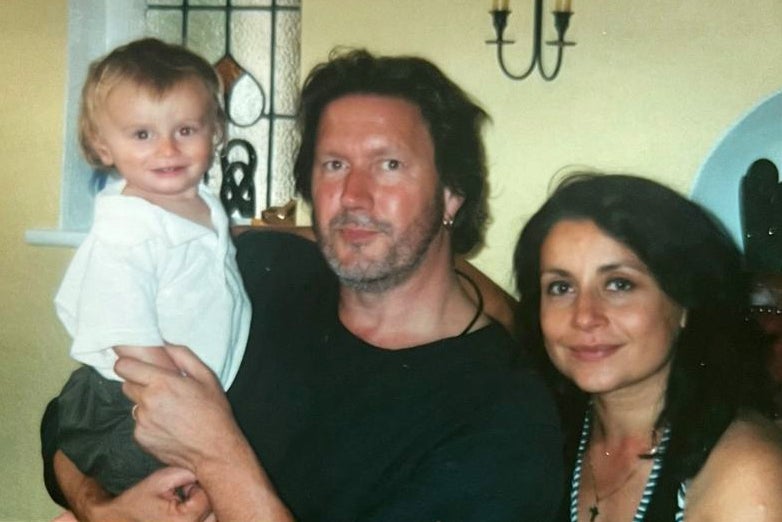
Alex as a baby with his parents (Supplied)
Hearing him speak, it seems truly astonishing that the significance of these symptoms could be missed in one appointment, let alone 50. But his reflection on why it happened is generously sanguine.
“All the GP and neurological exams were normal because I was not having any episodes at the time,” he says. “I present really well. I am articulate and fit, so no one would think even now that there would be anything wrong with me.”
“There were also partial symptomatic improvements,” he continues, sounding like the medical student he is. “Once I slept, the symptoms went away, which reinforced more benign interpretations. But to be told it was health anxiety was pretty horrible, especially as a medical student”.
“I would estimate I had the tumour for seven or eight years. All it would have taken was someone saying they were not sure what was going on and booking me for a scan. When I did have a scan, it was 5cm, a big tumour that you could not really miss,” he says without a trace of anger or bitterness.
With matter-of-fact understatement, he describes his doctors’ failure to reappraise their conclusions despite the persistence of his symptoms as “disappointing”.
“It makes me disappointed that this slipped through the net, but it allows me to advocate for it not happening again,” he says, segueing towards a silver lining that would probably be invisible for most people. “I hope it means that GPs take young people more seriously, especially when presenting with the same thing many times.
.jpeg)
open image in gallery
The Warwicks ‘dropped everything’ to devote themselves to their son (Supplied)
After the diagnosis, Ian, a writer and educational policy advisor, stopped work, dropping everything to devote himself to helping Alex. “This is now 24 hours a day,” he explains. “Everything else in life pales completely into insignificance. It makes you realise that everything that matters is normally extremely close to you.”
He and Indira embarked on a research project into Alex’s cancer; a rare, high-grade glioma. “There is hugely contradictory advice out there. We get as much advice as possible from amazing people in the UK, US and Germany and keep reading about new things all the time.”
After the surgery, which removed most of the tumour, Alex had radiotherapy and chemotherapy, and a shunt was inserted into his brain. Ian and Indira moved to Liverpool for Alex’s treatment, his sisters visited every weekend for months, and Ian and Alex would drive to the appointments blasting their favourite music at top volume to boost their spirits.
.jpeg)
open image in gallery
Alex’s sisters started fundraising and, with the support of the Brainstrust charity, launched an appeal on JustGiving. (Supplied)
For a while, the treatment appeared to be working. But over Christmas, Alex suddenly developed new symptoms, including difficulty walking. An MRI showed that the cancer had spread.
“The problem with brain cancers is that they mutate,” explains Ian. “This highly aggressive one has spread to his spinal cord. It is a rare glioma, pretty much a unique one, but it has mutated, and Alex now has leptomeningeal disease (LMD)”
LMD is a rare, severe complication that involves cancer cells spreading to the cerebrospinal fluid and membranes surrounding the brain and spinal cord.
When the chemotherapy finished, Alex reached the end of the NHS treatment options and his medical team advised him to investigate private treatment, which led the family towards a cutting-edge immunotherapy treatment available in Germany, which activates the body’s own immune defences against the tumour.
“Brutally put,” says Ian, “Germany has different laws, so if you are diagnosed with something where you have less than a year to live, you are allowed to try far more experimental treatments that are not fully research-based in the sense of double-blind testing.”
And it comes at a price. The cost for the immunotherapy plus insurance and travel would be around £200,000. Undeterred, Alex’s sisters started fundraising and, with the support of the Brainstrust charity, launched an appeal on JustGiving.
“Alex is the best of all of us,” their post reads. “He is the kindest, funniest son, brother, boyfriend, friend and grandson, who always has time for other people and brings endless joy to all of us. Despite receiving this diagnosis so young and at the beginning of his adult life, he has faced it with his characteristic strength, humour and optimism…”
“Alex’s sisters have been astonishing,” says Ian.
Three weeks ago, Ian and Indira drove Alex to Cologne for the first immunotherapy treatment, a positive experience that restored their sense of agency. The next trip will be in a few weeks’ time, all being well; they are awaiting an MRI to see if he needs lumbar punctures and intra-chemotherapy, which could impede travel.
In the meantime, Alex has moved back home and life is going on.
“Alex is a beautiful young man, the most thoughtful, empathetic, kind person and an amazing friend. He is the heart and soul of our family and always has been,” says Ian. “He is the centre of our world and utterly, utterly loved.”
.jpeg)
open image in gallery
Alex is still undergoing treatment, paid for by crowdfunding and charity help organised by his family (Supplied)
Rather than dwelling on regret, the family has chosen a remarkable path of positivity and optimism.
“We are a close family and we could not have done this without each other. The network of the family has been the reason that Alex has maintained such positivity.”
And Alex reads every single message on his JustGiving page every night, his father says. “It gives him hope, that people love him.”