
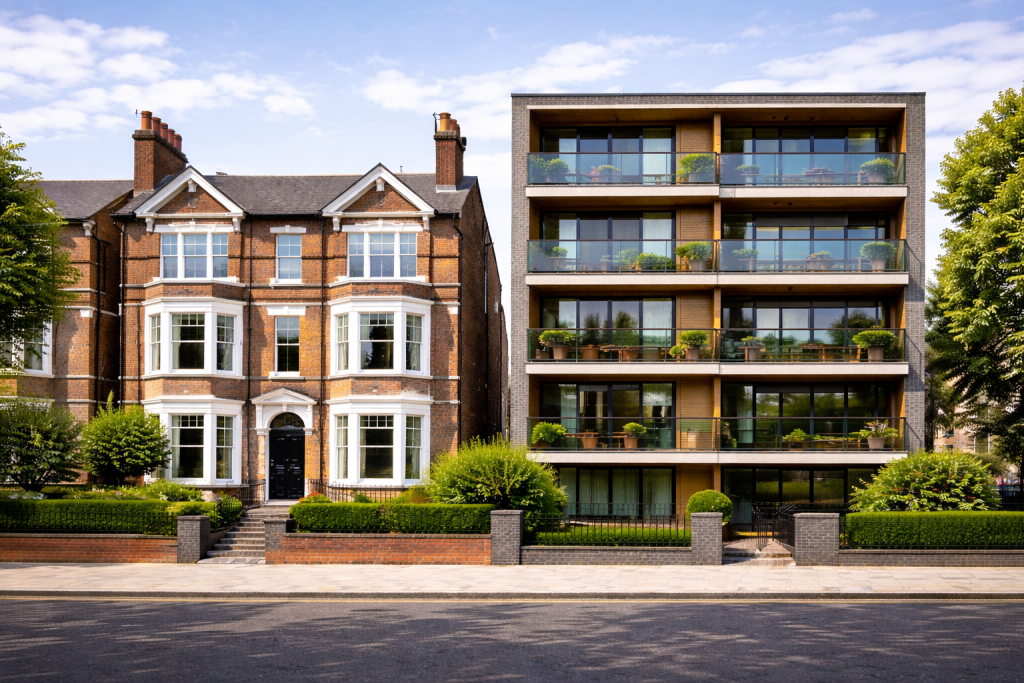
The London Assembly Planning and Regeneration Committee published a letter today (2 March) warning the mayor of a ‘disconnect’ between the type of developments Londoners want to see in their neighbourhoods and those that are being delivered (see below).
Written by committee chair James Small-Edwards, the letter pointed to public polling and visual surveys highlighted by Robert Kwolek from Create Streets, who was among the experts to give evidence during the Better Design for London panel meeting in December.
Kwolek claimed that 70 to 80 per cent of respondents prefer ‘human-scale’ buildings with ‘coherent frontages’ which are in keeping with an area’s local character. People, he said, also expressed a preference for traditional designs over those making an ‘impersonal statement’.
In the letter to the mayor, the committee argued that failing to back the kind of design that draws the broadest approval risks ‘fuelling opposition, increasing delays and undermining delivery’ of the government’s housing targets.
The letter reads: ‘Traditional buildings have the features that people are interested in: nice materials, some ornament, variety in a pattern.
‘You can get the same features with modern buildings, but we tend not to see those buildings being built.’
The letter acknowledges that some contemporary designs do employ ‘these popular features’, citing as examples the 2025 Stirling Prize-winning Appleby Blue Almshouse by Witherford Watson Mann, and the winner of the 2021 Neave Brown award, McGrath Road by Peter Barber Architects.
The document also quoted mayor design advocate Holly Lewis, who suggested during the committee meeting that ‘most Londoners do not feel they are shaping the future of London’, and Lucy Bush from cross-party think-tank Demos, who said there was ‘a great appetite to get involved in placemaking, which is not currently being met’.
Small-Edwards said: ‘Londoners are not anti-development, they just want to be engaged early and see homes built that they find visually appealing.
‘If we are to deliver 880,000 new homes over the next decade, we must close the gap between what Londoners want and what is getting built. Embedding popular design principles and meaningful early engagement will be essential to maintaining public confidence and delivering the homes our city needs.’
In response to the findings, the letter calls for the London Plan Housing Design Standards to be updated to reflect the public’s design preferences.
It also recommends a greater use of borough-wide design codes developed with representative, paid community participation, as well as the introduction of structured early-stage engagement requirements for major schemes.
The mayor is set to review development and growth policies in the capital in the London Plan update, which will be published this year.
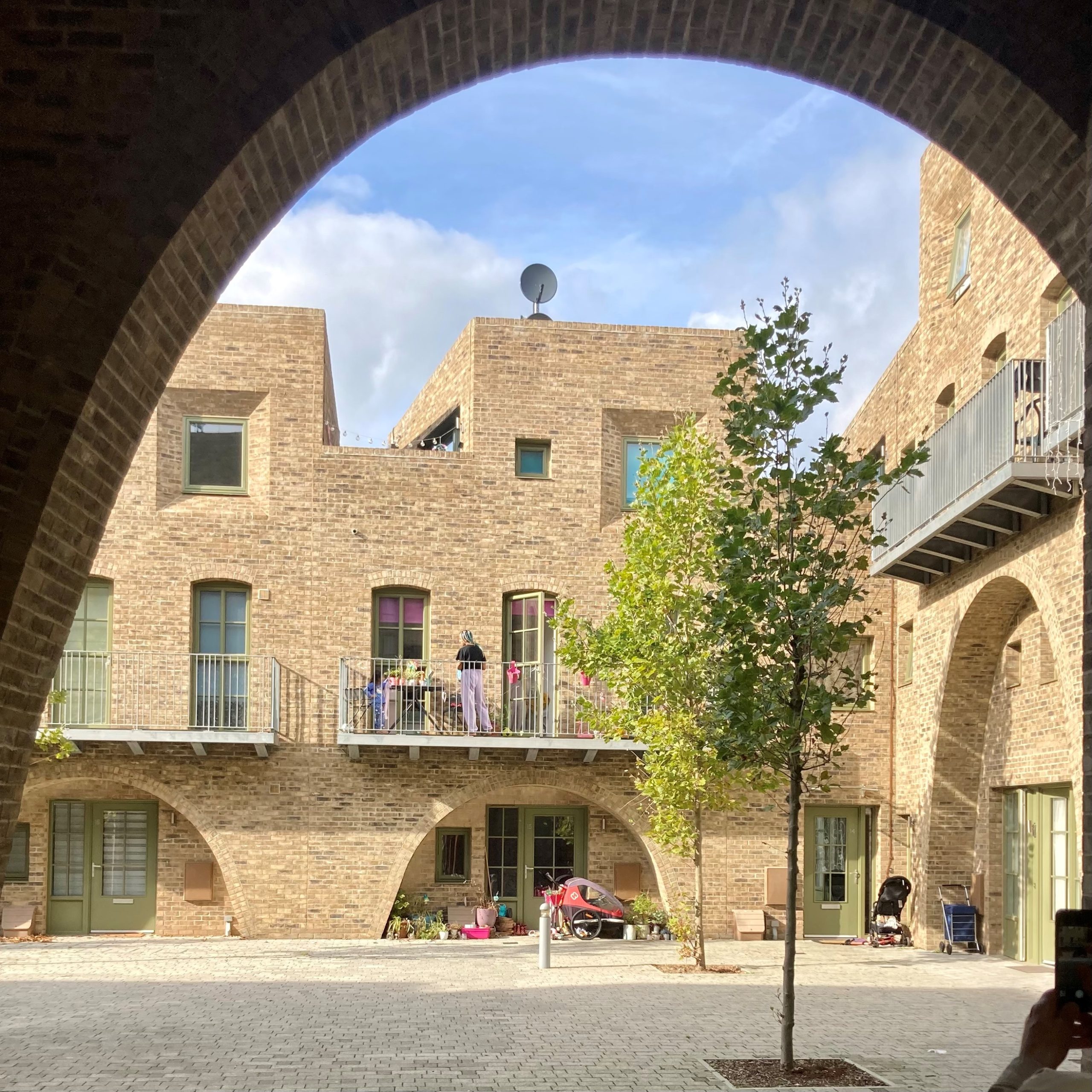
Source:Morley von Sternberg
Peter Barber Architects’ McGrath Road scheme was hailed as an exemplar in
Comment
Sally Lewis, founding director, Stitch Architects, and practice principal, Broadway Malyan
I read James Small-Edwards’ letter to the mayor with interest. There is much to agree with – any decent architect strives to create buildings with coherent frontages, contextual materials and clear block structures. But this letter’s premise is that ‘popular’ design is also ‘human scaled’ with ‘traditional forms’. This implies there is no local appetite for any building in London that is larger or taller than, say, four to six storeys. Of course there isn’t! Of course, people will prefer smaller new buildings in their local neighbourhood.
But where does that leave us with our increasingly out-of-reach housing targets? London is hardly building. Housing schemes stall before they get anywhere close to a democratic planning process or discussions about design. The few major projects that do emerge through ever-present viability challenges are inevitably tall by necessity.
‘Of course people will prefer smaller new buildings, but London is hardly building’
There is some comfort in the recommendation for councils to create design codes working with a broad range of local residents who are paid for their time. The key here is to ensure that these local residents are young people who will be the beneficiaries of new homes, not middle-aged homeowners who are concerned about keeping their neighbourhoods unchanged. This is a moment in time when we should be engaging the Londoners of the future and empowering the increasingly disenfranchised younger generations, who may even welcome an explanation about why hardly any homes are being built.
The housing crisis is everyone’s business now and should be the starting point for any discussion about design. If we want more homes in London, we need to swing the conversation away from building heights and start interrogating the wider benefits offered by new development: providing affordable homes, making great streets, creating parks and safe spaces for all. That’s where design really matters.