
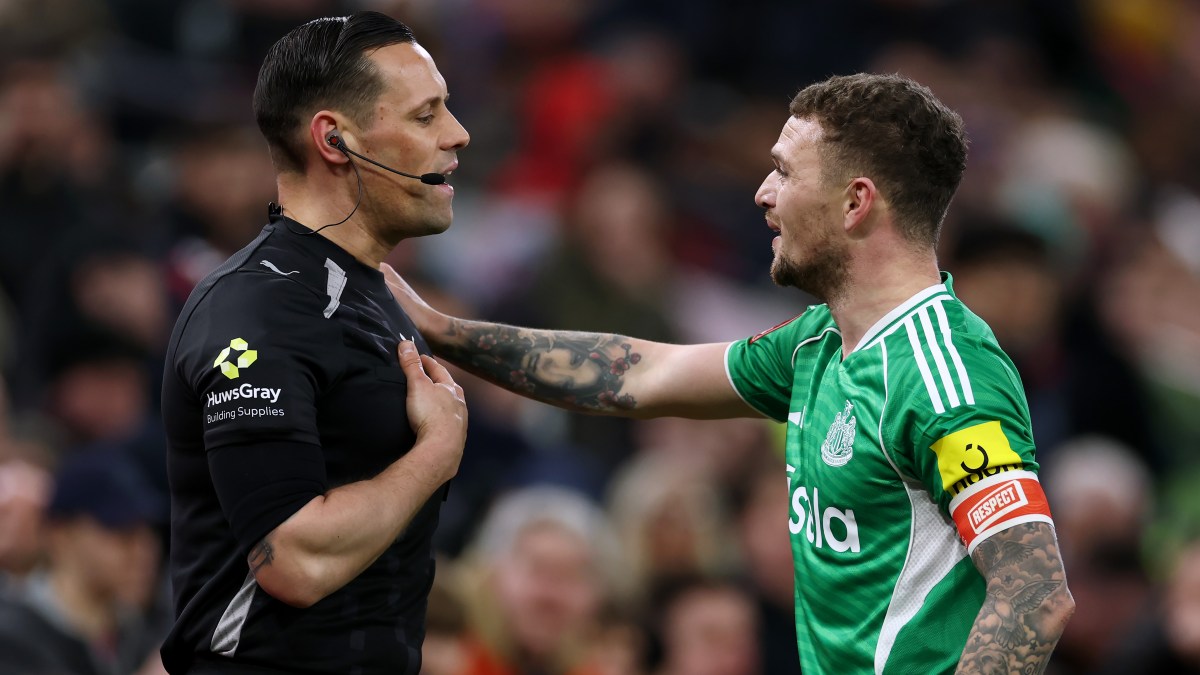
English football chiefs want to explore using a “coach’s challenge” for subjective VAR decisions to see if it would reduce delays.
The FA is in favour of trials of a system similar to that used in cricket where two unsuccessful challenges per match are permitted and reviewed using video and other technology. Teams keep their challenges if they are successful. American football’s NFL also has its version of a coach’s challenge while rugby league’s Super League has a “captain’s challenge”.
One potential trial is for a system where VAR and other technology would automatically cover factual decisions such as offsides but not subjective decisions such as fouls or handballs unless there was a challenge from the coach, in which case there would be a VAR review. That could significantly reduce the number of delays caused by VARs who look at every goal and every red card.
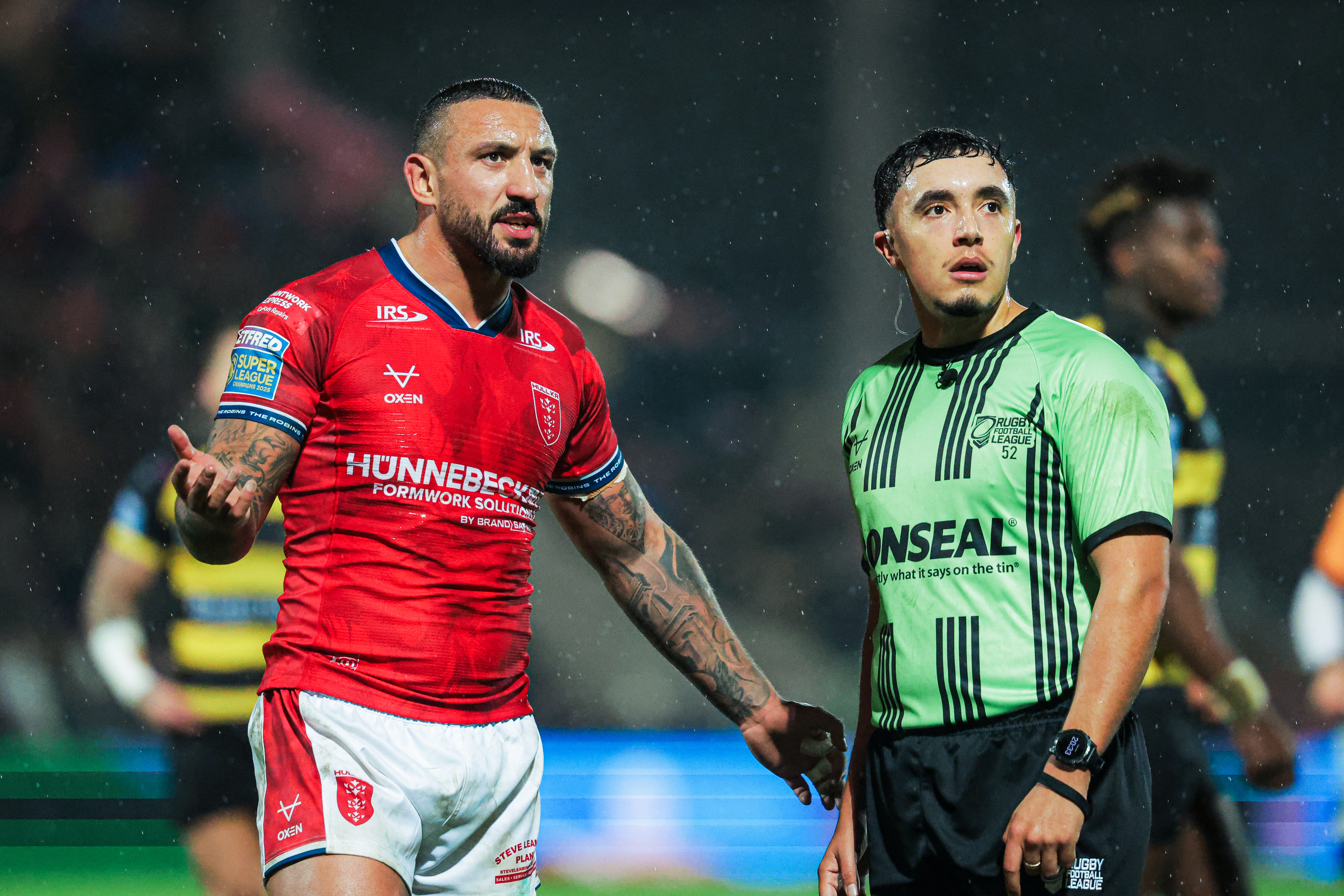
Rugby League has a “captain’s challenge” system
ALEX WHITEHEAD/SWPIX.COM
The International FA Board (Ifab), the game’s law makers, is to hold a two-year review of VAR, and the FA — which is one of the Ifab members along with the other home nations and Fifa — will push for trial schemes involving challenges.
A challenge system in football already exists in competitions — such as in Malta and lower leagues in Italy and Spain — which use a low-cost alternative to VAR called Football Video Support (FVS) where there are only a few cameras. Other competitions could volunteer to trial a challenge system next season. If the system had been used for Newcastle United’s 3-1 win over Aston Villa in the FA Cup last month — with VAR not in operation, as was the case for all fourth-round ties — Eddie Howe, the Newcastle head coach, could have challenged a number of blatant errors from the referee Chris Kavanagh and his assistants, including a handball from Lucas Digne inside the penalty area wrongly given as a free kick outside the box.
Mark Bullingham, the FA’s chief executive, said after Ifab’s annual meeting near Cardiff: “The other interesting area is looking at what can we learn from other trials being done? So [FVS] and where you have a model where referees are refereeing the game but then the coach has a challenge system.
“What can we learn from that? Are there elements of that we should consider adopting for the future? Because that changes the dynamic, that reduces the amount of times when there is a VAR intervention and effectively puts the onus on the coach.

Bullingham said introducing challenges would decrease delays
HARRY MURPHY/GETTY IMAGES
“I think that’s just something which we might continue to learn as we trial that model in the parts of the game that fundamentally can’t afford full VAR at the moment — but that doesn’t mean it’s necessarily the wrong model for the future.”
Bullingham said VAR was brought in to decide on “big match-changing moments” and the FA was not in favour of extending its powers any further or increasing delays.
“There is a review going on looking at how we use VAR best and that balance between getting the big decisions right and not slowing the game down,” he added.
Some figures within Ifab are opposed to bringing in a challenge system more broadly. David Elleray, the former English referee who is now Ifab’s technical director, said last year: “There’s no reason to have challenges with VAR because the video match officials check every single incident. It is mainly designed for competitions where you’ve only got one, two, three or maximum four cameras.”
There are also concerns that there might still be a blatant refereeing error — such as over an obvious handball — that is allowed to stand if a team has used up its challenges, which could be a source of major embarrassment.
Rugby League’s Super League introduced a “captain’s challenge” last year for which team captains can ask for a video review and retain that challenge if it is successful. That followed its launch in Australia’s NRL in 2020.
Insiders from the RFL, rugby league’s governing body in England, said it had been a hugely successful innovation — but there were teething problems at first often caused by teams challenging with little chance of being successful. There are still some complaints that it sometimes takes too long for video officials to analyse the clips.