
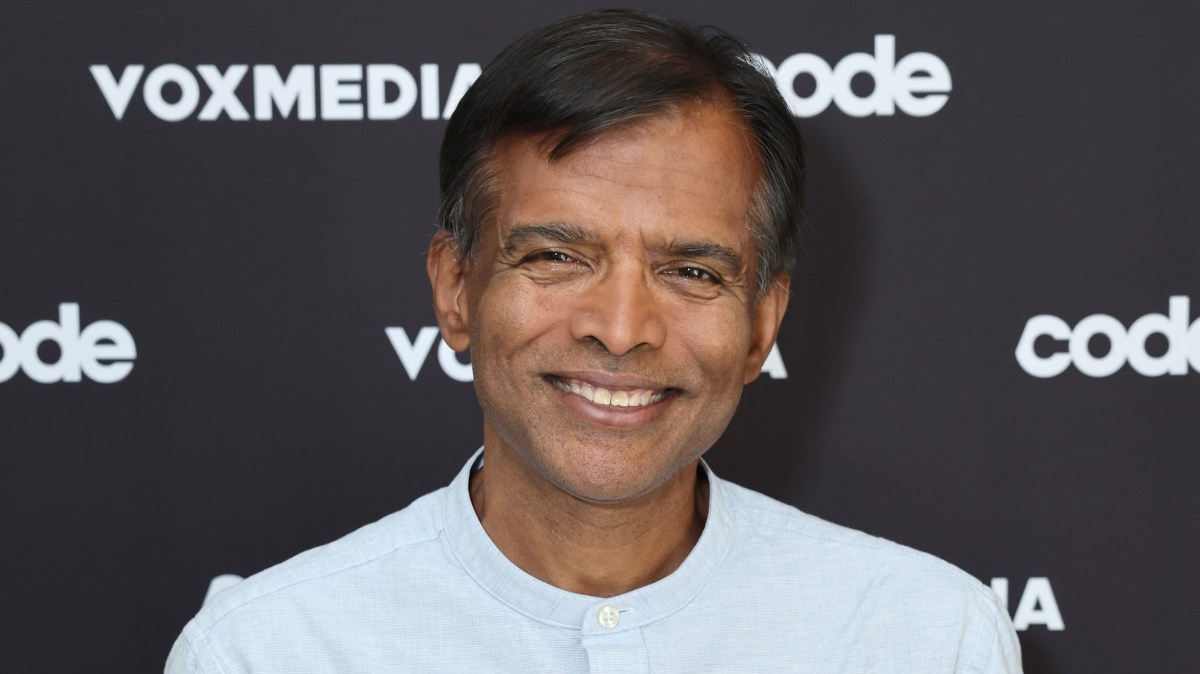
Artificial intelligence has created “a big market delusion”, according to a professor known on Wall Street as the “dean of valuation”. Aswath Damodaran, a professor of finance at the Stern School of Business at New York University and an author of influential books on corporate finance and valuation, says he is more cautious about the market now than at any time in his career.
He said: “Every time there’s a big market, people overreach. They overreach because you’ve got overconfident founders/entrepreneurs surrounded by overconfident venture capitalists … Each part thinks it’s going to win. So you ask each part to price itself, it’s going to attach a high price to itself and attach a high expectation to being able to win this game.”
Damodaran, 68, added: “They can’t all win, but none of them has the capacity or the humility to even consider that possibility.”
Last week OpenAI, the maker of ChatGPT, said it had raised $110 billion in a deal backed by Nvidia, Amazon and SoftBank that values the startup at $730 billion. Its rival Anthropic raised $30 billion in February in a deal backed by Nvidia and Microsoft which valued the company at $380 billion.
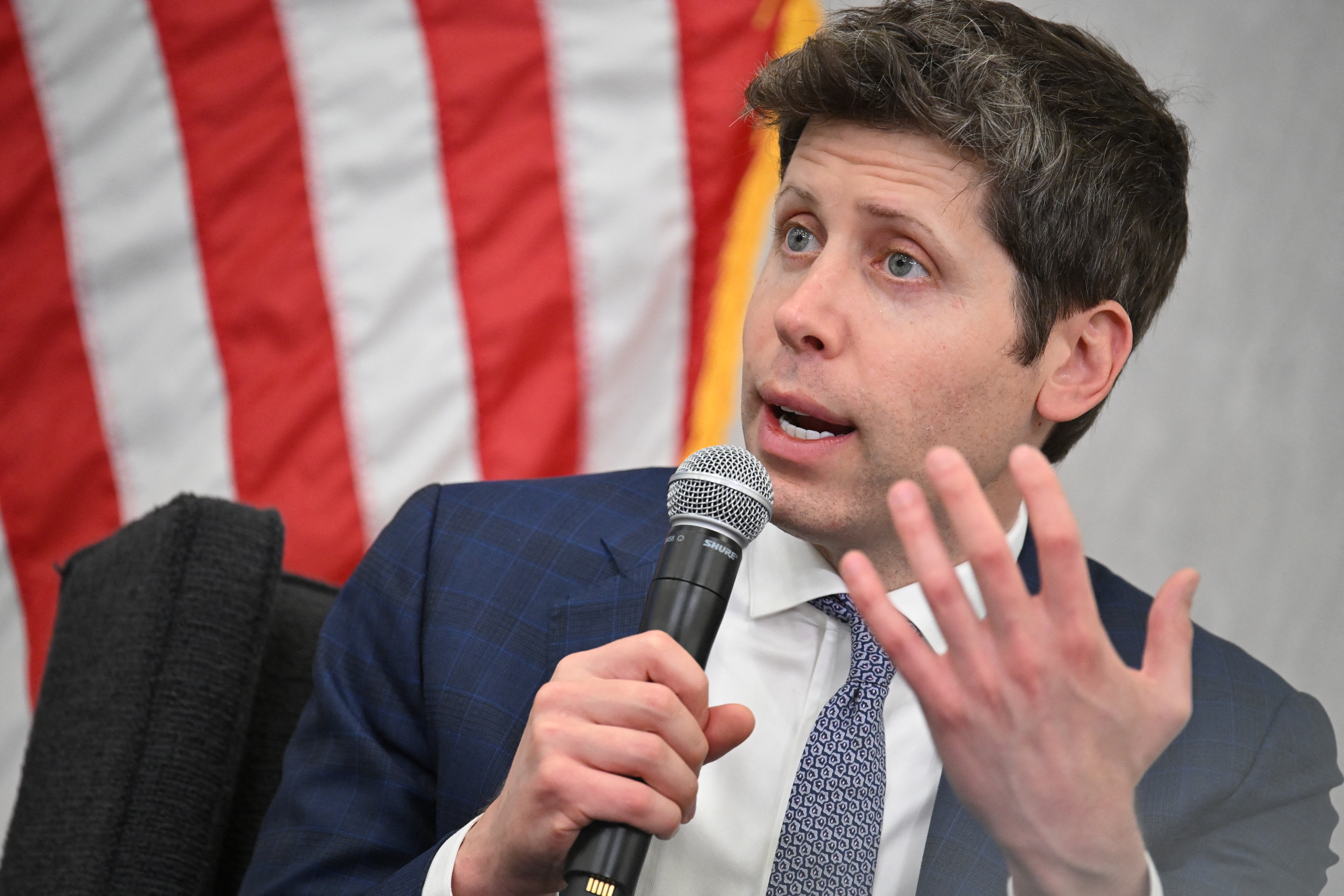
Sam Altman, OpenAI’s chief executive
MANDEL NGAN/GETTY IMAGES
Damodaran believes that AI is going to make businesses less profitable, but that there will be a smaller group of companies that will become big winners thanks to the technology. Those fortunate ones will “sell the [AI] products and services that companies buy to make themselves less profitable”. To win in the era of advanced AI, they will have to create exclusivity around a product or service, either by tying data to an AI product, or building something that nobody else has yet built.
His response to those who argue that AI will boost profits across sectors as companies become more productive and efficient?
“This is what happens in game theory, when you act like you’re the only person moving and the rest of the world stays still, right? So as people say that, I say, OK, that sounds nice, but what if your 99 other competitors are doing exactly what you’re doing and they have access to the same [AI] products you bought? […] The next thing you do, you’re on this price cutting mission where at the end of the process, you all have lower costs, you all also charge lower prices. And if history is any guide, you all end up with lower margins on those lower prices than you did before.”
Uncertainty around the impact of AI on markets grew last week after a viral Substack post by a little-known New York research outfit posing a doomsday scenario for the US economy in the age of superhuman AI was deemed partially responsible for a sell-off.
The Citrini Research post, titled “The 2028 Global Intelligence Crisis”, forecast a hypothetical scenario whereby AI advances by June 2028 lead to widespread white-collar job losses, and a prolonged downturn and financial crisis.
The fallout from the post laid bare the nervousness of investors about the sustainability of the AI boom. Even after a market rebound last Tuesday, the report stoked debate on Wall Street about what AI means for the economy and corporate America.
Damodaran said he is very wary of any scenario analysis like the Citrini report. However, he said: “Is it possible that a terrible outcome could come out of AI? Absolutely. And it’ll happen either because AI works really well, really soon; or really badly, really soon.
“Let me explain: if it works really well, really soon, and it does the jobs of bankers and consultants and software engineers, the problem is tons of people are going to lose their jobs, and then where are they going to go? […] They now lose their jobs and their income.”
• Meet the AI refugees: white-collar workers retrain as teachers
He added: “At the other extreme, you could have AI that doesn’t work out at all, and this is a pipe dream in the minds of founders who think they’re going to change the world. Silicon Valley is full of them.” If that happens, some of the big tech companies, such as Amazon, Meta Platforms and Alphabet would have to write down tens of billions or hundreds of billions of dollars of investments they should not have made, he said. That would affect their employees, shareholders and investors in S&P 500 index funds.
More pain would be caused due to the fallout from AI companies that have invested in data centres and chips using private credit. However, he does not think it would be “2008 kind of crazy” because private credit is not as big a segment of the lending market as banks and corporate bonds.
Damodaran believes that the true impact of AI will “fall somewhere in the middle” of those two extremes. He said: “I think AI will work, not as well as people claim it will, and not as easily monetisable as people think it is.”
The academic has built up a geographically and sectorally diverse investment portfolio, which includes big tech stocks, over the years. He personally trades very little, buying and selling up to four stocks a year. Two of his investment rules are: “Do no harm and act as little as you can”. About 15 per cent of his portfolio is currently in cash, the highest proportion it has ever been.
• AI for beginners — what you really need to know to keep up
Markets are presently “richly priced”, he said. “They seem to be underestimating the transition risks we face of going from a post 20th century global economy that’s worked pretty well for most, to something different, and we don’t know what the structure is but it’s amazingly sanguine about what that transition will look like, and that the new structure that’s coming is going to be benign.”
He said the pillars that we have long taken for granted, such as the US dollar as the centre of the currency system and the US as the primary driver of global growth, are under threat amid a shift towards de-globalisation and a widespread decline in trust in institutions.
“I think every piece of that post-Second World War structure is getting shakier … Trust is shaky around the world in institutions.”
However, one of his most contrarian views is that 2026 might be one of the first years in a long time that the global economy outperforms the market, measured by global GDP growth.
• Robert Colvile: If you’re not terrified by AI, you’re not paying attention
The economy has “shown resilience that nobody thought it would”, he said. If he had asked most people after President Trump’s “liberation day” what the outlook was for the global economy, he said most people believed it was going to “collapse and burn”.
He said: “The fact that it’s kind of sustained itself and kept going is, I think, almost an incredible surprise.” He believes that 21st century economies are going to be far more volatile and more difficult to predict than in the 20th century, when recessions and unemployment worked in particular ways. People are becoming more adaptable, and “learning that we have to change the way we work, we live, because the world around us is constantly shifting”, he said.
“The economy has learned to adapt much better than the 20th century economy did, and that adaptability might explain why it can keep going in the face of so much stuff that says, ‘you should not be doing well’.”
Despite being widely regarded as an expert himself, Damodaran warns investors against turning to so-called market experts to “make you more comfortable with what the market is doing”. While 50 years ago, he believed the market was largely run by a handful of people in London and New York engaging in “sheep-like behaviour”, he said the market has now become much more spread out in terms of where the power lies, from hedge funds and private equity to individual investors building a following on social media. “It’s not like a few portfolio managers running big funds can influence the market, and it scares them. It terrifies the big institutional investors, because they have no idea what’s coming.”