It is a tough thing to be a Morrissey fan these days. “People will judge you,” says George Allen, co-host of the Morrissey and Wine podcast. “I remember my boss at work found out and he was like, ‘I find it really hard to believe, because some of the things that Morrissey says, that’s not you.’ And of course, I don’t think those things. But it does present problems in the real world.” Allen says his podcast gets good listening figures. But they haven’t yet managed to attract a sponsor. “And I think that’s because of the Morrissey thing.”
Newly signed to Sire/Warner, the former Smiths frontman is on the comeback trail with his first album in six years, Make-up is a Lie. And yet “the Morrissey thing” – the former Smiths frontman’s well-earned toxic reputation – persists. But to what extent?
Cards on the table: I am a lapsed Moz fanatic, a veteran of 24 gigs who could recite the lyrics to the obscurest solo B-side. His music and beautiful, poetic, lyrics are part of who I am. With The Smiths in the 80s, Morrissey became the voice of outsiderdom, a lifeline for the lonely and misunderstood. He championed issues – vegetarianism, anti-monarchism, anti-Thatcherism – that struck a chord; The Smiths appeared at Red Wedge in 1986, a socialist, Labour Party-supporting tour organised by Paul Weller and Billy Bragg.
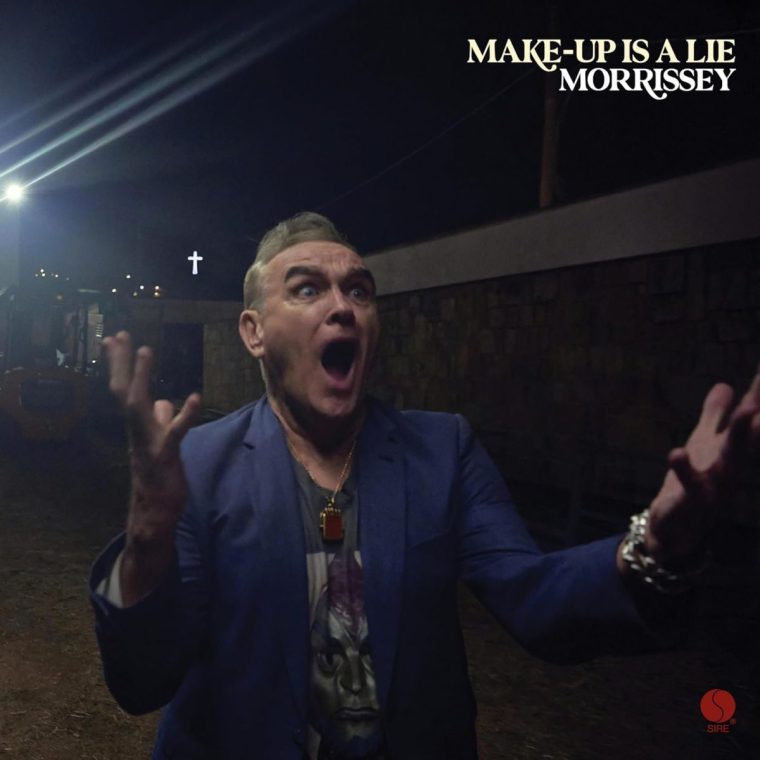 Morrissey is newly signed to Sire/Warner
But since the 90s, he has often been accused of flirting with far-right ideology and imagery, both in song (“Asian Rut”, “The National Front Disco”) and on-stage, infamously by wrapping himself in the Union Jack at a Madness concert in 1992. His comments on race and immigration in interviews were often ambiguous. Take his comment onstage at The O2 last weekend: before singing national pride anthem “Irish Blood, English Heart” he claimed to care about the “safety of all communities. But right now I’m most concerned about my own community”. As an exercise in plausible deniability, it takes some beating.
But his 2018 support for far-right party For Britain and expressions of sympathy for Tommy Robinson were shocking, his disdain towards the victims of Harvey Weinstein unfathomable. I could go on.
Morrissey has always denied accusations of racism or supporting fascism. But I couldn’t reconcile this with the man who wrote about life’s outsiders with such pathos and humour. It felt – feels – like a heartbreaking betrayal.
Many feel the same, including Johnny Marr, who has made clear his political opposition, and in 2024 rejected a $25m (£18.6m) offer from AEG for The Smiths to reform (a reunion Morrissey said yes to and was seemingly desperate for) due to what he later called “bad vibes”.
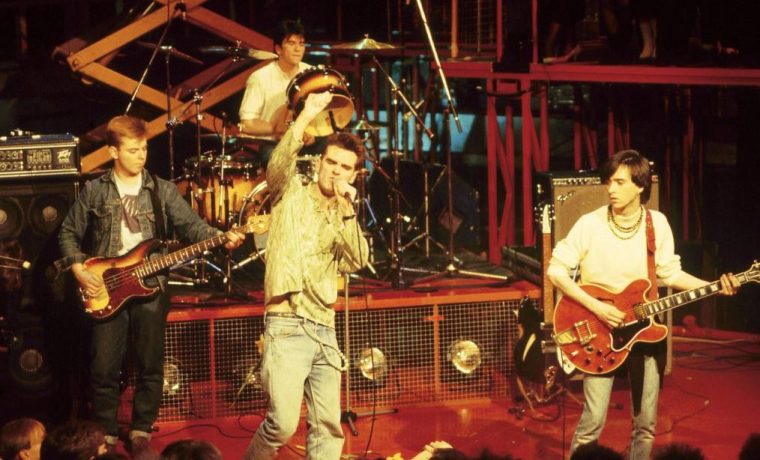
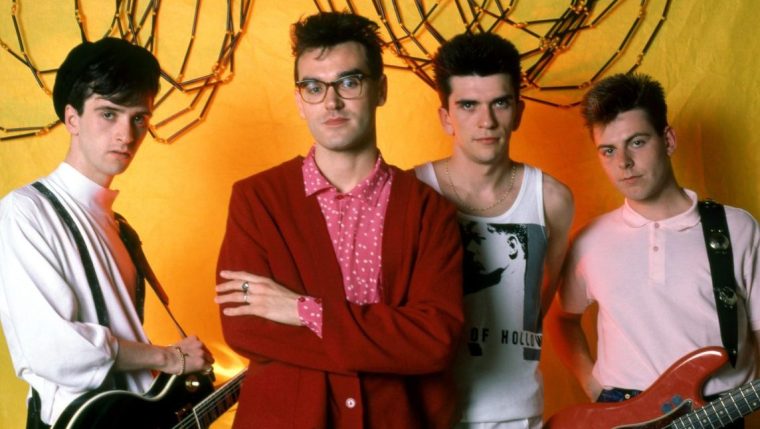 The Smiths in 1985. They continue to accrue young fans, proving popular on TikTok (Photo: Ross Marino/Getty)
Many others differ, either agreeing with Morrissey, not caring, or willing to separate art from the artist. Allen – whose podcast involves informative, informal chat about all things Morrissey past and present while enjoying “medium-priced wine” – admits to moments of doubt. “It’s probably not very becoming,” he says. “I have moved away from Morrissey a couple of times throughout the last decade. Some of the things that he said required some mental gymnastics to get around. But you don’t have to agree with everything he says to be a fan.”
To my surprise, I do find myself taking an interest in how Morrissey’s comeback is faring (“I know it’s over, still I cling”…). His current position in British pop is utterly unique. Here is a man once synonymous with left-wing causes now embraced by opponents of those causes; a great wordsmith who has become more famous for the controversial things he’s said than the songs he’s put out; a man who with little favourable recent press and no radio play still has an ardent fan base large enough to fill London’s O2 Arena, like he did last Saturday; an artist who despite everything remains of such fascination that both Manic Street Preachers and Robbie Williams have written songs about him in the past 12 months.
The Manics’ “Dear Stephen” (an alternative spelling of Morrissey’s first name, Steven) is a futile plea for “my secret hidden love” to reject his belief system and “come back to us”; Williams’ “Morrissey” is a homoerotic paean that ignores the past 35 years to sing about the effect Morrissey had on the young Robbie. Heard back-to-back, they basically cover the two ends of Morrissey fandom.
Culturally and politically, you could argue it is a good time for Morrissey to re-enter the fray. The Smiths continue to accrue young fans, proving popular on TikTok. And some of Morrissey’s past rhetoric – especially on immigration and free speech – is now very much central to mainstream political discourse. “What I will say about Morrissey is that he is often quite far ahead of the zeitgeist, the cultural mood,” Allen says. “In a lot of instances, you can look back and see things he said in interviews, but 10 or 20 years later, become common things that people think. You often find that a lot of people end up agreeing with him in the end.”
 Johnny Marr turned down a Smiths reunion (Photo: Pete Cronin/Redferns)
Inevitably, in the culture wars, Morrissey is a new-found martyr on the right of politics, seen as standing up to the woke left: unthinkable when Morrissey said in 1984 that “the sorrow of the IRA Brighton bombing is that [Margaret] Thatcher escaped unscathed”.
“Morrissey is accruing political currency on the right wing,” Allen says. In October, Fox News of all places ran an article titled “Morrissey might be the last British person you will ever know”. Reform UK even invited Morrissey to its party conference last year; Morrissey declined stating he was “apolitical” but thanked them for their interest. “It’s not a good look, even just on a brand level,” Allen says. “But it is a very popular political party that is representing a large chunk of the mainstream. So I suppose it shows that he has cultural value and currency.”
But it isn’t clear that the right’s embrace of Morrissey has won him many new listeners. The campaign for Make-up is a Lie has thus far had a muted response. Morrissey’s last major comeback in 2004 was big news: after a gap of seven years, he released the album You Are the Quarry to critical acclaim and commercial success, buoyed by two classic Morrissey singles “Irish Blood, English Heart” and “First of the Gang to Die”. He was everywhere: Top of the Pops, Glastonbury, Jools Holland, Friday Night with Jonathan Ross, Radio 2, CD:UK. Even 2017’s Low in High School was launched with a live gig for 6Music.
There has been nothing like the same level of profile or attention (could you imagine him on Graham Norton?) this time around. Allen says the campaign “feels a bit stunted”, even with the attempts at modernity by posting on TikTok and Instagram. “He’s in his influencer era,” Allen says. But the album’s first two singles “Make-up is a Lie” and “Notre-Dame” have received virtually no major radio play in the UK, and have not yet reached one million streams on Spotify between them, perhaps an indicator of their lack of wider appeal. In a post on his Morrissey Central website after The O2, Morrissey bemoaned “the usual Iron Curtain blackout” of his music in “soviet England” – victimhood turned to 11.
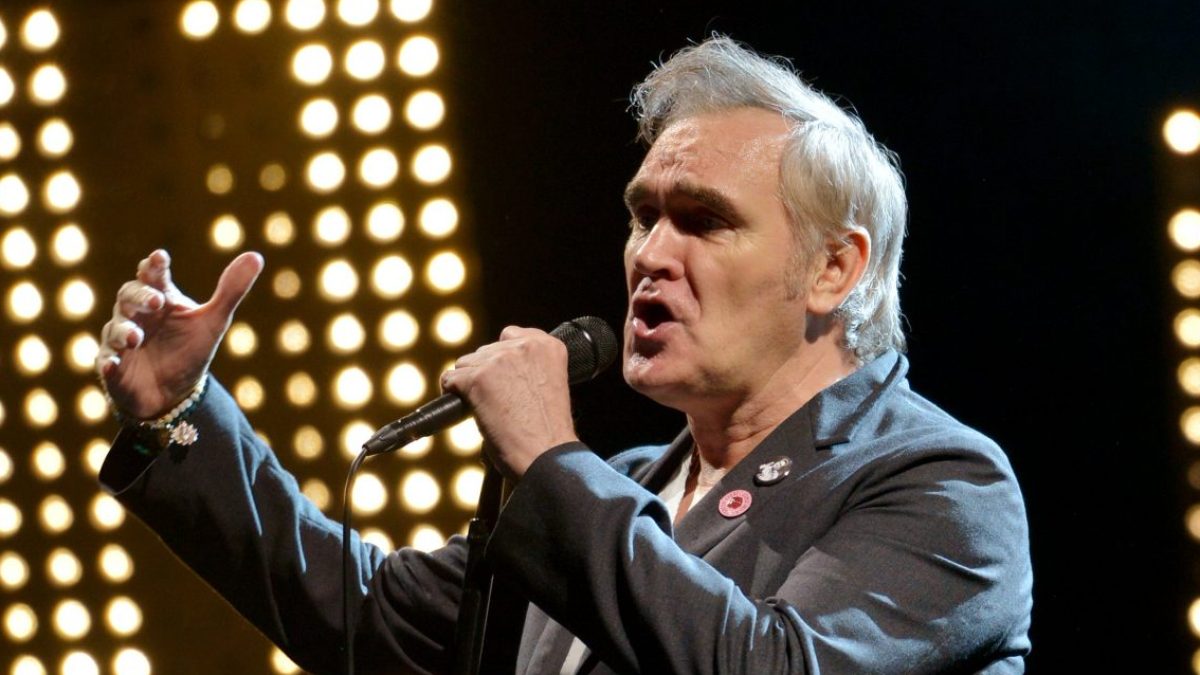
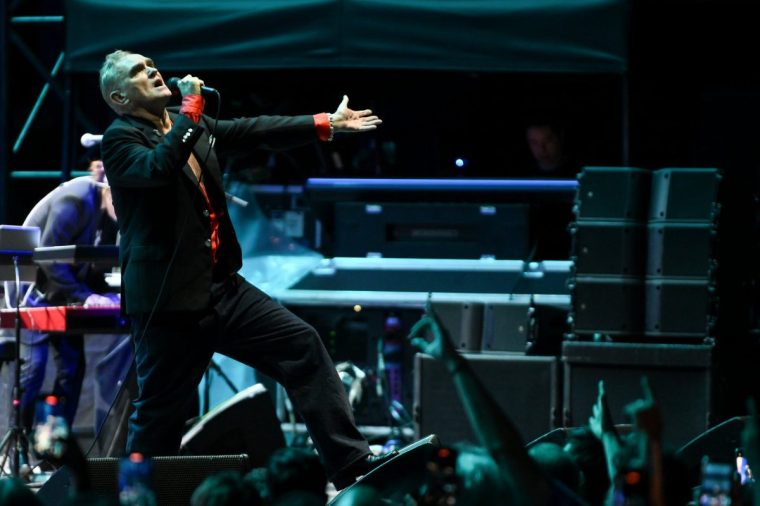 Morrissey performs in 2025. The campaign for his new album has thus far had a muted response (Photo: Marilla Sicilia/Mondadori Portfolio/Getty)
“I’m not getting that same sense of hype this time with this album,” says Allen. “And I think it’s particularly noticeable that none of my non-Morrissey friends have said to me, ‘Oh, I’ve heard that Morrissey has got a new album out.’ It seems that the vast majority of the interest is from that existing fan base. I would love it to be a big comeback. I’m not getting that vibe right now.”
But like anything else, the supposed sins of the artist can – and often are – put aside if the music is good enough. In truth, Morrissey has made it easier for people to get off the train because for years now, his output hasn’t been anywhere near his exalted standards: sub-par songs increasingly filtered through a worldview many find objectionable.
His track “Bonfire of Teenagers” crassly takes aim at the public show of solidarity after the 2017 terrorist attack on Ariana Grande’s concert at Manchester Arena, which killed 22 people, coming to the bizarre conclusion people wanted to “go easy on the killer”. It remains unreleased – Capital Records refused to put it out – along with the album of the same name, despite Morrissey buying back the rights to the album after leaving the label in 2022.
New single “Notre-Dame” has a lyric putting forth the conspiracy theory that the real cause of 2019 Notre-Dame fire – officially declared as either a cigarette or electrical circuit – has been covered up. “Notre-Dame, we know who tried to kill you,” he sings, stopping short of what he really wants to say (the recorded version of the track omits the direct mention of terrorism he’d been singing live). As a snapshot of his mindset, it’s indicative. Perhaps radio stations just don’t want to play songs that promote baseless conspiracies.
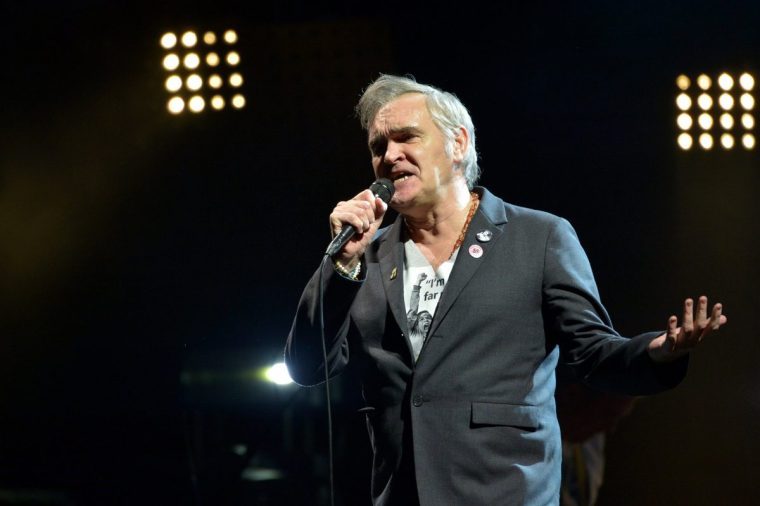 Morrissey’s recent output hasn’t reached the mainstream (Photo: Jim Dyson/Getty)
Put it together with “Make-up is a Lie” – a so-so atmospheric track with a phoned-in chorus – and a perfunctory take on Roxy Music’s “Amazona”, and there has been little released so far to get floating customers interested. There are actually much better songs on the album, particularly the lovely, wistful “The Monsters of Pig Alley” and stand-out “Many Icebergs Ago”, a dark ballad that bristles with the old magic. They seem unlikely to win anyone over, but then at this stage he perhaps doesn’t need to.
“I think what we have to say is that Morrissey would love to be accepted by the mainstream again,” Allen says. “There’s nothing that would give him greater joy than to have his songs widely played on the radio, going on talk shows. I think he would love that. But he doesn’t need it. He talked about it on stage the other day, saying he didn’t give a f**k about the radio. And that indicates to me that Morrissey is perhaps getting comfortable on the fringe of pop.”
Returning to mainstream acclaim certainly seems unlikely with Make-up is a Lie, barring an unforeseen upturn. But the die-hards like Allen will keep the faith. “I just want to see him part of that conversation again. Yes, he’s controversial and he’s difficult to love, but he is a genius. This isn’t the last chance saloon for Morrissey. Maybe with the next album we’ll see it happen again.”
‘Make-up is a Lie’ is out on Friday
Your next read