
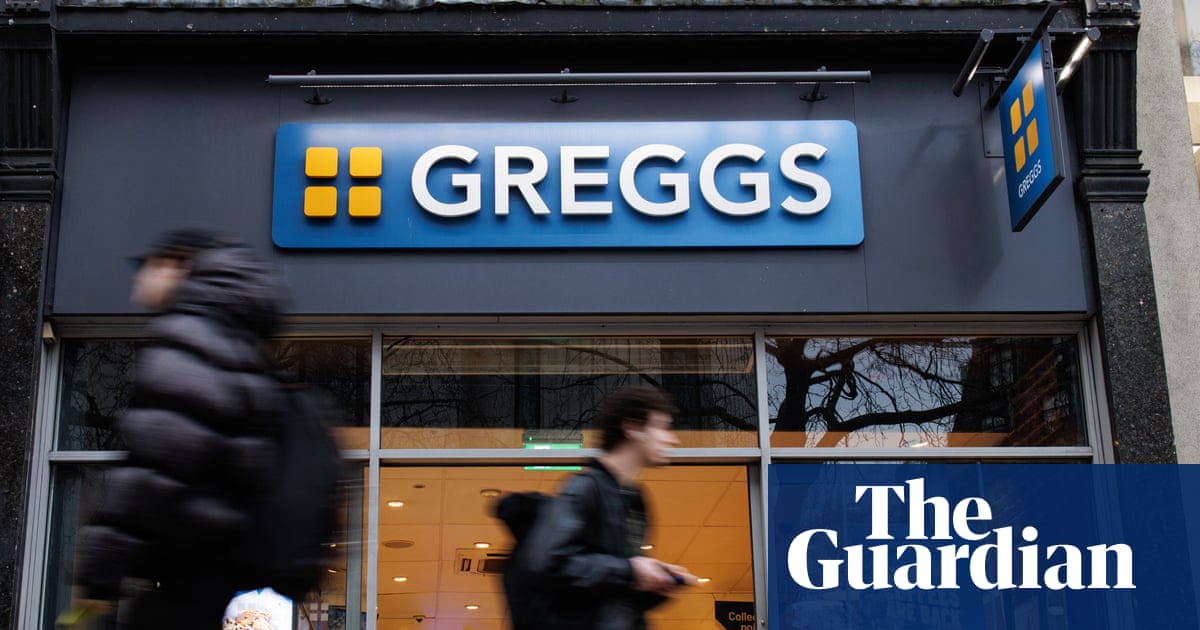
Greggs has reported a slump in profits as it bemoaned “challenging” market conditions hitting consumer confidence and disposable income, amid pressure to prove the UK has not hit “peak Greggs”.
The high street bakery chain, known for its sausage rolls and steak bakes, said statutory pre-tax profits fell by 17.9% to £167.4m for the year to 27 December, compared with a year earlier. Total sales rose by 6.8% to £2.15bn over the year.
It also reported a slowdown in sales growth over the start of the new year. Sales at established stores rose 1.6% over the first nine weeks of 2026 and total sales were up 6.3% on the back of store openings.
Over the past year, Greggs has come under pressure from cautious shoppers affected by the rising cost of living and higher tax and labour costs, and the growing use of weight-loss treatments.
Its chief executive, Roisin Currie, said last year: “I absolutely don’t believe we have reached peak Greggs,” adding that the company had previously bounced back from downturns.
On Tuesday, she said easing inflation had dampened sales growth.
She said she still thought the UK was “moving into a lower inflationary environment that should give respite to the consumer”, despite signs of grocery inflation creeping back up and the threat of conflict in the Middle East further pushing up energy prices.
Greggs had agreed a price for its energy up front so it would be protected from any price rises caused by the conflict until 2027, she said.
She predicted that the business would face inflation of about 3%, about half the level in the previous year, with a drop in its business rates bill after adjustments by the government in the autumn budget but rising wage costs as the legal minimum wage increases.
The business, which employs more than 33,000 people, said it had been resilient in the face of a difficult market.
“We find it challenging and the consumer finds it challenging,” Currie said, as households’ disposable income remained under pressure from high energy and food costs.
Despite falling profits, Greggs paid out a £20m profit-share bonus to staff who had worked for the business for more than six months – an average of £800 for someone on a typical 30-hour contract. Currie said that figure was similar to last year.
“The year-on-year profit position reflected challenging market conditions, compounded by the spell of particularly hot weather that had a material impact on footfall and consumer behaviour,” it said.
Greggs said it had 121 net store openings in 2025, expanding its shop estate to 2,739 locations by the end of the year.
It is targeting about 120 further openings this year as it highlighted ambitions to grow to “significantly more than 3,000 UK shops over [the] longer term”.
Sales growth was also supported by more deliveries and shops staying open into the evening.
Analysts were split on the long-term prospects for Greggs. A Shore Capital analyst, Darren Shirley, said there was “little to shout about as trading slows”.
Aarin Chiekrie, an equity analyst at Hargreaves Lansdown, said: “Despite the challenges, Greggs is working hard to build the foundations for future growth.
“Menus are being adapted to changing customer preferences, and shops are staying open later to cash in on more evening customers – the group’s fastest growing day-part.”