
 John Kowitz
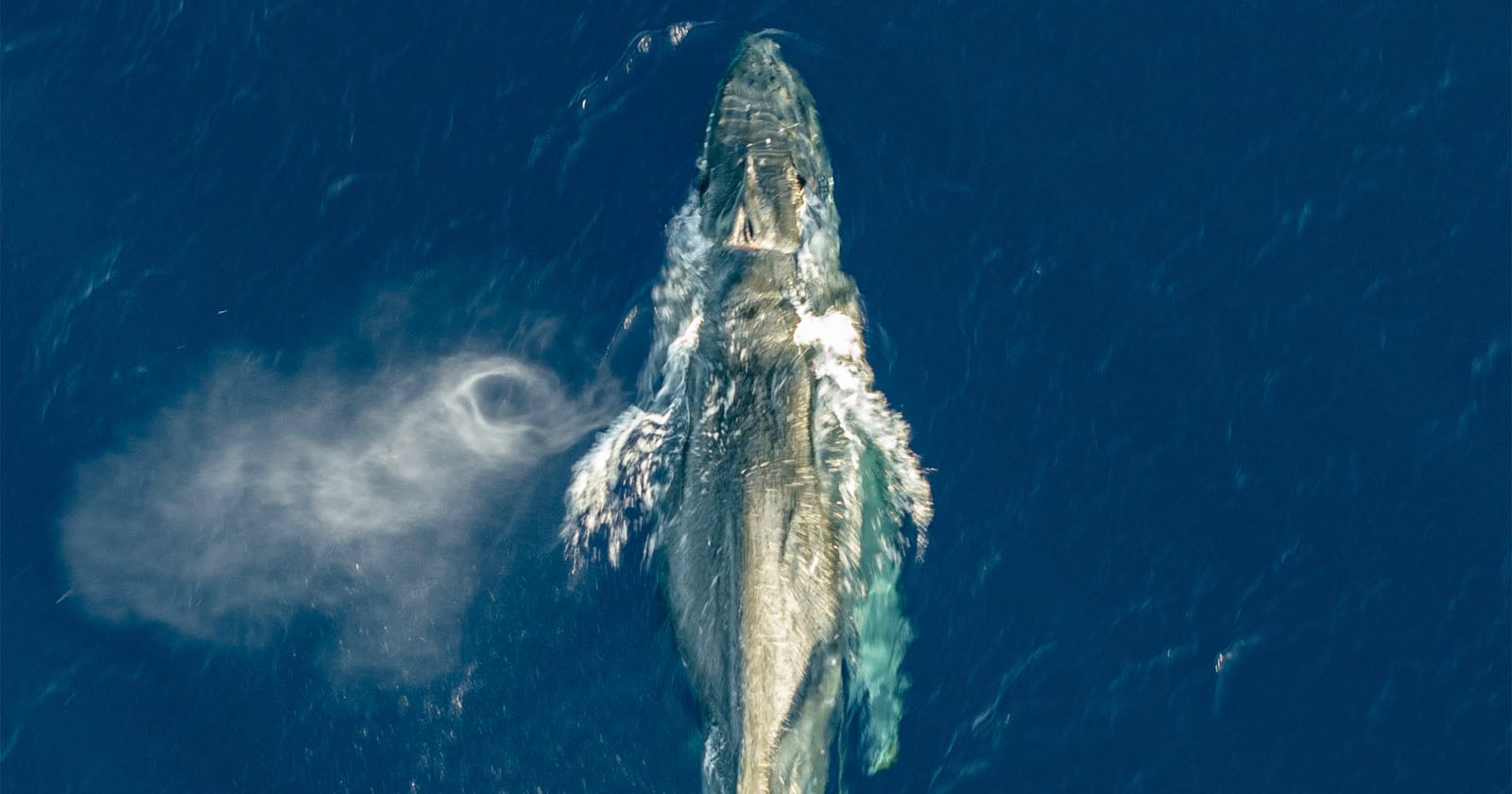
Not long after setting off from the Hawaiian coast, underwater photographer John Kowitz and his team spotted two humpback whales and sent a drone up to scope them out — they immediately realized something was terribly wrong.
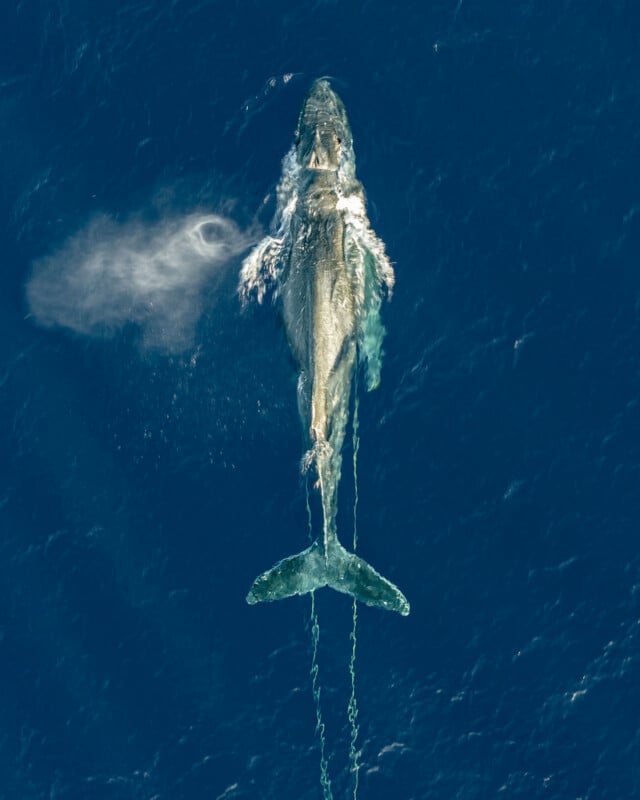
Embedded deep into one of the whale’s skulls were hundreds of feet of fishing gear and chains that the poor individual was forced to drag through the ocean.
Despite the whale’s obvious discomfort, it had a friend for company — perhaps comforting its injured companion.
The boat’s captain was trained in whale disentanglement and called the relevant NOAA authorities. The boat was granted a permit to begin documenting the animal.
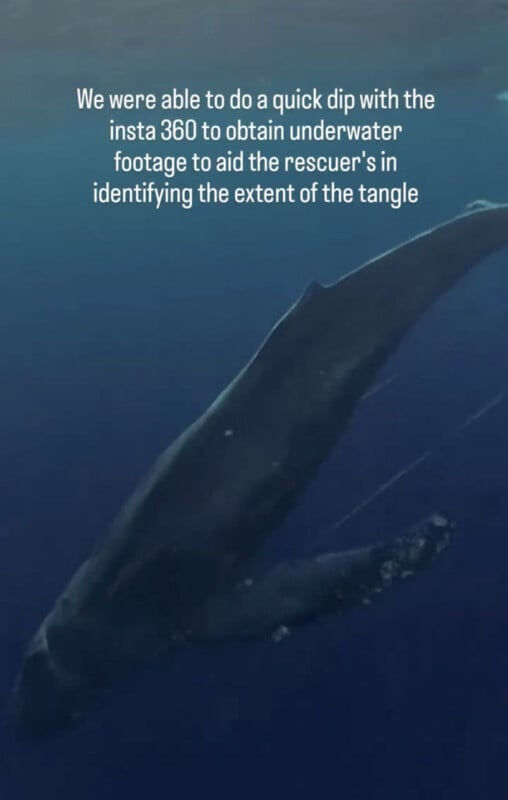
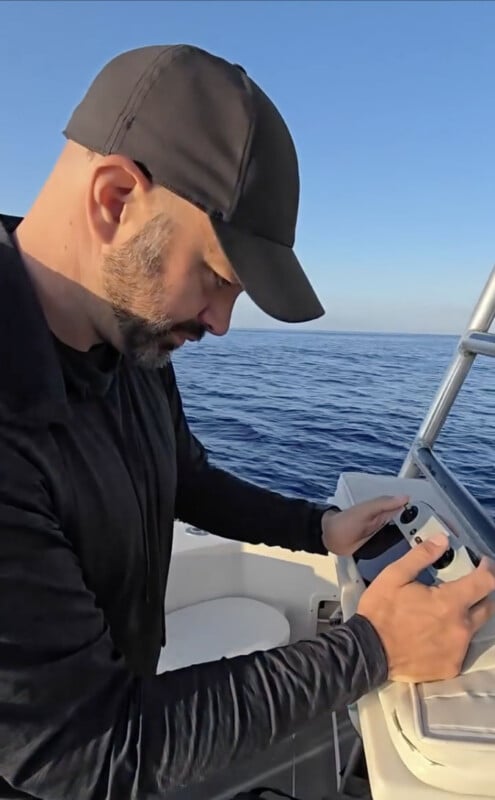
“For two and a half hours we took drone photos, topside DSLR photos, and Insta360 underwater footage to capture imagery of the nature of the entanglement in order to provide the NOAA response team with as much information as possible so they could organize a plan effectively,” Kowitz explains in an Instagram post.
The photographer tells The Dodo that he and his crewmates desperately wanted to help but lacked the proper tools and training to remove the fishing gear from the whale. They were forced to wait for the rescue team.
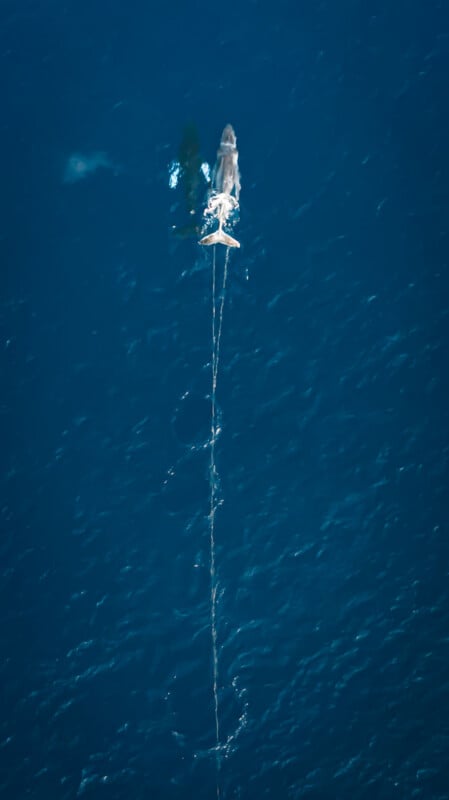 The fishing line stretched for hundreds of feet.
  @j.kowitz
Once the rescue team arrived, they “worked tirelessly for five hours” and scored an incredible result: they removed 251 feet of line, 10 feet of chain, and several hooks from the animal.
“All in all, an approximate 320 feet of gear was removed from the whale,” Kowitz says. “An asymmetrical cut was finally made near the mouth of the animal, which should allow the whale to shake free the line running through its mouth with ease now that all that drag had been removed.”
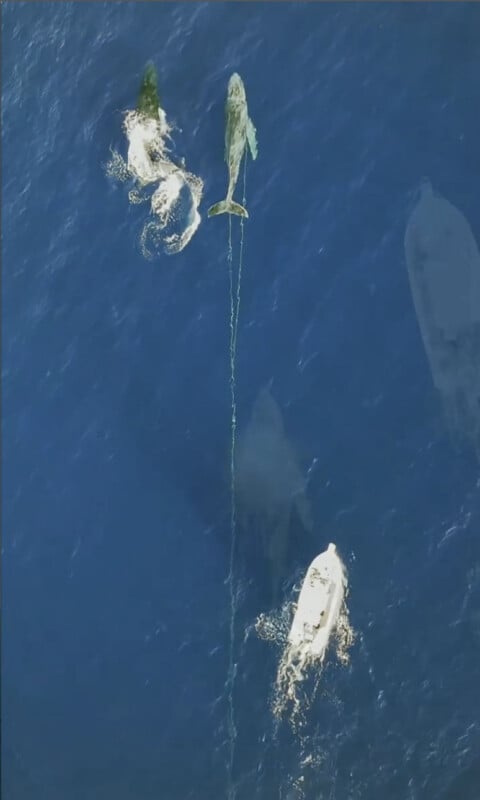
Kowitz explains to PetaPixel that the NOAA attached buoys to the line to slow the whale down so they could get close enough to the animals to cut the lines and free the whale.
“This was one of the most successful disentanglement efforts of the season, and this whale will most likely survive to live a much longer and healthy life once given time to recover,” Kowitz says, calling his boat’s role crucial.
“The rescuers said the whale immediately started swimming faster and moving around a lot, like it had a newfound sense of freedom,” Kowitz tells The Dodo.
Kowitz urges everyone to be better stewards of our ocean. “The entanglements are happening more frequently due to commercial fishing increases,” Kowitz adds. “I’ve seen it before with a mobula ray in Mexico and I see sharks tangled in fishing lines frequently.”
You can follow more of Kowitz’s marine adventures on his Instagram and website.
Image credits: Photographs by John Kowitz