
The problems in the case in Andhra Pradesh arose in August last year when a junior civil judge in the trial court in Vijaywada city passed an order in a case about a disputed property.
The court had previously assigned an official to survey the property and file a report, which the defendants in the case objected to. The judge dismissed their objection, citing four past legal judgements – all of which were later found to be AI-generated.
AI programmes have vastly simplified tasks in the workplace but generative AI systems are known for their ability to “hallucinate” and assert falsehoods as fact, even sometimes inventing sources for the inaccurate information.
The defendants challenged the order in the state’s high court, pointing out that the cited orders were fake. The high court acknowledged this, but accepted that the junior civil judge had made the error in “good faith” and went on to agree with the trial court’s decision anyway.
In its order, the high court said that “the citations may be non-existent, but if the learned trial court has considered the correct principles of law and its application to the facts of the case is also correct, mere mentioning of incorrect or non-existent rulings/citations in the order cannot be a ground to set aside the order”.
The high court had also sought a report from the junior judge who had used the AI-generated rulings. She told the court that this was her first time using an AI tool and she had believed the citations to be “genuine”. She had no intention to misquote or misrepresent the rulings and that “the mistake occurred solely due to the reliance on an automatic source”, the high court wrote.
The high court also advocated for the “exercise of actual intelligence over artificial intelligence”.
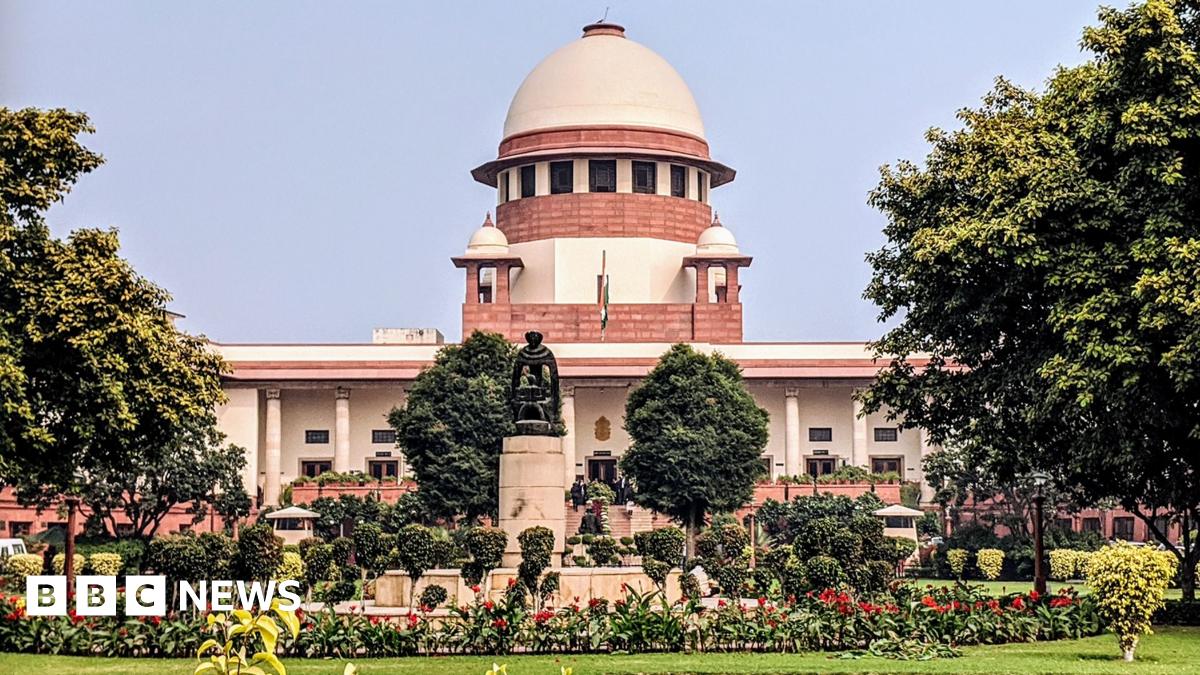
Following this, the defendants appealed again, taking the matter to the Supreme Court, which was less forgiving about the impact of AI.
Coming down sternly against the fake judgements, the top court last Friday stayed the lower court’s order on the property dispute. It said the use of AI while making judgements was not simply “an error in decision making” but an act of “misconduct”.
“This case assumes considerable institutional concern, not because of the decision that was taken on the merits of the case, but about the process of adjudication and determination,” the top court said.
The court said it would examine the case in more detail and issued notices to the country’s Attorney and Solicitor General, as well as the Bar Council of India.