
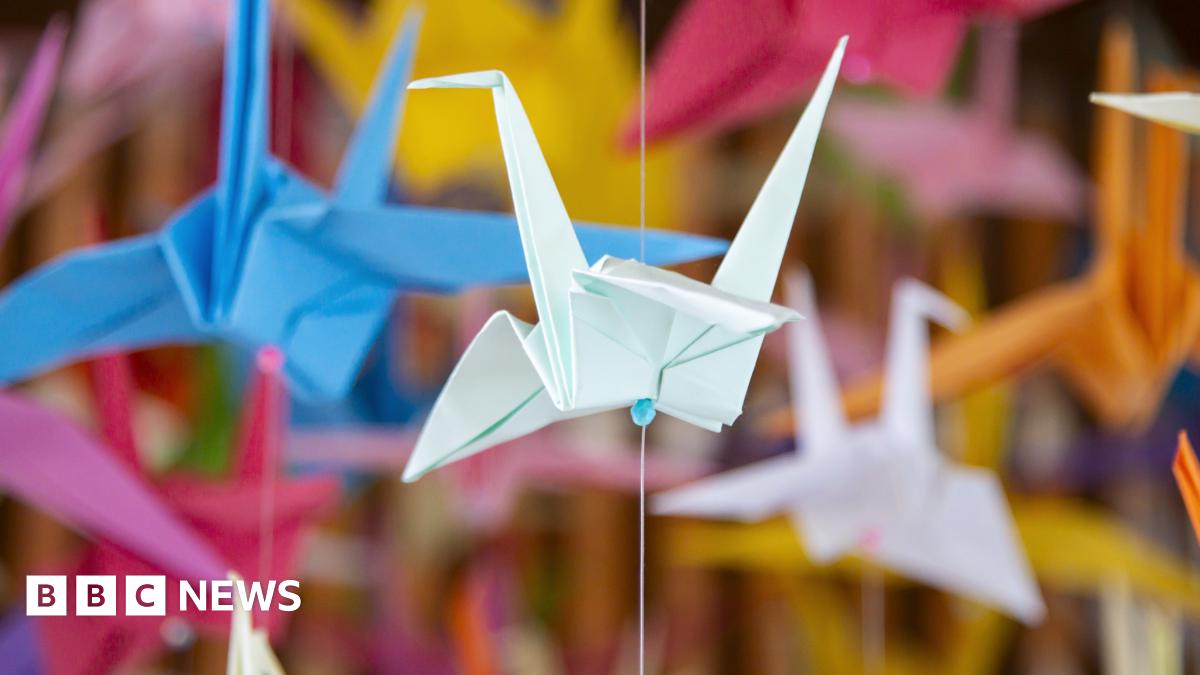
And yet the prospect of using origami to improve existing technologies is, for some, tantalizing. Moneesh Upmanyu at Northeastern University in the US, and one of his PhD students, were awarded a patent last year, external for a design that uses origami to make strong but foldable wing structures.
It’s like a wing with a flexible, corrugated structure within it – something like an accordion – that allows said wing to fold down quickly, or flex with ease.
Such a wing could, for example, bend merely its edges, just like birds do with their feathers, in order to stabilize themselves in flight.
“Birds can actually morph their wings,” says Upmanyu. “They have perfected this highly efficient way to fly.” Aircraft and wind turbines might one day do something similar. Upmanyu suggests that the wing could automatically and dynamically respond to air pressure, using a valve-based system to adjust its shape.
It will take a lot of research and investment to develop these ideas into real products. In the meantime, traditional, paper-folding origami remains a pursuit adored by many. However, not everyone enjoys it.
“For me, it’s an academic interest, it’s my job,” admits Mark Schenk, who says he has little interest in making paper origami models. “My mother, funnily enough, is very good at it.”