
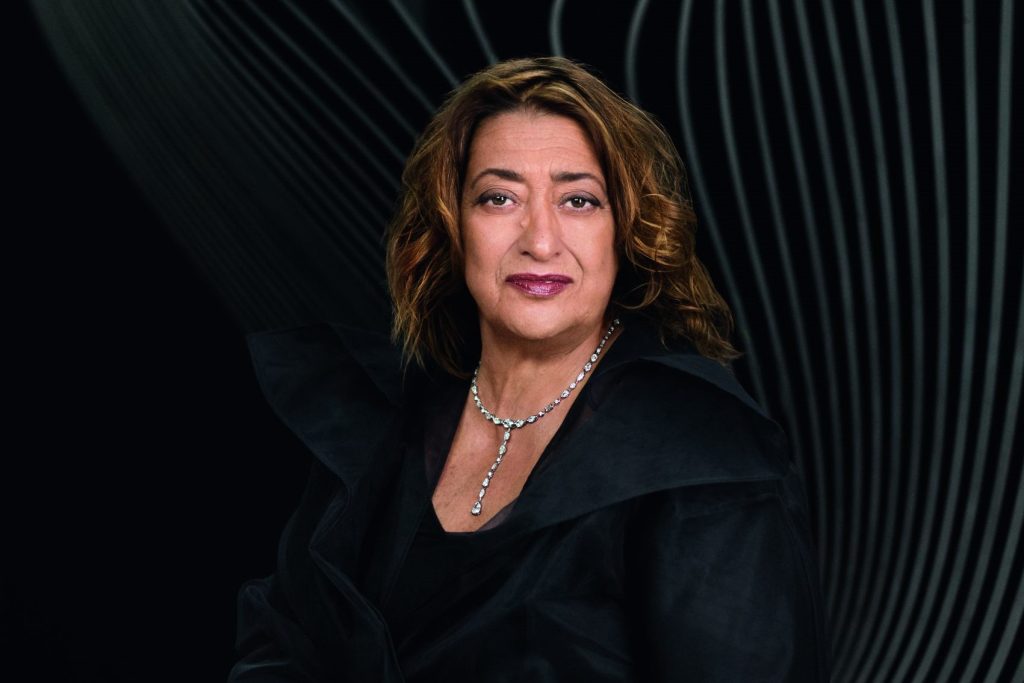
The ruling, handed down by the court last week (27 February), means the practice can now renegotiate the terms of an agreement with the charitable foundation promoting the work of the late Iraqi-British architect Zaha Hadid, who founded the practice.
Since Hadid’s death in 2016, the practice has paid 6 per cent of its income to the foundation every year.
Directors for the practice had long argued that the licensing agreement was ‘unusual and unreasonable’ and a ‘restraint’ on trade – points the High Court did not accept when it ruled against the practice in late 2024.
Overturning that decision, justice Adam Johnson said in a new ruling that the ‘indefinite’ long-running agreement between the practice and foundation could not have been intended to be ‘forever’ and that the naming rights deal could be terminated by the practice with 12 months’ notice.
The foundation had argued the practice could not terminate the deal with notice because the contract, signed by Hadid in 2013-14, did not include an exit clause.
Johnson, explaining his interpretation of the contract, said that ‘indefinite … would mean that the contract was literally intended to go on forever unless terminated by Dame Zaha or her successor in title. While no doubt it was envisaged to be a long-term relationship, from either party’s point of view, that would not make business sense.’
He continued by pointing out the restraints of retaining the ‘Zaha Hadid’ name in perpetuity, Johnson wrote: ‘Many things might happen or emerge over the decades or centuries following the date of the agreement which might be so detrimental to the brand as to make it seriously disadvantageous to the company to be obliged to continue to promote the marks, for example if an iconic Zaha Hadid building was beset with structural problems.
‘Further, architectural styles change with changes in technology and taste. Can it sensibly be said that the parties intended the company to be bound to associate itself with and to promote Dame Zaha’s architectural identity in 100 years’ time?’
The decision paves the way for the practice to renegotiate the contract and its terms with the foundation, including how much it pays to use the name Zaha Hadid – an obligation that has cost the practice more than £21.4 million since her death.
In a statement, ZHA told the AJ: ‘Following a longstanding review of the trademark licence with the Zaha Hadid Foundation (ZHF), the Court of Appeal has confirmed Zaha Hadid Architects’ (ZHA) position that the outdated 2013 licence agreement could be ended on reasonable notice.
‘The practice will now engage in constructive discussions with the foundation about an updated licence. Following many consecutive years of record growth, the business is strong, with solid governance, healthy cash reserves and a clear long-term global plan, and will continue to honour Zaha Hadid’s legacy built over decades in developing acclaimed architecture across six continents.’
In 2024, the High Court ruled against directors’ claims that using the late architect’s name was a restraint on trade given the practice’s turnover of £69.4 million in 2023. This assertion was excluded from the Court of Appeal claim.
The Court of Appeal said the terms of the deal, other than the right to renegotiate and its indefinite ending, ‘are all rationally and commercially defensible, such as the royalty and the other requirement’ and that it ‘became clear that this plea was unsustainable given the successful financial performance of the company’.
In 2024, ZHA recorded its highest-ever annual turnover for the fourth year running, reporting an income of £83.1 million for the year ending 30 April 2025.
That included income from the Middle East, which leapt 45 per cent, rising from £27.1 million in April 2024 to £39.3 million in April 2025.