
Your support helps us to tell the story
From reproductive rights to climate change to Big Tech, The Independent is on the ground when the story is developing. Whether it’s investigating the financials of Elon Musk’s pro-Trump PAC or producing our latest documentary, ‘The A Word’, which shines a light on the American women fighting for reproductive rights, we know how important it is to parse out the facts from the messaging.
At such a critical moment in US history, we need reporters on the ground. Your donation allows us to keep sending journalists to speak to both sides of the story.
The Independent is trusted by Americans across the entire political spectrum. And unlike many other quality news outlets, we choose not to lock Americans out of our reporting and analysis with paywalls. We believe quality journalism should be available to everyone, paid for by those who can afford it.
Your support makes all the difference.Read more
Drivers are being urged to avoid panic buying petrol, despite concerns that fuel prices may climb due to the escalating conflict in the Middle East.
Oil prices have already increased as the regional war entered its fourth day, with analysts predicting the impact could reach forecourts within weeks.
However, motorists are advised against altering their refuelling habits, given the delay before higher wholesale costs typically filter through to the pump.
Luke Bosdet, a spokesman for the AA, said: “Pump prices are heading up – wholesale costs had been increasing even before the weekend’s strikes on Iran.
“However, pump averages today are still below where they started the year and petrol is almost 6.5p a litre cheaper than this time last year. That makes a tank of petrol more than £3.50 cheaper than in early March 2025.
“The fuel trade has reported some increased demand, which was expected, but drivers in general are heeding advice to stick to their usual refuelling routines.
“There’s no point wasting time, fuel and money queuing when drivers don’t need to.”
open image in gallery
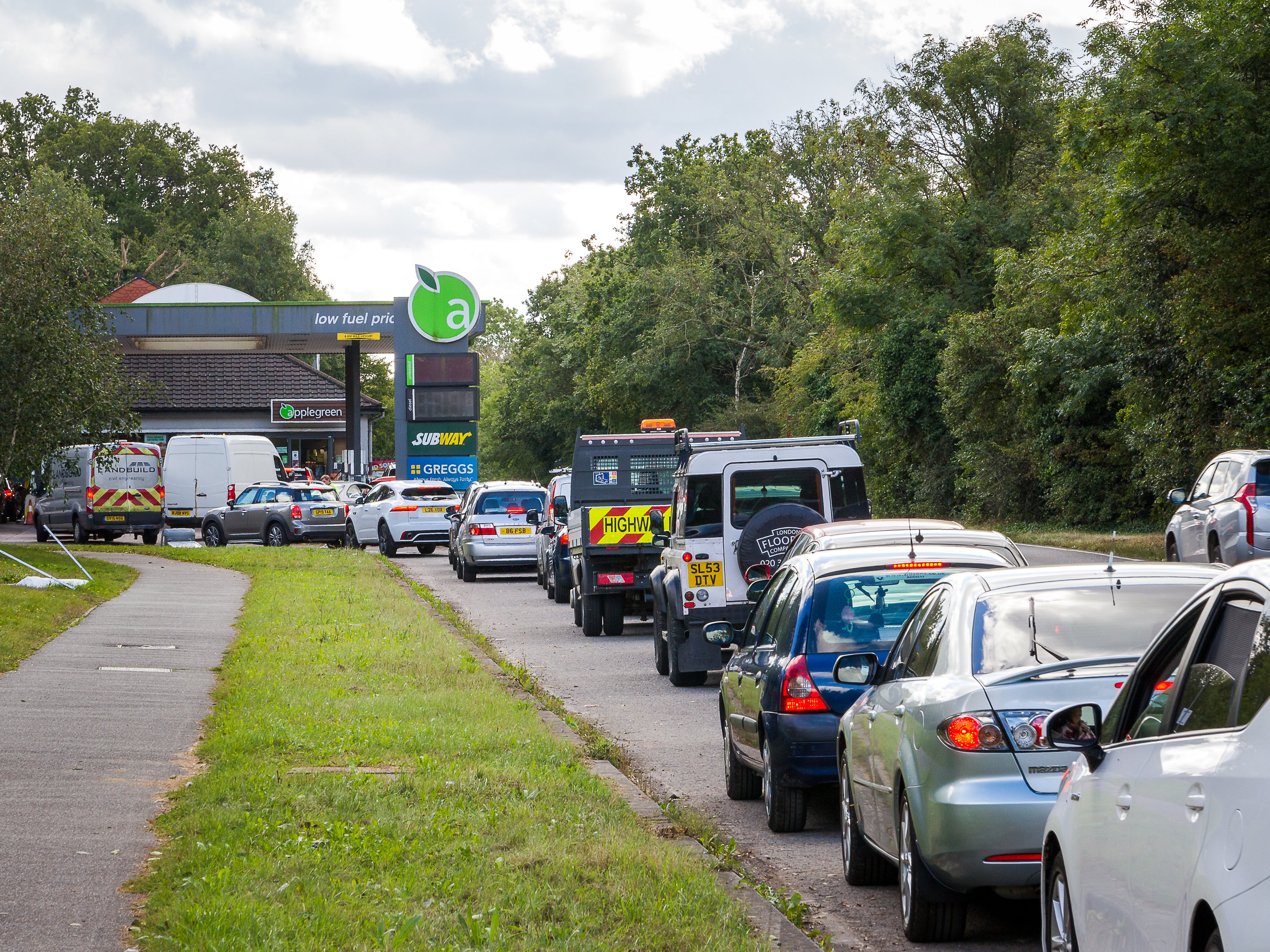
Cars queue up to fill up with petrol at the gas station during a fuel shortage in September 2021 (Getty Images)
The motoring organisation said the increased demand has not caused queues onto the roads.
RAC head of policy Simon Williams said the impact of oil price rises should not be felt for at least a week.
Mr Williams said: “We really shouldn’t see a shock jump in prices at the pumps as wholesale fuel costs had only been rising gradually in recent weeks.
“Even though the price of dated Brent crude rose by five dollars a barrel yesterday to 78 dollars, the impact of this shouldn’t be felt for over a week.”
He encouraged retailers not to increase the price of fuel which is already in forecourt tanks.
“Knowing the tendency for price increases to be passed on far more quickly than cuts, on behalf of drivers we urge retailers not to put up the price of fuel they’ve already got in forecourt tanks and reflect any increases in wholesale fuel fairly on the forecourt,” Mr Williams said.
open image in gallery
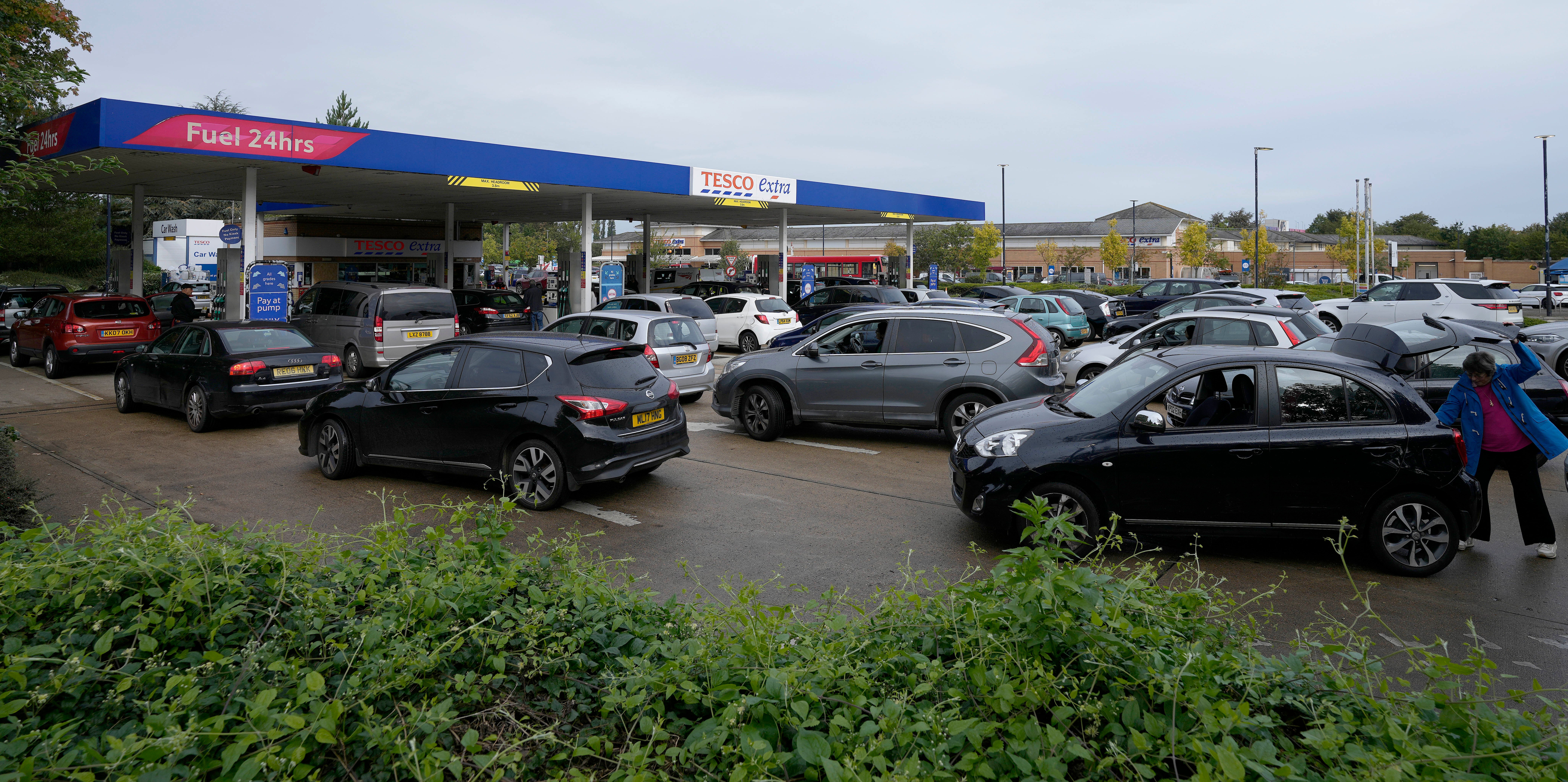
RAC head of policy Simon Williams said the impact of oil price rises should not be felt for at least a week (AP)
Meanwhile, Gordon Balmer, executive director of the Petrol Retailers Association, said pump prices will “have to go up”.
“The conflict in the Middle East has increased the wholesale cost of petrol and diesel, which will mean pump prices will have to go up,” he said.
“Rising fuel prices hurt the economy in the form of higher inflation, impacting already hard-pressed household budgets.
“To help motorists and businesses, I am today writing to the Chancellor urging her to abandon the planned fuel duty increases.”
The Treasury has been contacted for comment.