
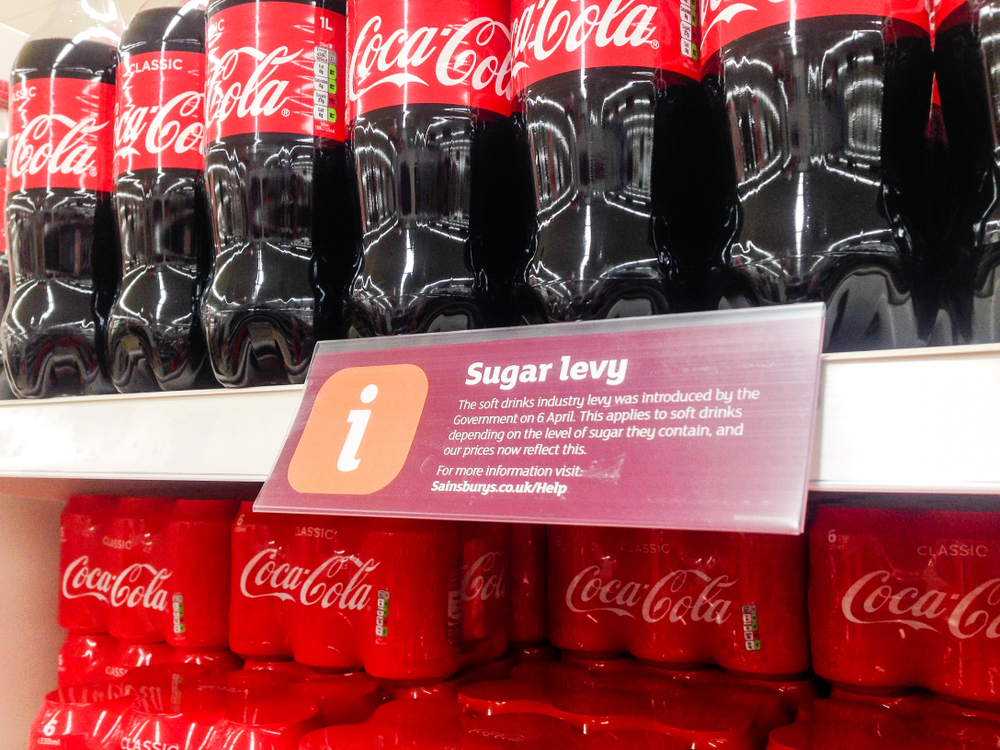
The sugar tax, formally known as the Soft Drinks Industry Levy, was introduced by Theresa May’s government in 2018 with the aim of curbing the nation’s sweet tooth by increasing the cost of the most sugary soft drinks. The levy targets manufacturers — although this cost is often filtered down to consumers — and applies increased charges to drinks containing more than 8g of sugar per 100ml. Recently, the Labour government announced reforms to the tax, lowering the threshold to pay the levy and expanding it to milk-based beverages. However, this policy was far more than an attempt to raise tax revenues: it was positioned as a public health tool, aimed at tackling Type 2 diabetes, obesity and the strain on the NHS from a nation fed on convenience products.
This raises a crucial question: while the tax clearly succeeded in decreasing the amount of sugar in a range of the most consumed drinks, how effective has it truly been as a public health policy?
Reformulation
Unlike traditional taxes that affect the consumer, the sugar levy was more of an incentive to industry. As the implementation of similar policies in France, Portugal and many other countries had shown, profit-driven manufacturers would almost certainly reformulate their drinks to cut production costs.
This worked to great success, with many major brands such as Lucozade, Fanta, Sprite and Ribena cutting their sugar content. Government data produced by bodies such as Public Health England suggested an impressive 46 per cent decrease in the average sugar content of soft drinks. Whilst Coca-Cola largely stood firm, the policy was affecting many large corporations, and the average UK shopper was seeing a significant decrease in the amount of sugar they consumed each week.
In effect, the general public was consuming less sugar without changing their buying habits — the policy was working as intended. Moreover, the revenue generated was being funnelled towards school sports programs and breakfast clubs, policies aimed at improving more than just children’s diets. However, the complication arises when you realise that, despite cuts to sugar consumption, the trend in obesity rates has not changed course. The nation continues to grow larger and unhealthier.
A Youth Dimension
Despite the sugar tax, childhood obesity remains one of the UK’s most pressing public health challenges. The rate of obesity among Year 6 pupils is alarmingly high, with the British Medical Journal estimating that more than one in five children in this age group are living with the disease. Over 10 per cent of reception-age children were also placed into the obese category.
This not only shows a failure of the tax to make a difference. It revealingly demonstrates a deep and systemic unfairness in our society. Anyone, anywhere on the political spectrum, would agree that all children deserve the best possible start in life. Predisposing them to diabetes, heart issues, and damage to every major organ is indisputably the antithesis of this.
Sugary drinks aren’t, and never were, the sole contributor of obesity; education debatably plays a far greater role. Whilst it is essential to teach children about the risks and potential health issues associated with a bad diet, educating society as a whole must not be neglected. Children rarely control their own diets. Without parents who have the time, resources and knowledge to provide balanced meals and explain what healthy eating looks like, a child’s long-term health — and their ability to reverse weight-related issues — becomes significantly compromised.
The issue of obesity is a societal one. A sugar tax alone does not solve the root causes of unhealthy eating habits.
Introducing Class to the Debate
The issue of obesity, and specifically childhood obesity, is worsened when class is taken into consideration. As statistics reveal, unhealthy food is often cheaper, more accessible and more practical for working-class families. For instance, those in deprived areas are more than twice as likely to be classed as obese and disadvantaged Year 6 pupils are almost three times as likely to be categorised as obese compared to their counterparts. This huge disparity needs to be addressed
Fresh produce is not only more expensive but also more time-intensive — requiring time after work that those balancing shift work, multiple jobs or other domestic responsibilities simply cannot afford. Processed foods and ready-made meals are convenient, long-lasting and often cheaper per calorie, making them seem a better alternative in the context of the current cost-of-living crisis. For many, in times of hardship, this affordability can outweigh long-term health considerations.
In this sense, the sugar tax is treating a symptom but not the cause. Without addressing the disparities in income and access to fresh foods, present consumption patterns and related health issues will remain unchanged.
The Solution
The soft drinks levy was effective in what it set out to do: it reduced the nation’s sugar intake without changing people’s buying habits. And while being statistically effective, the levy had no meaningful impact on overall public health. If we want to reduce the strain on the NHS and reverse declining health outcomes, then the systemic issues around diet need to be addressed.
Simply expanding the scope of the sugar tax risks placing a disproportionate burden on working-class families, many of whom rely on cheap, accessible foods as a result of their financial situation and time poverty. Increasing the tax on these foods will only drive up prices as corporations shift the levy back onto consumers, further decreasing the standard of living for such families. Rather than targeting ultra-processed foods, the government should focus on making whole foods more accessible and affordable for the public, possibly exploring subsidies, tax breaks or incentives to lower prices.
Education is also key. Teaching schoolchildren about the importance of a balanced diet is essential, but this must accompany sustained public health education. Adults must be given the knowledge, confidence and resources to break bad habits and challenge the misconceptions that have been shaping the public’s diet.
A healthier society comes not from taxing sugar, but from providing education and the opportunity for everyone to buy nutritious foods.
DISCLAIMER: The articles on our website are not endorsed by, or the opinions of Shout Out UK (SOUK), but exclusively the views of the author.