

We think of astronomy as a visual science. Telescopes gather light; astronomers analyse images. Yet for decades, researchers have been doing something stranger: they have been following the music produced by the sun.
A study shows that the “notes” produced by our nearest star change slightly during its quietest periods. By tracking these subtle shifts, scientists may one day be able to predict dangerous bursts of space weather — powerful solar eruptions that can disrupt satellites, communications and power grids on Earth.
In a very real sense, the sun behaves like a vast musical instrument. On Earth, a clarinet makes a note when air blown across a reed sets up pressure waves that bounce back and forth inside a tube. Only certain waves fit neatly inside the instrument, forming “standing waves” that resonate and produce a clear pitch.
The sun works in much the same way. Its outer layers are turbulent and constantly churning. This activity generates sound waves. Those waves become trapped inside its enormous spherical body, bouncing around within it. Like a giant, gaseous instrument, it resonates.
We cannot hear this music directly — the sound is trapped inside the star — but the vibrations make the whole sun gently “breathe” in and out, explains Bill Chaplin, professor of astrophysics at the University of Birmingham and co-lead author of the new study.
The sun’s surface shifts by only a few tens of metres, yet scientists have been able to track this movement to reveal a hidden soundtrack.
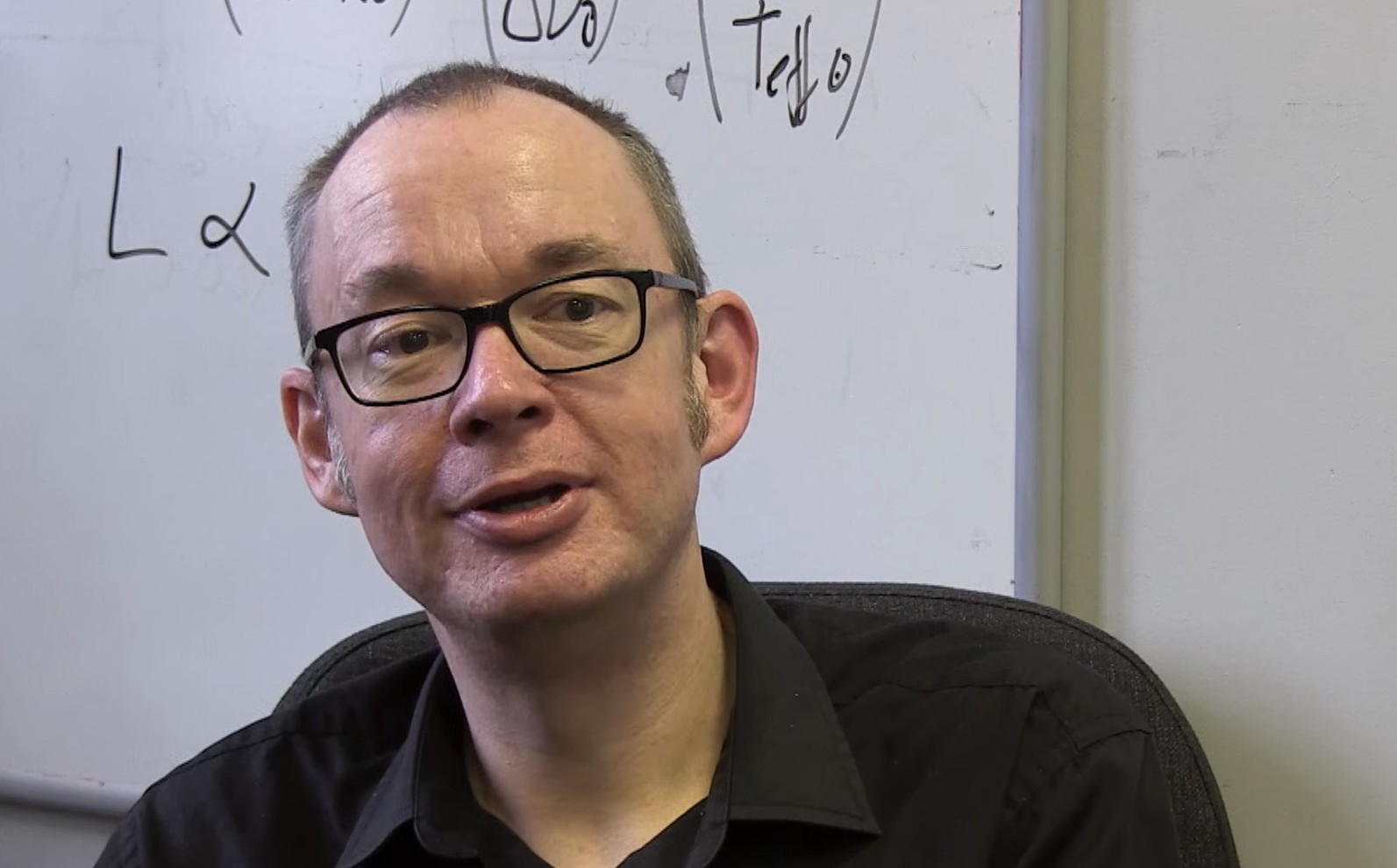
Bill Chaplin, a professor of astrophysics
UNIVERSITY OF BIRMINGHAM
The pitch is astonishingly low. On Earth, a typical musical note might vibrate a few hundred times per second. The sun’s main tones vibrate at about three thousandths of a cycle per second — roughly one oscillation every five minutes. If the sun were an instrument, it would be an immense bass, rumbling far below our auditory range.
By analysing these vibrations — a technique known as helioseismology — scientists can infer what is happening beneath the surface. Changes in temperature, pressure and magnetic fields subtly alter the speed at which sound travels, and therefore the frequencies.
For the study, which has been published in Monthly Notices of the Royal Astronomical Society, Chaplin and his team compared four recent periods when the sun was calm.
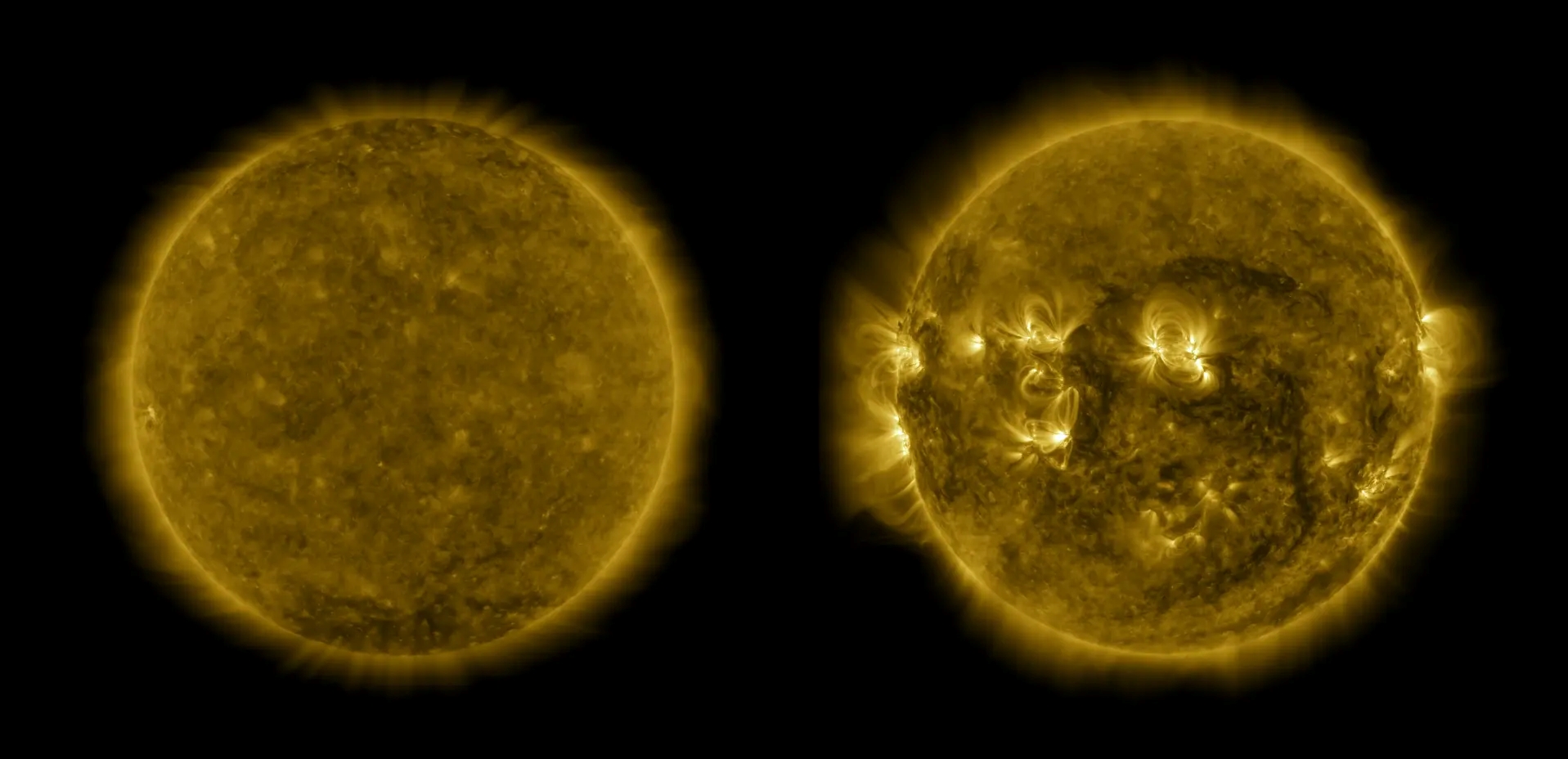
If the sun were a real instrument, its pitch would be very low, and we wouldn’t be able to hear it
NASA/SDO/JOY NG
Its activity rises and falls on an 11-year cycle. At its “maximum”, it displays more sunspots and emits more high-energy flares; at its “minimum”, it is relatively subdued. Using data from the Birmingham Solar Oscillations Network (BiSON), a global array of telescopes that has monitored the sun’s oscillations since the late 1970s, the researchers studied the “minima”, quiet periods.
• Iron ‘bar’ found in deep space hints at what might happen to Earth
The lull between two cycles in 2008 and 2009 was especially still and prolonged. The question they asked was whether the sun’s internal music changed during this period.
The answer appears to be yes. One signal stood out. It comes from a layer inside the sun where its helium gas changes state in a particular way. It leaves a clear mark on the sun’s sound pattern. During the especially quiet solar minimum of 2008–09, that mark was noticeably stronger than during other quiet periods.
Put simply, a particular series of tones in the sun’s internal “music” rang more clearly when it was at its calmest.
By working backwards from the sound data, the scientists were able to estimate what had changed inside the star. The best explanation is that sound was travelling slightly faster in a layer just below the surface.
• Supermassive black holes make galaxies live fast and die young
Faster sound suggests higher gas pressure and temperature there, which fits with the idea that magnetic fields were weaker. It seems that the sun’s inner “tune” shifts with its magnetic mood.
This matters because the sun’s magnetic activity drives space weather — the eruptions of charged particles that cause the northern lights — but can also interfere with satellites, radio communications and power grids.
Predicting those volatile spells is notoriously difficult. Forecasters often rely on clues from the sun’s still phases to estimate how intense the next active cycle will become. As Chaplin puts it: “What’s happening beneath the sun during a quiet period is interesting because that has a bearing on how activity levels then build up in the cycle that follows.”
A clearer understanding of the sun’s internal music during these lulls could therefore improve forecasts of future solar storms. And that may help protect the technologies on which modern life depends.