
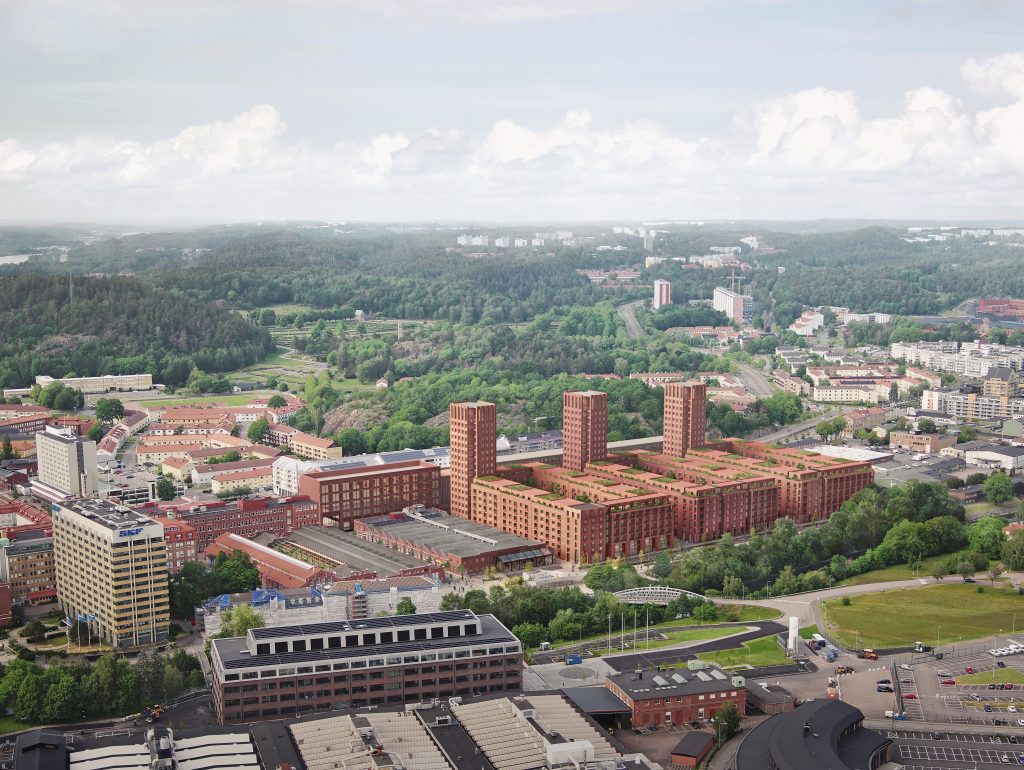
The City of Gothenburg has approved the vision to retrofit a series of disused factories in the Kulan industrial quarter to create more than 1,000 new homes as well as workspace, leisure facilities and a public park.
Bell Phillips drew up plans for the site in collaboration with Studio Egret West, after the pair won an international design competition organised by Stena Fastigheter, one of Sweden’s largest developers, in early 2020.
Studio Egret West left the project after its early conceptual stages, and Bell Phillips has worked with local Gothenburg architect Liljewall on the current plans.
The proposal reuses the site’s most noteworthy buildings, with many of the existing elevations and steel structures set to become spaces for new retail, dining and commercial functions.
New-build homes will reference the site’s history through their materials and forms, for instance, through saw-tooth roofs.
Since winning the design competition six years ago, the scheme has been modified to remove planned student accommodation and introduce additional green spaces between the housing blocks.
The new neighbourhood will also have urban planting between blocks, while a linear park will run alongside the River Savaen.
Practice director Tim Bell said: ‘For Bell Phillips, our first international project is a major milestone, and it has been a pleasure to work alongside our client Stena Fastigheter, partner architects Liljewall and Studio Egret West, in such a productive collaboration.
‘We are now looking forward to commencing technical preparation ahead of construction, and to seeing Gothenburg’s new quarter taking shape over the coming years.’
Stena Fastigheter chief executive officer Cecilia Fasth said: ‘We have been inspired by Bell Phillips’ work in transforming historic industrial areas into vibrant neighbourhoods.
‘That experience has been important in shaping Kulan as an open and welcoming part of Gothenburg.’
Construction is expected to begin in late 2027, with the first residents and commercial tenants scheduled to move in around 2029.
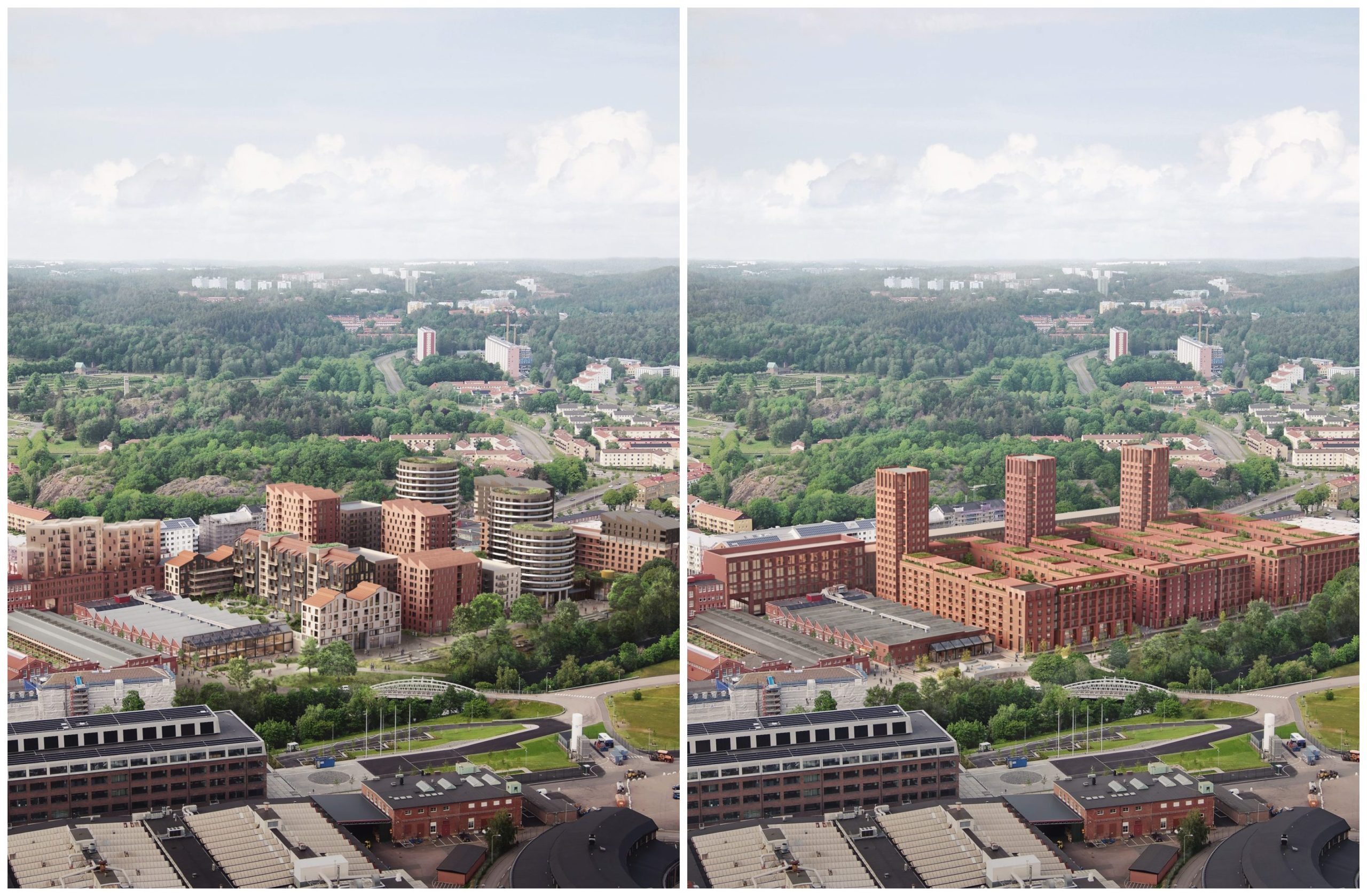
Evolution of the proposals: early designs from 2021 (left); approved scheme from 2026 (right)