
The President of Indonesia, at a National Christmas Celebration Summit and the World Economic Forum, claimed that Gallup and Harvard University found that Indonesia is the happiest and most flourishing country in the world.
Indonesia indeed self-reported the highest scores on several individual indicators, as well as on a composite flourishing index (covering happiness, health, meaning, character, relationships, and financial security) among 22 countries in the 2023 Global Flourishing Study data. The President’s statements have come under some criticism. Here are some clarifications.
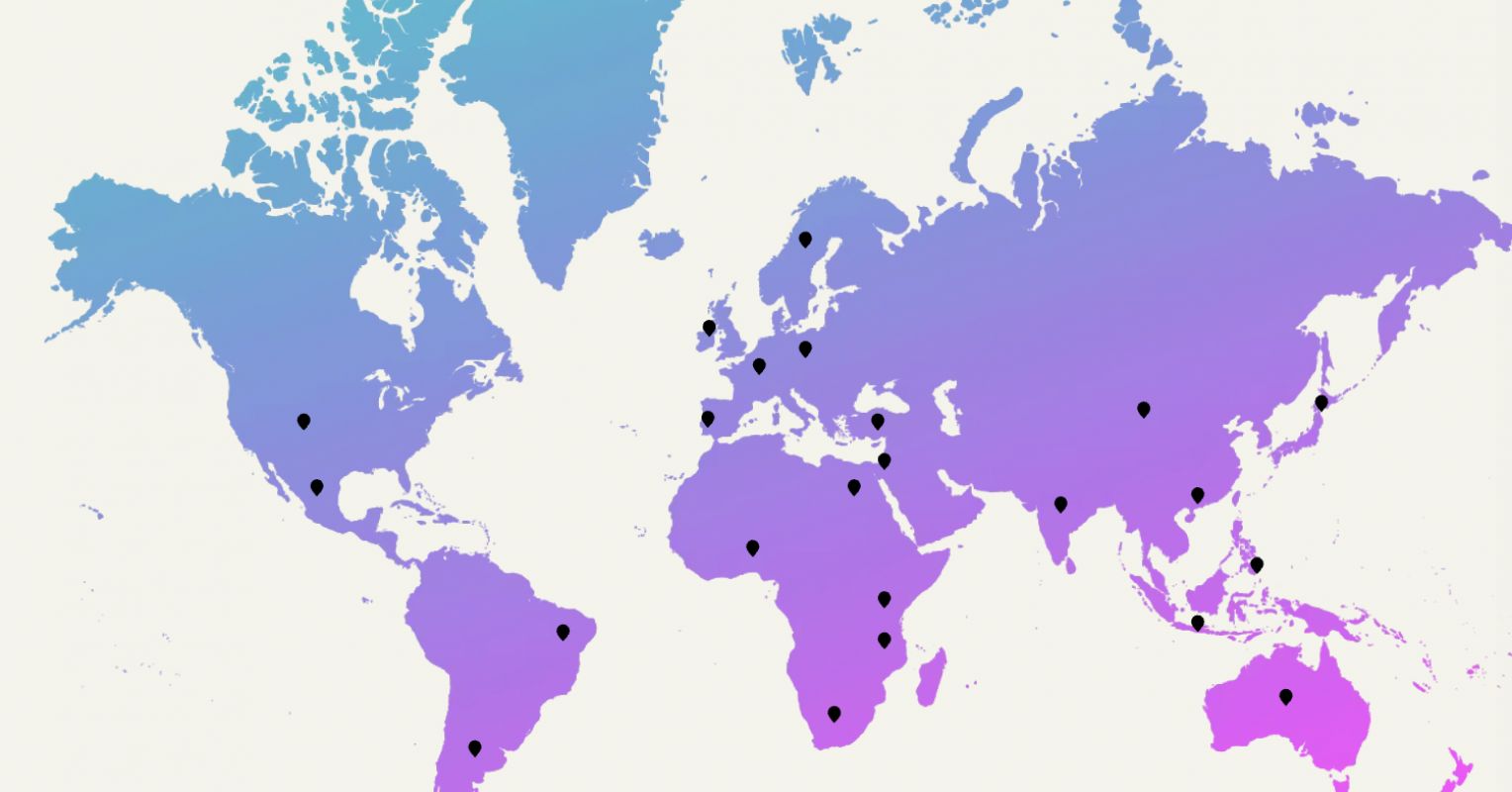
First, there is a distinction between the Global Flourishing Study, a longitudinal panel study of flourishing in 22 countries, and the Gallup World Poll, an annual cross-sectional survey of 140+ countries on a host of different indicators. Gallup collects data for both, but the Global Flourishing Study has a much broader range of flourishing indicators; the Gallup World Poll has fewer well-being indicators, but a much broader range of countries. Indonesia self-reported the highest on the composite flourishing assessment in the Global Flourishing Study, among 22 countries. However, that study is insufficient to draw conclusions or make comparisons with the many other countries of the world.
Second, the reports associated with these different studies typically use different measures. For example, the World Happiness Report uses Gallup World Poll data on 140-plus countries to report on a single question on life evaluation. This question is worded as, “Please imagine a ladder with steps numbered from zero at the bottom to 10 at the top. The top of the ladder represents the best possible life for you, and the bottom of the ladder represents the worst possible life for you. On which step of the ladder would you say you personally feel you stand at this time?” This question is sometimes referred to as the “Cantril Ladder.” Indonesia does not score as high on that single question. In the 2025 World Happiness Report, it was 83 out of the 147 countries. Even in the Global Flourishing Study, if we examine this Cantril Ladder question, Indonesia ranks fifth rather than first among the 22 countries.
Flourishing is a more all-inclusive state, which we have defined elsewhere as “the relative attainment of a state in which all aspects of a person’s life are good, including the contexts in which that person lives.” The flourishing index in the Global Flourishing Study uses two questions in each of six domains (happiness, health, meaning, character, relationships, and financial security) as a crude assessment of flourishing. This certainly does not cover everything that might be included in flourishing, and indeed, no assessment ever could; however, it is also a lot broader than just happiness or life evaluation. It is in large part because Indonesia does well on meaning, relationships, and character that it scores so highly on the composite flourishing assessment. And indeed, as we have previously noted, many middle-income countries self-reported higher on meaning, relationships, and character, whereas higher-income countries often report higher on Cantril Ladder life evaluation and on financial security.
We realize these distinctions are subtle, but we believe they are important for making sense of the differing reports. Moreover, even the Cantril Ladder life evaluation question is not really the same as “happiness” as many people interpret it. The Cantril Ladder life evaluation question is more about making the cognitive judgment that one is “happy with life” rather than “feeling happy.” If one turns to “feeling happy,” Indonesia does very well once again. In these studies, there may be other differences in the samples used, but the differences in the content of the questions being used are of central importance when interpreting the differing results.
These studies of happiness, life evaluation, and flourishing can provide important insights into what is going well and what is not; into who needs help and in what ways; and into how things are changing over time. These subjective self-report measures should be reported alongside more objective measures like education, literacy, life expectancy, and economic growth. Together, they can provide a more complete picture of what is going well and what might need strengthening.