
In the mid-1990s, Royal Navy officers at staff college in Shrivenham were asked to map out their predictions for what the service would look like in 30 years. One submariner said the navy would have 30 of the American Arleigh Burke-class guided-missile destroyers, the same number of frigates and 20 attack submarines.
More than a decade earlier, the navy had deployed 127 ships for the Falklands conflict, including 43 warships. The British nuclear submarine HMS Conqueror had sunk the Argentine cruiser ARA General Belgrano, killing 323 sailors onboard.
The submariner, who recently retired, cannot believe the size of the navy now. “Nobody wrote down that you would have six Type 45s [destroyers] that never work, two aircraft carriers we can’t man because we don’t have enough people, and seven frigates, many alongside. Nobody wanted this navy.”
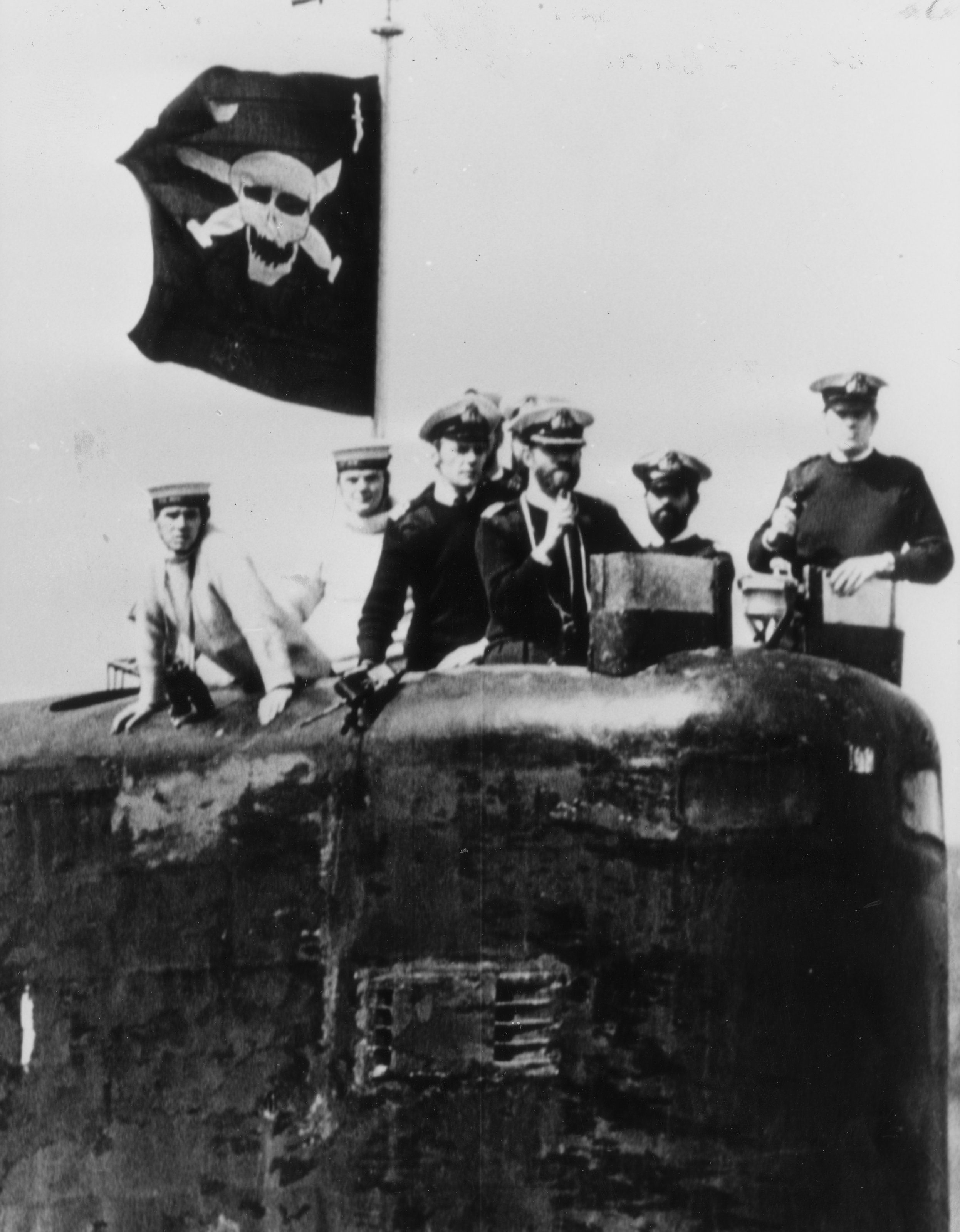
The Conqueror, which sank the Belgrano, returning to base
UPI
He said life as a submariner in the Eighties and Nineties was “like in the movies … We were so close to Russian submarines, they had no idea we were under them and behind them. We dominated the oceans. We were the best,” he said.
Today, “it’s an absolute disgrace” because of a lack of availability of the submarines and ships and a focus on far too expensive vessels.
“Instead of six Ferraris we could have had 100 BMWs,” he added, speaking as a US submarine sank an Iranian frigate, Iris Dena, with a torpedo:
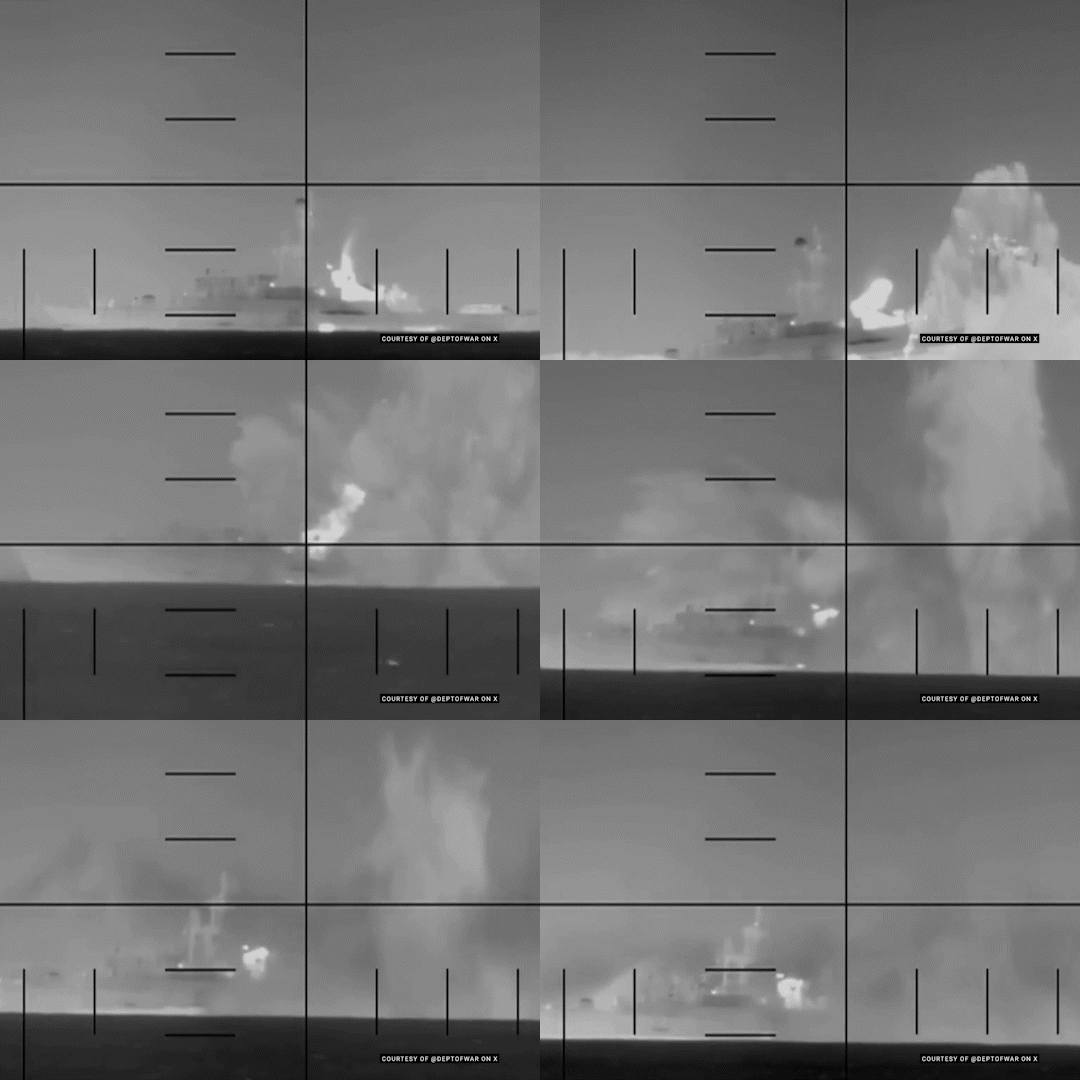
Operation Epic Fury, which has involved Iranian kamikaze drone boats, American aircraft carrier strike groups and the destruction of 18 Iranian ships, has brought into sharp focus the state of the Royal Navy, which has no ships in the Middle East for the first time in half a century.
At 9.30am on Tuesday — four days after the war began and two days after a drone struck RAF Akrotiri — a proposal was made inside the UK Ministry of Defence to send one destroyer to waters off Cyprus.
But a lack of availability of ships has meant it will not set sail until next week, meaning it could be almost two weeks until it arrives in theatre. In such a fast-evolving conflict, nobody knows what the state of the region will be by then.
Western officials have not ruled out the UK escorting vessels through the Strait of Hormuz in an attempt to protect oil and gas flows, but would the navy have many ships to send?
I see no ships
The Royal Navy has 13 principal surface combatants comprising six Type 45 destroyers — the only weapon in the UK’s arsenal that can shoot down ballistic missiles — and seven Type 23 frigates.
By comparison the US navy, which is the world’s most powerful, boasts 121 vessels in its surface fleet, comprising 11 aircraft carriers, 74 destroyers, 27 frigates and nine cruisers.
China has the largest navy in the world by hull count and is the second-most powerful, with 110 surface combatants, including three carriers, 48 destroyers, 51 frigates and eight cruisers.
Even France’s fleet rivals the UK’s in size, with one carrier, four destroyers and 17 frigates.
One of the Royal Navy’s frigates, HMS Richmond, is retiring this year. At that point there will be only 12 warships, most of which are in maintenance, until new ships — Type 26s and Type 31s — start to enter service by the end of the decade.
Of the six Type 45 destroyers in the Royal Navy, three are in deep maintenance and three are deemed “operational”. One, HMS Dragon, is being prepared to head to Cyprus but will not be ready to sail until next week. Three of the seven frigates are unavailable for operations. Neither of the two £3 billion aircraft carriers is at sea.
Ageing subs on ‘mind-boggling’ marathons
The submarine service is also in disarray.
The Royal Navy operates four ageing Vanguard submarines, which entered service in the 1990s and have provided a near continuous at-sea nuclear deterrent ever since. They carry up to 16 Trident missiles, capable of launching up to 192 nuclear warheads, which protect Britain and its European allies.
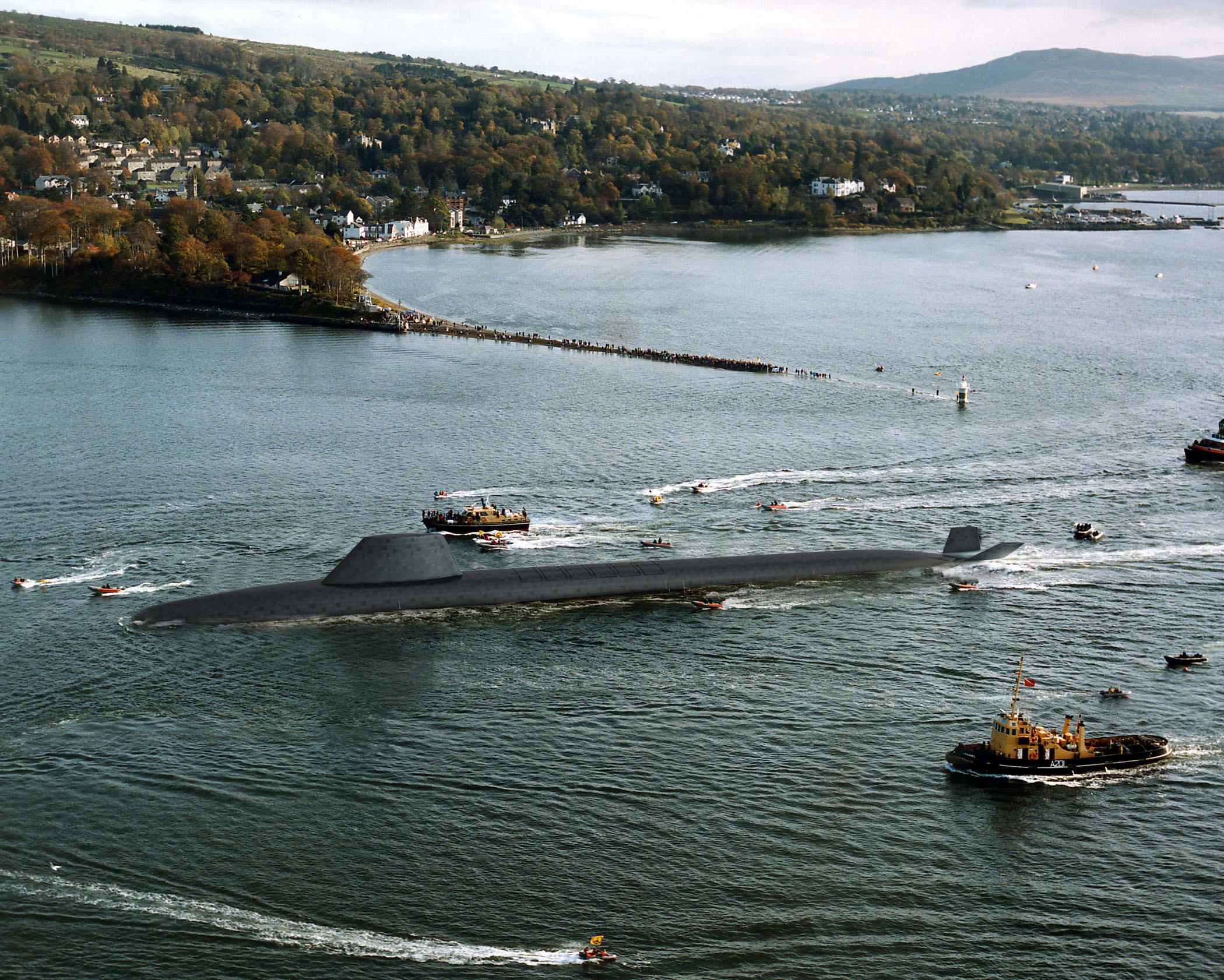
A Dreadnought-class submarine under construction
BAE SYSTEMS
The plan had been for the boats to patrol in three-month cycles, with one at sea, another preparing to go and the remaining two undergoing maintenance. But when a refit of one submarine overran by several years, its sister vessels stretched patrol lengths to cover the workload.
Crews on the “bomber” boats are now enduring “mind-boggling” marathons underwater, with HMS Vanguard returning from a record seven months at sea in March last year.
Such demanding deployments are exacerbating a retention and recruitment crisis in the navy. Experienced submariners have explained to The Times how they quit after living under immense pressure on extended patrols, during which they are totally cut off from the outside world.
The Vanguards’ replacements, the Dreadnought-class submarines, were finally procured in 2016 as part of a £31 billion programme but will not join the fleet until 2032.
Of Britain’s six “hunter-killer” Astute-class submarines, designed to track and attack targets with Tomahawk cruise missiles and Spearfish torpedoes, just one is available and it is in Australia. Another could be put to sea in the next few weeks, while the rest are either at very low readiness, in dry docks or shipyards.
Years of defence neglect
Pete Sandeman, a maritime analyst who runs the Navy Lookout website, said the “crisis has come at a particularly low point for the Royal Navy” after years of “defence neglect”.
He said: “Thirteen frigates are in the shipbuilding pipeline but the 30-year-old Type 23s are falling apart and the Type 45 destroyers are in the middle of an upgrade programme.
“Submarine unavailability is tied mainly to infrastructure issues that are being slowly addressed.”
In 2014 the Royal Navy had 65 ships in its fleet, including 13 frigates, six destroyers and four amphibious assault vessels. It also had 11 submarines.
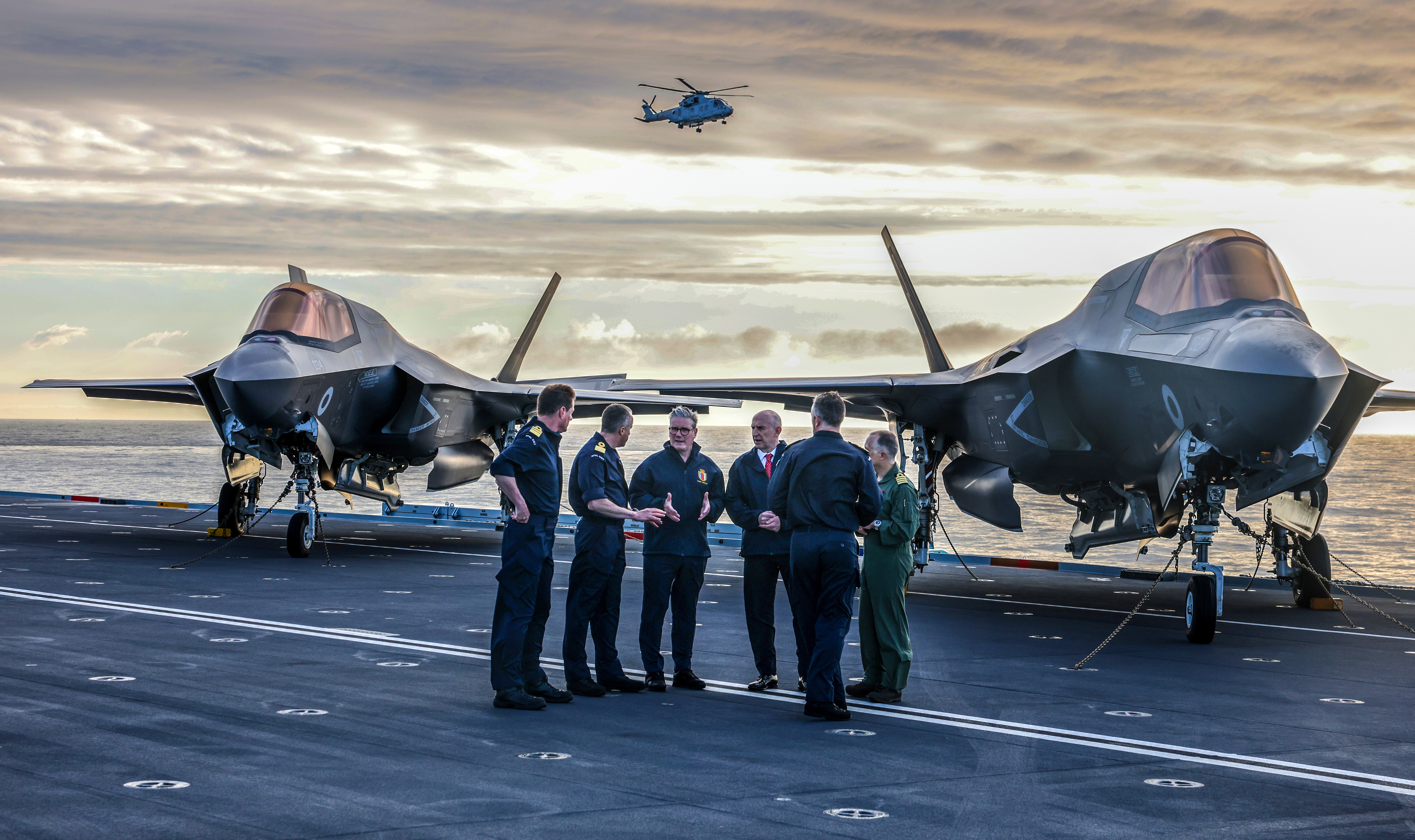
Sir Keir Starmer on a visit to HMS Prince of Wales
TIMES PHOTOGRAPHER RICHARD POHLE
Now it has 51 warships and ten submarines, many of which have been stuck in port for years. Both the Navy’s former amphibious assault ships have been scrapped, as well as five frigates, two minehunters, and one attack submarine in the past three years.
Today, the navy is smaller than at any point since the English Civil War, according to James Smith, a war studies researcher at King’s College London.
• I see no ships: our shrinking Royal Navy in numbers
Military Balance, an annual global comparison of the strength of armed forces carried out by the International Institute for Strategic Studies think tank, points out that in 2021, the UK deployed a carrier strike group to the Indo-Pacific.
In 2025, another carrier strike group deployed, this time with HMS Prince of Wales, but with half the number of accompanying vessels. This reflected the Royal Navy’s “challenges in generating vessels”, it said.
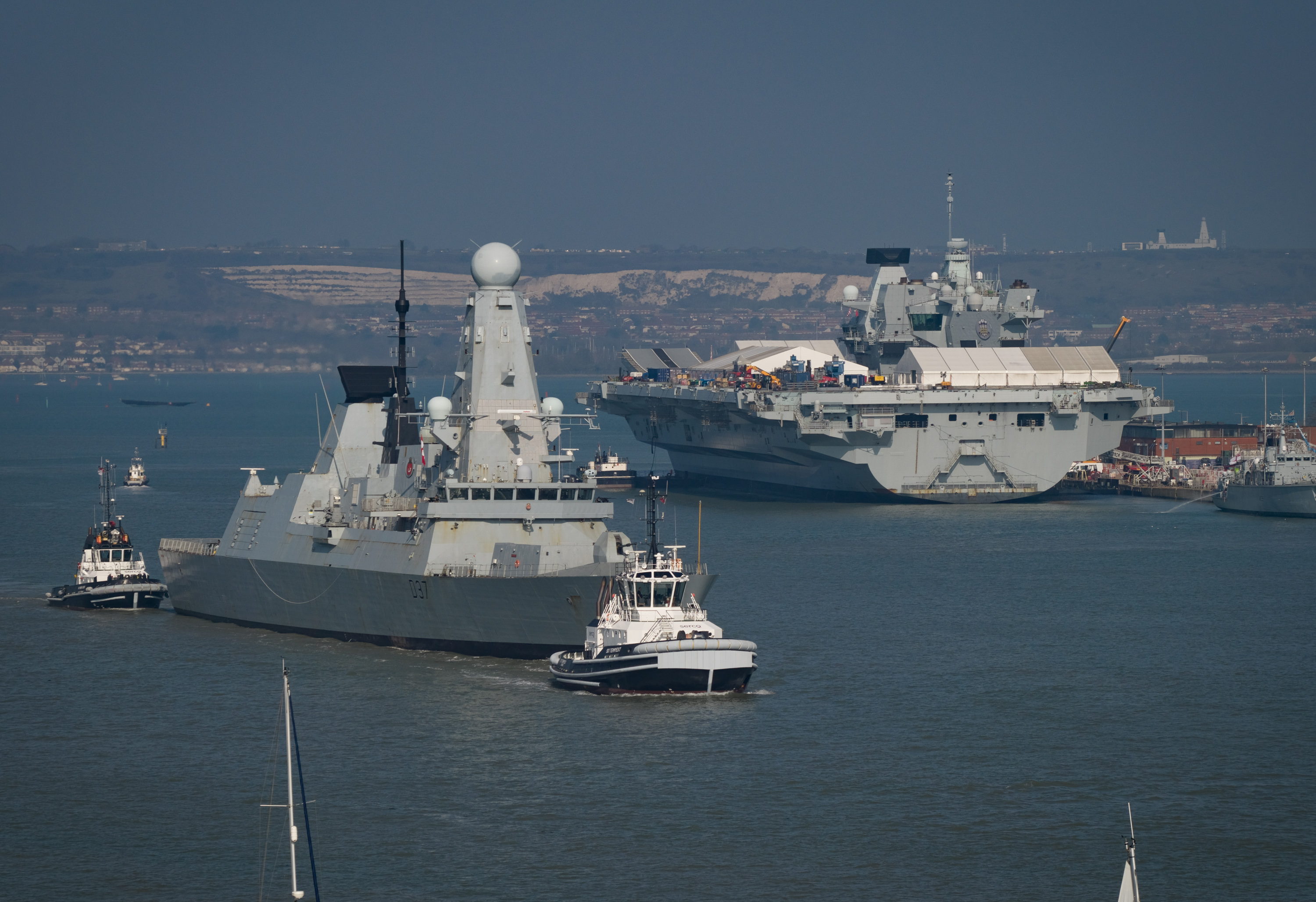
HMS Duncan passes the aircraft carrier HMS Prince of Wales in Portsmouth Harbour on Wednesday
PETER MACDIARMID
Lord West, the former head of the navy, warned: “We have steadily sliced away and we have ended up with a navy that isn’t able to do what is expected of it.”
“I used to send ships to the sound of guns,” he said, remarking on the time it has taken to deploy a destroyer to protect Cyprus.
Work is under way to expand the fleet, with two new frigate types and two new submarine classes under construction. Atlantic Bastion, a programme to deploy autonomous drone warships alongside traditional vessels, has also been launched.
But if the UK was at war now, could its submarines sink the Belgrano again?
“For sure,” said one naval source.
“No chance,” said the former submariner. “We couldn’t support a task force to go that far away, for that long, today.”