
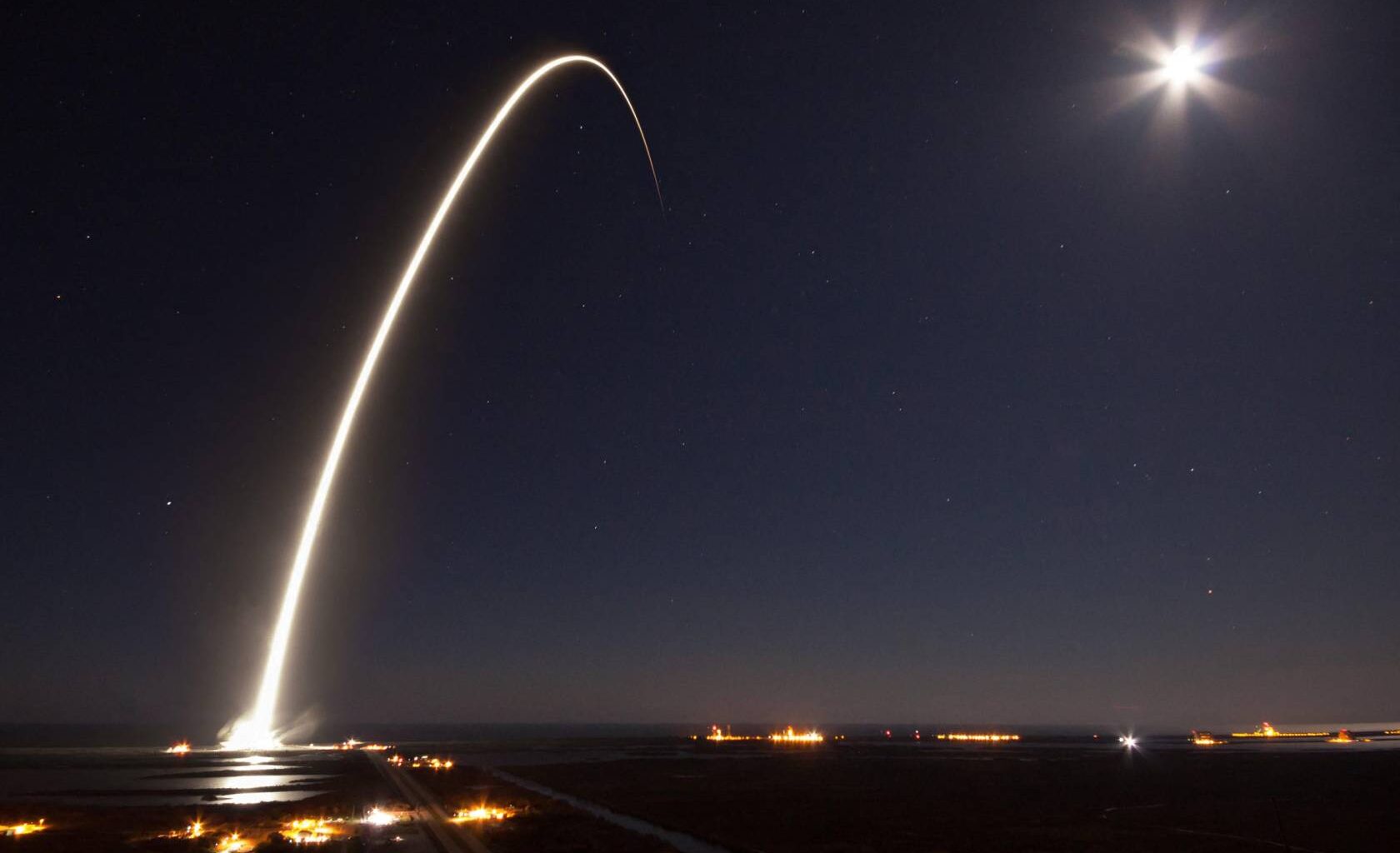
More than a century ago, Konstantin Tsiolkovsky, widely regarded as the father of astronautics, declared that ‘the Earth is the cradle of humanity, but mankind cannot stay in the cradle forever’. His words express the inevitability of expansion, but not the nature of the intelligence that will accompany it. Today, as humanity moves beyond Earth, the challenge is no longer purely technological, it is also ethical, geopolitical and existential: is humanity ready to govern the forms of intelligence it is unleashing – including the possibility that critical digital infrastructure may begin migrating into orbit?
For decades, space was defined by propulsion systems, satellites, and the human pioneering spirit. Now, artificial intelligence, quantum technologies, advanced robotics and synthetic biology are converging in a phenomenon I call the era of Disruptive Techno-Convergence (DTC). This fusion reshapes not only tools but the very nature of agency in space. It may even relocate the infrastructure of intelligence itself, as proposals emerge to externalise energy-intensive computation into orbital data centres powered by near-continuous solar exposure. DTC promises to overcome historic constraints on long-duration missions and extraterrestrial settlement, yet it also introduces cascading risks to astronaut safety, geopolitical stability, and fragile cosmic environments. The future of space will not be determined solely by launch capability but by whether ethical foresight and governance evolve as rapidly as technological power, and by how prudently mankind manages the transition toward a hybrid human-machine civilisation.
Artificial intelligence is rapidly becoming the central nervous system of space operations. Its most mature applications lie in satellite data-processing and Earth observation, where AI filters vast datasets, identifies anomalies and prioritises responses. Autonomous systems enhance orbital prediction, optimise manoeuvres and improve risk assessment.
In planetary exploration, onboard AI allows rovers such as NASA’s Perseverance to classify terrain and chart routes with minimal ground intervention. Deep-space missions, where communication delays stretch to minutes or hours, increasingly rely on machine autonomy. AI-driven planning tools manage resources and scheduling, while predictive maintenance algorithms anticipate failures before they occur.
AI is also reshaping astronaut preparation. Digital twins simulate spacecraft and habitats, immersive training environments strengthen mission readiness, and experimental language-model systems on the International Space Station assist with complex technical documentation. It is a preview of the autonomy required for Lunar or Martian crews.
More radically, commercial and geopolitical interest is growing in orbital data centres. Several US and Chinese firms have signalled plans to deploy large-scale computing platforms in orbit, citing environmental and efficiency advantages. The appeal is clear: space offers abundant solar energy, vacuum-assisted thermal regulation, and insulation from terrestrial infrastructure vulnerabilities.
For countries with overstressed power-grids, including parts of India, South Africa and Brazil, outsourcing energy-intensive AI training to orbit may appear economically attractive. Orbital facilities could reduce terrestrial cooling demands and fossil-fuel dependence while enabling high-performance AI training and quantum-secure communication beyond national grid constraints.
These platforms would do more than support space missions; they would carry part of Earth’s digital metabolism into orbit. If ownership and control remain concentrated among a few US and Chinese actors, orbital data centres may deepen global digital asymmetries. Developing states risk becoming data suppliers and AI consumers, while computational sovereignty and economic value remain elsewhere. Infrastructure positioned beyond territorial jurisdiction may also escape meaningful regulatory oversight. In this sense, data centres may be going to space faster than the rules that govern them.
What is emerging is not merely new infrastructure, but a reconfiguration of where and how intelligence is generated and exercised. Computation, autonomy, biology and robotics are fusing into architectures that transcend terrestrial boundaries. In this context, the operational environment reflects increasingly the early contours of Homo HURAQUS, a distributed intelligence architecture in which biological cognition and machine processing function symbiotically. The acronym stands for Humanoid Robotics, AI-superintelligence, Quantum intelligence and Synthetic biology. Together, these elements capture a hybridisation likely to define future human-machine collaboration beyond Earth. Given the profound vulnerabilities of the human body to deep-space isolation, cosmic radiation and persistent microgravity, long-duration exploration, mining, and settlement will increasingly depend on intelligent, mobile, dexterous technological-biological hybrids rather than purely biological crews.
While this hybrid intelligence promises unprecedented capability and autonomy, it simultaneously creates new points of fragility that will need to be managed carefully. For example, radiation-hardened processors must endure extreme conditions, autonomous systems may act unpredictably, and faults, adversarial interference, or model-drift could compromise navigation or life-support decisions within seconds. As autonomy grows, so does systemic risk, especially when human oversight is limited.
Robotics has long defined space exploration, but AI now transforms platforms from pre-programmed tools into adaptive agents capable of complex manipulation and decision-making. Humanoid and semi-humanoid robots are particularly valuable: their anthropomorphic design allows them to use existing tools, navigate spacecraft interiors and perform maintenance without new infrastructure. Early initiatives, such as NASA’s Robonaut and Valkyrie, pioneered the concept, and other nations are now exploring human-shaped robots in orbit.
Robots endure radiation, extreme temperatures and isolation without food, water or psychological strain, handling hazardous or repetitive tasks and freeing astronauts for higher-priority activities. Commercially developed humanoids are increasingly adapted for orbital and planetary operations.
Beyond practical utility, humanoid robotics signals a deeper shift. As machines assume roles once reserved for humans, ‘presence’ in space no longer requires continuous biological embodiment. In Homo HURAQUS terms, humans increasingly extend themselves through robotic avatars, quantum-enhanced processors and bioengineered systems.
Nevertheless, misinterpreted commands or corrupted sensors could still cause physical harm, especially in confined habitats. Cyber vulnerabilities raise the stakes: compromised robots could endanger operators or sabotage infrastructure. As autonomy increases, the line between human and machine agency blurs, making space exploration a genuinely hybrid endeavour – and raising ethical, security and governance challenges that remain largely unresolved.
Quantum computing and communication are the next frontier of space technology. Quantum processors can analyse massive datasets, optimise spacecraft design, simulate complex systems and accelerate material discovery for efficient propulsion and radiation-resistant structures. Quantum communication offers ultra-secure channels and tamper detection for deep-space missions, though quantum advantage could also undermine existing encryption, threatening satellite communications and command networks.
The integration of quantum processors into robotic architectures (‘quantum robotics’) shows promise for enhanced motion control, posture stability and real-time processing for Lunar, Martian or asteroid operations. Quantum-enhanced processors could also dramatically increase the strategic value of orbital data centres, amplifying both scientific discovery and military-relevant computational capacity.
Yet this capability is geopolitically destabilising: perceived quantum superiority could confer asymmetric strategic advantages and trigger competitive escalation and conflict. Quantum systems remain fragile and sensitive to radiation, vibration, and temperature fluctuations, and integration with classical systems is still underdeveloped. The promise is immense, but so are the uncertainties.
Sustaining life beyond Earth is one of the greatest challenges of long-duration missions. Synthetic biology offers a solution by redesigning organisms for in-situ production of food, medicines and materials. Experiments in orbit explore microbial manufacturing, from antioxidants in engineered yeast to converting carbon dioxide and water into useful compounds. Biomining microbes can extract elements from lunar or asteroid material, reducing reliance on heavy machinery.
AI-controlled bioreactors integrated with modelling systems may dynamically regulate life-support ecosystems, making life itself a programmable infrastructure – a hallmark of the Homo HURAQUS condition, where biology is technologically co-shaped, potentially adding a human element that may include empathy and positive human attributes.
Yet risks remain. Off-target effects could disrupt habitats or trigger immune responses, while biological contamination of extraterrestrial environments could compromise research. Altered organisms returning to Earth might also behave unpredictably in terrestrial ecosystems.
The true disruption arises not from any single technology, but from their convergence. When AI governs robots managing bioengineered life-support systems (possibly linked through quantum-enhanced orbital data hubs), failure modes multiply exponentially. Cascading errors may be difficult to diagnose in real time. DTC operationalises Homo HURAQUS. Hybrid intelligence architectures outperform purely human systems, yet reduce transparency, complicate attribution, and compress decision cycles.
Autonomous systems act at machine speed, leaving minimal room for human intervention. Navigation errors, misallocated resources, or malfunctioning robotic or biological systems in confined habitats could prove catastrophic. Quantum processors, if destabilised by cosmic radiation, may generate miscalculations; bioengineered organisms might compromise life-support ecosystems. In tightly coupled hybrid architectures, simultaneous failures across digital, mechanical, and biological domains could overwhelm even the most highly trained crews.
DTC reshapes great-power competition. AI-enabled satellites, autonomous spacecraft, robotic surface systems, and quantum-secure networks are inherently dual-use. Space-based data centres could become the strategic computational high ground. Hosting immense processing capacity beyond terrestrial jurisdiction, they may support intelligence, surveillance, financial clearing systems, military command-and-control and advanced AI training. Control over such platforms would confer significant influence over both spaceborne and terrestrial digital ecosystems, making orbital real estate a new locus of geopolitical tension.
Routine orbital manoeuvres, automated data-routing architectures, or AI-directed habitat operations may be interpreted as offensive posturing. If orbital data centres are privately owned yet geopolitically aligned, lines of accountability blur still further. Developing countries may find themselves structurally dependent on types of extra-territorial AI infrastructure over which they exercise little governance, relegated effectively to a consumer tier within the hybrid intelligence ecosystem.
In a Homo HURAQUS era, semi-autonomous hybrid intelligence may operate at speeds that exceed human cognitive limits, compressing decision cycles and heightening the risk of rapid, destabilising escalation at both geopolitical and civilisational levels. Traditional deterrence, transparency, foresight, or confidence-building measures designed for human-paced operations may no longer suffice.
The convergence of AI, robotics, quantum technologies and synthetic biology creates tightly coupled architectures, in which single-point failures can cascade across domains, especially if these systems depend on distributed orbital computing infrastructure. A cyber intrusion into an orbital data centre could affect robotic control systems or terrestrial financial networks. In a similar vein, a quantum encryption failure could destabilise global communications. Optimised algorithms may prioritise throughput over safety, sustainability, or equitable access.
The paradox is stark: the technologies enabling expansion are those that magnify fragility. Without anticipatory governance, robust ethical frameworks and cooperative oversight, the disruptive, convergent space age could transform systemic advantage into systemic vulnerability, even potentially into pan-human existential risk.
The 1967 Outer Space Treaty (OST) and related agreements were drafted long before the advent of autonomous AI, engineered organisms, quantum communication or hyperscale orbital data infrastructure. Existing law offers limited clarity on liability for autonomous or bioengineered systems. It says little about data sovereignty in orbit, ownership of extraterrestrial digital infrastructure, cross-border data flows processed beyond Earth’s territory, or responsibility for algorithmic harms originating in space. Few existing frameworks account for the hybrid operational core of Homo HURAQUS.
This gap is not abstract; it translates directly into unresolved questions of responsibility, jurisdiction and accountability in the real world. If an AI-controlled spacecraft causes a collision, who bears responsibility: the state that launched it, the software developer, or the private operator? If an orbital data centre processes sensitive national data beyond territorial jurisdiction, which regulatory authority applies? And when hybrid digital-biological systems malfunction across distributed domains, how is accountability attributed in architectures where agency itself is shared?
Highly disruptive technological convergence is outpacing not only legal evolution but conceptual frameworks of responsibility and sovereignty. Without anticipatory governance, outer space could become the first arena in which hybrid intelligence and extra-territorial digital infrastructure systematically outstrip institutional control. I favour a transdisciplinary approach, which I call Neuro-Techno-Philosophy. Technological progress is too complex to be managed within disciplinary silos: engineers, computer scientists, social scientists, neuroscientists, philosophers, ethicists and policymakers must collaborate to anticipate impacts and steer innovation toward long-term human flourishing. At the core of this approach lies foresight, ethical reflection and geopolitical realism, ensuring astronaut safety and environmental stewardship, as well as national and global security, stability and prosperity.
Historically, governance has lagged behind innovation. In an era of DTC, such delay could prove catastrophic. Regulation must be preventive rather than reactive, multi-sum rather than zero-sum, an approach which emphasises interdependence, absolute gains, win-win, non-conflictual competition and shared security, prosperity and destiny. By embedding these principles early, policy, strategy and operational norms can guide the rise of hybridised intelligence safely and responsibly, rather than reacting after systemic crises emerge.
Against the backdrop of orbital data centres externalising terrestrial computation, artificial superintelligence, quantum systems, advanced robotics and synthetic biology are coalescing into a new space age defined not merely by exploration, but by technological convergence. Their integration promises autonomy, resilience, and discovery. It also generates systemic, pan-human vulnerabilities.
Outer space may become the first true laboratory of Homo HURAQUS, where humanity’s transition toward hybridised intelligence unfolds beyond the cradle of Earth. The central question is not whether these technologies will transform space, but whether we will guide that transformation wisely. Without foresight, DTC could intensify rivalry, entrench digital hierarchies between computational ‘producers’ and ‘consumers’, externalise regulatory responsibility into orbit, endanger crews and produce cascading existential risks. With responsible governance, it could enable sustainable, peaceful, prosperous expansion and exploration beyond Earth.
The final frontier will not only test humanity’s engineering prowess, it will also challenge the capacity to collectively manage the rise of hybrid agency responsibly. Our future beyond the cradle may depend not merely on how far we travel or what resources, cosmic knowledge or geostrategic advantages we may acquire, but on what kind of species we become as we do so.