
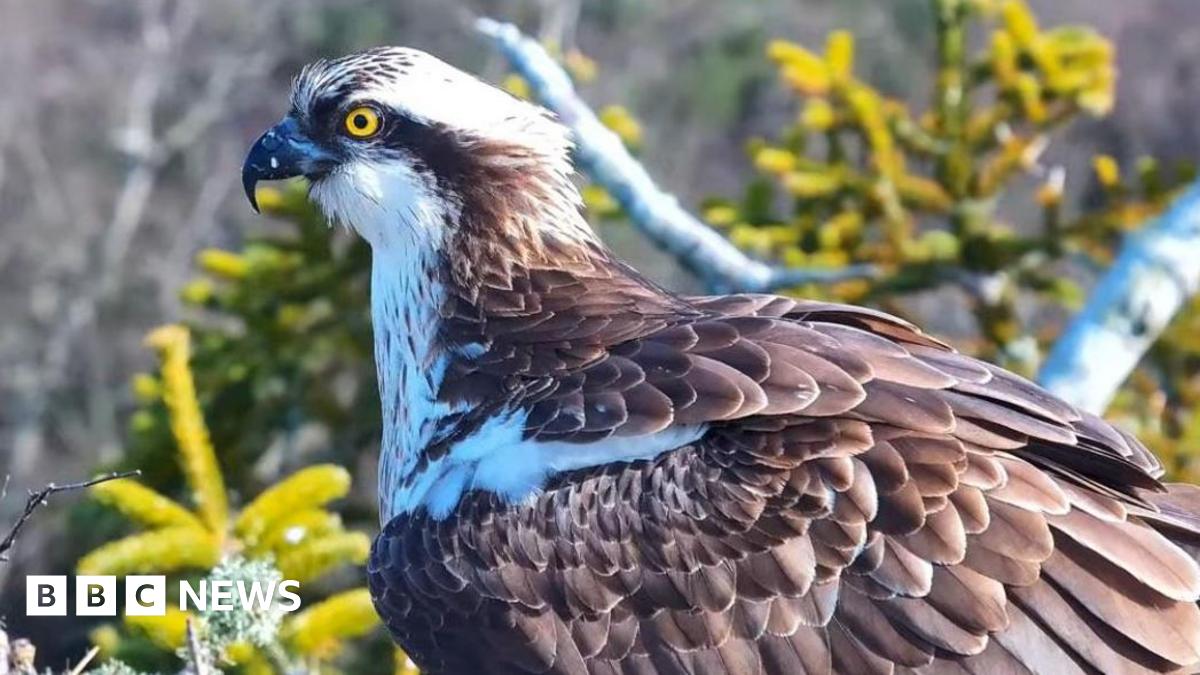
Sam Ryde from the charity said a young male, hatched in 2023, had shown an interest in returning to the area, and might form the third pair now that he is of breeding age.
However, he said: “Because of the long distance of migration, the return rate is about 30%.”
Young ospreys who do not return might have fallen prey to crocodiles and jackals, or have been blown out into the Atlantic, he said.
Many of the south of England ospreys are ringed but do not carry trackers, so the exact fate of those who are missing is unknown, he added.