
Wars have always been laboratories for new weapons.
World War I introduced the tank and large-scale air combat. World War II debuted radar, jet aircraft, and the atomic bomb. The Gulf War in 1991 revealed precision-guided munitions to the world.
Now the war between the United States, Israel, and Iran is offering the first real glimpse of what the next generation of warfare looks like.
Across the skies of the Middle East, weapons that until recently existed mostly in testing ranges and classified briefings are now being used in combat. Lasers are shooting down drones. Cheap swarming drones are striking targets hundreds of miles away. Stealth aircraft are penetrating air defenses. And precision missiles are hitting targets once considered unreachable.
The battlefield is becoming a preview of the future.
One of the most notable debuts is the Low-Cost Unmanned Combat Attack System, or LUCAS, a new American kamikaze drone manufactured by an Arizona-based firm called SpektreWorks. The irony is that LUCAS was designed specifically to counter Iran’s own drone strategy. For years Iran and its proxies used inexpensive one-way drones to overwhelm expensive Western air defenses. The United States responded by building its own version.
The result is LUCAS — a small delta-wing drone costing roughly $35,000 that can fly hundreds of miles and strike a target with an explosive payload. It was used in combat for the first time in the opening strikes of the war this past weekend.
Drones like LUCAS represent a profound shift in military thinking. For decades, the United States relied on exquisite and extremely expensive weapons. Now it is embracing what defense planners call ‘affordable mass,’ large numbers of inexpensive drones capable of overwhelming enemy defenses.
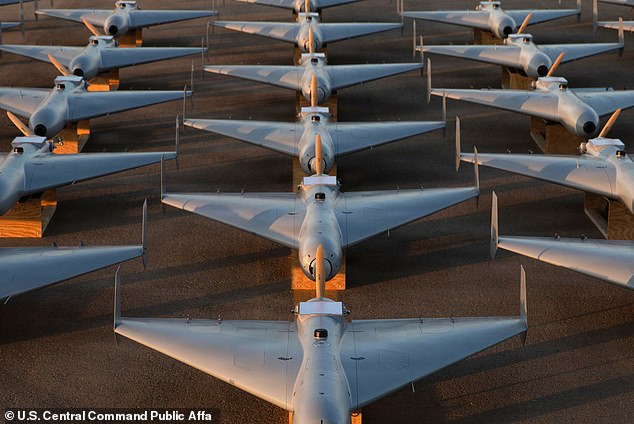
LUCAS is a small delta-wing drone costing roughly $35,000 that can fly hundreds of miles and strike a target with an explosive payload
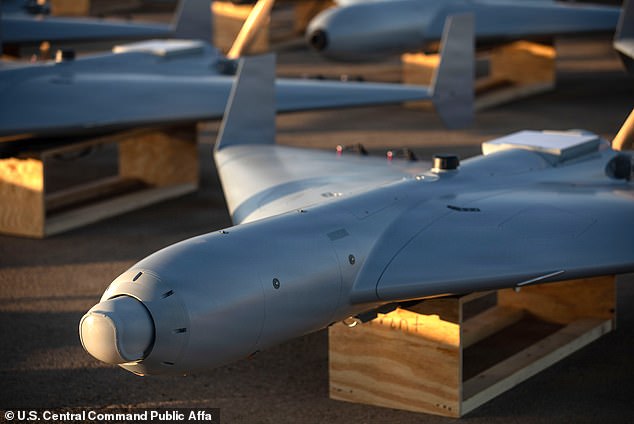
For years Iran and its proxies used inexpensive one-way drones to overwhelm expensive Western air defenses. The United States responded by building its own version
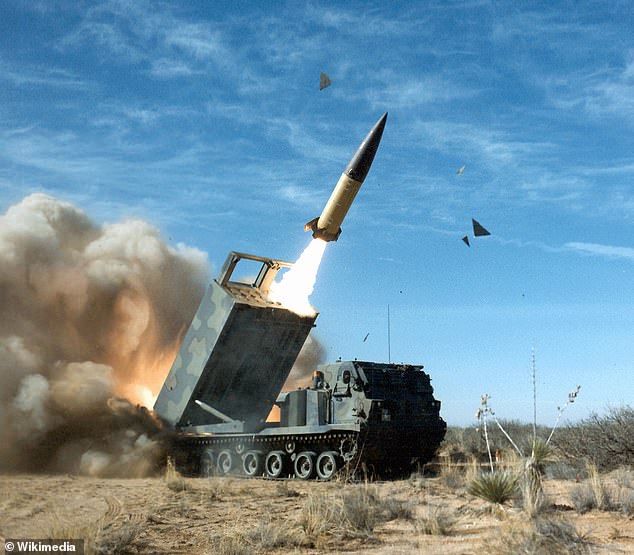
Now the war between the United States, Israel , and Iran is offering the first real glimpse of what the next generation of warfare looks like (Pictured: Army Tactical Missile System being launched by an M270)
At the other end of the technological spectrum is the arrival of combat laser weapons. The U.S. Navy has deployed ship-mounted high-energy lasers capable of burning through drones or small missiles at the speed of light. Israel has also fielded its own laser-based defenses designed to shoot down rockets and unmanned aircraft before they reach populated areas.
Unlike traditional missile interceptors that can cost hundreds of thousands or even millions of dollars per shot, a laser engagement costs only a few dollars in electricity. That changes the economics of air defense entirely.

John Spencer, Executive Director of the Urban Warfare Institute
Another key element of the war is the continued dominance of stealth aircraft.
American B-2 bombers and F-35 stealth fighters have been used in strikes against Iranian targets, penetrating defended airspace and delivering precision weapons against hardened sites. These aircraft are not new, but the way they are being used is.
Modern stealth aircraft now operate as nodes in a networked battlefield, fusing intelligence from satellites, drones, and ground sensors while artificial intelligence rapidly analyzes that data to identify targets and generate strike options.
Pilots are no longer flying only to preplanned coordinates. Instead, they operate inside an AI-enabled kill chain that can locate, track, and strike enemy assets in minutes.
The United States has also debuted a new generation of long-range precision missiles, which are playing a central role in the current Middle East conflict. The Precision Strike Missile (PrSM), fired from HIMARS and Multiple Launch Rocket System launchers, for instance, has reportedly been used for the first time in combat during strikes on Iranian targets.
Designed to replace the aging ATACMS missile, PrSM allows ground forces to strike command centers, missile launchers, and air defenses with extraordinary accuracy. The missile can reach targets more than 350 miles away, with future variants expected to reach significantly farther — allowing land-based forces to conduct deep strikes once reserved primarily for aircraft and cruise missiles.
Combined with cruise missiles like the Tomahawk, these systems allow attacks from ships and aircraft operating far outside the reach of Iranian air defenses.
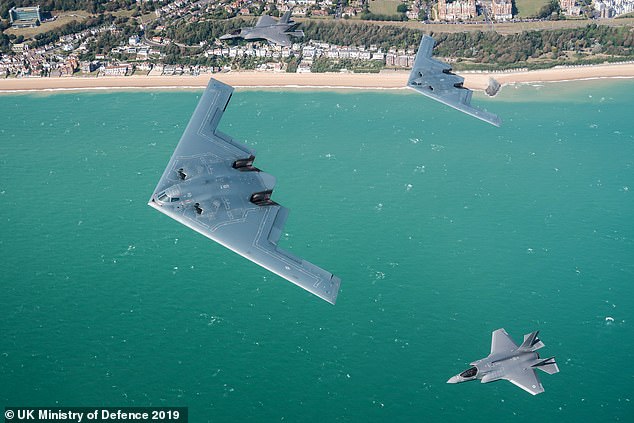
American B-2 bombers and F-35 stealth fighters have been used in strikes against Iranian targets

The United States has also debuted a new generation of long-range precision missiles, which are playing a central role in the current Middle East conflict
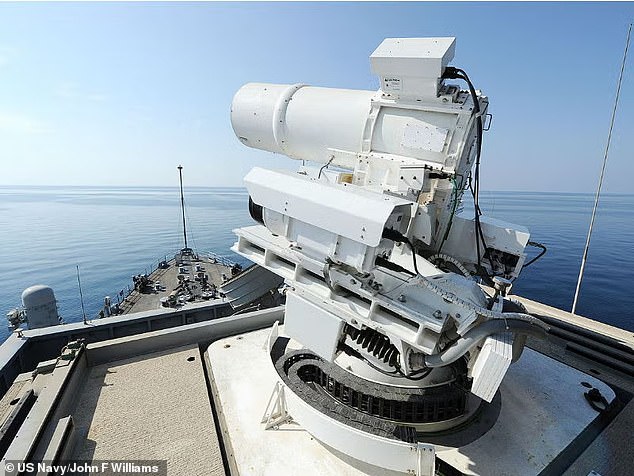
The US Navy has deployed ship-mounted high-energy lasers capable of burning through drones or small missiles at the speed of light
Future wars will likely combine several key characteristics now visible in this conflict.
First, cheap drones will operate alongside high-end platforms, creating both mass and precision.
Second, directed-energy weapons like lasers will begin to replace traditional missile defenses.
Third, long-range precision strikes will change the calculations and importance of geography, allowing militaries to destroy critical targets deep inside enemy territory from hundreds or even thousands of miles away.
And finally, the battlefield will be increasingly networked and intelligence-driven, with satellites, cyber operations, and artificial intelligence helping identify and strike targets faster than ever before.
What we are seeing right now with the war in Iran is not just another regional conflict.
It is a glimpse of the future of warfare.
The weapons debuting across the Middle East today will almost certainly define the battlefields of tomorrow. And for militaries around the world, the lesson is already clear: the character of war is changing again.
John Spencer is the Executive Director of the Urban Warfare Institute. On X @SpencerGuard