
Photo by JMEnternational/Getty Images
Who made Harry Styles? Not Simon Cowell. Simon Cowell made One Direction. He made a mega-selling teenage boyband. But as most former members of mega-selling teenage boybands could tell you, between fingers of vodka or blister packs of sertraline, a long, successful solo career is a very hard thing to build afterwards. Only Justin Timberlake and Robbie Williams managed to do it as well as Styles has, but while those two largely stuck to the respective sounds that made NSYNC and Take That huge, Styles has taken the retro road, through 70s glam rock, psychedelia and indie. His new fourth album, Kiss All the Time. Disco, Occasionally., now pivots towards dance music.
But the music isn’t the only thing, or even really the main thing. The man who really made Harry Styles is Alessandro Michele, a fashion designer with a love of Renaissance finery and the hair and beard of a Jesus impersonator. Michele’s tenure as Gucci’s creative director, from 2015 to 2022, coincided with the end of One Direction and Styles assembling a solo identify for himself. Styles booked himself a meeting with Michele, and adopted the furry, frilly, feminine look the designer was imposing on Gucci’s menswear. We saw Styles in pearls and feather boas. In 2020, he wore a Gucci dress for the first Vogue cover consisting of a bloke on his own. “Bring back manly men,” shrieked Candace Owens.
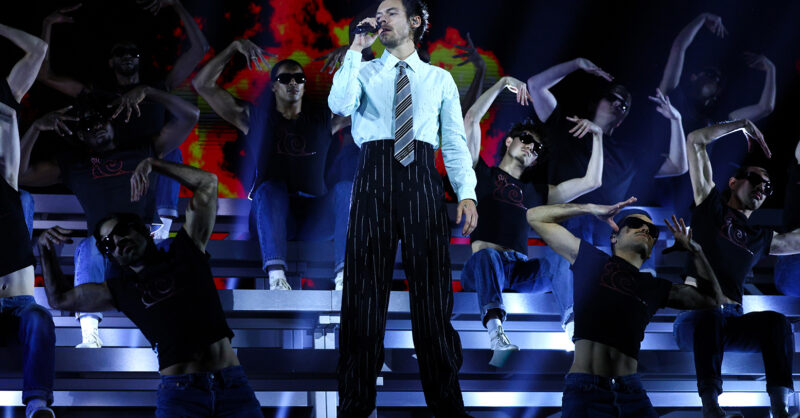
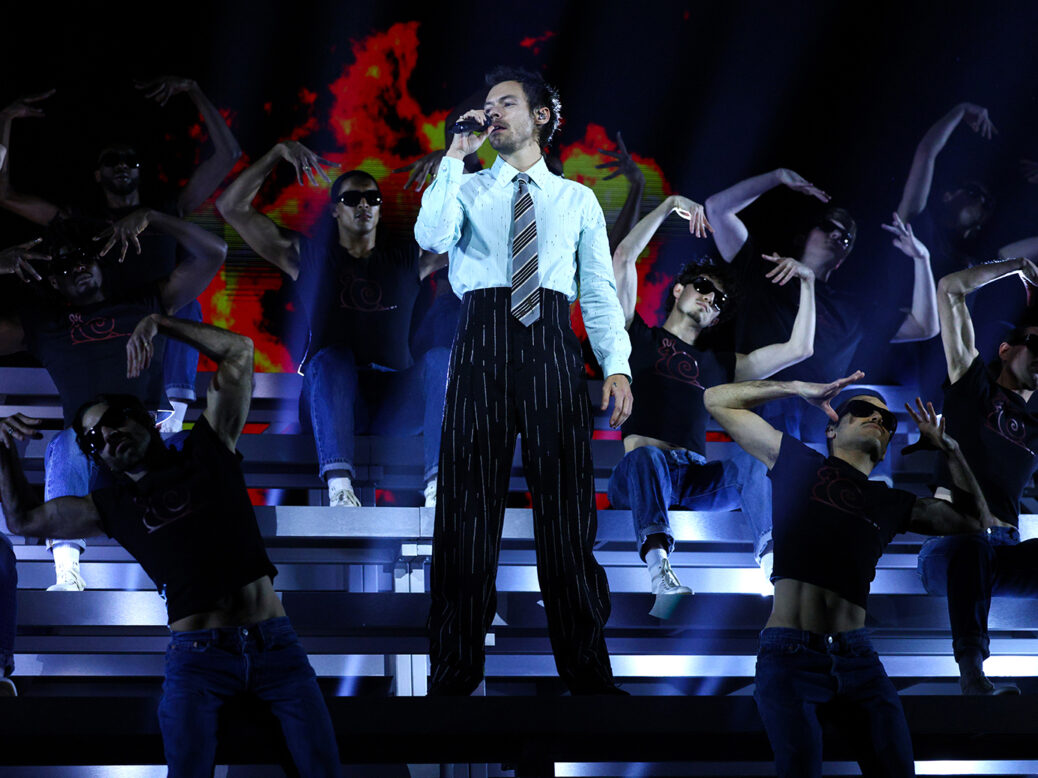
Styles is on another magazine cover this week, but he isn’t in a dress. He’s on Runner’s World. He’s in his running gear. He’s in conversation with Haruki Murakami about the meditative loveliness of a good marathon. If this doesn’t say “I’m 32” loud enough, we also had his Brits appearance last weekend, for which he wore a suit, shirt and tie. What is this? Is Styles becoming a manly man? Has he done the sartorial equivalent of taking the pronouns out of his social media bio?
No. For even as he has moved on from Gucci and the most obviously gender-bending outfits, subtle playfulness persists, as with the cropped, sparkly Dior jacket he wore at this year’s Grammys. His Brits outfit was Chanel womenswear. Suits and ties aren’t really representative of lumbering, vanilla-flavoured male heterosexuality anymore. For that, you want a Patagonia or North Face gilet, some chinos that fit too tight and sit too low on the hips, and a pair of those disgusting dark-leather-and-white-sole trainers designed for “smart-casual” offices.

Subscribe to the New Statesman today for only £1 a week.
Suits and ties, especially in a fashion context, and especially especially when they’re repurposed womenswear, are now less male than they are “male”. Wearing them is like a kid saying, in a mocking basso profundo, “I’m a grownup” – it’s performative. David Bowie, one of Styles’ biggest influences, got through wardrobes of flamboyantly female clothes too. The tailoring of his Thin White Duke persona was no less of a costume.
Go back to Styles’ Vogue dress. Five years beforehand, Young Thug, a rapper much more atypical than his name implies, wore one in a Dazed magazine photoshoot; a year later, he wore another for the cover of his album Jeffrey. “I wore this long-ass dress because I had a motherfucking AK-47 up under it,” he explained. That gets us to the truth quicker than a shelf of feminist theory could. Gender-bending of this kind is usually done by only the hottest, most charismatic men; men who would smoulder in a binbag and some Crocs, let alone in couture. When they wear dresses, pearls and makeup, it is the ultimate assertion of heterosexual power. Their libido is so overwhelming, so spotless of doubt and anxiety, that it reaches over and steals female signifiers for itself.
This, clearly, is not the kind of behaviour easily replicable by every guy. Though Styles has helped start micro-trends in the menswear crowd – the aforementioned pearls; sweater vests – masculinity at large has been largely unmoved. It takes a sea change for most men to alter their cut of their jeans; them opening up their grandmothers’ jewellery boxes might take a revolution.
Vaguely campy suiting has a better chance of sticking. You’re not asking men to break gender norms, but just to wink at them. It’s a more robust kind of progressivism, suited to a cultural moment in which it’s on the defensive. Social media is populated by manosphere influencers preaching zero-sum sexual politics, and looksmaxxers who advocate hitting your jaw with a hammer to give it more definition. But both of those have an almost terminally anxious relationship with masculinity. The Styles model is higher status – almost aristocratic, in fact. It is more properly masculine in its confidence to invert what belongs to it and appropriate what doesn’t. Wearing a women’s suit isn’t quite wearing a dress, but in 2026 it counts as some kind of victory.
[Further reading: Gorillaz’ The Mountain review: Damon Albarn’s strange formula]
Content from our partners